Introduction to Namakarana Puja
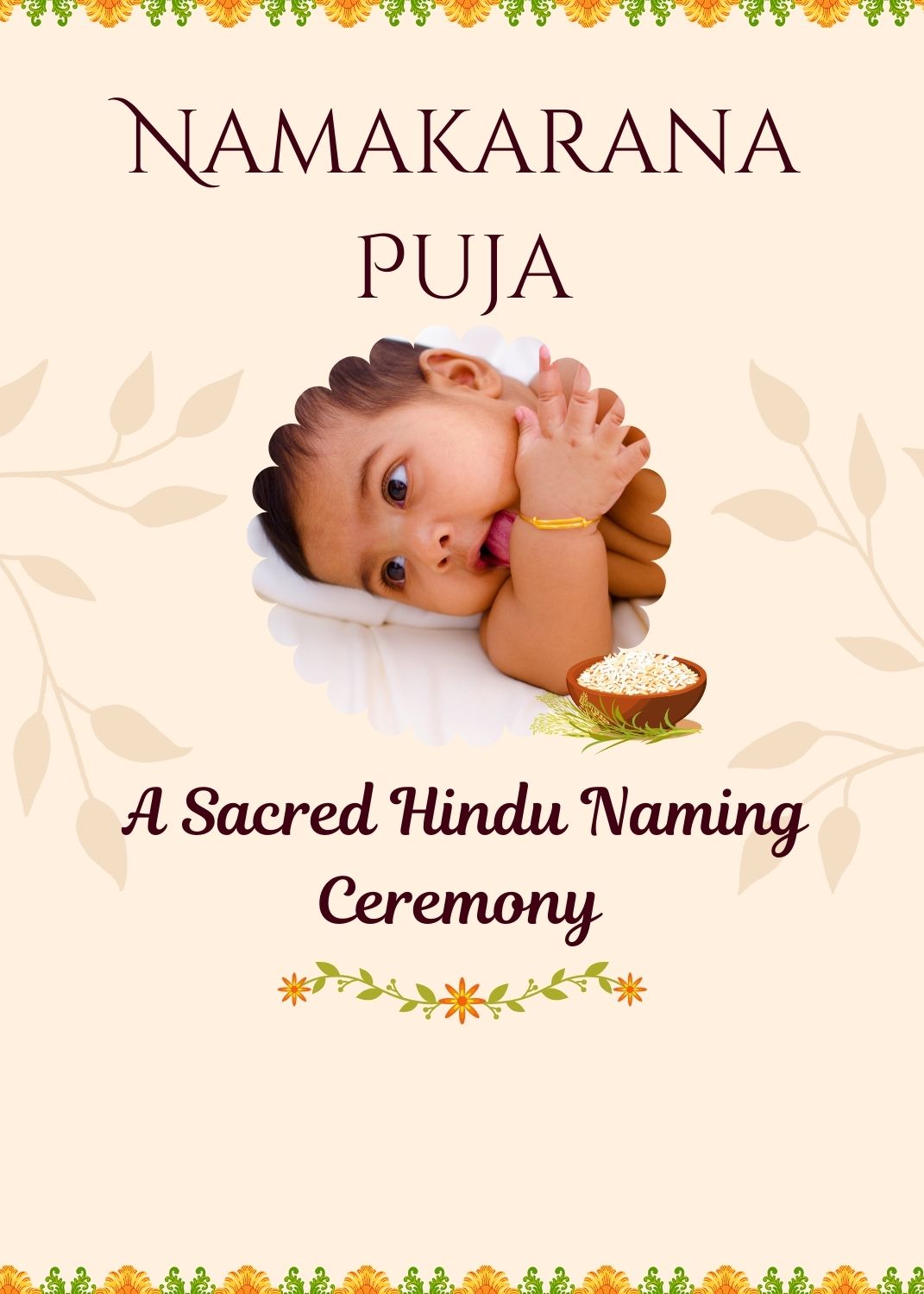
Namakarana Puja, also known as the Hindu naming ceremony, is a highly auspicious ritual performed to formally assign a name to a newborn child. This ancient Vedic tradition holds immense cultural and spiritual significance in Hinduism. The ritual is conducted according to Hindu scriptures, ensuring that the child receives a name that aligns with their astrological chart and divine blessings.
The Significance of Namakarana Puja
In Hinduism, a name is not just a means of identification; it carries spiritual vibrations that influence the individual’s life journey. The Namakarana Puja is believed to:
- Bless the child with good health, prosperity, and wisdom.
- Align the child’s energies with their astrological nakshatra (birth star).
- Protect the child from negative influences.
- Strengthen the family’s spiritual connection with the divine.
When is Namakarana Puja Performed?
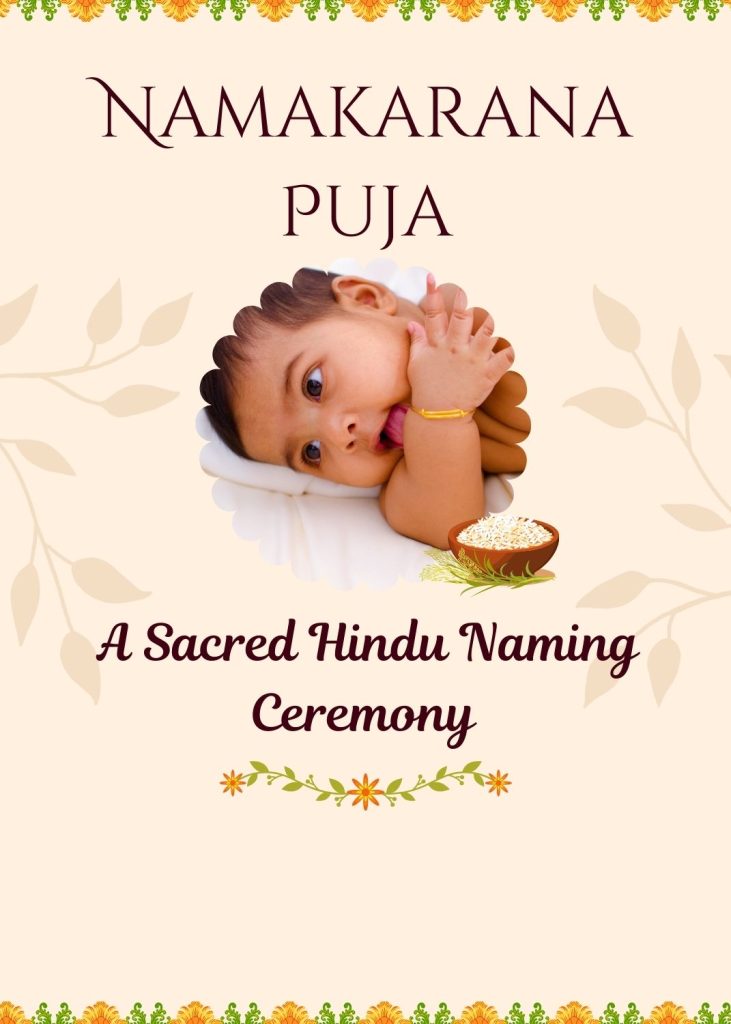
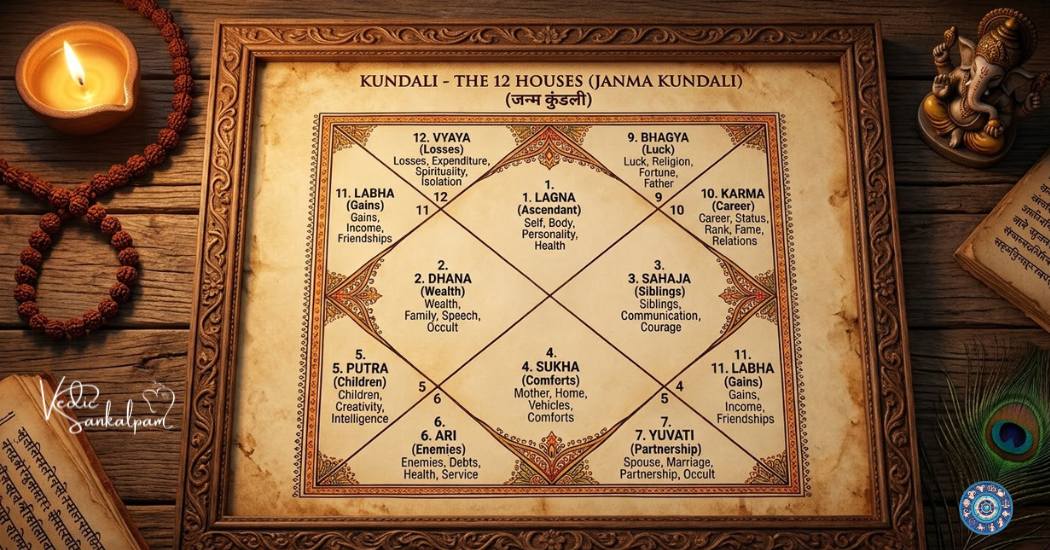
Namakarana Puja is typically performed on the 11th, 12th, or 16th day after birth. However, some families follow specific traditions and choose an auspicious day based on the child’s birth chart (Janam Kundali). If the ceremony cannot be performed in the early days, it may be held on the child’s first birthday or another suitable occasion.
Rituals of Namakarana Puja
- Purification (Shuddhi Karana): The house and baby are purified through traditional rituals to create a sacred environment.
- Invocation of Deities: A priest performs prayers and chants Vedic mantras to seek divine blessings.
- Naming Process: The chosen name is whispered into the baby’s ear by the father or elder family members.
- Blessings: Family members and guests bless the baby with gifts and good wishes.
- Havan (Sacred Fire Ritual): A small fire ritual is conducted to purify the surroundings and invite positive energies.
Preparation for Namakarana Puja
To ensure the puja is performed with utmost sanctity, families prepare by following these essential steps:
- Choosing an auspicious date: The family consults an astrologer or priest to determine the most favorable day based on the child’s birth chart.
- Purifying the home: Cleaning the house and decorating the puja space with flowers, rangoli, and holy symbols.
- Arranging puja essentials: Items such as kalash (sacred pot), sandalwood paste, flowers, ghee, coconut, incense sticks, and betel leaves are gathered.
- Inviting family and friends: The ceremony is often a grand affair, with relatives and loved ones in attendance.
Step-by-Step Namakarana Puja Ritual
1. Sankalpa (Resolution)
The ceremony begins with the parents and priest taking a sankalpa (sacred vow), expressing their intent to conduct the puja for the well-being of the child.
2. Ganesha Puja
Lord Ganesha, the remover of obstacles, is worshipped first to ensure the puja is completed without any hindrances.
3. Kalash Sthapana (Sacred Pot Installation)
A kalash, filled with holy water, is placed at the center of the puja setup. A coconut is placed on top, symbolizing divine energy.
4. Abhishekam (Holy Bathing Ritual)
The baby is bathed with panchamrit (a sacred mixture of milk, curd, honey, ghee, and sugar), symbolizing purification and blessings.
5. Name Selection and Announcement
The chosen name is based on the child’s nakshatra and horoscope. The priest whispers the name in the baby’s right ear while chanting sacred Vedic mantras.
6. Aarti and Blessings
Aarti is performed, and the elders of the family bless the baby with rice grains, turmeric, and kumkum. Relatives and guests shower the baby with gifts and good wishes.
Choosing the Right Name for the Child
The name selection follows astrological principles. Each nakshatra is associated with specific syllables, and the name typically begins with one of these syllables. The name should be:
- Easy to pronounce
- Culturally significant
- Meaningful and auspicious
Benefits of Namakarana Puja
- Brings positive energy and divine blessings to the child.
- Strengthens family bonds and traditions.
- Ensures the name aligns with astrological influences.
- Promotes overall well-being and prosperity of the child.
Celebratory Feasts and Social Gatherings
The Namakarana Puja is not just a spiritual ceremony; it is also a joyous occasion marked by:
- Traditional music and hymns.
- Special delicacies and prasad distribution.
- Exchange of gifts and blessings.
Modern Adaptations of Namakarana Puja
While the core traditions remain intact, many families today customize the ceremony by:
- Hosting virtual pujas for family members who cannot attend in person.
- Choosing unique or modern names while keeping astrological guidance in mind.
- Incorporating eco-friendly rituals, such as using organic materials and avoiding excessive wastage.
Conclusion
Namakarana Puja is a sacred and joyous occasion that marks the beginning of a child’s journey in the world with divine blessings. This time-honored ritual ensures that the baby receives a name filled with positivity, spiritual energy, and good fortune.