Have you ever wondered why certain days feel more challenging than others, or why some people seem to face repeated obstacles despite their best efforts? In Vedic astrology, planetary combinations called yogas can explain these patterns. One such yoga is Vyaghata Yoga, a celestial configuration that has intrigued astrologers and seekers for centuries. Let’s dive deep into understanding what Vyaghata Yoga is, how it affects our lives, and what we can do about it.
What is Vyaghata Yoga?
Vyaghata Yoga is one of the 27 yogas in Vedic astrology, formed by specific combinations of the Sun and Moon’s positions. The word “Vyaghata” comes from Sanskrit, meaning “obstacle” or “hindrance.” As the name suggests, this yoga is generally considered inauspicious and is believed to bring challenges, delays, and unexpected hurdles in various aspects of life.
In the Panchanga (Hindu calendar), Vyaghata is listed among the yogas that astrologers consider when determining auspicious times for important activities. When this yoga is active, it’s traditionally recommended to avoid starting new ventures, making major decisions, or conducting important ceremonies.
The Origins and Significance of Vyaghata Yoga
Ancient Vedic texts, including the Brihat Samhita and various Panchanga compilations, mention Vyaghata Yoga as part of the 27-yoga system. This system has been used for thousands of years to help people align their actions with cosmic energies.
The significance of Vyaghata Yoga lies in its ability to reveal periods when natural energies are not favorable for progress. Think of it as the universe’s way of saying, “Hold on, this might not be the best time.” Our ancestors recognized these patterns and used them to make informed decisions about everything from weddings to business launches.
How is Vyaghata Yoga Formed?
Planetary Positions and Combinations
Vyaghata Yoga forms based on the angular relationship between the Sun and Moon. Specifically, it occurs when the combined longitudinal movement of these two luminaries falls within a particular range in the zodiac. The calculation involves adding the degrees of the Sun and Moon and determining which of the 27 yogas corresponds to that sum.
Each yoga covers approximately 13 degrees and 20 minutes of arc (360 degrees divided by 27). When the Sun-Moon combination falls within Vyaghata’s designated range, this yoga becomes active.
The Role of Nakshatras
Nakshatras, or lunar mansions, also play a crucial role in determining yogas. The Moon’s position in specific nakshatras can intensify or modify the effects of Vyaghata Yoga. When the Moon transits through certain nakshatras while Vyaghata is active, the yoga’s influence may become more pronounced.
Characteristics of Vyaghata Yoga
Impact on Personality
People born during Vyaghata Yoga often display unique personality traits. They may be:
Resilient and able to bounce back from setbacks
Cautious and careful in their approach to life
Prone to overthinking and anxiety
Determined to overcome obstacles
Sometimes pessimistic or defensive due to repeated challenges
These individuals might feel like they’re constantly swimming against the current, but this struggle often builds tremendous inner strength and character.
Influence on Career and Profession
In professional life, Vyaghata Yoga can manifest as:
Delays in promotions or recognition
Unexpected obstacles in projects
Difficulty in establishing businesses
Challenges with authority figures
Need to work harder than others for similar results
However, those who persist despite these challenges often develop exceptional problem-solving skills and become more resourceful than their peers.
Effects on Relationships and Family Life
Vyaghata Yoga can create ripples in personal relationships:
Misunderstandings with family members
Delays in marriage or relationship commitments
Communication challenges with loved ones
Need for extra effort to maintain harmony
Occasional feelings of isolation
The key is recognizing these patterns and working consciously to maintain open communication and understanding with loved ones.
Positive Aspects of Vyaghata Yoga
Hidden Strengths and Resilience
While Vyaghata Yoga is traditionally considered challenging, it’s not all doom and gloom. This yoga can actually forge incredible strength. Like a diamond formed under pressure, individuals born under this yoga often develop:
Exceptional perseverance
Deep wisdom gained from overcoming obstacles
Empathy for others facing difficulties
Innovative problem-solving abilities
Spiritual depth and philosophical outlook
Opportunities for Transformation
Challenges are often disguised opportunities. Vyaghata Yoga can push individuals toward personal transformation and spiritual growth. When life doesn’t come easy, we’re forced to look within, question our assumptions, and develop a more meaningful understanding of life’s purpose.
Challenges Associated with Vyaghata Yoga
Vyaghata Yoga in Vedic Astrology
Obstacles and Difficulties
The primary challenge of Vyaghata Yoga is the recurring nature of obstacles. These might include:
Projects that face unexpected delays
Plans that require revision or cancellation
Financial setbacks or unexpected expenses
Conflicts arising from misunderstandings
Feeling blocked despite sincere efforts
It’s important to remember that these obstacles are temporary and can be navigated with patience and proper remedies.
Health Concerns
Some astrologers believe Vyaghata Yoga can influence health, particularly:
Stress-related conditions
Digestive issues
Sleep disturbances
Nervous system sensitivity
Chronic conditions that resist quick treatment
Maintaining a healthy lifestyle and regular health check-ups becomes particularly important for those influenced by this yoga.
Remedies for Vyaghata Yoga
Vedic Rituals and Pujas
Traditional Vedic astrology offers several remedies to mitigate Vyaghata Yoga’s effects:
Performing Navagraha Puja to balance planetary energies
Conducting special homas (fire rituals) on auspicious days
Offering prayers to Lord Hanuman, known for removing obstacles
Visiting temples regularly, especially on Tuesdays and Saturdays
Feeding animals, particularly cows and dogs, as acts of compassion
Gemstone Recommendations
Wearing appropriate gemstones can help balance the challenging energies of Vyaghata Yoga. An experienced astrologer might recommend:
Ruby for strengthening the Sun’s positive influence
Pearl for calming the Moon’s emotional turbulence
Hessonite (Gomed) for Rahu-related challenges
Cat’s Eye for Ketu-related issues
Always consult a qualified astrologer before wearing any gemstone, as improper use can sometimes amplify problems rather than solve them.
Mantras and Meditation
Spiritual practices can significantly reduce Vyaghata Yoga’s negative impact:
Daily meditation to calm the mind and reduce anxiety
Yoga practice to balance physical and mental energies
Pranayama (breathing exercises) for emotional stability
Regular chanting of protective mantras
Specific Mantras for Relief
Some powerful mantras for Vyaghata Yoga include:
Gayatri Mantra: “Om Bhur Bhuvaḥ Swaḥ, Tat Savitur Vareṇyaṃ, Bhargo Devasya Dhīmahi, Dhiyo Yo Naḥ Prachodayāt”
Hanuman Chalisa: Regular recitation for obstacle removal
Chanting these mantras with devotion and correct pronunciation, ideally 108 times daily, can create positive energy shifts.
Vyaghata Yoga in Daily Life
Best Times for Important Decisions
If you’re aware of Vyaghata Yoga’s timing in the Panchanga, you can plan around it. Avoid:
Starting new businesses or ventures
Signing important contracts
Getting married or engaged
Making major purchases
Initiating legal proceedings
Beginning construction projects
Instead, choose days when more favorable yogas like Siddha, Brahma, or Indra are active.
Activities to Avoid During Vyaghata Periods
During Vyaghata Yoga periods, it’s wise to:
Postpone important meetings when possible
Avoid confrontations or difficult conversations
Delay travel for crucial purposes
Refrain from making impulsive decisions
Skip risky investments or speculations
Use these times instead for planning, reflection, research, and preparation for when more favorable energies return.
Vyaghata Yoga vs Other Inauspicious Yogas
Vyaghata is one of several inauspicious yogas in Vedic astrology. Others include:
Vishkambha: Creates obstacles in new beginnings
Vajra: Brings hardness and inflexibility to situations
Parigha: Creates barriers and restrictions
Shula: Associated with sharp, piercing difficulties
Vaidhriti: Brings emptiness and lack of support
While all these yogas present challenges, Vyaghata is specifically known for creating unexpected hindrances and reversals. Understanding the nuances helps in applying the right remedies.
Real-Life Examples and Case Studies
Throughout history, astrologers have documented cases where Vyaghata Yoga influenced outcomes. For instance, business ventures launched during Vyaghata periods often faced unexpected regulatory issues, partnership disputes, or market challenges that weren’t present in the initial planning.
Conversely, individuals born with Vyaghata Yoga who embraced spiritual practices and remained persistent often achieved remarkable success later in life. Their early struggles became the foundation for wisdom that benefited not just themselves but entire communities.
Consulting an Astrologer for Vyaghata Yoga
If you suspect Vyaghata Yoga is affecting your life, consulting a knowledgeable Vedic astrologer can provide:
Accurate identification of the yoga in your birth chart
Personalized remedies based on your unique planetary configuration
Timing guidance for important life decisions
Understanding of how this yoga interacts with other factors in your chart
Spiritual practices tailored to your needs
A good astrologer won’t just predict problems but will empower you with practical solutions and a positive perspective.
Conclusion
Vyaghata Yoga, while traditionally considered inauspicious, is ultimately a teacher in disguise. Like all challenging aspects in Vedic astrology, it serves a purpose in our spiritual evolution. The obstacles it brings aren’t meant to defeat us but to strengthen us, develop our character, and push us toward our highest potential.
Understanding Vyaghata Yoga helps us work with cosmic energies rather than against them. By timing our activities wisely, applying appropriate remedies, and maintaining a positive mindset, we can minimize this yoga’s challenges and maximize the growth opportunities it presents.
Remember, the stars may incline, but they don’t compel. Your free will, determination, and spiritual practices can overcome any astrological challenge. Vyaghata Yoga is simply one thread in the vast tapestry of your life’s journey—acknowledge it, work with it, but never let it define your limits.
FAQs
Q1: Can Vyaghata Yoga be completely removed from one’s life?
No, if Vyaghata Yoga is present in your birth chart, it remains a part of your astrological blueprint. However, its negative effects can be significantly reduced through consistent spiritual practices, remedies, and conscious living. Think of it like having a chronic condition that’s manageable with proper care rather than something curable.
Q2: How often does Vyaghata Yoga occur in the Panchanga?
Vyaghata Yoga occurs approximately once every 27 days as the Moon completes its cycle through the zodiac. Each occurrence lasts for about 24 hours. Additionally, if you’re born during this yoga, its influence remains throughout your life, though it may be more pronounced during certain planetary transits.
Q3: Is it possible to get married during Vyaghata Yoga?
Traditional Vedic astrology strongly advises against conducting marriages during Vyaghata Yoga, as it’s considered inauspicious for new beginnings. However, if you must proceed due to unavoidable circumstances, perform additional rituals, have a priest conduct protective prayers, and choose an otherwise favorable muhurta (auspicious time) to minimize negative influences.
Q4: Does Vyaghata Yoga affect everyone the same way?
No, Vyaghata Yoga’s effects vary based on individual birth charts. Factors like the strength of your ascendant, the position of benefic planets like Jupiter and Venus, and the overall chart strength can modify its impact. Someone with a strong chart might experience only minor delays, while someone with multiple challenging placements might face more significant obstacles.
Q5: Can wearing gemstones alone neutralize Vyaghata Yoga?
While gemstones can help, they work best when combined with other remedies like mantras, meditation, charitable acts, and conscious behavior. Vedic astrology teaches a holistic approach—gemstones address the energetic level, mantras work on the mental and spiritual planes, and good karma through right action completes the remedy. Relying on just one method is like trying to row a boat with one oar; you’ll go in circles rather than forward.
Ever wondered who controls the cosmic bank account? In Hindu mythology, that supreme treasurer is none other than Lord Kubera. Known as the god of wealth, prosperity, and material abundance, Kubera holds a special place in the hearts of devotees seeking financial stability and success. But he’s much more than just a deity associated with money – he’s a guardian, a king, and a symbol of righteous wealth earned through honest means.
In this comprehensive guide, we’ll explore everything about Lord Kubera – from his mythological origins to his modern-day relevance. Whether you’re spiritually inclined or simply curious about ancient wisdom, this article will give you fascinating insights into the divine treasurer of the heavens.
Who is Lord Kubera?
Origins and Birth of Kubera
Lord Kubera’s story begins with interesting lineage. According to Hindu scriptures, Kubera was born to the sage Vishrava and Ilavila, making him a grandson of the great sage Pulastya, one of the ten mind-born sons of Lord Brahma. What makes his birth particularly noteworthy is that he shares the same father with Ravana, the legendary king of Lanka. Yes, you read that right – Kubera and Ravana are half-brothers, though their paths in life took drastically different directions.
Kubera initially wasn’t the lord of wealth. He earned this position through intense penance and devotion to Lord Brahma. His dedication was so profound that Brahma granted him lordship over all worldly treasures and made him one of the Lokapalas (guardians of directions). Talk about working your way up the divine corporate ladder!
Physical Appearance and Iconography
Unlike the typically handsome Hindu deities, Kubera has a distinctive appearance that sets him apart. He’s usually depicted as a stout, dwarfish figure with a pot belly – symbolizing abundance and prosperity. His complexion is often shown as white or golden, representing purity and wealth.
Kubera typically has three legs and only eight teeth, which might seem unusual but carries deep symbolic meaning. The three legs represent the three sources of energy – Brahma, Vishnu, and Shiva – while the eight teeth are said to represent the eight forms of wealth (Dhana Ashtaishwarya).
He’s adorned with jewels and ornaments, carries a money pot (Nidhi) or a bag of gold coins, and holds a mace or a club called Gada. Sometimes he’s shown riding his divine vehicle, the Pushpaka Vimana (a flying chariot), or sitting on a throne with a mongoose that spits jewels by his side.
The Role of Kubera in Hindu Mythology
Guardian of Wealth and Treasures
Kubera’s primary role is managing the universe’s treasury. Think of him as the divine CFO of creation! He distributes wealth to worthy beings and protects treasures hidden within the earth. But here’s the interesting part – Kubera doesn’t just hand out wealth randomly. He rewards those who work hard, live righteously, and use wealth for good purposes. This makes him different from deities who grant wishes unconditionally.
In many texts, Kubera is shown as a friend to gods and humans alike, always willing to help those in genuine need. He symbolizes the principle that wealth should be earned through honest means and used responsibly for the benefit of society.
King of the Yakshas
Beyond his treasurer duties, Kubera is the king of Yakshas – semi-divine nature spirits who are guardians of natural treasures hidden in the earth and roots of trees. Yakshas are known for their connection to fertility, wealth, and the wilderness. As their king, Kubera commands respect from these mystical beings who serve as protectors of hidden riches.
The Yakshas under Kubera’s command aren’t just treasure guardians; they’re also known for their benevolent nature, often helping travelers and protecting sacred groves. This aspect of Kubera shows his connection to nature and environmental guardianship.
Protector of the North Direction
In Hindu cosmology, Kubera holds the prestigious position of Dikpala (guardian of direction) for the North. This direction is considered highly auspicious and is associated with wealth accumulation and material prosperity. Vastu Shastra, the ancient Indian architectural science, places significant importance on the north direction precisely because of Kubera’s association with it.
Many believe that keeping the north direction of your home clean, clutter-free, and properly arranged can attract Kubera’s blessings. This isn’t superstition but rather an ancient understanding of energy flow and spatial harmony.
Kubera’s Abode – The Glorious City of Alaka
Description of Alaka
Kubera resides in the magnificent city of Alaka (also called Alakapuri), described in ancient texts as a city of unparalleled splendor. Imagine streets paved with gold, palaces adorned with precious gems, and gardens where wish-fulfilling trees grow. The city is said to be so beautiful that even celestial beings visit it to marvel at its grandeur.
Alaka represents the ultimate manifestation of prosperity – not just material wealth but also aesthetic beauty, cultural richness, and spiritual abundance. It’s said that nobody in Alaka ever experiences poverty, hunger, or suffering. The city symbolizes the ideal state of human civilization when wealth is distributed justly and used wisely.
Mount Kailash Connection
What makes Alaka even more special is its location – it’s situated on Mount Kailash, the sacred abode of Lord Shiva. This proximity to Shiva isn’t coincidental; it represents the divine relationship between spiritual enlightenment (Shiva) and material prosperity (Kubera). True wealth, the mythology suggests, comes when material abundance is balanced with spiritual wisdom.
The connection between Kubera and Kailash also explains why he’s often shown as a devotee of Lord Shiva. This relationship teaches us that seeking wealth without spiritual grounding can lead to ruin, while spiritual pursuit without addressing material needs creates imbalance.
Kubera’s Family and Relationships
His Divine Consort – Goddess Bhadra
Kubera is married to Goddess Bhadra (also known as Riddhi), who represents prosperity and good fortune. Their union symbolizes the complete form of wealth – Kubera brings material riches while Bhadra brings luck and auspiciousness. Together, they form the perfect partnership for holistic prosperity.
Goddess Bhadra is also associated with happiness and well-being, teaching us that true wealth includes emotional and mental prosperity, not just money in the bank. Their relationship reminds devotees that financial success should go hand-in-hand with family happiness and inner peace.
Sons of Kubera
Kubera has several sons, with Nalakubara and Manigriva being the most prominent. These sons feature in interesting mythological stories that often carry moral lessons. In one famous tale, they were cursed by Sage Narada for their arrogance and transformed into trees, only to be later liberated by young Lord Krishna.
This story serves as a powerful reminder that wealth can lead to pride and downfall if not accompanied by humility and respect for others. Even the sons of the wealth god weren’t immune to the corrupting influence of unchecked prosperity!
Stories and Legends Associated with Lord Kubera
Kubera and Ravana – The Tale of Two Brothers
One of the most fascinating stories involves Kubera and his half-brother Ravana. Initially, Kubera ruled from the golden city of Lanka (now Sri Lanka), which he had built himself. However, Ravana, through severe penance, gained immense powers from Lord Brahma and became virtually invincible.
Driven by ambition and jealousy of his brother’s wealth, Ravana conquered Lanka and forced Kubera to retreat to Alaka. Ravana even took possession of Kubera’s famed Pushpaka Vimana, the flying chariot. This story illustrates an important lesson: ill-gotten wealth, even when taken from the god of wealth himself, ultimately leads to destruction. Ravana’s end, as we know from the Ramayana, was tragic despite all his stolen riches.
Kubera’s Encounter with Lord Shiva
Another beautiful story tells of Kubera’s devotion to Lord Shiva. Once, Kubera invited Shiva for a feast, thinking he would impress the lord with his wealth and hospitality. However, Shiva sent his son Ganesha instead. Young Ganesha had such an enormous appetite that he consumed all the food Kubera had prepared, then started eating the vessels, decorations, and even threatened to eat Kubera himself!
Terrified, Kubera rushed to Shiva, who gave him a handful of roasted rice with his blessings. When Ganesha ate this humble offering, his hunger was instantly satisfied. This story teaches that divine satisfaction doesn’t come from ostentatious displays of wealth but from offerings made with genuine devotion. A small gesture with a pure heart outweighs elaborate shows of riches.
The Story of Kubera and Lord Ganesha
Beyond the feast incident, Kubera and Ganesha share another interesting connection. Kubera is often invoked alongside Ganesha in prayers for removing obstacles to prosperity. While Ganesha removes barriers in your path to success, Kubera provides the resources and opportunities to achieve that success.
This partnership represents the Hindu understanding that success requires both opportunity (removal of obstacles) and resources (wealth). Worshipping both deities together is considered highly auspicious for new business ventures and financial undertakings.
Symbolism and Attributes of Lord Kubera
Lord Kubera, the divine treasurer, depicted with his iconic mongoose and pot of endless wealth
The Mongoose – Symbol of Prosperity
One of Kubera’s most distinctive symbols is the mongoose (Nakula), often shown sitting beside him or in his lap. But this isn’t an ordinary mongoose – it spits out jewels and precious stones from its mouth! This magical creature represents the conversion of venom into wealth, as mongooses are natural enemies of snakes.
The mongoose also symbolizes the victory of prosperity over poverty and abundance over scarcity. In some interpretations, it represents the control of greed – just as a mongoose kills snakes, Kubera’s wealth should kill the snake of excessive desire and greed in human hearts.
The Pot of Gold
Kubera is frequently depicted holding a pot or bag filled with gold coins and precious gems. This pot, known as Nidhi, is never empty – it represents the inexhaustible nature of divine wealth. The symbolism goes deeper: just as the pot never empties, true prosperity comes from sources that don’t deplete but rather regenerate and multiply.
This attribute teaches an important economic principle – sustainable wealth creation rather than mere accumulation. Kubera’s pot suggests that wealth should flow, circulate, and benefit many, not sit stagnant in one place.
The Divine Vehicle
Kubera’s vehicle, the Pushpaka Vimana, is legendary in Hindu mythology. This self-moving aerial chariot was originally created by Vishwakarma (the divine architect) for Brahma but was later gifted to Kubera. The vimana could travel anywhere at the speed of thought and adjust its size based on the number of passengers.
The Pushpaka Vimana represents rapid progress and the ability to reach goals swiftly when blessed by Kubera. It’s a metaphor for how proper financial resources can accelerate your journey toward success, just as a vehicle speeds up travel compared to walking.
Kubera Mantras and Their Significance
Popular Kubera Mantras
Mantras dedicated to Lord Kubera are powerful tools for attracting wealth and prosperity. The most famous is the Kubera mantra:
These sacred sounds are believed to carry vibrational frequencies that align the chanter with prosperity consciousness.
Benefits of Chanting Kubera Mantras
Regular chanting of Kubera mantras is said to bring multiple benefits. Devotees report increased financial opportunities, unexpected gains, recovery of lost money, and overall improvement in material circumstances. But the benefits aren’t purely material – chanting also develops a prosperity mindset, confidence in financial matters, and clarity in money management.
The mantras work on psychological and spiritual levels simultaneously. They help remove mental blocks about money, dissolve limiting beliefs about deserving wealth, and create positive energy around financial matters. Think of it as spiritual programming for abundance!
Worshipping Lord Kubera – Rituals and Practices
How to Perform Kubera Puja
Performing Kubera puja at home is relatively simple yet powerful. Start by placing an image or idol of Lord Kubera in the north direction of your home or puja room. Clean the area thoroughly and decorate it with flowers, preferably yellow or white.
Begin the puja by lighting a ghee lamp and incense sticks. Offer fresh fruits, especially bananas and coconuts, and sweets like jaggery or honey. Sprinkle water mixed with turmeric around the idol while chanting Kubera mantras. You can also offer coins or small amounts of money as symbolic offerings.
The key to Kubera worship is consistency and purity of intention. It’s not about elaborate rituals but sincere devotion. Many people perform a simple daily worship by lighting a lamp, offering flowers, and reciting a Kubera mantra 108 times.
Best Days to Worship Kubera
While Kubera can be worshipped any day, certain times are considered especially auspicious. Fridays are traditionally dedicated to Goddess Lakshmi (wealth) and are excellent for Kubera worship too. Diwali, the festival of lights and wealth, is the most significant day for propitiating Kubera.
Dhanteras, which falls two days before Diwali, is specifically dedicated to wealth worship. Many businesses and individuals perform special Kubera pujas on this day. The full moon day (Purnima) of each month is also considered favorable, particularly the Sharad Purnima in autumn.
The eighth day (Ashtami) of the bright fortnight in any lunar month is another auspicious time for Kubera worship. However, remember that sincere daily worship on any day carries more power than occasional elaborate rituals.
Offerings Pleasing to Lord Kubera
Kubera is pleased with specific offerings that carry symbolic meaning. Yellow flowers like marigolds and sunflowers are highly favored. Yellow represents gold and prosperity, making it Kubera’s preferred color. Betel leaves and nuts are traditional offerings that symbolize respect and devotion.
Food offerings can include sweet rice pudding (kheer), coconut, bananas, and sweets made with jaggery. Avoid offering items made with salt, as Kubera is traditionally offered only sweet items. Some devotees also offer camphor and sandalwood paste.
An interesting practice is to keep a silver or brass pot filled with grains or coins in your puja room as a symbolic representation of Kubera’s inexhaustible treasure pot. This serves as a constant reminder of abundance and attracts prosperity energy into your home.
Kubera Yantra – The Sacred Geometric Design
What is Kubera Yantra?
A yantra is a geometric design that represents divine energy in visual form. The Kubera Yantra is a specific mystical diagram believed to attract wealth and prosperity. It consists of numbers arranged in a 3×3 grid pattern, with each row, column, and diagonal adding up to the same number (usually 72).
The yantra looks like this:
The sacred Kubera Yantra used for attracting financial prosperity and abundance
24  28  20
22  24  26
26  20  26
This numerical arrangement is said to create a powerful energy field that resonates with Kubera’s vibration. The yantra is more than decorative; it’s considered a living energy tool that works on subtle levels to attract abundance.
How to Use Kubera Yantra for Wealth
To use the Kubera Yantra effectively, it should be placed in the north direction of your home or office – Kubera’s direction. The best material is copper or gold, though printed versions can also work if energized with proper mantras.
Before using the yantra, it should be energized through a ritual called Prana Pratishtha, where mantras are chanted to invoke Kubera’s energy into the yantra. Once energized, you can meditate on it daily, focusing your attention on the center point while visualizing your financial goals.
Many businesses place the Kubera Yantra in their cash box or near their accounts section. Some people carry a small version in their wallet. The key is regular attention – the yantra grows more powerful with consistent focus and devotion.
Kubera in Buddhist and Jain Traditions
Kubera in Buddhism
Interestingly, Kubera isn’t exclusive to Hinduism. In Buddhism, he’s known as Vaisravana or Jambhala and serves as one of the Four Heavenly Kings, protecting the northern direction. Buddhist traditions, especially in Tibet, Mongolia, and East Asia, venerate him as a deity of wealth and prosperity.
In Buddhist iconography, Kubera often appears holding a mongoose and a treasure banner. Tibetan Buddhists perform elaborate rituals invoking Yellow Jambhala (a form of Kubera) for material and spiritual prosperity. The Buddhist understanding emphasizes that Kubera’s wealth should support dharma practice and benefit all beings, not just individual accumulation.
Kubera in Jainism
Jain traditions also recognize Kubera, though with some differences. In Jainism, he’s considered a Yaksha – a protective deity associated with Tirthankaras (spiritual teachers). He serves as the guardian yaksha of several Jain shrines and is invoked for protection and prosperity.
Jain iconography sometimes depicts Kubera with slightly different attributes, but the core association with wealth and guardianship remains consistent. This cross-religious recognition of Kubera speaks to the universal human aspiration for prosperity and the archetypal nature of this divine treasurer.
Modern Relevance of Lord Kubera
Kubera Worship in Contemporary Times
In today’s materialistic world, you might think ancient wealth deities would lose relevance. Surprisingly, the opposite is true! Kubera worship has actually increased in urban India, especially among business communities and corporate professionals. Modern temples dedicated to Kubera attract thousands of devotees seeking financial breakthroughs.
The appeal lies in Kubera’s practical nature – he represents wealth you can see, touch, and use, not abstract spiritual concepts. For people struggling with debts, unemployment, or business failures, Kubera offers hope and a spiritual framework for improving financial circumstances.
Contemporary devotees use traditional methods like mantras and yantras alongside modern practices. Many maintain digital Kubera yantras as phone wallpapers or screen savers. Online Kubera pujas and virtual blessings have become popular, showing how ancient wisdom adapts to digital age.
Business and Financial Success
Kubera has become the patron deity of modern businesses. Many entrepreneurs perform Kubera puja before launching ventures or making significant investments. Corporate offices, especially in India, often have Kubera images or yantras in their finance departments.
The principles associated with Kubera – honest earning, wise management, and generous sharing of wealth – align perfectly with sustainable business ethics. He represents capitalism with conscience, prosperity with purpose. In an era of corporate scandals and economic inequality, Kubera’s model of righteous wealth creation offers valuable guidance.
Financial advisors and wealth managers sometimes reference Kubera’s wisdom when counseling clients about money management. The idea that wealth should be earned righteously, managed wisely, and shared generously resonates across cultures and religions.
Temples Dedicated to Lord Kubera
Famous Kubera Temples in India
While Lakshmi temples are common, dedicated Kubera temples are relatively rare, making them special pilgrimage sites. Each temple has its unique history and spiritual significance.
Kubera Temple in Mysore
The most famous Kubera temple is located in Kukkarahalli village near Mysore, Karnataka. This ancient temple attracts devotees from across India who seek financial blessings. The temple’s unique feature is that devotees can borrow money from the temple fund for business or personal needs and return it once their financial situation improves.
This practice of divine lending embodies Kubera’s role as a generous giver who expects responsible use and return of wealth. The temple maintains records of loans given and repaid, and interestingly, most devotees do return the borrowed amount with gratitude!
Other Notable Shrines
The Thirumananjeri Temple in Tamil Nadu houses a rare Kubera shrine where devotees perform special rituals for debt relief. The Venkatachalapathy Temple in Sholinghur also has a significant Kubera sanctum that’s popular among business people.
In North India, the Tantrik Sidh Peeth in Himachal Pradesh has a Kubera temple where wealth rituals are performed. Guwahati’s Basistha Temple complex includes a Kubera shrine visited by devotees seeking material prosperity.
These temples aren’t just religious sites but also economic equalizers in a way – they offer psychological support and practical help (through temple funds and community networks) to people in financial distress.
Lessons from Lord Kubera’s Life
Lord Kubera’s mythology offers timeless wisdom for modern life. First, wealth should be earned through righteous means. Kubera gained his position through penance and devotion, not shortcuts or deceit. This teaches that sustainable prosperity comes from honest work, not quick schemes.
Second, humility remains essential even with immense wealth. Kubera’s encounter with Ganesha taught him that material riches don’t impress the divine – devotion does. True prosperity includes humility and spiritual awareness, not just bank balances.
Third, wealth should be shared generously. Kubera distributes treasures to worthy recipients, teaching that hoarding creates stagnation while sharing creates flow. Modern philanthropy echoes this ancient wisdom – the wealthiest people today often become the most generous givers.
Fourth, respect for spiritual values must accompany material success. Kubera’s proximity to Mount Kailash and his devotion to Shiva symbolize that spiritual growth and material prosperity should develop together. One without the other creates imbalance and dissatisfaction.
Finally, Kubera teaches us that everyone deserves prosperity. He doesn’t discriminate based on birth or status but rewards those who work sincerely and live righteously. This democratic view of wealth creation empowers individuals to seek prosperity without guilt or shame.
Conclusion
Lord Kubera stands as a timeless symbol of prosperity, not just in terms of money but holistic abundance that includes material comfort, spiritual wisdom, and generous heart. His mythology offers practical wisdom wrapped in divine stories – teaching us that wealth should be earned honestly, managed wisely, and shared generously.
In our modern world obsessed with getting rich quickly, Kubera’s principles provide balance. He reminds us that true prosperity includes peace of mind, healthy relationships, and spiritual fulfillment alongside financial success. Whether you approach Kubera as a devotee seeking blessings or as someone interested in ancient wisdom, his teachings remain remarkably relevant.
The divine treasurer invites us to transform our relationship with money – from anxiety and scarcity consciousness to confidence and abundance mindset. By understanding and applying Kubera’s principles, we don’t just attract wealth; we become worthy custodians of prosperity who use resources for personal well-being and collective good. Isn’t that the kind of wealth worth pursuing?
FAQs About Lord Kubera
1. Can anyone worship Lord Kubera, or are there restrictions?
Anyone can worship Lord Kubera regardless of caste, creed, gender, or social status. Kubera doesn’t discriminate – he responds to sincere devotion and righteous living. However, the intention matters. If you seek wealth for selfish purposes or through dishonest means, the worship won’t bear fruit. Kubera blesses those who work honestly and plan to use wealth responsibly.
2. How long does it take to see results from Kubera worship?
There’s no fixed timeline because spiritual practices work differently for everyone. Some devotees report positive changes within weeks, while others may take months or even years. The results depend on your karma, consistency of practice, sincerity of devotion, and the nature of your financial situation. Remember, Kubera worship isn’t a magic pill but a spiritual practice that gradually transforms your relationship with wealth and opens doors to prosperity.
3. Should Kubera be worshipped alongside Goddess Lakshmi?
Absolutely! In fact, worshipping Kubera and Lakshmi together is considered highly auspicious. They complement each other perfectly – Lakshmi brings fortune and prosperity while Kubera provides material resources and management wisdom. Many people worship both deities, especially on Fridays and during Diwali. Some traditions consider them as divine partners in wealth creation, making their combined worship more powerful than individual devotion.
4. Is it necessary to visit a Kubera temple, or can I worship at home?
While visiting Kubera temples carries special significance and powerful energy, home worship is equally effective if done with devotion. Establishing a small Kubera shrine at home and worshipping daily often produces better results than occasional temple visits. The key is consistency and sincerity. However, if you’re facing severe financial difficulties, visiting a Kubera temple and seeking blessings from priests who perform traditional rituals can provide additional spiritual support.
5. What’s the difference between Kubera and Lakshmi since both represent wealth?
Though both are associated with wealth, they represent different aspects. Goddess Lakshmi embodies fortune, abundance, prosperity, and the grace that brings wealth. She’s the energy of wealth itself. Lord Kubera, on the other hand, is the treasurer and distributor of that wealth. He represents the practical management, protection, and righteous distribution of material resources. Think of Lakshmi as the source and Kubera as the manager. For complete financial well-being, both energies are needed – the grace to receive wealth and the wisdom to manage it properly.
Have you ever heard someone blame their troubles on “Sade Sati”? If you’re familiar with Vedic astrology, you’ve probably encountered this term more than once. Shani Sade Sati is one of the most talked-about astrological phenomena, often associated with challenges, hardships, and life-altering transformations. But is it really as terrifying as people make it out to be? Let’s dive deep into what Sade Sati actually means, how it works, and what you can do to navigate this period with grace and wisdom.
What is Shani Sade Sati?
Shani Sade Sati refers to the seven-and-a-half-year period when Saturn (Shani) transits through three specific zodiac signs in relation to your Moon sign (Chandra Rashi). The term “Sade Sati” literally translates to “seven and a half” in Hindi and Sanskrit. This transit occurs when Saturn moves through the 12th house, 1st house, and 2nd house from your natal Moon.
In Vedic astrology, the Moon represents your mind, emotions, and inner peace. When Saturn—a planet known for discipline, karma, and life lessons—transits these houses, it creates a powerful dynamic that can test your patience, resilience, and character. Think of it as life’s way of giving you a reality check, pushing you to grow beyond your comfort zone.
The Astrological Significance of Saturn
Saturn’s Role in Vedic Astrology
Saturn is one of the most significant planets in Vedic astrology. Unlike the quick-moving planets like Mercury or Venus, Saturn takes approximately 2.5 years to transit through one zodiac sign and around 30 years to complete its journey through all twelve signs. This slow movement means that Saturn’s influence is deep, lasting, and transformative.
Saturn governs time, justice, karma, discipline, and hard work. It’s the planet that rewards those who put in genuine effort and teaches lessons to those who cut corners. While Jupiter is considered the teacher who gives blessings freely, Saturn is the strict teacher who makes you earn your rewards.
Why Saturn is Called the Taskmaster
Saturn doesn’t hand out free passes. It demands accountability, responsibility, and maturity. During its transit, especially during Sade Sati, Saturn acts like a cosmic auditor reviewing your life’s ledger. Have you been honest in your dealings? Have you worked hard? Have you treated others with respect? Saturn will present situations that reflect the answers to these questions.
This is why Saturn is often called the “taskmaster” or “karma’s enforcer.” It’s not about punishment—it’s about growth through experience. Just as a potter shapes clay through pressure, Saturn shapes your character through challenges.
The Three Phases of Sade Sati
Sade Sati isn’t a uniform experience throughout its duration. It’s divided into three distinct phases, each lasting approximately 2.5 years and affecting different aspects of your life.
The Rising Phase
The first phase begins when Saturn enters the 12th house from your Moon sign. This phase is often marked by hidden challenges, expenses, losses, or feelings of isolation. You might experience anxiety, sleep disturbances, or a sense of being misunderstood. It’s like walking through fog—you know you’re moving forward, but you can’t quite see where you’re going.
This phase teaches detachment and prepares you mentally for the more intense experiences ahead. It’s a time for introspection and building inner strength.
The Peak Phase
The second phase occurs when Saturn transits directly over your Moon sign. This is typically considered the most challenging phase of Sade Sati. The effects are more visible and tangible—career setbacks, relationship troubles, health issues, or financial stress may surface.
However, this phase also brings the most profound lessons. It’s during this time that you’re forced to confront your deepest fears, insecurities, and patterns. Think of it as the darkest hour before dawn—it’s tough, but it’s also when real transformation happens.
The Setting Phase
The third and final phase happens when Saturn moves into the 2nd house from your Moon sign. The intensity begins to decrease, though challenges may still persist, particularly related to finances, family, or speech. This phase is about integrating the lessons learned and beginning to see the fruits of your perseverance.
By the end of this phase, most people report feeling stronger, wiser, and more grounded than before Sade Sati began.
How Sade Sati Affects Different Moon Signs
Regular prayer and mantra chanting can help ease the challenges of Sade Sati
While Sade Sati has common themes, its specific effects vary based on your Moon sign and the overall condition of your birth chart.
Impact on Career and Professional Life
During Sade Sati, many people experience career stagnation, job changes, or increased workplace stress. You might feel underappreciated, face obstacles in promotions, or even lose a job. However, these challenges often redirect you toward a more suitable career path or teach you valuable professional skills like patience, persistence, and strategic thinking.
Some individuals actually experience career growth during Sade Sati if they’ve been diligent and ethical in their work. Saturn rewards genuine effort, so those who’ve built their careers on solid foundations may find recognition during this period.
Effects on Personal Relationships
Relationships—whether romantic, familial, or friendships—can become strained during Sade Sati. Misunderstandings increase, emotional distance grows, and some relationships may end. This isn’t necessarily negative; Saturn often removes relationships that no longer serve your growth or reveals their true nature.
For those in committed relationships, Sade Sati tests the strength of the bond. Couples who weather this storm together often emerge with deeper understanding and commitment.
Health Implications During Sade Sati
Saturn rules bones, joints, teeth, and chronic ailments. During Sade Sati, existing health issues may worsen, or new chronic conditions might develop. Mental health can also be affected, with increased stress, anxiety, or depression.
The key is to take preventive measures—maintain a healthy lifestyle, get regular check-ups, and don’t ignore warning signs your body gives you.
Common Myths and Misconceptions About Sade Sati
Let’s bust some myths! Sade Sati has gained a fearsome reputation, but much of it is exaggerated.
Myth 1: Sade Sati is always disastrous. Reality: While challenging, Sade Sati isn’t universally negative. The effects depend on your karma, birth chart, and how you respond to situations.
Myth 2: Nothing good can happen during Sade Sati. Reality: Many people get married, start successful businesses, or achieve significant milestones during this period. Saturn rewards hard work and sincerity.
Myth 3: You should avoid major decisions during Sade Sati. Reality: While caution is advised, avoiding life altogether isn’t practical or necessary. Make decisions thoughtfully, but don’t put your life on hold for seven years!
How to Identify If You’re Going Through Sade Sati
To determine if you’re in Sade Sati, you need to know your Moon sign (Chandra Rashi) from your birth chart. Then, check Saturn’s current position in the zodiac. If Saturn is in the sign before your Moon sign, in your Moon sign, or in the sign after your Moon sign, you’re experiencing Sade Sati.
For example, if your Moon sign is Taurus, you’ll experience Sade Sati when Saturn transits through Aries, Taurus, and Gemini.
You can consult an astrologer or use online Vedic astrology calculators to get accurate information about your current transits.
Remedies and Solutions for Sade Sati
While you can’t skip Sade Sati, you can certainly ease its effects through various remedies rooted in Vedic tradition.
Gemstone Recommendations
Wearing a blue sapphire (Neelam) is traditionally recommended for Saturn. However, this is a powerful gemstone and should only be worn after consulting a qualified astrologer. Some people react adversely to blue sapphire.
Alternative gemstones like amethyst can also be beneficial and are generally safer.
Mantras and Prayers
Chanting Saturn mantras can help mitigate negative effects. The most common ones include:
“Om Sham Shanicharaya Namah”
Hanuman Chalisa (Lord Hanuman is known to protect devotees from Saturn’s malefic effects)
Shani Stotra or Dasharatha Shani Stotra
Regular prayer and meditation help maintain mental peace during turbulent times.
Charitable Acts and Donations
Saturn appreciates humility and service. Donating to the needy, especially on Saturdays, is considered highly beneficial. Items associated with Saturn include black sesame seeds, black cloth, iron utensils, and mustard oil.
Helping the elderly, disabled, or underprivileged resonates with Saturn’s energy of compassion and responsibility.
Lifestyle Adjustments
Practical adjustments can make a big difference:
Practice patience and avoid impulsive decisions
Maintain discipline in daily routines
Avoid shortcuts or unethical means to achieve goals
Stay physically active to counter lethargy
Seek therapy or counseling if mental health suffers
The Positive Side of Sade Sati
Here’s what many people overlook: Sade Sati can be incredibly transformative in positive ways. It forces you to eliminate what’s not working, face uncomfortable truths, and build genuine strength.
Many successful individuals credit their Sade Sati period for teaching them resilience, humility, and wisdom. It’s like going through an intense training program—it’s tough while you’re in it, but you emerge stronger and more capable.
Sade Sati also brings maturity and clarity. The superficial falls away, revealing what truly matters in life. Priorities shift, and you develop a deeper understanding of yourself and your purpose.
Real-Life Stories: Transformation Through Sade Sati
Consider the story of Ramesh, a businessman who lost everything during his Sade Sati—his business collapsed, and his marriage nearly ended. Instead of giving up, he used this period to reassess his life. He started a small venture based on his true passion, rebuilt his relationship through honest communication, and emerged financially stable and personally fulfilled.
Or take Priya, who faced severe health issues during her Sade Sati. The experience forced her to prioritize self-care, leading to lifestyle changes that not only resolved her health problems but also brought her mental peace she’d never experienced before.
These stories illustrate that Sade Sati, while challenging, can be a catalyst for positive change when approached with the right mindset.
When Does Sade Sati End?
Sade Sati concludes when Saturn moves out of the 2nd house from your Moon sign and enters the 3rd house. The exact duration is approximately seven and a half years, though the intensity varies across the three phases.
After Sade Sati ends, most people experience a sense of relief and renewal. Life doesn’t necessarily become perfect overnight, but the constant pressure lifts, and things start flowing more smoothly.
Consulting an Astrologer: When and Why
If you’re going through a particularly difficult Sade Sati, consulting a knowledgeable Vedic astrologer can provide valuable insights. An astrologer can:
Analyze your complete birth chart to understand how Sade Sati specifically affects you
Recommend personalized remedies
Provide timing for when certain phases will intensify or ease
Offer perspective to help you navigate challenges
Choose an astrologer with good credentials and reviews. Remember, astrology is a guide, not an absolute decree. Your actions and attitude still play the most significant role in your experience.
Conclusion
Shani Sade Sati is undoubtedly one of the most profound astrological transits in Vedic astrology. While it brings challenges, obstacles, and tests, it’s far from the catastrophe it’s often portrayed to be. Think of it as life’s refining process—removing impurities to reveal your strongest, most authentic self.
The key to navigating Sade Sati successfully lies in accepting the lessons it brings, maintaining ethical conduct, practicing patience, and taking care of your physical and mental health. Rather than fearing this period, embrace it as an opportunity for deep personal growth.
Remember, what Saturn takes away often makes room for something better aligned with your true path. Trust the process, do your best, and know that this too shall pass—leaving you wiser, stronger, and more grounded than before.
FAQs
1. Can Sade Sati be completely avoided through remedies?
No, Sade Sati cannot be completely avoided as it’s a natural astrological transit. However, remedies can significantly reduce its negative impacts and help you navigate the period with greater ease and awareness.
2. Does everyone experience Sade Sati the same way?
Not at all. The effects of Sade Sati vary greatly depending on your individual birth chart, karma, and how Saturn is positioned in your horoscope. Some people experience mild effects while others face more intense challenges.
3. Can I get married during Sade Sati?
Yes, you can get married during Sade Sati. While traditional beliefs suggest caution, many people have successful marriages that begin during this period. What matters more is the compatibility between partners and the overall condition of both birth charts.
4. How often does Sade Sati occur in a lifetime?
Since Saturn takes approximately 30 years to complete its zodiac cycle, most people experience Sade Sati two to three times in their lifetime—typically in youth, middle age, and old age if they live long enough.
5. Is Sade Sati the same as Saturn Return?
No, these are different concepts. Sade Sati is specific to Vedic astrology and relates to Saturn’s position from your Moon sign. Saturn Return, found in Western astrology, occurs when Saturn returns to the same position it occupied at your birth, happening around ages 29-30, 58-60, and 87-90.
Have you ever heard someone say they can’t get married because they’re “Manglik”? Or perhaps you’ve encountered this term while matching horoscopes for marriage? Manglik Dosh is one of the most talked-about concepts in Vedic astrology, especially when it comes to marriage compatibility. But what exactly is it, and should you really be concerned about it?
Let’s dive deep into this fascinating astrological phenomenon and separate fact from fiction.
What is Manglik Dosh?
The Astrological Definition
Manglik Dosh, also known as Mangal Dosha or Kuja Dosha, is an astrological condition that occurs when the planet Mars (Mangal) is positioned in certain houses of a person’s birth chart. In Vedic astrology, this planetary placement is believed to create challenges, particularly in married life.
Think of it like this: if your birth chart were a house, Mars would be that one guest who doesn’t quite fit in certain rooms. When Mars occupies specific positions, astrologers believe it can create turbulence in relationships and personal life.
Origins in Vedic Astrology
This concept has its roots deeply embedded in ancient Vedic astrology, which has been practiced in India for thousands of years. The ancient sages who developed this system observed planetary movements and their correlations with human behavior and life events. Mars, being the planet associated with energy, aggression, and passion, was considered particularly influential in matters of marriage and partnership.
How Does Manglik Dosh Form?
The Position of Mars in Your Birth Chart
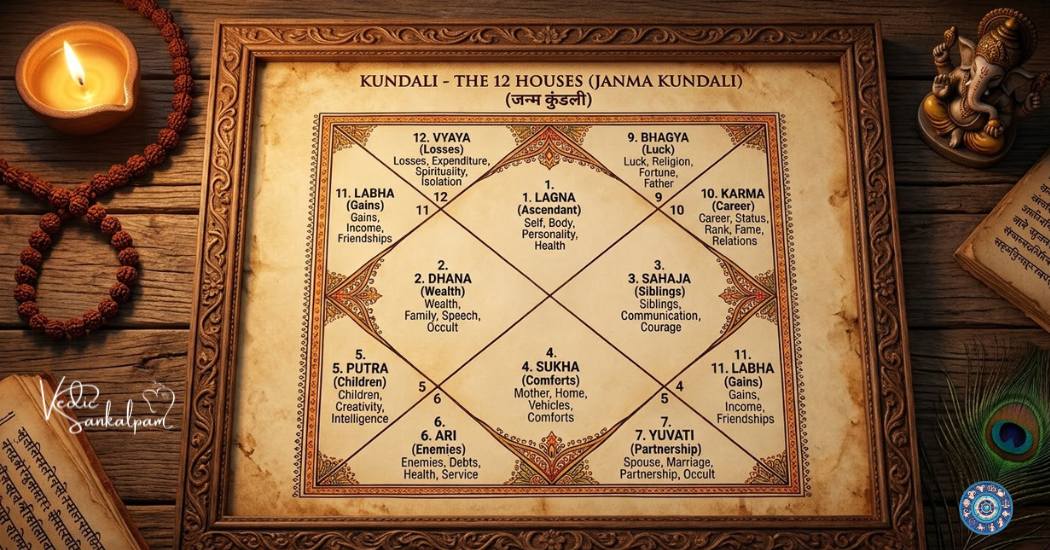
Your birth chart is essentially a snapshot of where all the planets were positioned at the exact moment you were born. It’s divided into twelve houses, each representing different aspects of life. Mars travels through these houses, and its placement determines whether you have Manglik Dosh or not.
Houses That Create Manglik Dosh
According to traditional Vedic astrology, Manglik Dosh is formed when Mars is placed in the 1st, 2nd, 4th, 7th, 8th, or 12th house of your birth chart. Each house represents something specific:
1st House: Self and personality
2nd House: Family and wealth
4th House: Home and mother
7th House: Marriage and partnerships
8th House: Longevity and transformation
12th House: Losses and expenses
When Mars sits in any of these houses, it’s believed to bring its fiery energy into those life areas, potentially causing disruptions.
Types of Manglik Dosh
Anshik Manglik (Partial Manglik)
Not all Manglik Doshas are created equal. An Anshik or partial Manglik Dosh occurs when Mars is weakly placed or when certain planetary combinations reduce its intensity. Think of it as having a mild version of the condition—it’s there, but it’s not as powerful.
Purna Manglik (Complete Manglik)
A Purna or complete Manglik Dosh happens when Mars is strongly positioned in the problematic houses without any mitigating factors. This is considered the more intense version, and traditionally, astrologers pay more attention to such placements.
Effects of Manglik Dosh on Marriage
Comprehensive visual guide to Manglik Dosh showing how Mars placement in specific houses affects marriage and relationships, along with proven astrological remedies and solutions
Common Beliefs and Concerns
Here’s where things get interesting—and sometimes scary for those who believe in astrology. Traditional beliefs suggest that Manglik Dosh can lead to various marital problems, including:
Frequent conflicts and misunderstandings
Delay in marriage
Financial troubles after marriage
Health issues for the spouse
In extreme cases, separation or early death of the partner
Sounds intense, right? But before you panic, let’s look at the whole picture.
Impact on Marital Harmony
The core belief is that Mars brings aggressive energy into the relationship domain. Since marriage requires harmony, understanding, and compromise, this fiery planetary influence could theoretically create friction. It’s like trying to have a calm conversation while loud music is playing in the background—the environment isn’t quite right.
Does Manglik Dosh Affect Everyone the Same Way?
Intensity Variations
Here’s something many people don’t know: not everyone with Manglik Dosh experiences the same effects. The intensity depends on various factors, including which house Mars occupies, what sign it’s in, and what other planets are influencing it. It’s not a one-size-fits-all situation.
Age Factor in Manglik Dosh
There’s an interesting twist in the Manglik tale—some astrologers believe that the effects of Manglik Dosh diminish after a person crosses 28 years of age. Why 28? According to Vedic astrology, this is approximately when Saturn completes its first cycle around the sun, bringing maturity and stability to a person’s life. It’s nature’s way of saying, “You’ve grown up now; things will settle down.”
Myths vs. Reality About Manglik Dosh
Debunking Common Misconceptions
Let’s address the elephant in the room. Over the years, Manglik Dosh has been surrounded by numerous myths that have caused unnecessary fear and broken many potential relationships. Some of the biggest misconceptions include:
Myth: A Manglik person will definitely cause their spouse’s death.
Reality: There’s no statistical evidence supporting this claim.
Myth: Manglik people should never marry non-Mangliks.
Reality: Many successful marriages exist between Manglik and non-Manglik individuals.
Myth: Manglik Dosh is a curse.
Reality: It’s simply a planetary position; calling it a curse adds unnecessary negativity.
What Science Says
From a scientific standpoint, there’s no empirical evidence linking planetary positions at birth with marital outcomes. Astrology operates on a different paradigm than science, based on observation and correlation rather than causation. Whether you believe in it or not is ultimately a personal choice, but it’s important to approach it with a balanced mindset.
Can Manglik Dosh Be Canceled?
Natural Cancellation Conditions
Good news! According to astrology, there are several conditions under which Manglik Dosh gets automatically canceled or neutralized:
When Mars is in its own sign (Aries or Scorpio) or exalted sign (Capricorn)
When the spouse also has Manglik Dosh (both Mars energies balance each other)
When benefic planets like Jupiter aspect Mars
When Mars is in certain specific degrees that reduce its malefic nature
Double Manglik Marriages
Ever heard the saying “two negatives make a positive”? In Manglik astrology, when two Manglik individuals marry each other, their Mars energies are believed to neutralize each other. It’s like two strong personalities understanding each other’s intensity because they share the same trait.
Remedies for Manglik Dosh
Astrological Solutions
If you’re concerned about Manglik Dosh, Vedic astrology offers various remedies that are believed to reduce its negative effects:
Reciting Hanuman Chalisa or Mangal Mantras regularly
Observing fasts on Tuesdays (the day associated with Mars)
Donating red items like clothes, lentils, or sweets on Tuesdays
Visiting Hanuman temples regularly
Gemstone Recommendations
Wearing Red Coral
Red Coral (Moonga) is the gemstone associated with Mars. Many astrologers recommend wearing it to strengthen Mars positively and reduce its malefic effects. However, it’s crucial to consult a knowledgeable astrologer before wearing any gemstone, as incorrect usage can sometimes have adverse effects.
Rituals and Pujas
Various pujas and rituals are performed to appease Mars, including:
Mangal Shanti Puja
Kumbh Vivah (a symbolic marriage performed before actual marriage)
Offering prayers at specific Mars temples
While these are traditional practices, their effectiveness is a matter of personal belief.
Manglik Dosh in Modern Times
Changing Perspectives
Times are changing, and so are perspectives on Manglik Dosh. Younger generations are questioning traditional beliefs and making decisions based on compatibility, understanding, and love rather than just astrological charts. Many couples today choose to focus on building strong relationships through communication and mutual respect.
Balancing Tradition and Logic
You don’t have to completely reject tradition or blindly follow it. The key is finding a balance. If astrology is important to your family or culture, you can acknowledge it while also using your judgment and reasoning. After all, your happiness shouldn’t be dictated solely by planetary positions.
Should You Worry About Manglik Dosh?
Here’s my take on this: while respecting cultural and astrological beliefs, it’s essential not to let fear rule your life decisions. Successful marriages are built on trust, communication, respect, and compatibility—qualities that have nothing to do with Mars or any other planet.
If you have Manglik Dosh and it concerns you, by all means, consult a knowledgeable astrologer and perform the recommended remedies if they bring you peace of mind. But don’t let it become an obstacle to finding happiness. Remember, millions of people with Manglik Dosh live happily married lives, and countless marriages without any dosha face challenges.
The real question isn’t whether Mars is in your 7th house—it’s whether you and your partner are willing to work together, understand each other, and grow as a team.
Conclusion
Manglik Dosh is a complex astrological concept that has influenced marriage decisions in many cultures, particularly in India, for centuries. While it originates from ancient Vedic wisdom and continues to hold significance for many people, it’s important to approach it with both respect and rationality.
Understanding what Manglik Dosh is, how it forms, and what remedies exist can help you make informed decisions rather than acting out of fear or superstition. Whether you choose to follow astrological guidance closely or take it with a grain of salt, remember that the strength of any relationship ultimately depends on the people in it, not the planets above them.
Your birth chart might show where Mars was when you were born, but you write the story of your life and your relationships through your choices, actions, and commitment.
FAQs
1. Can Manglik Dosh be completely removed?
According to Vedic astrology, while Manglik Dosh itself cannot be completely removed from your birth chart (since it’s a fixed planetary position), its negative effects can be neutralized through specific remedies, planetary combinations, or by marrying another Manglik person. The intensity also naturally reduces after age 28.
2. Is it true that a Manglik should only marry another Manglik?
This is a common belief but not an absolute rule. While marrying another Manglik is one solution that astrologers suggest, many other factors in compatibility matter more. Numerous successful marriages exist between Manglik and non-Manglik individuals. Remedies can also be performed to reduce concerns.
3. How can I check if I have Manglik Dosh?
You need your complete birth details—date, time, and place of birth—to create an accurate birth chart. A qualified Vedic astrologer can analyze your chart and determine if Mars is positioned in the houses that create Manglik Dosh. Several online calculators are also available, though consulting an expert is recommended for accuracy.
4. Does Manglik Dosh affect career or health, or only marriage?
While Manglik Dosh is primarily discussed in the context of marriage and relationships, Mars’s placement can influence other life areas too, including career ambition, energy levels, and courage. However, the term “Manglik Dosh” specifically refers to its impact on marital prospects and harmony.
5. Are there any famous people who have Manglik Dosh?
Yes, several well-known personalities reportedly have Manglik Dosh and yet lead successful personal and professional lives. This demonstrates that having this astrological condition doesn’t determine your destiny—your choices, efforts, and circumstances play far more significant roles in shaping your life outcomes.
If you ever felt that certain parts of your life keep repeating the same struggles over and over again, chances are you’ve wondered whether your planetary positions are influencing these outcomes. This is where Grah Dosh comes into the picture — one of the most important concepts in Vedic astrology. Grah Dosh refers to planetary defects in an individual’s birth chart that can create hurdles in various aspects of life. Luckily, through Grah Dosh Nivaran, these imbalances can be corrected or reduced.
Let’s dive deep into everything you need to know.
Introduction to Grah Dosh
What is Grah Dosh?
Grah Dosh occurs when any planet in the birth chart is placed unfavourably, weak, debilitated, or affected by malefic planets. These imbalances can influence your mind, health, relationships, career, and overall luck.
Planets represent energies. When these energies clash or weaken, life reflects this disturbance — just like how a weak foundation impacts a building’s stability.
Types of Grah Dosh
Mangal Dosh
Also known as Manglik Dosh, it arises when Mars sits in certain houses. It especially affects marriage and relationships.
Kaal Sarp Dosh
Formed when all planets fall between Rahu and Ketu, causing delays and obstacles.
Pitra Dosh
Linked to ancestors and their unresolved karmas. Affects family harmony and financial stability.
Shani Dosh
Created by weak or malefic Saturn. It can slow progress, cause hardship, and bring emotional stress.
Rahu–Ketu Dosh
Rahu and Ketu create illusions, confusion, sudden losses, and instability.
Guru Chandal Dosh
Occurs when Jupiter is in conjunction with Rahu or Ketu. It impacts wisdom, education, and guidance.
Surya Dosh and Chandra Dosh
Weak Sun or Moon leads to ego issues, low confidence, emotional instability, and stress.
Common Symptoms of Grah Dosh
Personal Life Problems
Repeated relationship failures, delays in marriage, misunderstandings, emotional distance.
Health-Related Issues
Chronic illness, low energy, mental stress, lack of peace.
Financial and Career Obstacles
Job instability, business losses, debt, slow growth.
Relationship and Family Struggles
Frequent arguments, lack of harmony, generational issues.
Authentic Methods of Grah Dosh Nivaran
Pooja and Rituals
Specific rituals like Mangal Shanti Pooja, Kaal Sarp Puja, or Shani Shanti help reduce planetary malefic effects.
Mantra Chanting
Mantras create positive vibrations:
Mangal Dosh: “Om Mangalaya Namah”
Shani Dosh: “Om Sham Shanicharaya Namah”
Kaal Sarp Dosh: “Om Namah Shivaya”
Daily chanting brings powerful results.
Donation (Daan) Practices
Donating specific items on particular days aligns planetary energies:
Mars: Red cloth, masoor dal
Saturn: Black sesame, black cloth
Rahu: Mustard oil
Wearing Gemstones
Gemstones strengthen weak planets and balance their energy. Must be worn only after consultation with an expert astrologer.
Fasting (Vrat)
Fasting on certain weekdays connected to planets reduces their negative influence.
Yantra Installation
Yantras like Kaal Sarp Yantra, Navgrah Yantra create positive vibrations in homes.
Temple Remedies
Visiting specific temples dedicated to particular planets can help speed up planetary healing.
Grah Dosh Nivaran for Each Dosh
Grah Dosh Nivaran
Mangal Dosh Remedies
Perform Mangal Shanti Pooja
Chant Hanuman Chalisa
Donate red items on Tuesday
Kaal Sarp Dosh Remedies
Kaal Sarp Pooja at Trimbakeshwar
Chant Maha Mrityunjaya Mantra
Worship Lord Shiva regularly
Pitra Dosh Remedies
Perform Pitra Tarpan
Feed cows, crows, and needy people
Worship ancestors on Amavasya
Shani Dosh Remedies
Shani Shanti Pooja
Light sesame oil lamp every Saturday
Visit Shani temple
Rahu–Ketu Remedies
Wear Gomed or Cat’s Eye (only after expert review)
Chant Rahu and Ketu mantras
Perform Navgraha Pooja
Guru Chandal Dosh Remedies
Donate yellow items
Chant “Om Gurave Namah”
Worship Brihaspati Dev
Importance of a Learned Astrologer
Accurate Kundli Analysis
Every individual’s horoscope is unique. Only a trained astrologer can identify the exact placement and intensity of Grah Dosh.
Personalized Remedies
Not every remedy works for everyone. Personalized solutions ensure correct results.
Conclusion
Grah Dosh can affect personal, professional, emotional, and financial aspects of life. But with proper guidance, rituals, and remedies, these doshas can be balanced. Whether you’re facing delays, repeated failures, or unexplained struggles, Grah Dosh Nivaran offers a path towards harmony, prosperity, and peace. The key is to consult an expert and follow remedies consistently.
FAQs
1. Can Grah Dosh be completely removed?
In most cases, it can be reduced significantly, making life smoother.
2. Are home remedies effective?
Yes, simple practices like chanting and donations help when done with pure intention.
3. Should everyone wear gemstones?
No, only after proper astrological consultation.
4. How long do remedies take to show results?
It depends on the intensity of the dosh and consistency in following remedies.
5. Which is the most harmful Grah Dosh?
Kaal Sarp and Pitra Dosh are often considered the most impactful, but it varies per person.
Have you ever wondered why some people seem to effortlessly attract success while others struggle despite their best efforts? Or why certain phases of life feel like you’re swimming against the current? The ancient science of Vedic astrology might just hold the answers you’re looking for. At the heart of this profound system lie two fascinating concepts: Yogas and Doshas. These planetary combinations can reveal incredible insights about your life’s potential, challenges, and the cosmic forces shaping your destiny.
Let’s dive deep into this mystical world and discover what the stars have been trying to tell you all along.
What is Vedic Astrology?
Before we explore Yogas and Doshas, it’s essential to understand the foundation they’re built upon. Vedic astrology, also known as Jyotish Shastra, is an ancient Indian system of astronomy and astrology that has been practiced for over 5,000 years. Unlike the horoscopes you casually read in newspapers, Vedic astrology is a sophisticated mathematical system that maps the precise positions of celestial bodies at the exact moment of your birth.
The Origins and Philosophy Behind Jyotish
The word “Jyotish” comes from Sanskrit, meaning “science of light” or “lord of light.” Ancient Indian sages believed that the positions of planets and stars at the time of birth could illuminate the path of an individual’s life. This wasn’t mere superstition – it was considered a sacred science passed down through generations of learned scholars.
The philosophy behind Vedic astrology is deeply rooted in the concept of karma. Your birth chart, or Kundli, is essentially a snapshot of your karmic blueprint – reflecting the accumulated actions from past lives and indicating the lessons you’re meant to learn in this one. Think of it as a cosmic GPS that shows where you’ve been, where you are, and the various routes available to reach your destination.
How Vedic Astrology Differs from Western Astrology
You might be wondering how Vedic astrology differs from the Western system you’re probably more familiar with. The primary difference lies in the zodiac system used. Western astrology uses the Tropical zodiac, which is based on the seasons and the position of the Sun relative to the Earth. Vedic astrology, on the other hand, uses the Sidereal zodiac, which is based on the actual positions of constellations in the sky.
Due to a phenomenon called precession of the equinoxes, these two systems have drifted apart by approximately 24 degrees over the centuries. This means your Sun sign in Vedic astrology might be different from your Western sign – and that’s just the beginning of the differences.
Understanding Yogas in Vedic Astrology
Yogas and Doshas in Vedic astrology
Now, let’s get to the exciting part – Yogas. If you’ve ever had your Vedic chart read, you’ve probably heard the astrologer mention various Yogas present in your horoscope. But what exactly are they?
What Exactly Are Yogas?
In Sanskrit, “Yoga” means union or combination. In the context of Vedic astrology, Yogas refer to specific planetary combinations that produce particular results in a person’s life. Think of them as cosmic recipes – when certain planetary ingredients come together in specific ways, they cook up distinct outcomes.
There are literally hundreds of Yogas mentioned in classical Vedic texts, ranging from incredibly auspicious combinations that can bestow wealth, fame, and spiritual enlightenment, to challenging ones that may indicate obstacles and hardships. The beauty of understanding Yogas lies in recognizing your inherent potential and working with these cosmic energies rather than against them.
How Yogas Form in Your Birth Chart
Yogas form based on the placement, conjunction, and aspects of planets in specific houses of your birth chart. The twelve houses in Vedic astrology represent different areas of life – from personality and wealth to relationships and spirituality. When planets interact in certain prescribed ways within these houses, Yogas are formed.
For instance, some Yogas require planets to be in angular houses (1st, 4th, 7th, and 10th), while others form when certain planets aspect each other from across the chart. The strength of a Yoga depends on factors like the dignity of the planets involved, their proximity to each other, and whether they’re afflicted by malefic influences.
Types of Beneficial Yogas (Shubh Yogas)
Let’s explore some of the most powerful and sought-after Yogas that can dramatically enhance different areas of your life.
Raj Yoga – The Yoga of Power and Success
Raj Yoga is perhaps the most celebrated combination in Vedic astrology. The term literally translates to “Royal Union,” and true to its name, this Yoga can bestow kingly status, authority, and tremendous success upon the native.
Raj Yoga forms when the lords of Kendra houses (1st, 4th, 7th, 10th) combine with the lords of Trikona houses (1st, 5th, 9th) through conjunction, mutual aspect, or exchange. When these planets come together harmoniously, they create a powerful synergy that can elevate a person to great heights in their chosen field.
However, here’s something many people don’t realize – having Raj Yoga in your chart doesn’t guarantee automatic success. The Yoga must be activated during the planetary periods (Dashas) of the involved planets, and the native must put in effort to actualize this potential.
Dhan Yoga – The Yoga of Wealth
Who doesn’t want financial prosperity? Dhan Yoga is the combination that indicates wealth accumulation and material abundance. This Yoga forms when there’s a connection between the lords of the 2nd, 5th, 9th, and 11th houses – all of which are associated with wealth, fortune, and gains in Vedic astrology.
The strength and nature of Dhan Yoga can vary significantly. Some combinations might indicate inherited wealth, others point toward self-earned prosperity, and some suggest wealth through speculation or sudden gains. Understanding the specific type of Dhan Yoga in your chart can help you align your financial strategies with your cosmic blueprint.
Gaja Kesari Yoga – The Yoga of Wisdom and Fame
Gaja Kesari Yoga is formed when Jupiter is in a Kendra (angular house) from the Moon. “Gaja” means elephant, and “Kesari” means lion – both symbols of power, dignity, and majesty in Indian culture. This beautiful combination bestows intelligence, wisdom, a good reputation, and lasting fame.
People with a strong Gaja Kesari Yoga often become leaders, teachers, or influential figures in their communities. They possess a natural charisma and the ability to inspire others with their knowledge and wisdom. This Yoga also indicates good relationships with family and a comfortable lifestyle.
Budhaditya Yoga – The Yoga of Intelligence
When Mercury (Budha) conjuncts the Sun (Aditya) in the same house, Budhaditya Yoga is formed. This combination enhances intellectual capabilities, communication skills, and analytical thinking. People blessed with this Yoga often excel in fields requiring mental acuity – such as writing, accounting, mathematics, astrology, or any profession where sharp thinking is paramount.
However, the effectiveness of this Yoga depends on the proximity of the two planets. If Mercury is too close to the Sun (combust), the benefits may be diminished. The house placement also matters significantly – this Yoga produces the best results in the 1st, 2nd, 4th, 5th, 9th, 10th, or 11th houses.
Understanding Doshas in Vedic Astrology
Now let’s turn our attention to the other side of the cosmic coin – Doshas. While Yogas represent beneficial combinations, Doshas indicate challenging planetary configurations that may create obstacles in various areas of life.
What Are Doshas and Why Do They Matter?
In Vedic astrology, “Dosha” literally means “fault” or “blemish.” Doshas are planetary combinations that can create difficulties, delays, or challenges in specific life areas. However, it’s crucial to understand that Doshas aren’t curses or doom sentences – they’re simply karmic indicators pointing toward areas that require extra attention and remedial measures.
Think of Doshas as road signs warning you of bumps ahead. Just because there’s a bump doesn’t mean you can’t continue your journey – it just means you need to slow down and navigate carefully. With proper awareness and remedies, the negative effects of most Doshas can be significantly reduced.
The Difference Between Yogas and Doshas
The fundamental difference between Yogas and Doshas lies in their outcomes. Yogas generally indicate areas where cosmic forces are aligned in your favor, creating opportunities for growth and success. Doshas, conversely, indicate areas where planetary energies may create friction or obstacles.
However, here’s an interesting perspective – even Doshas can have silver linings. The challenges they present often push individuals toward personal growth, spiritual development, and building resilience. Many highly successful people have significant Doshas in their charts, which they’ve overcome through determination and conscious effort.
Major Doshas You Should Know About
Let’s examine some of the most commonly discussed Doshas in Vedic astrology and understand their implications.
Mangal Dosha (Manglik Dosha)
Mangal Dosha, also known as Kuja Dosha or Manglik Dosha, is perhaps the most feared Dosha, especially in the context of marriage. This Dosha occurs when Mars (Mangal) is placed in the 1st, 4th, 7th, 8th, or 12th house from the Ascendant, Moon, or Venus.
Mars is a fiery, aggressive planet, and its placement in these houses is believed to create turbulence in marital life. The fear around Mangal Dosha has led to countless matches being rejected in traditional Indian matchmaking. However, it’s important to note that approximately 50% of the population has some form of Mangal Dosha, and most live perfectly happy married lives.
Several factors can cancel or reduce the effects of Mangal Dosha, including specific planetary aspects, the nature of the sign Mars occupies, and whether the prospective partner also has this Dosha (which is said to neutralize the effects).
Kaal Sarp Dosha
Kaal Sarp Dosha is formed when all seven planets are hemmed between Rahu (the North Node) and Ketu (the South Node) in the birth chart. This creates a serpentine pattern, hence the name “Kaal Sarp” (Serpent of Time).
This Dosha is associated with struggles, sudden setbacks, and feelings of being trapped in difficult circumstances. People with Kaal Sarp Dosha may experience delays in achieving their goals and may face unexpected obstacles just when success seems within reach.
However, many astrologers note that this Dosha also bestows a certain intensity and depth of character. Individuals with this configuration often develop strong spiritual inclinations and may achieve success later in life after overcoming significant challenges.
Pitra Dosha
Pitra Dosha relates to ancestral karma and is indicated by an affliction involving the Sun, Saturn, Rahu, and the 9th house in various combinations. “Pitra” means ancestors, and this Dosha suggests unresolved karmic debts from the paternal lineage.
People with Pitra Dosha may experience difficulties with their father, face obstacles in receiving ancestral property, or struggle with issues related to progeny. The remedy for this Dosha often involves honoring ancestors through specific rituals, charitable acts, and prayers.
Shani Dosha
When Saturn (Shani) is poorly placed or afflicting important houses in the birth chart, it creates what’s broadly termed Shani Dosha. Saturn is the planet of karma, discipline, and lessons learned through hardship. Its malefic influence can manifest as delays, chronic health issues, career setbacks, or relationship difficulties.
The most famous Saturn-related condition is “Sade Sati” – the seven-and-a-half-year period when Saturn transits through the 12th, 1st, and 2nd houses from your natal Moon. This period is often associated with significant life tests and transformations.
How to Identify Yogas and Doshas in Your Chart
Identifying Yogas and Doshas requires a careful analysis of your birth chart by a knowledgeable astrologer. While there are many software programs and online tools that can list the Yogas and Doshas in your chart, understanding their actual strength and impact requires expertise.
A competent Vedic astrologer will consider multiple factors: the strength of planets involved (through Shadbala calculations), the divisional charts (Vargas), the ongoing planetary periods (Dashas), and transits. They’ll also look at mitigating factors that might strengthen Yogas or weaken Doshas.
If you’re serious about understanding your cosmic blueprint, investing in a consultation with an experienced Vedic astrologer is highly recommended over relying solely on automated interpretations.
Remedies for Doshas in Vedic Astrology
The good news is that Vedic astrology doesn’t just diagnose problems – it also prescribes solutions. Various remedial measures can help mitigate the negative effects of Doshas.
Mantras and Prayers
Specific mantras dedicated to planetary deities can help appease malefic planets and strengthen benefic ones. For example, chanting the Hanuman Chalisa is recommended for those with Mars-related afflictions, while the Shani Stotra is prescribed for Saturn-related Doshas.
The key to mantra remedies is consistency and devotion. These aren’t magic spells but rather tools for focusing spiritual energy and aligning oneself with cosmic frequencies.
Gemstones and Their Healing Powers
Wearing specific gemstones corresponding to beneficial planets in your chart can help strengthen their positive influences. For instance, Yellow Sapphire strengthens Jupiter, Ruby enhances the Sun, and Pearl is associated with the Moon.
However, gemstone remedies must be prescribed carefully based on individual charts. Wearing the wrong gemstone can amplify negative energies instead of positive ones.
Charitable Acts and Rituals
Performing charitable acts related to specific planets is a powerful remedy accessible to everyone. Feeding crows on Saturdays (for Saturn), donating red lentils on Tuesdays (for Mars), or supporting educational initiatives (for Mercury) are examples of planet-specific charities.
Additionally, specific rituals like pujas, havans (fire ceremonies), and pilgrimages to sacred sites are traditionally recommended for severe Doshas.
Can Yogas Cancel Out Doshas?
This is a question many people ask, and the answer is nuanced. Yes, strong benefic Yogas can significantly mitigate the effects of Doshas. For instance, if someone has both Raj Yoga and Mangal Dosha, the positive effects of Raj Yoga may overshadow the challenges posed by the Mars affliction.
Additionally, certain planetary combinations naturally cancel Doshas. As mentioned earlier, Mangal Dosha has several cancellation conditions, and Kaal Sarp Dosha’s effects are said to reduce after the age of 33 or through specific spiritual practices.
The Role of Planetary Periods (Dashas) in Activating Yogas and Doshas
Here’s something crucial that many overlook – Yogas and Doshas don’t operate continuously throughout life. They get activated during specific planetary periods called Dashas and sub-periods called Antardashas.
This is why someone might have a powerful Raj Yoga in their chart but not experience its full benefits until the Dasha of the involved planet begins. Similarly, a Dosha might lie dormant for years until triggered by a related planetary period.
Understanding your current and upcoming Dashas can help you prepare for periods of opportunity as well as potential challenges.
Common Misconceptions About Yogas and Doshas
Let’s clear up some widespread misunderstandings. First, having a Yoga in your chart doesn’t guarantee its results – the Yoga must be strong, well-placed, and activated during the appropriate period. Second, Doshas aren’t death sentences – they indicate challenges, not inevitable disasters.
Third, and perhaps most importantly, your birth chart isn’t your fate set in stone. Vedic astrology believes in both destiny and free will. While certain karmic patterns are indicated in your chart, your conscious choices, efforts, and spiritual practices can significantly alter outcomes.
Conclusion
Yogas and Doshas represent the beautiful complexity of Vedic astrology – a system that acknowledges both the gifts and challenges written in our cosmic blueprint. Understanding these combinations isn’t about passively accepting fate; it’s about gaining insight into your inherent strengths and potential obstacles so you can navigate life more wisely.
Whether you have powerful Raj Yogas promising success or challenging Doshas indicating karmic lessons, remember that you are ultimately the author of your life story. The stars may incline, but they don’t compel. Use the wisdom of Vedic astrology as a tool for self-awareness and conscious living, and you’ll find that even the most challenging configurations can become stepping stones toward growth and fulfillment.
FAQs
1. Can Mangal Dosha be completely removed from my chart? Mangal Dosha cannot be “removed” as it’s a permanent feature of your birth chart. However, its effects can be significantly mitigated through remedies like specific pujas, wearing coral gemstones (if prescribed), marrying someone with similar Dosha, or performing charitable acts on Tuesdays.
2. How many Yogas can a person have in their birth chart? A single birth chart can contain multiple Yogas – sometimes dozens. However, the actual impact depends on their strength, the dignity of involved planets, and whether they get activated during your lifetime through planetary periods. Quality matters more than quantity.
3. Are Doshas always negative? Not necessarily. While Doshas indicate challenges, they often lead to personal growth, resilience, and spiritual development. Many successful individuals have significant Doshas that they’ve transmuted into sources of strength through conscious effort and remedial measures.
4. Can I check my Yogas and Doshas online? Yes, several websites and apps can generate your Vedic birth chart and list Yogas and Doshas. However, these automated interpretations often lack nuance. For accurate analysis, consulting an experienced Vedic astrologer who can assess the strength and actual impact of these combinations is recommended.
5. Do Yogas guarantee success and wealth? No, Yogas indicate potential, not guaranteed outcomes. For a Yoga to manifest its results, it must be strong in the chart, activated during the appropriate planetary period, and supported by the individual’s efforts. Think of Yogas as favorable winds – you still need to sail the ship.