loading

Category: Vastu Shastra

  • Home
  • Category: Vastu Shastra

18 Mukhi Rudraksha: The Divine Bead of Earth’s Abundance

Introduction to 18 Mukhi Rudraksha

Have you ever wondered about the mysterious beads that have captivated spiritual seekers for thousands of years? Among the sacred Rudraksha beads, the 18 Mukhi Rudraksha stands as one of the rarest and most powerful. This divine bead isn’t just a piece of religious jewelry—it’s considered a spiritual powerhouse that connects you directly with the energies of Mother Earth herself.

In the vast ocean of spiritual tools and sacred objects, the 18 Mukhi Rudraksha shines like a rare gem. It’s not something you’ll find on every street corner, and that’s exactly what makes it so special. Think of it as nature’s own blessing, wrapped in a tiny seed that carries the wisdom of ages.


What is 18 Mukhi Rudraksha?

Let’s break this down in simple terms. A Rudraksha is a seed that comes from the Elaeocarpus ganitrus tree, which grows primarily in the Himalayan regions, Indonesia, and parts of Southeast Asia. The word “Rudraksha” literally means “tears of Lord Shiva” in Sanskrit, and these beads have been venerated in Hindu and Buddhist traditions for millennia.

Now, the “18 Mukhi” part refers to the number of facets or lines (called mukhis) on the bead’s surface. Each mukhi represents a specific energy channel, and an 18 Mukhi Rudraksha has—you guessed it—18 natural divisions running from top to bottom. These aren’t carved or artificially created; they’re completely natural formations.

What makes this particular bead extraordinary is its extreme rarity. While you might find five-faced or six-faced Rudraksha beads relatively easily, the 18 Mukhi variety is exceptionally uncommon. It’s like finding a four-leaf clover in a field of three-leaf ones—possible, but definitely special.


The Spiritual Significance of 18 Mukhi Rudraksha

Connection with Goddess Earth (Bhumi Devi)

The 18 Mukhi Rudraksha is directly associated with Bhumi Devi, or Mother Earth. Can you think of a more grounding energy than the very planet we stand on? This bead is believed to channel the nurturing, stable, and abundant energy of the Earth itself.

In Hindu mythology, Bhumi Devi represents fertility, prosperity, patience, and unconditional support. She’s the one who literally holds us up, provides for us, and absorbs all our negativity. Wearing an 18 Mukhi Rudraksha is like carrying a piece of this divine maternal energy with you wherever you go.

Symbolic Meaning and Energy

The number 18 itself carries profound significance. In numerology, 18 reduces to 9 (1+8=9), which represents completion, wisdom, and universal love. The 18 Mukhi Rudraksha embodies material and spiritual abundance, grounding energy, and protection from negative influences.

This bead is said to balance all the elements within your body and environment. It’s like having a personal harmonizer that keeps you aligned with natural rhythms and cosmic energies. Pretty amazing for something so small, right?


Benefits of Wearing 18 Mukhi Rudraksha
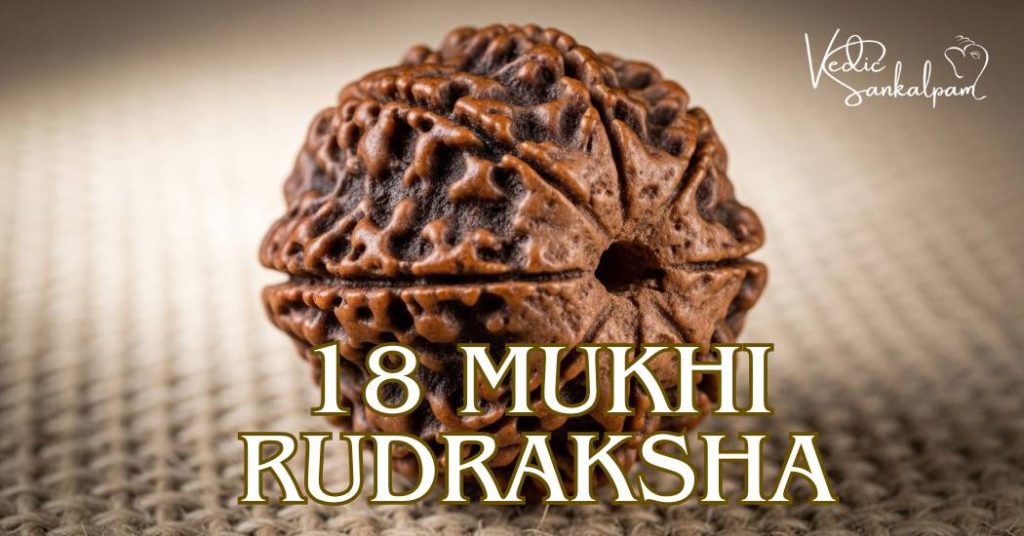
18 Mukhi Rudraksha
18 Mukhi Rudraksha

Spiritual Benefits

From a spiritual standpoint, the 18 Mukhi Rudraksha is nothing short of transformative. It’s believed to:

  • Enhance your connection with divine energies and higher consciousness
  • Strengthen your intuition and inner wisdom
  • Remove obstacles from your spiritual path
  • Balance your chakras, particularly the root chakra (Muladhara)
  • Provide protection from negative energies and psychic attacks
  • Deepen meditation practices and spiritual awareness

Think of it as a spiritual anchor. Just as a ship needs an anchor to stay steady in turbulent waters, this bead helps you remain grounded even when life throws challenges your way.

Health Benefits

While spiritual benefits are paramount, many wearers report tangible health improvements as well. The 18 Mukhi Rudraksha is associated with:

  • Enhanced vitality and energy levels
  • Better immune system function
  • Relief from stress and anxiety
  • Improved focus and mental clarity
  • Support for bone health and physical strength
  • Balance in hormonal functions

Remember, though, that Rudraksha beads aren’t medical devices. They’re complementary tools that work alongside proper healthcare, not replacements for it.

Material and Professional Benefits

Here’s where things get really interesting. The 18 Mukhi Rudraksha is particularly renowned for attracting material prosperity. It’s believed to:

  • Bring success in business ventures and professional endeavors
  • Attract wealth and financial stability
  • Enhance leadership qualities and decision-making abilities
  • Open doors to new opportunities
  • Provide stability in property and land-related matters
  • Boost confidence and charisma

It’s like having a lucky charm, but one that’s backed by centuries of spiritual tradition and countless testimonials from believers worldwide.


Who Should Wear 18 Mukhi Rudraksha?

So, is this divine bead right for you? The beautiful thing about the 18 Mukhi Rudraksha is that it’s beneficial for almost anyone, regardless of age, gender, or religious background. However, certain individuals may find it particularly powerful:

  • Business owners and entrepreneurs seeking growth and prosperity
  • People dealing with property or land matters who need positive energy in real estate
  • Those feeling ungrounded or disconnected from reality
  • Individuals seeking material stability alongside spiritual growth
  • Anyone working in earth-related professions like agriculture, mining, or construction
  • Spiritual seekers wanting to deepen their connection with Mother Earth

That said, if you’re drawn to this bead, that attraction itself might be a sign that it’s meant for you. Trust your intuition—it’s often wiser than you think.


How to Identify Genuine 18 Mukhi Rudraksha

Physical Characteristics

Given the rarity and value of authentic 18 Mukhi Rudraksha beads, the market unfortunately has its share of fakes. Here’s how to spot the real deal:

  • Natural lines: The 18 mukhis should be clearly visible, running from top to bottom
  • Size: Genuine 18 Mukhi beads are typically larger, ranging from 18mm to 25mm
  • Weight: Authentic Rudraksha beads have a certain heft to them
  • Texture: The surface should feel slightly rough, not perfectly smooth
  • Color: Natural beads are usually brown to dark brown, sometimes with reddish tones

Testing Methods

Want to verify authenticity? Here are some traditional methods:

The Water Test: A genuine Rudraksha will sink in water, while many fakes will float.

The Copper Coin Test: Place the bead between two copper coins. Some believe genuine beads will rotate slightly due to magnetic properties, though this isn’t scientifically proven.

Magnification: Use a magnifying glass to check if the mukhis are natural formations or artificial cuts.

X-ray or CT scan: The most reliable method—professional testing can reveal the internal structure and confirm authenticity.

Your best bet? Purchase from reputable dealers who provide certificates of authenticity and have a solid track record.


How to Wear 18 Mukhi Rudraksha

Best Day and Time

Timing matters when it comes to energizing and wearing your 18 Mukhi Rudraksha. Traditional wisdom suggests:

  • Best day: Monday, which is associated with Lord Shiva
  • Best time: Early morning, preferably during Brahma Muhurta (approximately 4:30-5:30 AM)
  • Moon phase: Some practitioners recommend starting during a waxing moon for growth-oriented intentions

Mantra for Energization

Before wearing your bead for the first time, it should be energized with specific mantras. The primary mantra for the 18 Mukhi Rudraksha is:

“Om Hreem Shreem Vasudhaye Swaha”

This mantra invokes the blessings of Bhumi Devi (Goddess Earth). Chant it 108 times while holding the bead. You can wear it as a pendant, bracelet, or keep it in your pocket or purse. Many prefer wearing it close to the skin, as this is believed to enhance its energetic connection with your body.


Astrological Significance

From an astrological perspective, the 18 Mukhi Rudraksha is associated with all nine planets (Navagrahas) due to its completeness. However, it has special connections with:

  • Earth element: Providing grounding and stability
  • Saturn: Bringing discipline, structure, and karmic balance
  • Rahu: Offering protection from negative planetary influences

If your birth chart shows challenging planetary positions, especially related to property, wealth, or stability, the 18 Mukhi Rudraksha might be particularly beneficial for you. Consulting with a knowledgeable Vedic astrologer can provide personalized insights.


Price and Availability

Let’s talk money. Because of its extreme rarity, an authentic 18 Mukhi Rudraksha doesn’t come cheap. Prices can range significantly based on:

  • Origin: Indonesian beads are generally less expensive than Nepali ones
  • Size: Larger beads command higher prices
  • Quality: Clearer mukhis and better-shaped beads cost more
  • Certification: Properly certified beads are more expensive but worth it

You might find prices ranging from several hundred to several thousand dollars for a genuine piece. If someone’s offering you an 18 Mukhi Rudraksha for $50, alarm bells should be ringing. Remember: if it seems too good to be true, it probably is.


Care and Maintenance

Your 18 Mukhi Rudraksha is a sacred object that deserves proper care:

  • Cleaning: Gently clean with lukewarm water and a soft brush occasionally
  • Oiling: Apply a light coating of natural oil (sandalwood or almond oil) every few months to prevent drying
  • Storage: When not wearing, keep it in a clean, dedicated space—preferably in a silk or cotton cloth
  • Avoid: Don’t expose it to harsh chemicals, extreme temperatures, or rough handling
  • Respect: Treat it as a sacred object, not just jewelry

With proper care, your Rudraksha can last for generations, potentially becoming a cherished family heirloom.


Common Myths and Misconceptions

Let’s clear up some confusion:

Myth 1: “Only Hindus can wear Rudraksha.” Truth: Anyone from any faith can benefit from Rudraksha beads. Spiritual energy doesn’t discriminate.

Myth 2: “Women shouldn’t wear Rudraksha during menstruation.” Truth: This is an outdated belief. There’s no spiritual reason for such restrictions.

Myth 3: “Rudraksha beads work like magic overnight.” Truth: While some people report immediate effects, for most, the benefits unfold gradually over time.

Myth 4: “You must be vegetarian to wear Rudraksha.” Truth: While some traditions recommend it, your diet doesn’t invalidate the bead’s power.

Myth 5: “More mukhis always mean more power.” Truth: Different mukhis serve different purposes. It’s about finding what’s right for your needs, not just the highest number.


Scientific Perspective on Rudraksha

You might be wondering: is there any science behind these claims? While spiritual benefits can’t always be measured in a laboratory, some interesting research has been conducted:

  • Electromagnetic properties: Studies suggest Rudraksha beads have unique electromagnetic properties that may interact with the human body’s bioelectric field
  • Capacitance: Research has shown that Rudraksha beads can store electric charge, potentially influencing nerve impulses
  • Stress reduction: Some studies indicate that wearing Rudraksha may reduce stress markers and promote calmness

That said, much of the Rudraksha’s power lies in the realm of faith, tradition, and personal experience—areas where science and spirituality often part ways. And honestly? That’s perfectly okay. Not everything that matters can be measured.


Important Info

The 18 Mukhi Rudraksha is more than just a rare bead—it’s a bridge between the earthly and the divine, a tool for transformation, and a symbol of abundance in all its forms. Whether you’re seeking spiritual growth, material prosperity, or simply a deeper connection with the nurturing energy of Mother Earth, this powerful bead offers a path forward.

Remember, though, that no spiritual tool is a substitute for hard work, ethical living, and genuine spiritual practice. The 18 Mukhi Rudraksha is best understood as a companion on your journey—a supportive energy that amplifies your intentions and efforts, not a magic solution that does the work for you.

If you feel called to explore the world of Rudraksha, particularly this rare 18 Mukhi variety, approach it with respect, authenticity, and an open heart. The journey might just surprise you in the most beautiful ways.


FAQs

Q1: Can I wear 18 Mukhi Rudraksha with other Rudraksha beads?

Absolutely! In fact, many people create combinations of different Mukhi Rudraksha beads to address multiple life areas. The 18 Mukhi works harmoniously with other beads and can enhance their collective energy. Just ensure you’re wearing them with clear intention and proper energization.

Q2: How long does it take to experience the benefits of 18 Mukhi Rudraksha?

This varies from person to person. Some individuals report feeling a shift in energy within days, while for others, the transformation is more gradual, unfolding over weeks or months. Consistency in wearing the bead and maintaining a positive mindset can accelerate the process.

Q3: What’s the difference between Indonesian and Nepali 18 Mukhi Rudraksha?

Nepali Rudraksha beads are generally larger, more powerful, and rarer, commanding higher prices. Indonesian beads are smaller and more readily available but still effective. Both are authentic—the choice often comes down to personal preference and budget.

Q4: Can I remove my 18 Mukhi Rudraksha while sleeping or bathing?

Yes, you can remove it during these times, though it’s not necessary. Some people prefer to keep it on at all times to maintain the energetic connection, while others remove it during sleep or bathing. Follow what feels right for you—there’s no strict rule here.

Q5: What should I do if my 18 Mukhi Rudraksha breaks?

If your bead breaks, don’t panic. Some traditions believe this means the Rudraksha has absorbed negative energy meant for you, essentially sacrificing itself for your protection. You can either respectfully immerse the broken pieces in a natural water body or bury them in soil. Then, if you feel called to, acquire a new one.
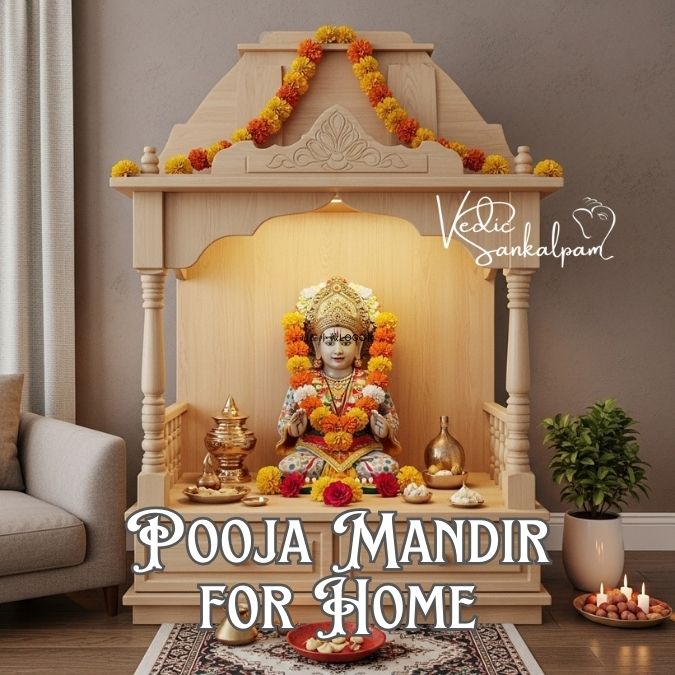


Pooja Mandir for Home: Creating Your Sacred Space

Have you ever felt the need for a quiet corner in your home where you can connect with the divine? A pooja mandir for home serves exactly that purpose—it’s your personal sanctuary, a sacred space where spirituality meets tranquility. Whether you’re deeply religious or simply seeking a peaceful spot for meditation, having a dedicated pooja mandir can transform your daily spiritual practice.

What is a Pooja Mandir?

A pooja mandir is essentially a small temple or altar designed for home worship. It’s a designated space where you place idols, pictures, or symbols of deities you worship. Think of it as your personal connection to the divine—a place where you can offer prayers, light incense, and find inner peace away from the chaos of daily life.

These mandirs come in various shapes, sizes, and designs, ranging from elaborate wooden structures to simple wall-mounted units. The beauty of a pooja mandir lies not just in its aesthetic appeal but in the sacred energy it brings to your home.

Why Do You Need a Pooja Mandir at Home?

Spiritual Significance

Having a pooja mandir at home goes beyond just following tradition. It creates a focal point for your spiritual energy and helps establish a routine for daily prayers. When you have a designated space, you’re more likely to maintain consistency in your spiritual practices. It’s like having a gym at home—the convenience encourages regular use.

A mandir also serves as a visual reminder of your faith and values. Every time you pass by it, you’re subtly reminded to stay grounded and connected to your spiritual roots.

Creating a Dedicated Prayer Space

Let’s be honest—in today’s fast-paced world, finding time for spirituality can be challenging. A pooja mandir solves this problem by providing a ready-to-use space for worship. You don’t have to set up and pack away prayer items daily. Everything has its place, making your spiritual practice more accessible and less of a chore.

Types of Pooja Mandirs for Home

Wall-Mounted Mandirs

Short on floor space? Wall-mounted mandirs are your best friend. These space-saving designs attach directly to your wall, making them perfect for apartments or smaller homes. They typically feature shelves and compartments for storing prayer essentials while keeping your deities at eye level.

Freestanding Mandirs

If you have more space to work with, freestanding mandirs offer grandeur and presence. These standalone units often feature intricate carvings, multiple levels, and ample storage. They become a statement piece in your home while serving their spiritual purpose.

Compact and Portable Mandirs

For those who travel frequently or live in temporary accommodations, compact portable mandirs offer flexibility. These lightweight designs can be easily moved or packed, ensuring you never have to compromise on your spiritual practices, wherever life takes you.

Traditional Wooden Mandirs

Wooden mandirs exude warmth and authenticity. Crafted from materials like teak, sheesham, or mango wood, these mandirs often feature traditional Indian architectural elements like pillars, domes, and intricate jaali work. They’re timeless pieces that can be passed down through generations.

Materials Used in Pooja Mandirs

Wooden Mandirs

Wood remains the most popular choice for pooja mandirs. It’s durable, easy to carve, and adds natural warmth to any space. Different woods offer different benefits—teak is known for its longevity, while sheesham offers beautiful grain patterns.

Marble Mandirs

Marble mandirs bring elegance and purity to your prayer space. They’re cool to touch, easy to clean, and create a temple-like atmosphere. While they’re heavier and more expensive, their aesthetic appeal and durability justify the investment.

Metal Mandirs

Brass and Copper Variations

Metal mandirs, particularly those made from brass or copper, offer a traditional yet modern look. They’re relatively lightweight, resistant to wear, and develop a beautiful patina over time. Brass mandirs are especially popular in South Indian homes.

Choosing the Right Location for Your Pooja Mandir

Vastu Shastra Guidelines

According to Vastu Shastra, the ancient Indian science of architecture, the placement of your pooja mandir significantly impacts the energy flow in your home. While you don’t have to be a Vastu expert, understanding basic principles can help you make informed decisions.

Ideal Directions for Placement

The northeast corner is considered the most auspicious location for a pooja mandir. This direction is associated with positive energy and spiritual growth. The east and north directions are also favorable. Avoid placing your mandir in bedrooms, bathrooms, or under staircases, as these locations are considered inauspicious.

When positioning your mandir, ensure you face east or north while praying. This orientation is believed to enhance concentration and spiritual connection.

Design Elements to Consider

Size and Space Requirements

Before purchasing a mandir, measure your available space carefully. Consider not just the mandir’s dimensions but also the space needed to sit or stand comfortably during prayers. You’ll want some breathing room around the mandir for movement and to prevent it from feeling cramped.

Storage and Compartments

A well-designed mandir includes storage for prayer essentials—incense sticks, diyas, prasad containers, prayer books, and more. Look for designs with drawers, shelves, and closed compartments to keep your prayer space organized and clutter-free.

Lighting and Ambiance

Lighting plays a crucial role in creating the right ambiance. Many modern mandirs come with built-in LED lights that illuminate the deities beautifully. If your mandir doesn’t have lighting, consider adding small lamps or spotlights to highlight the sacred space, especially for evening prayers.

How to Set Up Your Pooja Mandir

Discover the perfect pooja mandir for home with our comprehensive guide. Learn about types, materials, Vastu placement, design tips, and how to create your sacred prayer space at home.
Pooja Mandir for Home Designs

Essential Items for Your Mandir

Setting up a pooja mandir isn’t complicated, but having the right items makes the experience complete. Essential items include idols or pictures of deities, a bell, incense holder, diya (lamp), kalash (water vessel), flowers, prasad plate, and sacred texts if you use them during prayers.

Arranging Deities and Idols

When arranging multiple deities, place the primary deity you worship at the center and at a slightly higher level. Smaller idols can be arranged on either side. Ensure all deities face you when you’re praying. Keep the mandir clean and orderly—it reflects your respect and devotion.

Maintenance and Care Tips

Maintaining your pooja mandir is an act of devotion in itself. Clean the mandir regularly using a soft, dry cloth for wooden surfaces. For marble mandirs, use a damp cloth with mild soap. Polish metal mandirs occasionally to maintain their shine.

Change flowers daily and dispose of them respectfully. Clean brass items with tamarind paste or lemon to remove tarnish. Ensure the area around your mandir remains dust-free and organized.

Modern vs. Traditional Pooja Mandirs

The debate between modern and traditional designs often boils down to personal preference and home décor. Traditional mandirs feature intricate carvings, dome structures, and classic Indian architectural elements. They work beautifully in homes with ethnic or traditional interiors.

Modern mandirs embrace minimalism with clean lines, simple designs, and contemporary materials. They blend seamlessly with modern home décor without compromising functionality. Some designs cleverly combine both aesthetics, offering traditional elements with modern finishes.

Budget Considerations

Affordable Options

You don’t need to break the bank to bring spirituality into your home. Affordable pooja mandirs made from engineered wood or MDF are widely available and surprisingly durable. Wall-mounted designs and compact units generally cost less than elaborate freestanding structures.

Premium and Custom Designs

If budget isn’t a constraint, premium mandirs crafted from solid wood, marble, or featuring custom designs offer unmatched beauty and durability. Custom mandirs allow you to incorporate specific design elements, dimensions, and features that perfectly match your space and spiritual needs.

Where to Buy Pooja Mandirs

You’ll find pooja mandirs at furniture stores specializing in ethnic furniture, online marketplaces like Amazon and Flipkart, and dedicated spiritual stores. Local carpenters can also create custom designs based on your specifications.

Online shopping offers convenience and variety, but visiting physical stores lets you assess quality firsthand. Check reviews, compare prices, and don’t hesitate to negotiate, especially for custom pieces.

DIY Pooja Mandir Ideas

Feeling creative? Building your own pooja mandir can be a fulfilling project. Simple designs using wooden crates, floating shelves, or repurposed furniture can create beautiful prayer spaces. You can personalize every aspect—from dimensions to finishes to decorative elements.

DIY mandirs also work great for rental homes where permanent installations aren’t possible. Use command strips for wall-mounted elements, and keep designs modular for easy disassembly when moving.

Common Mistakes to Avoid

Don’t rush into buying the first mandir you see. Common mistakes include choosing a size that doesn’t fit your space, ignoring Vastu guidelines completely, compromising on quality for price, or selecting designs that clash with your home décor.

Another mistake is creating a mandir that’s difficult to maintain. If you can’t easily reach all areas for cleaning, or if the design collects dust in hard-to-reach corners, your beautiful mandir will become a maintenance headache.

Conclusion

A pooja mandir for home is more than just furniture—it’s a bridge between your daily life and spiritual aspirations. Whether you choose a grand traditional design or a sleek modern unit, what matters most is the devotion and peace it brings to your life. The right mandir creates a sacred atmosphere, encourages regular spiritual practice, and becomes a cherished part of your home.

Remember, there’s no one-size-fits-all solution. Your perfect pooja mandir depends on your space, budget, aesthetic preferences, and spiritual needs. Take your time, explore options, and choose something that resonates with your heart. After all, this sacred space will be where you seek solace, offer gratitude, and connect with the divine for years to come.


FAQs

1. What is the ideal height for a pooja mandir? The ideal height positions the deities at or slightly above eye level when you’re seated for prayers. Typically, this means the main platform should be between 3 to 5 feet from the ground, but adjust based on your comfort and whether you pray sitting or standing.

2. Can I place my pooja mandir in the bedroom? While traditionally discouraged, modern space constraints sometimes necessitate bedroom placement. If you must place it in a bedroom, ensure it’s in the northeast corner, keep it covered when not in use, and maintain the sanctity by keeping the area clean and respectful.

3. How often should I clean my pooja mandir? Daily light dusting and weekly thorough cleaning are recommended. Remove old flowers daily, wipe surfaces, and deep clean monthly. Regular maintenance not only preserves the mandir’s appearance but also shows respect for the sacred space.

4. What’s the difference between wooden and marble mandirs? Wooden mandirs offer warmth, are easier to customize, and generally cost less. Marble mandirs are more durable, easier to clean, and provide a temple-like appearance but are heavier and more expensive. Choose based on your budget, space, and aesthetic preferences.

5. Can I customize a pooja mandir according to Vastu requirements? Absolutely! Custom mandirs allow you to incorporate specific Vastu elements like proper dimensions, appropriate materials, and correct positioning of compartments. Many carpenters and manufacturers specialize in Vastu-compliant designs and can guide you through the process.

Pooja Room Direction as per Vastu

Introduction to Vastu Shastra and Its Importance

Have you ever wondered why certain spaces in your home feel more peaceful than others? That’s where Vastu Shastra comes into play. This ancient Indian architectural science has been guiding homeowners for thousands of years, helping them create harmonious living spaces that promote positive energy, prosperity, and well-being.

When it comes to designing a sacred space like a pooja room, Vastu principles become even more critical. Your pooja room isn’t just another area in your house—it’s the spiritual heart of your home, a place where you connect with the divine. Getting the direction and placement right can amplify the positive vibrations and create an environment conducive to meditation and prayer.

Why Direction Matters for Your Pooja Room

Think of your home as a body and the pooja room as its soul. Just as the heart needs to be in the right place for the body to function optimally, your pooja room needs proper directional alignment for spiritual energy to flow freely throughout your home.

According to Vastu Shastra, different directions are governed by different cosmic energies and deities. The northeast, for instance, is considered the “Ishanya corner”—the direction of Lord Shiva and associated with divine grace. When you align your pooja room with these cosmic energies, you’re essentially tuning into frequencies that can enhance your spiritual practices and bring peace to your household.

But it’s not just about tradition. Many homeowners report feeling a tangible difference in their home’s atmosphere after repositioning their pooja room according to Vastu guidelines. Coincidence? Perhaps. Or maybe there’s something to this age-old wisdom after all.

Best Directions for Pooja Room According to Vastu

North-East Direction – The Most Auspicious

If there’s one golden rule in Vastu for pooja rooms, it’s this: northeast is best. This direction is considered the most sacred and spiritually charged zone in your entire home. Why? Because the northeast receives the first rays of the morning sun, symbolizing new beginnings, divine light, and positive energy.

The northeast corner is believed to be where cosmic energy enters your home. By placing your pooja room here, you’re positioning your sacred space at the very source of this positive flow. It’s like placing your meditation cushion directly beside a flowing stream of tranquility—you’re getting the purest form of spiritual energy available.

Moreover, when you pray facing east (which naturally happens when your pooja room is in the northeast), you’re aligning yourself with the sun’s path, which Vastu considers highly beneficial for spiritual growth and mental clarity.

East Direction – A Strong Alternative

Can’t manage the northeast? Don’t worry—the east direction is your next best bet. The east has always held special significance in Indian spirituality. It’s the direction of the rising sun, symbolizing knowledge, enlightenment, and fresh starts.

An east-facing pooja room ensures that when you pray, you’re facing toward the source of light and life. This positioning is said to enhance concentration during meditation and prayer. Many people find that morning prayers in an east-facing pooja room feel particularly powerful, as they’re literally greeting the sun as it begins its daily journey.

The east is also associated with Lord Indra, the king of gods in Hindu mythology, making it an auspicious direction for worship. If northeast isn’t feasible in your floor plan, an eastern pooja room is certainly nothing to compromise on—it’s genuinely an excellent choice.

North Direction – Suitable but Secondary

The north direction comes in as the third-best option for your pooja room. Governed by Lord Kubera, the deity of wealth and prosperity, a north-facing pooja room can attract material abundance alongside spiritual growth.

While not as spiritually charged as the northeast or east, the north still receives good natural light and positive energy flow. Many Vastu consultants recommend this direction particularly for those seeking financial stability along with spiritual development.

However, if you have the option to choose between north, northeast, or east, always prioritize the northeast first, followed by east, and then north. It’s like choosing between gold, silver, and bronze medals—they’re all winners, but there’s still a hierarchy of preference.

Directions to Avoid for Pooja Room

Learn pooja room direction as per Vastu: best locations, directions to avoid, idol placement, design tips & remedies for creating a sacred space at home.
Pooja Room Direction as per Vastu

South Direction

Here’s where things get tricky. The south direction is generally considered inauspicious for a pooja room. In Vastu, the south is associated with Yama, the god of death, which isn’t exactly the energy you want permeating your sacred space.

A south-facing pooja room is believed to bring negative energy, health issues, and obstacles in spiritual progress. It’s not that the south is inherently “bad”—it simply doesn’t carry the same spiritual frequencies that make a pooja room energetically vibrant.

South-West Direction

The southwest is another no-go zone for your pooja room. This direction is meant to be the heaviest part of your home—ideal for master bedrooms or storage, but definitely not for light, elevated spiritual energy.

Placing your pooja room in the southwest is thought to create spiritual heaviness rather than lightness. It’s like trying to fly a kite in a basement—the conditions just aren’t right. The southwest is governed by ancestral energies and earth element, which, while important, aren’t conducive to the upward, ethereal energy you want in a worship space.

South-East Direction

The southeast belongs to Agni, the fire element. While fire is certainly part of many Hindu rituals (think lamps and havan), having your entire pooja room in this direction creates an imbalance.

A southeast pooja room is believed to cause mental restlessness, family conflicts, and health issues related to heat (like inflammation or anger issues). The fire element is too dominant here, creating agitation rather than the peace and serenity you seek during prayer.

Ideal Location Within Your Home

Ground Floor vs Upper Floors

Where should your pooja room be located vertically? Vastu has opinions on this too. Ideally, your pooja room should be on the ground floor of your home. This connects your worship space directly with the earth’s stabilizing energy.

However, if you live in a multi-story home, you can certainly have your pooja room on upper floors—just ensure it’s not directly above or below bathrooms, kitchens, or staircases. The ground floor is preferred because it’s considered more grounded (pun intended) and stable, creating a solid foundation for spiritual practices.

Avoid Basements and Attics

Never, and I mean never, place your pooja room in a basement or attic. Basements represent the lowest energy in your home—dark, damp, and disconnected from natural light. Your pooja room deserves to be elevated, not buried.

Similarly, attics are too high and often cramped, creating instability. Your sacred space should feel neither oppressively low nor precariously high—it should occupy the heart of your living space, accessible and welcoming.

Positioning of Idols and Images in Pooja Room

Which Direction Should Idols Face?

This is crucial: regardless of where your pooja room is located, your idols and images should face either east or west, which means you’ll be facing east or west while praying. The most preferred arrangement is having idols face east, so you face east while praying.

Some Vastu experts also approve of idols facing west (so you face west during worship), but east remains the traditional favorite. Never have idols facing south—this is considered highly inauspicious and can reverse the positive energy flow you’re trying to create.

Height and Placement of Deities

Your idols shouldn’t be too high or too low. A good rule of thumb is to place them at eye level when you’re seated for prayer—typically about 3-4 feet from the ground. They should never be kept directly on the floor or so high that you need to strain your neck to see them.

Also, avoid keeping idols directly against the wall. Leave a small gap so energy can flow around them. Think of it as giving your deities breathing space—respectful and energetically appropriate.

Essential Vastu Tips for Pooja Room Design

Colors to Use in Your Pooja Room

Color psychology meets ancient wisdom in Vastu’s recommendations for pooja room colors. Stick with light, soothing shades—white, light yellow, light blue, or subtle shades of green. These colors promote tranquility and spiritual contemplation.

White represents purity and peace, yellow symbolizes knowledge and learning, and light blue brings calmness. Avoid dark colors like black, grey, or dark red, which can create heaviness and agitation—exactly what you don’t want in a meditation space.

Lighting Considerations

Natural light is your best friend in a pooja room. Ensure adequate windows that allow sunlight to stream in, purifying the space with solar energy. For artificial lighting, opt for warm, soft lights rather than harsh fluorescent ones.

Many people love using traditional oil lamps (diyas) in their pooja rooms. Not only do they fulfill ritualistic purposes, but their gentle flickering light creates a meditative atmosphere that electric lights simply can’t replicate.

Ventilation and Windows

Your pooja room should breathe. Good ventilation ensures that incense smoke and the energy generated during prayers doesn’t become stagnant. Windows in the north or east walls are ideal, allowing fresh air and positive energy to circulate.

A stuffy, closed pooja room feels oppressive, while a well-ventilated one feels alive and welcoming. It’s the difference between praying in a sealed box versus praying in a garden pavilion—both are enclosed, but one feels infinitely more inviting.

Pooja Room Door Direction and Design

The door to your pooja room should ideally be in the north or east wall. It should open inward, not outward, symbolically inviting divine energy into the space rather than pushing it away.

Use wooden doors rather than metal ones, and consider a two-shutter design rather than a single door. Ensure the door doesn’t make noise when opening or closing—squeaky hinges disrupt the peaceful atmosphere you’re cultivating.

Some families prefer curtains instead of doors, which is also acceptable as long as the pooja room maintains its privacy and sanctity.

Common Vastu Mistakes to Avoid

Let’s talk about what not to do. First, never place your pooja room adjacent to or sharing a wall with bathrooms. This is considered highly inauspicious—mixing sacred and impure spaces creates energetic confusion.

Don’t store broken idols, dusty items, or unused objects in your pooja room. It’s a worship space, not a storage room. Keep it clean, organized, and dedicated solely to spiritual purposes.

Avoid placing photographs of deceased family members in the pooja room. While it’s natural to want to honor ancestors, Vastu suggests keeping these photographs elsewhere, perhaps in the living area or study room.

Never keep your pooja room locked all the time. It should be accessible and used regularly—a locked pooja room is like a sleeping heart, not pumping positive energy through your home.

What If You Can’t Follow Ideal Directions?

Vastu Remedies for Incorrect Placement

Real talk: not everyone can have a northeast pooja room. Maybe you’re renting, or your home’s architecture just doesn’t allow it. Don’t panic—Vastu offers remedies.

If your pooja room is in an unfavorable direction, you can mitigate negative effects by ensuring the idols face the correct direction (east or west). Use crystals, pyramids, or Vastu-recommended yantras to correct energy flow.

Keep the space impeccably clean and ensure it receives plenty of natural light. Regular prayers and positive intentions can also override architectural limitations to a significant extent. Remember, your devotion and sincerity matter more than perfect alignment.

Pooja Room in Small Apartments and Flats

Living in a compact apartment? You’re not alone, and you don’t need a separate room for a pooja space. A dedicated corner in your living room or bedroom, positioned in the northeast or east, works wonderfully.

Use a wooden cabinet or shelf to create a defined pooja area. Even a small, elevated platform can work—the key is making it feel separate and sacred, even within a multipurpose room.

Many modern homes feature beautiful wall-mounted pooja units that don’t consume floor space but still provide a dignified space for worship. The size doesn’t matter; the intention and care you put into maintaining it does.

Benefits of a Vastu-Compliant Pooja Room

Why go through all this trouble? Because the benefits are substantial. A properly positioned pooja room enhances the overall energy of your home, creating a peaceful atmosphere that affects every family member.

Many homeowners report improved family harmony, better health, enhanced focus, and a general sense of well-being after aligning their pooja rooms with Vastu principles. It becomes easier to maintain a regular spiritual practice when your worship space itself supports your efforts.

Think of it as creating a spiritual amplifier in your home—a spot where your prayers and meditations carry extra weight, where positive energy accumulates and radiates outward, blessing your entire household.

Conclusion

Creating a Vastu-compliant pooja room isn’t about rigid rules or superstitious fear—it’s about honoring ancient wisdom that recognizes how spatial arrangements affect our mental and spiritual states. The ideal pooja room faces northeast, is filled with natural light, maintains proper ventilation, and serves as a dedicated sacred space within your home.

Whether you’re building a new home or adjusting your current space, implementing even some of these Vastu principles can make a noticeable difference in how your pooja room feels and functions. Remember, while perfect directional alignment is wonderful, your sincere devotion and regular spiritual practice matter most of all.

Start where you are, use what you have, and do what you can. Your pooja room, regardless of its size or exact position, can become a powerful spiritual anchor for your home when maintained with love, respect, and awareness.


FAQs

1. Can I have my pooja room in the bedroom?

Yes, you can have a pooja space in your bedroom, especially in apartments where space is limited. Ensure it’s in the northeast or east corner of the room, and maintain cleanliness and respect. Just make sure the pooja area is separate from your sleeping space if possible, and keep it covered when not in use.

2. What should I do if my pooja room is in the south direction?

If relocation isn’t possible, focus on corrective measures: ensure idols face east, keep the space exceptionally clean, use appropriate Vastu remedies like crystals or pyramids, and maintain regular worship. Your devotion can compensate for directional limitations.

3. Is it necessary to have a separate room for pooja, or can a corner suffice?

A separate room is ideal but not mandatory. A dedicated corner in your living room, bedroom, or kitchen (if in northeast or east) works perfectly fine. What matters is creating a clean, respectful space dedicated to worship, regardless of its size.

4. Which direction should I face while praying?

You should ideally face east while praying, as this is considered the most auspicious direction. Facing north is also acceptable. Avoid facing south during prayers as it’s considered inauspicious according to Vastu principles.

5. Can I keep photos of deities along with idols in the pooja room?

Yes, absolutely. Photos and images of deities are perfectly appropriate alongside idols. Just ensure they’re placed respectfully at proper height, are kept clean, and face the correct direction (east or west). Avoid damaged or faded images and replace them promptly.

South Facing House Vastu: Complete Guide to Harmony and Prosperity

Introduction to South Facing House Vastu

Have you ever heard someone say, “Don’t buy a south facing house—it brings bad luck”? Well, let me stop you right there. This is one of the biggest misconceptions floating around in the world of Vastu Shastra. South facing houses have been unfairly judged for decades, but the truth is far more interesting than you might think.

Vastu Shastra, the ancient Indian science of architecture, isn’t about superstition—it’s about creating harmony between your living space and natural energies. When it comes to south facing homes, there’s a whole treasure chest of guidelines that can turn your house into a beacon of prosperity and positive energy. The key? Understanding the right principles and applying them correctly.

Think of Vastu as your home’s personal GPS. Just as you wouldn’t randomly drive without directions, why would you arrange your home without understanding the energy flow? Whether you’re building from scratch, renovating, or simply rearranging furniture, knowing the Vastu principles for south facing houses can transform your living experience.

What Makes a House South Facing?

Before we dive deeper, let’s get our basics straight. What exactly qualifies as a south facing house? It’s simpler than you think—a house is considered south facing when the main entrance door faces the south direction. Notice I said “main entrance,” not just any door. This is the door through which most people enter and exit your home daily.

To determine your house’s direction, stand at your main entrance with your back to the door, looking outward. If you’re facing south, congratulations—you have a south facing house! You can also use a compass or smartphone app to confirm the exact direction. Remember, we’re talking about magnetic south here, so precision matters.

Many people confuse the plot’s orientation with the house’s direction. Your plot might have a south-facing boundary, but if your main door opens toward the east, it’s an east facing house. The entrance is what counts in Vastu terminology.

The Truth About South Facing Houses

Let’s tackle the elephant in the room—why do south facing houses get such a bad reputation? The answer lies in half-understood knowledge and misapplication of Vastu principles. In ancient texts, certain configurations of south facing houses were considered inauspicious, but that doesn’t mean ALL south facing houses are problematic.

Here’s what actually matters: it’s not the direction itself but how you design and utilize the space that determines the energy flow. A poorly designed east facing house can be worse than a well-planned south facing one. The devil, as they say, is in the details.

From a scientific perspective, south facing houses in the Northern Hemisphere receive maximum sunlight throughout the day. This means better natural lighting, warmth during winters, and when properly designed, excellent ventilation. Southern exposure has practical benefits that ancient architects understood intuitively.

The stigma primarily comes from incorrect entrance placement and ignoring the pada system (more on this later). When these factors are ignored, yes, problems can arise. But when respected? South facing houses can be absolute powerhouses of positive energy and prosperity.

Benefits of South Facing Houses

Financial Prosperity

Surprised? You shouldn’t be. When designed according to proper Vastu guidelines, south facing houses are actually associated with financial growth and stability. The south direction is governed by Lord Yama in Vastu, representing discipline, righteousness, and dharma. This energy, when channeled correctly, translates into steady income and wealth accumulation.

Many successful business owners and entrepreneurs live in south facing homes. The key is proper entrance placement and maintaining the right energy balance through room positioning and décor choices.

Career Growth Opportunities

The disciplined energy of the south direction supports focus, determination, and career advancement. People living in correctly designed south facing houses often report enhanced professional recognition and growth opportunities. It’s like having a cosmic career coach built into your home’s architecture!

Enhanced Energy Flow

When you get the design right, south facing houses offer excellent energy circulation. The abundant sunlight naturally purifies spaces, reduces dampness, and creates a vibrant atmosphere. This physical brightness translates into mental clarity and emotional positivity for the residents.

Vastu Guidelines for South Facing House Entrance

Ideal Entrance Positions

Here’s where things get technical—and important. The south wall is divided into nine equal parts called “padas” in Vastu terminology. Not all padas are created equal! The ideal entrance positions for a south facing house are in padas 4 and 5, counting from the southeast corner.

These positions are considered highly auspicious and can bring tremendous benefits to the residents. If your entrance falls in these padas, you’ve hit the Vastu jackpot! These positions allow positive energy to flow freely while blocking negative influences.

Pada System Explained

Think of the pada system as dividing your south wall into nine vertical slices, like cutting a cake. Each pada has different energy characteristics. Some are friendly and welcoming, while others are, well, best avoided for entrance placement.

Auspicious Padas for South Entrance

Padas 4 and 5 (the central-left positions when viewed from outside) are your best friends. These positions balance the intense southern energy and create harmony within the home. Pada 4 specifically is associated with wealth and prosperity, while Pada 5 connects with success and recognition.

If you’re building or buying, aim for these positions. If you already have an entrance elsewhere, don’t panic—remedies exist, and we’ll discuss them shortly.

Padas to Avoid

Padas 1, 2, 3, 6, 7, 8, and 9—basically everything except 4 and 5—should ideally be avoided for main entrance placement. Particularly problematic are padas 1 and 2 (extreme left from southeast) and pada 9 (extreme right near southwest). These positions can create health issues, financial instability, and relationship problems if used as main entrances.

The southwest corner (pada 9) is considered the energy storage point of your home—punching a hole there with an entrance is like draining your home’s battery!

Room Placement in South Facing Homes

South facing house Vastu guidelines explained. Learn entrance positions, room placement, colors & remedies to transform your home into a prosperity hub.
South Facing House Vastu

Master Bedroom Location

Where you sleep matters—a lot. For south facing houses, the master bedroom ideally belongs in the southwest corner of the home. This position provides stability, authority, and strong relationships. It’s the power corner of your house, and the heads of the household should claim it.

Avoid placing the master bedroom in the northeast corner—that’s the zone of lightness and spirituality, not the groundedness needed for restful sleep and marital harmony. The bed should be positioned so that you sleep with your head toward the south or west, never toward the north.

Kitchen Placement

The kitchen represents the fire element and should be positioned accordingly. For south facing houses, the ideal kitchen location is the southeast corner—the Agni (fire) corner in Vastu. This aligns with the natural fire element and supports health and prosperity.

If southeast isn’t possible, the northwest corner works as a secondary option. Avoid placing the kitchen in the northeast (water zone) or southwest (earth zone) corners, as these create elemental conflicts that can manifest as health issues and family discord.

Living Room Arrangement

Your living room is where you entertain guests and family gathers—it should radiate welcoming energy. The north, northeast, or east portions of your south facing house work beautifully for living spaces. These areas are naturally bright and create positive impressions on visitors.

Keep heavy furniture toward the south and west walls, leaving the north and east more open. This arrangement allows positive energy to circulate freely and creates a sense of spaciousness.

Pooja Room Position

The northeast corner is sacred in Vastu—it’s the Ishan corner, representing divine energy and spiritual connection. Your pooja room or meditation space should ideally occupy this position in your south facing house. This placement enhances spiritual practices and brings peace to the entire household.

If a dedicated pooja room isn’t possible, create a small altar in the northeast corner of any room. Face east or north while praying for maximum benefit.

Colors and Materials for South Facing Houses

Exterior Color Recommendations

The exterior of your south facing house acts as its face to the world—and colors matter! Shades of red, orange, pink, and brown work exceptionally well for south facing homes. These warm tones complement the fire element associated with the south direction and create visual harmony.

Avoid blue and black as dominant exterior colors—these represent water and space elements that conflict with the south’s fire nature. White and cream are neutral options that work universally if you prefer subtlety.

Interior Color Schemes

Inside your south facing home, balance is key. While you can incorporate warmer tones, don’t go overboard. The south and west portions of your house can handle deeper colors—think terracotta, warm yellows, or light reds. These create a cozy, grounded feeling.

For north and east portions, stick with lighter shades—whites, light blues, light greens, or pastels. This creates a balance between the intense south energy and the lighter north energy, making your home feel harmonious rather than overwhelming.

Bedrooms benefit from calming colors regardless of direction—soft blues, greens, or neutral beiges promote restful sleep. Your kitchen can embrace brighter yellows, oranges, or whites to stimulate appetite and energy.

Common Vastu Defects and Remedies

Extended South Corners

If the south or southwest portion of your house extends beyond the rest of the structure, you have an extension—which sounds good but isn’t ideal in Vastu terms. Southwest extensions can create health issues and obstacles in life progress.

The remedy? Create a heavy stone boundary in the extended area, add weight through rock gardens or heavy planters, and paint this section in earthy tones. You’re essentially grounding the excess energy.

Missing Sections

Conversely, if the southwest corner has a cut or missing section, your house lacks stability. This can manifest as financial insecurity and relationship instability. Remedies include placing a pyramid or crystal in the missing corner’s projected space, using mirrors to create visual completeness, or adding heavy items in the adjacent areas to compensate.

Simple Remedial Measures

Got an entrance in the wrong pada? Here are some practical fixes:

  • Install a brass metal strip or threshold at the entrance—metal creates a protective barrier
  • Place a Vastu pyramid or crystal at the entrance
  • Use bright lighting to energize the entrance
  • Add auspicious symbols like swastika or Om near the door
  • Keep the entrance area impeccably clean and clutter-free
  • Plant tulsi (holy basil) on the left side of the entrance

Remember, remedies work best when combined with positive intentions and regular maintenance.

South Facing House Plot Selection

Buying a plot for your south facing house? Smart move to consider Vastu from the start! Look for plots that are square or rectangular—irregular shapes create energy disturbances. The plot should ideally be level or slightly sloping toward north or east.

Avoid plots that slope toward the south or west—these create downward energy flow that drains prosperity. If you’re stuck with such a plot, create a retaining wall to level it before construction.

Check the neighborhood too. Is your plot lower than surrounding properties? Not ideal—you want to be on equal or slightly higher ground. South facing plots work exceptionally well when the road is on the south side, as this creates the right energy flow pattern.

Architectural Considerations

Window Placement

Windows are your home’s eyes—they need strategic placement! In south facing houses, maximize windows on the north and east sides to capture positive energy and morning sunlight. The south and west sides should have fewer, smaller windows to prevent energy loss.

Large south-facing windows can lead to excessive heat in summer and energy drain, so balance is crucial. Use quality curtains or blinds to control light and heat in southern windows.

Balcony Direction

Love balconies? Place them in the north, east, or northeast directions of your south facing house. These directions support open spaces and benefit from balcony placement. Avoid balconies in the southwest corner—this area needs weight and stability, not openness.

If you do have a south-facing balcony, keep it partially covered and add some weight through planters or furniture. This mitigates the negative effects of the open space.

Staircase Location

Staircases represent movement and transition—their placement affects energy flow significantly. Ideal positions for staircases in south facing houses are the south, southwest, or west portions of the building. These directions handle the heavy, grounded energy of staircases well.

Avoid placing staircases in the northeast corner—this blocks the most auspicious energy zone of your house. If stairs must be in the center (though not ideal), ensure they turn clockwise as you ascend.

Do’s and Don’ts for South Facing Houses

Essential Do’s

  • Do keep the northeast corner light, clean, and clutter-free
  • Do place heavy furniture and storage in the south and west sections
  • Do ensure your main entrance is well-lit and welcoming
  • Do maintain proper ventilation, especially in southern rooms
  • Do use appropriate colors that complement the south direction
  • Do sleep with your head toward the south or east
  • Do place your study or home office in the west or southwest
  • Do keep water features (if any) in the northeast corner
  • Do maintain your entrance door regularly—oil hinges, fresh paint
  • Do create height gradient—higher in southwest, lower in northeast

Critical Don’ts

  • Don’t place your entrance in padas 1, 2, 8, or 9
  • Don’t have water bodies or sumps in the southwest
  • Don’t keep the southwest corner empty or light
  • Don’t place your kitchen in the northeast corner
  • Don’t sleep with your head pointing north
  • Don’t have your main entrance in the exact south center
  • Don’t create extensions in the southwest
  • Don’t ignore cracks, leaks, or damage—repair immediately
  • Don’t paint your entire house in dark, heavy colors
  • Don’t block the northeast with heavy structures or tall trees

Modern Adaptations of Traditional Vastu

Let’s face reality—we don’t all live in sprawling bungalows where every Vastu principle can be perfectly applied. Many of us inhabit apartments, townhouses, or compact homes where structural changes aren’t possible. Does this mean Vastu doesn’t work for us?

Absolutely not! The beauty of Vastu lies in its flexibility. While the traditional principles remain unchanged, modern practitioners have developed practical adaptations. Can’t change your apartment’s entrance direction? Focus on what you CAN control—room purposes, furniture arrangement, color schemes, and décor elements.

Think of it like cooking—you might not have the traditional clay oven, but you can still make delicious food with a modern stove if you understand the principles. Similarly, Vastu’s core goal is harmonizing energies, and you can achieve this through adjustments rather than structural changes.

Use mirrors strategically to redirect energy flow, employ colors to balance elements, position your bed and desk for optimal energy, and keep spaces organized. These “soft” Vastu techniques can create significant improvements in your living experience, even in a rented apartment where you can’t knock down walls.

Real-Life Success Stories

Theory is great, but does this stuff actually work? Let me share some compelling examples. I know a software entrepreneur in Bangalore who was struggling with business despite working tirelessly. After consulting a Vastu expert, he made simple changes to his south facing apartment—relocated his office to the southwest room, adjusted his sleep direction, and reorganized the entrance with proper lighting and remedies.

Within six months, he landed three major contracts and doubled his revenue. Coincidence? Perhaps. But he credits the mental clarity and confidence boost from living in a harmoniously designed space.

Another example—a couple experiencing constant health issues moved into a south facing house with the entrance in pada 5 (auspicious position). They followed Vastu guidelines for room placement and within a year reported significant improvements in health and family relationships. The wife mentioned feeling “lighter” and more energized in their new home.

These stories aren’t magic—they’re about creating environments that support rather than drain your energy. When your living space aligns with natural energy principles, you simply function better.

Conclusion

So, what have we learned? South facing houses aren’t the villains they’re made out to be! When designed with proper Vastu principles, they can be absolute powerhouses of prosperity, health, and positive energy. The secret lies in understanding the pada system, placing rooms strategically, using appropriate colors and materials, and maintaining balance throughout your space.

Whether you’re building a new home, buying property, or simply looking to improve your current south facing residence, these principles offer a roadmap to harmony. Remember, Vastu isn’t about rigid rules—it’s about creating flow, balance, and alignment with natural energies.

Don’t let myths and misconceptions scare you away from a south facing property. With the right knowledge and application, your south facing house can become your greatest asset, supporting your dreams and aspirations every single day. The direction your door faces matters far less than the awareness you bring to your living space.

Start with small changes—adjust your sleep direction, reorganize furniture, add appropriate colors. Notice how you feel. Vastu works subtly but powerfully, transforming your home from just a shelter into a sanctuary that truly supports your life journey.


FAQs

1. Are south facing houses really unlucky according to Vastu?

Not at all! This is a widespread misconception. South facing houses aren’t inherently unlucky—what matters is the proper application of Vastu principles, especially entrance placement in the correct padas (4 and 5). When designed correctly, south facing homes can bring tremendous prosperity and success. The stigma comes from improper designs where entrances are placed in inauspicious padas, which can create problems. Focus on getting the details right rather than worrying about the direction itself.

2. Which is the best location for the main door in a south facing house?

The best positions for your main entrance in a south facing house are pada 4 and pada 5, counting from the southeast corner. These central-left positions when viewing from outside are considered highly auspicious. Pada 4 is particularly associated with wealth creation, while pada 5 connects with recognition and success. Avoid placing the entrance in padas 1, 2, 8, and especially 9 (near the southwest corner), as these positions can create various challenges in health, finance, and relationships.

3. Can I make changes to my existing south facing house if the entrance is in the wrong position?

Yes! While structural changes aren’t always feasible, several Vastu remedies can significantly improve energy flow even with a poorly positioned entrance. Install a brass threshold, place a Vastu pyramid or crystal at the entrance, ensure bright lighting, add auspicious symbols near the door, and maintain impeccable cleanliness. You can also balance energy through proper room utilization, correct furniture placement, and appropriate color schemes. These adjustments, combined with positive intention, can create substantial improvements in your home’s energy.

4. What colors should I use for my south facing house?

For exteriors, warm tones like red, orange, pink, and brown work excellently as they complement the fire element of the south direction. For interiors, use warmer colors (terracotta, warm yellows, light reds) in south and west portions, and lighter shades (whites, light blues, pastels) in north and east areas. This creates energetic balance. Bedrooms benefit from calming neutrals or soft colors regardless of direction. Avoid using blue and black as dominant colors in south facing houses, as these water-element colors conflict with the south’s fire nature.

5. Where should I place my bedroom and kitchen in a south facing house?

The master bedroom should ideally be in the southwest corner of your south facing house, providing stability and strong relationships. Position your bed so you sleep with your head toward south or west, never north. The kitchen belongs in the southeast corner (Agni or fire zone), aligning with the natural fire element. If southeast isn’t possible, northwest works as a secondary option. Avoid placing the kitchen in northeast or southwest corners, as these create elemental conflicts that can manifest as health and family issues.

Toilet Direction as Per Vastu: A Complete Guide to Harmonious Living

Introduction to Vastu Shastra and Toilets

Have you ever wondered why some homes feel more peaceful and prosperous than others? The ancient Indian science of Vastu Shastra might hold the answer. Vastu is all about creating harmony between your living space and the natural energies that surround us. And believe it or not, even something as mundane as your toilet’s direction can significantly impact the energy flow in your home.

Toilets and bathrooms are essential parts of modern living, but according to Vastu principles, they’re also spaces where negative energy can accumulate if not positioned correctly. That’s why understanding the right toilet direction as per Vastu isn’t just about following tradition—it’s about creating a healthier, more balanced environment for you and your family.

Why Toilet Direction Matters in Vastu

Think of your home as a living organism with energy channels flowing through it. In Vastu Shastra, every direction has its ruling deity and elemental force. When you place a toilet in the wrong direction, it’s like blocking one of these vital energy pathways.

Toilets are considered places where waste is eliminated, both physically and energetically. If positioned incorrectly, they can drain positive energy from important areas of your life—like your health, wealth, or relationships. The direction of your toilet can influence everything from your financial stability to your mental peace. Sounds dramatic? Perhaps. But countless homeowners have reported positive changes after making simple Vastu adjustments to their bathroom placements.

Best Directions for Toilet Placement

East Facing House Vastu

Let’s get to the heart of the matter. Where should you actually place your toilet according to Vastu? There are a few favorable directions that won’t disrupt the energy balance of your home.

North-West Direction

The north-west direction is considered the most favorable for toilet placement in Vastu. This zone is associated with the air element and is governed by Vayu, the wind god. Since air naturally moves and disperses, having a toilet here helps negative energy flow away from your home rather than stagnating.

When you position your toilet in the north-west, you’re essentially creating a natural exit point for unwanted energies. Many Vastu experts consider this the ideal location because it minimizes the negative impact on other important life aspects. Homeowners with north-west toilets often report fewer health issues and better overall harmony in their households.

West Direction

The west direction serves as a secondary option for toilet placement. While not as ideal as the north-west, it’s still acceptable according to Vastu principles. The west is associated with gains and profits, but placing a toilet here won’t necessarily drain your finances if done correctly.

If you’re building a new home or renovating, and the north-west isn’t available, the west direction provides a reasonable alternative. Just make sure the toilet seat faces either north or south when someone is using it—never east or west.

South Direction

The south direction can work for toilet placement, though it requires more careful consideration. The southern zone relates to fame and reputation, so having a toilet here needs to be balanced with other Vastu remedies to prevent any negative impacts on your social standing or career growth.

If your toilet must be in the south, ensure proper ventilation and keep the space extremely clean. Regular purification with natural elements like sea salt or camphor can help neutralize any negative energies.

Directions to Avoid for Toilet Construction

Just as some directions welcome toilet placement, others should be avoided at all costs. These prohibited zones can seriously disrupt the energy flow in your home.

North-East Direction

The north-east is perhaps the most sacred direction in Vastu Shastra. Known as the “Ishanya” corner, it’s associated with water element, spiritual growth, and divine energy. This is where deities reside energetically, and it’s considered the entry point for positive cosmic energy.

Placing a toilet in the north-east is like putting a roadblock on prosperity’s highway. This placement can lead to health problems, financial difficulties, and obstacles in children’s education. If you’re house-hunting, this is one of those non-negotiable factors you should check immediately.

South-West Direction

The south-west corner represents stability, relationships, and the head of the household. It’s the heaviest direction in Vastu, where earth energy dominates. A toilet here can destabilize family relationships, cause health issues to the family’s primary earner, and create general instability in life.

Many Vastu consultants have observed that homes with south-west toilets often experience marital discord or challenges with authority figures. The south-west should ideally house the master bedroom, not a waste disposal area.

East Direction

The east is where the sun rises, bringing new beginnings and positive energy. This direction governs health and vitality. A toilet in the east can drain your physical energy and create health complications, particularly related to immunity and vitality.

While not as severely problematic as north-east placement, an eastern toilet still goes against Vastu principles. If you have no choice, implement remedies like keeping the toilet door always closed and using Vastu-approved colors.

Vastu Guidelines for Toilet Seat Direction

It’s not just where your toilet is placed—the direction you face while using it matters too. According to Vastu, the ideal toilet seat orientation is facing either north or south. This alignment helps maintain the natural flow of energy through your body and the space.

Never position the toilet seat so that you face east or west while using it. The east-west axis is considered the path of spiritual energy, and disrupting it during such activities can create energetic imbalances. Most modern toilet designs make this easy to adjust during installation, so communicate this requirement to your plumber or contractor.

Common Vastu Mistakes in Toilet Design

Even when the direction is correct, several design mistakes can undermine Vastu compliance. One frequent error is sharing a common wall between the toilet and the kitchen or prayer room. These spaces have opposite energies—one eliminates waste, the other nourishes—and they should never be adjacent.

Another mistake is placing the overhead water tank above the toilet. Water represents wealth in Vastu, and positioning it above a waste area symbolically drains your finances. Similarly, having a toilet directly under a staircase creates pressure from above and disrupts energy flow.

Many people also overlook the importance of keeping toilet doors closed. An open toilet door allows negative energy to spread throughout the home. Make it a household rule to keep bathroom doors shut when not in use.

Remedies for Incorrectly Placed Toilets

What if you’re already living in a home with a poorly placed toilet? Relocating isn’t always practical, but Vastu offers several remedies that can minimize the negative effects.

Using Vastu Pyramids

Vastu pyramids are powerful energy correction tools. Place a metal pyramid on the outside wall of the toilet (on the side facing the problematic direction) to deflect negative energies. These pyramids work by restructuring the energy field and creating a protective barrier.

Placing Specific Plants

Certain plants have natural purifying properties. Keep a money plant or bamboo plant near the toilet area (but outside, not inside the bathroom). These plants absorb negative energies and help maintain balance. Just ensure the plants remain healthy—wilted plants can worsen the situation.

Salt Water Remedy

Here’s a simple yet effective remedy: Place a bowl of sea salt mixed with water in the toilet corner. Change this mixture every Saturday. Salt is known for its ability to absorb negative vibrations. This ancient practice costs almost nothing but can make a noticeable difference in the energy quality of your home.

Vastu Tips for Attached Bathrooms

Modern homes often have attached bathrooms within bedrooms. While convenient, these need special Vastu consideration. The attached bathroom should ideally be in the west or north-west portion of the bedroom, never in the north-east or south-west corners.

Always keep the bathroom door closed, especially at night. The energy exchange between bedroom and bathroom should be minimal since these spaces serve opposite purposes—one for rest and rejuvenation, the other for cleansing and elimination.

If your attached bathroom is in an unfavorable direction, use a partition or screen to create energetic separation. Heavy curtains can also help, though they need regular cleaning to remain effective.

Color Recommendations for Toilets as Per Vastu

Colors carry vibrational frequencies that influence our mood and energy. For toilets, Vastu recommends light, soothing colors that help maintain cleanliness and positive vibration.

White is the top choice—it represents purity and cleanliness. Light shades of blue work well too, as they’re calming and associated with the water element. Pastel shades of pink or cream are also acceptable.

Avoid dark colors like black, dark blue, or dark red in toilets. These absorb and retain negative energy. Similarly, extremely bright colors like orange or bright yellow can be too stimulating for a space meant for elimination and cleansing.

Ventilation and Lighting Requirements

Proper ventilation isn’t just a hygiene concern—it’s a Vastu necessity. Stagnant air in toilets allows negative energy to accumulate. Install exhaust fans or ensure windows provide adequate cross-ventilation. Natural airflow is always preferable to mechanical ventilation when possible.

Lighting plays an equally important role. Toilets should never be dark or dimly lit. Good lighting uplifts the energy and prevents the space from becoming a reservoir of negative vibrations. If natural light isn’t available, use bright artificial lighting. Some Vastu experts recommend leaving a small night light on in bathrooms to maintain continuous positive energy flow.

Mirror Placement in Toilets

Mirrors are powerful Vastu elements that can either amplify or redirect energy. In toilets, place mirrors on the north or east walls. Never position a mirror directly facing the toilet seat, as this reflects and doubles the negative energy.

The mirror should also never face the bathroom door. When you open the door, the first thing you see shouldn’t be your reflection from the bathroom mirror—this creates confusion in energy flow. Position mirrors thoughtfully to enhance light and space without creating energetic conflicts.

Benefits of Following Vastu for Toilets

Why go through all this trouble? The benefits of Vastu-compliant toilet placement extend far beyond superstition. Families living in Vastu-aligned homes often report improved health, particularly fewer digestive and urinary tract issues.

Financial stability tends to improve when toilets aren’t draining wealth-related directions. Many people notice better sleep quality and mental peace when their bedrooms don’t share problematic walls with bathrooms. Children’s academic performance can improve when the north-east corner—associated with wisdom and learning—remains free from toilet placement.

On a psychological level, knowing your home follows harmonious principles creates mental peace. There’s something comforting about living in alignment with ancient wisdom, even in our modern world.

Conclusion

Toilet direction as per Vastu might seem like a small detail in the grand scheme of home design, but its impact can be surprisingly significant. By following these guidelines—placing toilets in favorable directions like north-west or west, avoiding sacred zones like north-east and south-west, and implementing simple remedies when needed—you can create a more harmonious living environment.

Remember, Vastu isn’t about blind faith or superstition. It’s about working with natural energies rather than against them. Whether you’re building a new home or adjusting an existing one, these principles offer practical wisdom accumulated over thousands of years. Your toilet’s direction is just one piece of the puzzle, but getting it right can contribute to better health, prosperity, and overall wellbeing for your entire family.


FAQs

1. Can I have a toilet in the center of my house according to Vastu?

No, the center of your home, known as the Brahmasthan, should remain absolutely free from toilets or any heavy structures. This central zone is considered the heart of your home where maximum positive energy concentrates. A toilet here can create serious health and financial problems. If you already have this placement, use strong Vastu remedies or consider renovation if possible.

2. What should I do if my toilet is in the north-east direction?

While this is the most unfavorable placement, you can minimize negative effects through remedies. Keep the toilet impeccably clean, use a Vastu pyramid on the outer wall, place a bowl of sea salt inside (changed weekly), and ensure the door remains closed always. Consider painting the walls in light colors and maintaining excellent ventilation. Some people also place specific Vastu yantras to neutralize the negative energy.

3. Is it okay to have a toilet above the main entrance?

This is not recommended in Vastu. The main entrance is where positive energy enters your home, and having a toilet directly above it creates energetic contamination. If you have this situation in a multi-story home, use remedies like hanging a Vastu metal strip between the floors or placing lead metal pyramids to deflect the negative impact.

4. How does toilet placement affect health according to Vastu?

Vastu associates different directions with specific health aspects. A north-east toilet can cause immunity issues and chronic diseases. South-west placement may affect bones, joints, and the household head’s health. Eastern toilets impact vitality and energy levels. Following proper toilet direction helps maintain better overall health by not disrupting the natural energy flow that supports physical wellbeing.

5. Can toilet direction affect my finances and career?

Absolutely. The north direction relates to career opportunities, while the north-west governs financial gains. A toilet in the north-east (the zone of prosperity) can significantly drain wealth. South-west toilet placement can destabilize the primary earner’s career. Following Vastu principles for toilet direction helps protect these important life areas by maintaining proper energy flow in zones connected to professional and financial success.

Bed Position According to Vastu: Your Complete Guide to Restful Sleep and Positive Energy

Have you ever wondered why you toss and turn all night despite having a comfortable mattress? Or why you wake up feeling drained even after eight hours of sleep? The answer might lie not in your sleep schedule, but in something far more ancient—the position of your bed according to Vastu Shastra.

Your bedroom isn’t just a place to crash after a long day. It’s your personal sanctuary where you spend nearly a third of your life recharging your body and mind. According to Vastu Shastra, the ancient Indian science of architecture, the direction your bed faces can significantly impact your health, relationships, career success, and overall well-being. Sounds intriguing, right?

In this comprehensive guide, we’ll explore everything you need to know about bed positioning according to Vastu principles. Whether you’re a firm believer in traditional wisdom or simply curious about optimizing your living space, you’ll find practical tips that can transform your sleep quality and life energy.

Understanding Vastu Shastra Basics

Before we dive into specific bed positions, let’s get acquainted with what Vastu Shastra actually is. Think of Vastu as the Indian cousin of Feng Shui—an ancient architectural science that’s been practiced for thousands of years.

What is Vastu Shastra?

Vastu Shastra literally translates to “science of architecture.” It’s a traditional system that guides the design and layout of buildings to harmonize with natural energies. The core belief is that our living spaces should align with cosmic energy flows to promote health, happiness, and prosperity.

The Five Elements in Vastu

Vastu is built on the foundation of five essential elements, known as the Pancha Mahabhootas: earth, water, fire, air, and space. Each direction in your home corresponds to specific elements and energies. Your bedroom, being a space of rest and rejuvenation, needs careful balancing of these elements.

How Vastu Affects Your Bedroom

Your bedroom is governed by principles that influence sleep quality, relationships between partners, and even your dreams. The magnetic fields of the Earth, the position of celestial bodies, and energy flows all play a role in determining the most beneficial sleeping arrangements. It’s like tuning into a frequency that resonates with natural rhythms rather than fighting against them.

Why Bed Position Matters in Vastu

You might be thinking, “Does the direction I sleep really make that much difference?” The answer, according to both Vastu practitioners and some scientific studies, is a resounding yes.

Connection Between Sleep and Energy Flow

While you sleep, your body isn’t just resting—it’s actively repairing cells, processing emotions, and consolidating memories. Vastu suggests that aligning your body with Earth’s magnetic field during this vulnerable state can either enhance or disrupt these processes. It’s similar to how plants grow better when positioned correctly relative to sunlight.

Impact on Health, Relationships, and Success

Poor bed positioning can lead to disturbed sleep, which cascades into numerous life areas. Chronic fatigue affects your work performance, irritability strains relationships, and low energy prevents you from pursuing your goals. Conversely, proper alignment according to Vastu can promote deeper sleep, better health, harmonious relationships, and increased prosperity.

Scientific Reasoning Behind Vastu Principles

Skeptical? That’s perfectly fine. Interestingly, some Vastu principles align with scientific understanding. The Earth has a magnetic field running from north to south. When you sleep with your head pointing north, your body’s magnetic field potentially conflicts with the Earth’s, possibly affecting blood circulation and brain function. While more research is needed, the correlation between ancient wisdom and modern science is fascinating.

Best Bed Positions According to Vastu

Bed Position According to Vastu

Now let’s get to the heart of the matter—which directions should you actually sleep facing?

Sleeping with Head Towards South

This is the gold standard in Vastu Shastra, and for good reason.

Benefits of South-Facing Sleep

When your head points south while sleeping, you align with Earth’s magnetic field rather than opposing it. This position is believed to promote deep, uninterrupted sleep and improve overall health. Many people report waking up more refreshed when sleeping in this direction.

Why This Is the Most Recommended Direction

South is associated with the element of fire and represents fame, reputation, and prosperity in Vastu. Sleeping with your head toward the south is said to bring financial stability, reduce stress levels, and promote longevity. It’s particularly beneficial for adults and is considered the universal direction that works for everyone.

Sleeping with Head Towards East

The second-best option, and in some cases, even preferable for certain individuals.

Advantages for Students and Professionals

East is the direction of the rising sun, symbolizing new beginnings, growth, and knowledge. If you’re a student, researcher, or someone in a learning phase of life, sleeping with your head towards the east can enhance memory, concentration, and intellectual abilities. It’s like giving your brain a head start every morning.

Spiritual Benefits of East Direction

For those on a spiritual path, east direction sleeping is highly recommended. It’s believed to promote mental clarity, positive thoughts, and spiritual awakening. Many yogis and meditation practitioners prefer this direction for its association with enlightenment and consciousness.

Sleeping with Head Towards West

While not as strongly recommended as south or east, west has its place in certain situations.

When West Direction Works

West direction can be suitable for people in business, politics, or leadership positions. It’s associated with fame, name recognition, and material success. However, it’s not generally recommended for long-term sleeping arrangements as it may lead to restlessness over time.

Considerations for This Position

If your bedroom layout absolutely requires a west-facing bed, ensure you balance this with other Vastu-compliant elements in the room. Use calming colors, avoid clutter, and maintain proper ventilation to counteract any potential negative effects.

Bed Positions to Avoid According to Vastu

Just as important as knowing the right positions is understanding which directions to strictly avoid.

Never Sleep with Head Towards North

This is the cardinal rule of Vastu bedroom design—never, ever sleep with your head pointing north.

Why North Is Strictly Prohibited

The Earth’s magnetic field flows from north to south. When you sleep with your head toward the north, your body’s magnetic field (which flows from head to toe) directly opposes the Earth’s magnetic pull. Think of it like trying to push two magnets together at their repelling ends—there’s constant tension.

Magnetic Field Theory

According to Vastu, this magnetic opposition can cause disturbed sleep, nightmares, increased blood pressure, and stress. Some people report feeling more agitated, experiencing headaches, or having trouble falling asleep when positioned this way.

Health Implications

Beyond the magnetic theory, north-facing sleep is associated with various health problems in Vastu literature. These include cardiovascular issues, mental stress, and even conflicts in relationships. While individual experiences vary, many people who’ve switched from north to south report noticeable improvements.

Avoiding Northeast Direction

Northeast is considered highly sacred in Vastu—so sacred that it should remain as open and uncluttered as possible.

Energy Disturbances in Northeast

This direction is associated with water elements and spiritual energy. Placing a heavy bed in the northeast corner can block positive energy flow and create imbalances in the home’s energy distribution.

Impact on Mental Peace

Sleeping in the northeast corner may lead to mental confusion, anxiety, and disturbed thoughts. This area is best left for meditation spaces, prayer rooms, or simply kept open to allow energy circulation.

Ideal Bedroom Location as Per Vastu

Beyond just the bed position, where your bedroom is located within your home matters significantly.

Best Directions for Master Bedroom

The southwest corner of your home is considered ideal for the master bedroom. This direction is associated with stability, strength, and grounding energy. It’s governed by the earth element, promoting security and restful sleep. The south or west directions are also acceptable alternatives for the master bedroom.

Children’s Bedroom Placement

For children’s rooms, the west, northwest, or east directions work well. West promotes creativity and growth, while east enhances learning and academic performance. Northwest is suitable for guest rooms or children who are still developing their independence.

Guest Room Considerations

Guest rooms should ideally be placed in the northwest section of the house. This encourages guests to have pleasant stays without overstaying, maintaining the transient nature appropriate for temporary occupants.

Bed Placement Within the Bedroom

Once you’ve got the direction sorted, the exact positioning of your bed within the room adds another layer of optimization.

Distance from Walls

Don’t push your bed flush against the wall on all sides—energy needs space to circulate.

Proper Spacing Guidelines

Leave at least a few inches of space between the headboard wall and side walls. This allows for smooth energy flow around your sleeping space and makes the room feel less confined. Think of it as giving energy breathing room.

Energy Circulation Importance

Trapped or stagnant energy can lead to feeling stuck in life. By allowing space around your bed, you facilitate better air circulation (important for physical health) and energy circulation (important according to Vastu principles).

Bed Position Relative to Doors and Windows

The relationship between your bed and the room’s openings creates specific energy dynamics.

Avoiding Direct Alignment with Doors

Your bed should not be in direct line with the bedroom door. This position, known as the “coffin position” in Feng Shui and equally discouraged in Vastu, creates a sense of vulnerability. You want to see the door from your bed but not be directly aligned with it. Position your bed diagonally or on the adjacent wall to the door.

Window Placement Considerations

While windows bring in positive energy and fresh air, avoid placing your bed directly under a window. This can create a sense of instability and disturb sleep due to temperature changes and outside noise. If unavoidable, use solid curtains and ensure the window is secure.

Additional Vastu Tips for Your Bedroom

Creating a Vastu-compliant bedroom goes beyond just bed positioning. Let’s look at other important elements.

Furniture Arrangement

Every piece of furniture contributes to the overall energy of your sleeping space.

Wardrobe and Dresser Placement

Heavy furniture like wardrobes should be placed in the south or southwest areas of the bedroom. Avoid placing tall furniture in the north or east, as these directions should remain relatively open to allow positive energy entry. Keep dressers and storage units organized—clutter anywhere disrupts energy flow.

Study Table Positioning

If you have a study table in your bedroom (though ideally, work should be in separate spaces), position it so you face east or north while working. This promotes concentration and productivity. Never place a study table at the foot of your bed or directly facing the bed.

Colors and Decor

The visual elements of your bedroom significantly impact its energy.

Vastu-Friendly Bedroom Colors

Soft, soothing colors work best for bedrooms. Light shades of blue, green, pink, or cream promote relaxation and harmony. Avoid harsh reds, blacks, or overly bright colors in the bedroom as they can create agitation. Think of your bedroom colors as a visual lullaby—calming and gentle.

Artwork and Mirror Guidelines

Choose artwork that evokes peaceful, positive emotions—landscapes, gentle abstracts, or spiritual imagery. Avoid paintings depicting violence, sadness, or loneliness. Mirrors require special attention: never place a mirror directly facing the bed, as this is believed to disturb sleep and create relationship discord. If you must have a mirror in the bedroom, position it on the north or east wall, but ensure it doesn’t reflect the bed.

Clutter and Cleanliness

This might seem obvious, but it’s crucial in Vastu practice.

Importance of Organized Spaces

Clutter represents stuck energy. A messy bedroom equals a cluttered mind. Regular cleaning and organization aren’t just about aesthetics—they’re about maintaining smooth energy flow. Make your bed daily, put away clothes, and keep surfaces clear.

Items to Avoid Under the Bed

Never store items under your bed. This blocks energy flow and can create stagnation. If storage is absolutely necessary, use this space only for bedding items like extra sheets or pillows—never shoes, old books, or random junk. Think of the space under your bed as part of your sleeping zone that needs to remain clear and energized.

Vastu Remedies for Incorrect Bed Positions

What if you’re in a rental apartment or have structural limitations that prevent ideal bed positioning? Don’t worry—Vastu offers remedies.

Practical Solutions When You Can’t Change Bed Position

If you absolutely cannot move your bed to the recommended direction, there are workarounds. Place a copper pyramid under your bed’s center point to neutralize negative magnetic effects. Use Vastu-corrective wallpapers or images on the wall behind your headboard. Ensure you’re following all other Vastu principles perfectly to compensate for the compromised bed direction.

Crystals and Objects for Energy Correction

Certain crystals can help balance energies. Amethyst promotes peaceful sleep, rose quartz enhances relationships, and clear quartz amplifies positive energy. Place these crystals strategically near your bed (but not on the headboard). Salt lamps can also help purify energy, especially if you’re stuck with north-facing sleep.

Simple Adjustments for Better Sleep

Sometimes small changes make big differences. Use heavier curtains if your bed faces a challenging direction. Add plants to the east or north areas of the bedroom (but not too close to the bed). Ensure good ventilation and natural light during the day, creating a fresh energy reset before nighttime.

Common Vastu Myths About Bed Position

With any ancient science, myths and misconceptions abound. Let’s separate fact from fiction.

Debunking Popular Misconceptions

Myth: You must follow Vastu rules exactly or face disaster. Reality: Vastu is about optimization, not fear. Following even some principles is better than none, and many successful people don’t follow Vastu at all. It’s a tool, not a mandate.

Myth: Vastu only works if you believe in it. Reality: If Vastu principles align with natural energy flows and magnetic fields, they may have effects regardless of belief—similar to how gravity works whether you believe in it or not. However, the placebo effect can also be powerful, so a positive mindset certainly helps.

What Really Matters in Vastu

The most important Vastu principle isn’t about strict directional rules—it’s about creating spaces that feel harmonious, clean, well-lit, and organized. If your home feels good to you, you’re likely doing many things right intuitively. Vastu simply provides a framework to optimize these natural instincts.

Modern Adaptations of Vastu Principles

Ancient wisdom meets contemporary living—how do we bridge the gap?

Balancing Vastu with Contemporary Bedroom Design

You don’t have to sacrifice modern aesthetics for Vastu compliance. Contemporary minimalist design actually aligns beautifully with Vastu’s emphasis on clutter-free spaces and good energy circulation. Choose furniture with clean lines, maintain open spaces, and incorporate natural materials—all of which serve both modern design and Vastu principles.

Practical Compromises for Small Spaces

Living in a studio apartment or tiny bedroom? Focus on what you can control. Even if you can’t achieve the perfect bed direction, you can ensure your space is clean, well-lit, and organized. Use mirrors strategically to make spaces feel larger (just not facing the bed). Multi-functional furniture can help reduce clutter while maintaining the functionality you need.

Conclusion

So, should you rearrange your bedroom based on these ancient principles? That’s entirely your call. What we do know is that millions of people across generations have found value in Vastu guidance for their sleeping arrangements, reporting better sleep quality, improved relationships, and enhanced well-being.

The beauty of Vastu lies in its holistic approach—it’s not just about following rigid rules but about creating living spaces that feel harmonious and energizing. Whether you attribute benefits to magnetic fields, energy flows, or simply the psychology of living in an organized, thoughtfully arranged space, the results can be transformative.

Start small. Try sleeping with your head toward the south or east for a few weeks and notice how you feel. Declutter your bedroom. Add some soothing colors. These simple changes cost nothing but might just change everything about your sleep quality and daily energy levels.

Remember, your bedroom should be your sanctuary—a place where you feel safe, relaxed, and rejuvenated. If Vastu principles help you create that perfect space, why not give them a try? Sweet dreams await!


Frequently Asked Questions

1. Can I sleep with my head towards any direction if I feel comfortable?

While comfort is important, Vastu suggests that long-term sleeping in unfavorable directions (particularly north) may create subtle disturbances that you might not immediately notice but that accumulate over time. If you feel comfortable in your current position, monitor your sleep quality, energy levels, and overall well-being over several months. If you experience chronic sleep issues or fatigue despite comfort, experimenting with south or east directions could be worthwhile.

2. What should I do if my bedroom layout makes it impossible to follow Vastu bed positions?

Don’t stress—life sometimes presents architectural challenges. Focus on implementing other Vastu principles you can control: keep the room clutter-free, ensure good ventilation, use appropriate colors, and maintain cleanliness. You can also use Vastu remedies like copper pyramids, crystals, or specific imagery to help balance energies. Many people successfully create harmonious bedrooms despite directional compromises by excelling in other Vastu areas.

3. Does Vastu bed position affect couples differently?

Vastu principles generally apply equally to both partners. However, south direction is considered particularly beneficial for married couples as it’s associated with stability and long-lasting relationships. If partners have different preferences based on their professions (one needs east for studies, another prefers south for health), south typically takes priority as it’s universally beneficial for all age groups and life situations.

4. How long does it take to notice changes after repositioning my bed according to Vastu?

Individual experiences vary widely. Some people report immediate improvements in sleep quality within days, while others notice gradual changes over weeks or months. Subtle shifts in energy levels, mood, and relationship harmony might take 3-4 weeks to become apparent. Give any new arrangement at least a month before evaluating its effectiveness. Keep a sleep journal to track objective changes rather than relying solely on subjective feelings.

5. Is there scientific evidence supporting Vastu bed positioning?

Scientific research specifically validating all Vastu principles is limited, though some aspects align with scientific understanding. The magnetic field theory has some scientific basis—studies have explored how electromagnetic fields affect sleep and biology. However, comprehensive peer-reviewed research on Vastu bed positioning specifically is scarce. Many benefits might come from the overall lifestyle improvements Vastu encourages: organized spaces, cleanliness, proper lighting, and good ventilation—all scientifically linked to better sleep and wellbeing. Consider Vastu as complementary wisdom rather than scientifically proven medical advice.

Understanding East Facing House Vastu: Complete Guide for Prosperity and Harmony

Have you ever wondered why some homes feel naturally more welcoming and peaceful than others? The ancient Indian science of Vastu Shastra might hold the answer. When it comes to east facing houses, there’s a wealth of wisdom that can transform your living space into a sanctuary of positive energy and prosperity. Let’s dive deep into the fascinating world of east facing house Vastu and discover how you can harness its benefits for your home.

What is Vastu Shastra?

Vastu Shastra is an ancient architectural science that originated in India thousands of years ago. Think of it as the blueprint for harmonious living—a guide that helps align your home with natural forces and cosmic energies. It’s not just about superstition; it’s about creating spaces that work with nature rather than against it.

Origins and Importance of Vastu

Dating back to the Vedic period, Vastu Shastra has guided builders and homeowners for over 5,000 years. The word “Vastu” literally means dwelling, while “Shastra” means science or knowledge. This ancient wisdom considers everything from the sun’s path to wind direction, ensuring your home receives optimal natural benefits. In today’s fast-paced world, these principles remain surprisingly relevant, helping us create balanced and energizing living environments.

The Five Elements in Vastu

Vastu works with five fundamental elements: earth, water, fire, air, and space. Each element has its designated direction and influence. For an east facing house, the fire element (associated with the east) plays a crucial role. When these elements are balanced properly in your home, they create an environment that supports health, wealth, and happiness. It’s like having nature’s own feng shui working in your favor!

What Does East Facing House Mean?

Here’s where many people get confused. An east facing house doesn’t mean the house faces east when you’re standing inside it. Rather, it means that when you stand at your main entrance and look outside, you’re facing east. Simple, right?

Identifying an East Facing Property

The easiest way to determine your house’s direction is using a compass. Stand at your main entrance door with your back to the house, and check which direction you’re facing. If the compass needle points east, congratulations—you have an east facing property! You can also use smartphone compass apps for quick verification. The sun rises in the east, so if the morning sun directly illuminates your main entrance, that’s another telltale sign.

Why Direction Matters in Vastu

Direction isn’t just a technicality in Vastu—it’s fundamental. Each direction is governed by different deities and planets, influencing the energy that enters your home. The east is ruled by Lord Indra, the king of gods, and is associated with the sun. This makes east facing homes particularly auspicious for new beginnings, growth, and enlightenment. The direction determines how cosmic energies flow through your space, affecting everything from your mood to your success.

Benefits of an East Facing House

East facing homes are considered highly favorable in Vastu Shastra, and there are solid reasons behind this preference. Let’s explore why these properties are so sought after.

Health and Wellness Advantages

The morning sun is a natural source of Vitamin D and positive energy. When your main entrance faces east, your home receives the first rays of sunlight, which are believed to have purifying and healing properties. This early sunlight exposure can boost your mood, regulate your circadian rhythm, and improve overall well-being. It’s like starting each day with nature’s own wellness treatment!

Prosperity and Career Growth

According to Vastu principles, the east direction is associated with growth, progress, and success. Homes with east facing entrances are believed to attract opportunities and prosperity. The sun’s energy, entering from the east, symbolizes the rise of fortune and new beginnings. Many successful entrepreneurs and professionals prefer east facing properties for this very reason. Who wouldn’t want that cosmic boost in their career?

Positive Energy Flow

East facing homes naturally allow fresh air and morning light to circulate throughout the living space. This creates a vibrant, energetic atmosphere that keeps negativity at bay. The continuous flow of positive energy helps maintain harmony among family members and creates an environment conducive to spiritual growth and mental clarity.

East Facing House Vastu Plan

East Facing House Vastu

Planning an east facing home according to Vastu principles requires attention to several key factors. Let’s break down the essentials.

Ideal Plot Shape and Size

The shape of your plot matters significantly in Vastu. Square and rectangular plots are considered most auspicious for east facing homes. The plot should ideally be higher in the south and west, sloping gently toward the north and east. This allows positive energy to flow freely while preventing stagnation. Avoid irregular shapes or plots with cut corners, as these can create Vastu defects that may cause problems.

Main Entrance Placement

For an east facing house, the main entrance should be positioned in specific zones. The most favorable positions are in the northeast section or the middle-east portion of the eastern wall. These locations ensure maximum benefit from the morning sun’s rays. Avoid placing the entrance in the southeast corner, as this area is governed by the fire element and might create imbalances.

Room Positioning and Layout

Room placement follows specific guidelines in east facing homes. The living room should be in the northeast or east direction to harness positive energy. Bedrooms work best in the southwest or south zones. The kitchen should ideally be in the southeast corner, aligning with the fire element. Storage rooms and heavy furniture should occupy the southwest areas, while the northeast should be kept light and clutter-free.

Main Door Vastu for East Facing House

Your main door is more than just an entry point—it’s the gateway through which energy enters your home. Getting this right is crucial for Vastu compliance.

Best Positions for the Main Door

In an east facing house, the main entrance should be placed in the fourth or fifth pada (section) from the northeast corner. These positions are considered highly auspicious and bring maximum benefits. If you divide the eastern wall into nine equal parts, positions 4 and 5 from the northeast are ideal. This placement ensures the entry of positive cosmic energy while blocking negative influences.

Door Design and Material Recommendations

The main door should be larger than other doors in the house and should open clockwise (inward to the left). Wood is the preferred material for east facing entrances, as it represents growth and stability. The door should be well-maintained, squeak-free, and obstacle-free. Decorating with auspicious symbols like Om, Swastik, or Ganesha enhances positive vibrations.

Colors for East Facing Main Doors

Color selection plays a vital role in Vastu. For east facing doors, lighter shades work best. White, cream, light yellow, or light green are excellent choices. These colors complement the sun’s energy and promote prosperity. Avoid dark colors like black, red, or deep brown on the main door, as they can absorb too much energy and create imbalances.

Room-by-Room Vastu Guidelines

Let’s walk through your home, room by room, and discover the optimal Vastu arrangements for each space.

Living Room Vastu

Your living room is where family and guests gather, making it a crucial space for positive energy. In an east facing house, position the living room in the northeast, north, or east zones. Furniture should be arranged so that when seated, family members face north or east. Keep this space clutter-free and well-lit. Adding plants in the northeast corner enhances vitality, while mirrors on the north or east walls can amplify positive energy.

Kitchen Placement and Direction

The kitchen represents the fire element and should be positioned accordingly. For east facing homes, the ideal location is the southeast corner. If that’s not possible, the northwest is an acceptable alternative. The cooking stove should be placed in the southeast corner of the kitchen, with the cook facing east while preparing food. This alignment ensures health and prosperity for the family.

Bedroom Locations

Bedroom placement varies depending on who uses them. The master bedroom should be in the southwest corner, providing stability and authority to the head of the family. Children’s rooms work well in the west or northwest. Guest rooms can be placed in the northwest zone. Avoid bedrooms in the northeast corner, as this sacred space should remain light and open.

Master Bedroom Guidelines

In the master bedroom, place the bed in the southwest corner with the headboard against the south or west wall. Sleep with your head pointing south or east—never north, as this contradicts the earth’s magnetic field. Keep electronic devices minimal and maintain a peaceful, clutter-free environment. Use warm, soothing colors like light pink, cream, or soft yellow for the walls.

Bathroom and Toilet Positioning

Bathrooms and toilets are associated with the elimination of waste, so their placement is sensitive in Vastu. The best locations are the northwest or west zones of the house. Avoid bathrooms in the northeast, east, or southwest corners. The toilet seat should be positioned so that when using it, you face north or south, never east or west. Keep bathrooms clean, well-ventilated, and always close the toilet lid when not in use.

Vastu Dos and Don’ts for East Facing Homes

Navigating Vastu principles can feel overwhelming, so here’s a practical guide to help you make the right choices.

What to Do

Keep the northeast corner of your home clean, clutter-free, and well-lit—this is the most sacred direction. Place a water feature like a fountain in the northeast to attract prosperity. Ensure your main entrance is well-maintained and welcoming. Use appropriate colors for each room based on its direction. Install bright lights in the east and northeast to enhance positive energy. Plant tulsi (holy basil) in the northeast for spiritual benefits. Keep windows clean to allow maximum sunlight and fresh air. Perform regular space-clearing activities like burning incense or using bells to disperse stagnant energy.

What to Avoid

Never place heavy objects, storage, or furniture in the northeast corner—keep this area light and open. Avoid having a staircase in the northeast, as it blocks positive energy flow. Don’t position overhead water tanks in the northeast or southeast. Avoid bedrooms in the northeast corner of the house. Never place the kitchen in the northeast zone. Don’t have a toilet attached to the northeast corner. Avoid keeping broken items, unused belongings, or clutter anywhere in the house. Don’t place mirrors facing the main entrance, as they can reflect positive energy back out.

Common Vastu Defects in East Facing Houses

Even well-planned homes can have Vastu defects. Recognizing and addressing them is key to maintaining harmony.

Identifying Vastu Doshas

Common defects in east facing homes include a main entrance in the southeast corner, which can cause financial instability and health issues. A kitchen in the northeast disrupts the natural energy flow and may lead to family conflicts. Toilets in the northeast or east zones create negative energy. A blocked or cluttered northeast corner prevents positive energy from entering. Extensions in the southeast can cause legal troubles and financial losses. Sleeping with your head pointing north can lead to health problems and restlessness.

Remedies for Common Problems

Vastu defects don’t always require major renovations. Simple remedies can help. For an improperly placed entrance, hang a brass Om symbol or place a brass threshold at the doorstep. If your kitchen is in the wrong zone, use Vastu pyramids or crystals to neutralize negative energy. For toilet-related doshas, keep a bowl of sea salt in the bathroom and replace it weekly. If the northeast is blocked, declutter immediately and enhance lighting in that area. Use mirrors strategically to correct directional imbalances. Paint walls in Vastu-compliant colors to balance energies. Most importantly, maintain cleanliness throughout your home—a clean space naturally attracts positive energy.

Colors and Décor for East Facing Homes

Colors aren’t just aesthetic choices in Vastu—they’re tools for energy manipulation. For east facing homes, light and warm colors work best. Use white, cream, light yellow, and light green for the main entrance and living areas. These colors complement the sun’s energy and create an inviting atmosphere. Bedrooms benefit from soothing pastels like light blue, pink, or lavender. The kitchen can handle brighter colors like orange or yellow, which stimulate energy and appetite. Avoid excessive use of dark colors like black, dark blue, or deep red, as these can absorb too much energy and create heaviness. When it comes to décor, choose meaningful items that bring joy. Religious symbols, family photographs, and natural elements like plants and crystals enhance positive vibrations.

Garden and Outdoor Vastu Tips

Your home’s exterior is just as important as the interior. For east facing properties, keep the northeast section of your garden or yard open and free from large trees or structures. This area should have lighter plants, flowers, and possibly a water feature. Plant taller trees in the south and west to provide protection and grounding energy. A lawn or garden in the east or north is highly beneficial. If you have a gate or boundary wall, ensure it’s slightly lower in the north and east compared to the south and west. Create a welcoming pathway to your main entrance, keeping it clean and well-lit. Consider installing outdoor lights in the east and northeast to enhance positive energy, especially during evening hours.

East Facing House vs Other Directions

You might wonder how east facing homes compare to other directions. Each direction has its unique benefits. North facing homes are excellent for financial growth and career opportunities. South facing houses, often misunderstood, can bring fame and recognition when properly designed. West facing properties are good for business-minded individuals and creative professionals. However, east facing homes offer the most balanced benefits—good health, prosperity, spiritual growth, and overall harmony. They’re particularly favorable for families with young children, students, and those seeking career advancement. The morning sun’s energy gives east facing homes an edge in terms of vitality and positive beginnings.

Myths and Facts About East Facing Houses

Let’s clear up some common misconceptions. Myth: Only east facing houses are good according to Vastu. Fact: All directions can be auspicious if designed correctly; east facing simply offers certain natural advantages. Myth: South facing houses are always unlucky. Fact: South facing homes can be highly beneficial for specific individuals and professions. Myth: Vastu compliance requires expensive renovations. Fact: Simple adjustments, color changes, and remedies can often address most issues. Myth: Vastu is just superstition. Fact: Many Vastu principles align with practical considerations like sunlight, ventilation, and energy efficiency. Myth: You must follow every Vastu rule perfectly. Fact: Prioritize major principles and make practical adjustments based on your specific situation and resources.

Conclusion

East facing house Vastu offers a comprehensive framework for creating a home that nurtures your physical, mental, and spiritual well-being. From the placement of your main entrance to the colors on your walls, every detail contributes to the overall energy of your space. While perfect Vastu compliance may not always be possible, understanding these principles empowers you to make informed decisions that enhance your living environment. Remember, Vastu is ultimately about creating harmony between your home and natural forces. Whether you’re building a new home or renovating an existing one, incorporating these time-tested principles can transform your house into a true sanctuary. The beauty of Vastu lies in its flexibility—even small changes can create significant positive shifts in your life. So why not start today? Take a fresh look at your east facing home and see where you can align it better with these ancient yet timeless principles.


FAQs

1. Is an east facing house good for all zodiac signs? Yes, east facing houses are generally considered beneficial for all zodiac signs. However, certain signs may experience enhanced benefits. Fire signs (Aries, Leo, Sagittarius) particularly thrive in east facing homes due to the natural alignment with the sun’s energy. The key is ensuring proper Vastu compliance throughout the house rather than focusing solely on the direction.

2. Can I place my home office in an east facing house? Absolutely! The best location for a home office in an east facing house is the north, northeast, or east zone. Position your desk so you face north or east while working, as this enhances concentration, creativity, and success. Ensure good natural lighting and keep the space organized and clutter-free for maximum productivity.

3. What if my east facing house has Vastu defects I cannot correct structurally? Don’t worry—many Vastu defects can be remedied without major renovations. Use Vastu pyramids, crystals, mirrors, or specific colors to balance energies. Regular spiritual practices like lighting incense, using singing bowls, or keeping the space clean can also neutralize negative effects. Sometimes simple adjustments in furniture placement or adding plants can make a significant difference.

4. How important is the main door color in an east facing house? The main door color is quite important as it’s the first point of energy entry. For east facing houses, lighter shades like white, cream, light yellow, or light green are ideal. These colors harmonize with the morning sun’s energy and attract prosperity. However, if you prefer other colors, ensure they’re not too dark or aggressive, as these can disrupt energy flow.

5. Should I avoid buying an east facing house if the main entrance is in the southeast? A main entrance in the southeast of an east facing house is considered a Vastu defect that can cause financial and health issues. However, this doesn’t mean you should automatically avoid such properties. If you love the house, you can apply remedies like placing a brass Om symbol, installing a brass threshold, using pyramids, or consulting a Vastu expert for specific corrections. Many people live happily in such homes with proper remedies in place.

West Facing House Vastu: Complete Guide for Prosperity and Harmony

Introduction to West Facing House Vastu

Are you living in a west facing house or planning to buy one? You’ve probably heard mixed opinions about west facing properties. Some people avoid them like the plague, while others swear they’re perfectly fine. So what’s the real story?

The truth is, west facing houses aren’t inherently good or bad. It all comes down to how you apply Vastu Shastra principles to your home. With the right entrance placement, room layout, and design choices, a west facing house can be just as prosperous and harmonious as any other direction.

In this comprehensive guide, we’ll break down everything you need to know about west facing house Vastu. Whether you’re a homeowner, architect, or someone house-hunting, you’ll discover practical tips that actually make sense.

Understanding Vastu Shastra Basics

What is Vastu Shastra?

Vastu Shastra is an ancient Indian architectural science that’s been around for thousands of years. Think of it as the original feng shui, but with its own unique approach. The word “Vastu” means dwelling, and “Shastra” means science or knowledge.

This system focuses on harmonizing your living space with natural elements and cosmic energies. It considers factors like the sun’s path, magnetic fields, wind direction, and the five elements: earth, water, fire, air, and space.

Why Direction Matters in Vastu

Direction plays a crucial role in Vastu because each direction is governed by different energies and deities. The west direction is associated with Saturn (Shani) and is linked to gains, prosperity, and stability when balanced correctly.

The sun sets in the west, which means this direction receives afternoon and evening sunlight. This natural phenomenon influences everything from temperature regulation to the mood and energy of spaces facing west.

Are West Facing Houses Good or Bad?

West Facing House Vastu

Common Myths About West Facing Homes

Let’s bust some myths right away. Many people believe west facing houses bring bad luck, financial troubles, or health issues. This misconception has created unnecessary fear in the real estate market.

The reality? West facing houses have been home to countless successful, happy families. The direction itself isn’t the problem—it’s how the house is designed and arranged that matters.

The Truth About West Facing Properties

West facing houses can actually be quite beneficial. They receive warm afternoon sunlight, which can reduce heating costs in cooler climates. The evening sun creates beautiful golden-hour lighting that many homeowners love.

From a Vastu perspective, west facing properties can bring prosperity and good fortune when the main entrance is positioned correctly. The key is following proper Vastu guidelines rather than avoiding west facing homes altogether.

Best Entrance Position for West Facing Houses

Ideal Door Placements

The main entrance is arguably the most critical element in west facing house Vastu. It’s like the mouth of your home—where energy enters and nourishes the entire space.

For west facing houses, the best entrance positions are in the 5th and 6th padas (sections) from the north-west corner. If we divide the west wall into nine equal parts, these would fall in the middle-northern sections.

Another acceptable position is the 3rd and 4th padas. These placements allow positive energy to flow smoothly into your home while minimizing any negative influences.

Positions to Avoid

Stay away from placing your main door in the south-west corner of the west wall. This is considered one of the worst positions and can lead to obstacles and challenges according to Vastu principles.

The extreme north-west and extreme south-west portions should also be avoided for main entrances. These positions can disrupt the natural energy flow and create imbalances in your living environment.

Vastu Tips for West Facing House Layout

Room Placement Guidelines

Once you’ve got the entrance sorted, let’s talk about internal room placement. Your living room should ideally be in the north-west or west portion of the house. This creates a welcoming space that naturally receives guests.

The master bedroom works best in the south-west corner of your home. This placement promotes stability, better sleep, and strengthens relationships. Children’s bedrooms can go in the north-west or west portions.

Kitchen Location in West Facing Homes

The kitchen represents the fire element, so its placement is crucial. For west facing houses, position your kitchen in the south-east corner if possible. This is the Agni (fire) corner and creates harmony with cooking activities.

If south-east isn’t available, the north-west corner can work as an alternative. Just make sure your cooking stove faces east while you cook, as this is considered highly auspicious.

Bedroom Positioning

Your sleeping direction matters more than you might think. In a west facing house, avoid sleeping with your head pointing west. Instead, position your bed so your head points south or east.

The master bedroom should occupy the south-west zone for stability and longevity. Guest bedrooms can be placed in the north-west, while children do well in the west or north-west rooms.

Colors and Elements for West Facing Houses

Recommended Colors

Colors have energy, and choosing the right palette can enhance your west facing home’s Vastu. White and light yellow are excellent choices for west facing houses as they represent purity and clarity.

Light blue and silver also work wonderfully, especially for walls receiving direct western sunlight. These cooling colors balance the warmth of afternoon sun exposure.

For your entrance door, metallic colors like silver, grey, or white are ideal. Avoid dark colors like black or deep red for the main entrance of west facing properties.

Materials and Textures

Wood is an excellent material for west facing homes, particularly for doors and furniture. It brings warmth and natural energy that complements the western direction.

Metal elements also work well—think brass door handles, steel railings, or iron decorative items. These materials resonate with the qualities associated with the west direction.

Common Vastu Defects in West Facing Houses

Identifying Problem Areas

Several common defects can occur in west facing houses. An entrance in the wrong pada is the most frequent issue. If your door is in the south-west corner of the west wall, this needs addressing.

Another common problem is having the master bedroom in the north-east corner. This placement can lead to health issues and relationship troubles. Heavy structures or water features in the north-east also create Vastu imbalances.

Simple Remedies

Don’t panic if your house has some Vastu defects. Many issues can be corrected without major renovations. For a misplaced entrance, you can use Vastu symbols, wind chimes, or specific colors to redirect energy flow.

If you can’t relocate your master bedroom, adjust your sleeping direction and use proper colors to minimize negative effects. Place heavy furniture in the south and west portions of rooms to create stability.

Mirrors can be strategically placed to redirect energy, but never position them directly opposite the main entrance. Keep the north-east area of your home light, clutter-free, and elevated if possible.

Benefits of Following Vastu for West Facing Homes

When you align your west facing house with Vastu principles, you’ll notice tangible improvements in various life areas. Financial stability often improves as the energy flow supports wealth accumulation and career growth.

Family relationships tend to become more harmonious. The balanced energy reduces conflicts and promotes understanding among household members. You might also notice better health outcomes as stress levels decrease in a Vastu-compliant environment.

Many homeowners report improved sleep quality, enhanced creativity, and a general sense of wellbeing. These aren’t magical transformations—they’re the result of living in a space that works with natural energies rather than against them.

Vastu Remedies for West Facing House Problems

If you’re experiencing specific challenges in your west facing home, targeted remedies can help. For financial difficulties, ensure your locker or safe is placed in the south or south-west wall, opening towards the north.

Relationship issues often improve when you correct bedroom Vastu. Use calming colors, avoid electronic devices near the bed, and ensure the master bedroom is in the south-west corner.

For health concerns, check your kitchen and bathroom placements. These areas should never be in the north-east, which is considered the most sacred zone of any home. Keeping this area clean, light, and uncluttered supports overall wellness.

Installing a Vastu pyramid on your roof or using specific yantras can amplify positive energies. Plants like tulsi (holy basil) near the entrance bring positive vibrations and purify the environment.

Conclusion

West facing houses aren’t the villains they’re often made out to be. With proper Vastu application, they can be just as beneficial as homes facing any other direction. The key is understanding the principles and implementing them thoughtfully.

Remember, Vastu Shastra isn’t about superstition—it’s about creating living spaces that harmonize with natural energies. A well-designed west facing house with the correct entrance placement, appropriate room layouts, and balanced elements can bring prosperity, health, and happiness to your family.

Whether you’re building a new home or modifying an existing one, start with the basics: get your entrance right, position rooms according to their function, and use colors and materials that support positive energy flow. Small adjustments can make a significant difference in how your space feels and functions.

Don’t let myths and misconceptions hold you back from purchasing a west facing property if it otherwise meets your needs. With the guidelines shared in this article, you’re equipped to make your west facing house a true haven of positive energy and abundance.

FAQs

1. Is it bad luck to buy a west facing house?

No, it’s not bad luck at all. This is a common misconception. West facing houses can be extremely auspicious when designed according to Vastu principles, especially with the main entrance in the correct pada. Many successful families live happily in west facing homes.

2. Which pada is best for the main entrance in a west facing house?

The 5th and 6th padas from the north-west corner are considered the best positions for the main entrance. The 3rd and 4th padas also work well. Avoid placing the entrance in the south-west corner of the west wall, as this can create obstacles.

3. Can I place my bedroom in the west direction?

Yes, you can place bedrooms in the west direction. However, the master bedroom should ideally be in the south-west corner for stability. Children’s rooms and guest bedrooms work well in the west or north-west portions of the house.

4. What colors should I use for a west facing house entrance?

Light metallic colors like white, silver, grey, or light blue work best for west facing house entrances. These colors represent clarity and balance the warm energy of the western direction. Avoid dark colors like black or deep red for the main door.

5. How can I fix Vastu defects in my west facing house without major renovations?

You can use several simple remedies including strategic mirror placement, wind chimes, Vastu symbols near the entrance, appropriate color schemes, and keeping the north-east area light and clutter-free. Rearranging furniture to place heavy items in the south and west can also help balance energies.

Muhurtham: The Ancient Art of Choosing the Perfect Moment

Have you ever wondered why your grandmother insists on starting important tasks at specific times? Or why Indian weddings happen at oddly precise hours, sometimes even before dawn? The answer lies in an ancient concept called Muhurtham – a practice that has guided millions of people for thousands of years. It’s not just superstition; it’s a sophisticated system of timing that connects us to cosmic rhythms in ways that might surprise you.

What Is Muhurtham?

Simply put, Muhurtham is the practice of selecting an auspicious time to begin important activities. Think of it like catching a wave at the perfect moment – timing is everything. Whether you’re getting married, starting a business, moving into a new home, or even taking medicine, traditional Hindu wisdom says that when you do something matters just as much as what you do.

The Sanskrit Origin and Meaning

The word Muhurtham comes from two Sanskrit roots: “Muhu” meaning moment or immediate, and “Rta” meaning order. Muhu means immediate or a moment, and Rta refers to an order. So essentially, Muhurtham refers to the natural order of moments – a recognition that time itself has different qualities at different points throughout the day.

Muhurtham as a Unit of Time

Here’s where it gets interesting. A MuhÅ«rta denotes a division of time: 1/30 of a day, or a period of 48 minutes. That’s right – the ancient Hindus divided each day into 30 equal parts, each lasting about 48 minutes. Each muhÅ«rta is further divided into 30 kalÄ, with 1 kalÄ equaling 1.6 minutes or 96 seconds. This incredibly precise system shows just how seriously our ancestors took the measurement of time.


The Historical Roots of Muhurtham

References in Vedic Scriptures

The concept of Muhurtham isn’t some recent invention – it goes back thousands of years. The term appears as early as the Ṛg Veda, where it means “a moment.” The ancient sages observed nature, studied the movements of celestial bodies, and developed this system through careful observation and spiritual insight.

It is stated in Manusmá¹›ti that 18 nimeá¹£as (“twinklings of the eye”) are 1 kÄṣṭhÄ, 30 kÄṣṭhÄs are 1 kÄla, 30 kÄlas are one muhÅ«rta, and 30 muhÅ«rtas are one day and night. The precision here is remarkable – they measured time starting from something as brief as the blink of an eye!

Evolution Through Ancient Texts

Over centuries, the understanding of Muhurtham evolved and became more sophisticated. In the TaittarÄ«ya BrÄhmaṇa, the 15 names of the muhÅ«rta of day and night have been given. Different texts offered varying perspectives, but the core idea remained constant – certain moments carry different energies, and aligning our actions with favorable times increases our chances of success.


Why Is Muhurtham Important in Hindu Culture?

The Science Behind Auspicious Timing

You might be wondering, “Is there any real science behind this?” Interestingly, there is. The gravitational force between the planets of the solar system makes a lot of difference on the living and nonliving things on the earth. For example, the gravitational force between the Moon and the earth causes the high and low tides in the ocean.

If the moon can move entire oceans, isn’t it reasonable to think it might affect us too? Our bodies are mostly water, after all. The effect of sun’s rays on biological activity and those of the moon on psychological processes is well-established.

Planetary Influences on Human Life

Muhurtham is a typical combination of the planets in the sky which make a favorable effect on the human beings. Ancient astrologers believed that different planetary alignments create different energetic conditions. Starting an activity during a favorable alignment is like sailing with the wind rather than against it.


Types of Muhurtham You Should Know

Muhurtham
Muhurtham

Not all Muhurthams are created equal. As per the ancient scriptures, the Muhurtas can either be auspicious, neutral, or inauspicious. Let’s explore the most important ones.

Brahma Muhurtham – The Creator’s Time

This is perhaps the most famous and revered of all Muhurthams. Brahma Muhurta literally means, The Creator’s Time! The Creator or Brahma is the ultimate knowledge and Muhurta means time period.

Brahma Muhurta starts exactly 2 Muhurta before sunrise. Hence, it begins 1 hr and 36 mins before sunrise and ends 48 mins before it. This period, typically falling between 4:00 AM and 5:30 AM, is considered the most sacred time of the day.

Why is it so special? During this peaceful time, the energy of the universe is in perfect balance and there are minimal distractions, making it easier to concentrate on practice. Yogis, meditators, and spiritual seekers have used this time for thousands of years to deepen their practice.

Abhijit Muhurtham – The Victorious Hour

Abhijit literally means victorious. Abhijit Muhurtham is the timing at which the event or activity initiated will make the native victorious. This powerful Muhurtham occurs around midday when the sun is at its peak.

The Astrological aspect behind the Abhijit Muhurtham is that this is the time when the Sun locates himself in the 10th house from the lagna, and the 10th represents the house of Karmas. Placement of the Sun means success.

This Muhurtham has no dependence on Tithi, Nakshatra, Rasi or month. This Muhurtham is present every day and its duration is around 48 minutes. It’s like a daily window of opportunity that’s available to everyone!

Choghadiya Muhurtham – For New Beginnings

Choghadiya Muhurta is an auspicious time best suited to start new work. Here each period is equal to one and a half hours. This system divides the day into different types of energy periods.

Shubh, Labh, and Amrit Muhurtham

The favorable Muhurtas are Shub, Labh, and Amrit. The inauspicious Muhurtas are Rog, Kal, and Udveg. Shubh means auspicious, Labh means profit, and Amrit means nectar – each carries its own special energy for different types of activities.


Muhurtham in Hindu Weddings

Perhaps nowhere is Muhurtham more important than in Hindu weddings. In the context of Indian weddings, “Muhurtham” refers to the auspicious or favorable time chosen for conducting the wedding ceremony.

How Wedding Muhurtham Is Calculated

Based on the couple’s horoscopes, the Priest determines the most auspicious day to conduct the marriage and time to start the ceremony. The calculation is derived from Hindu Vedic Astrology.

There is no fixed formula to calculate an auspicious Muhurat for marriage rituals. Even Hindu sages had different viewpoints on some of the elements considered while selecting auspicious marriage dates. The process considers multiple factors including lunar days, star positions, and planetary alignments.

The Role of Horoscopes and Astrology

Monday, Wednesday, Thursday, and Friday are considered best for marriage. Sunday and Saturday are moderate days. Tuesday should be avoided.

Taurus, Gemini, Cancer, Virgo, Libra, Sagittarius and Pisces are best lagnas for marriage. Jupiter or Venus should be in lagna or aspecting it for the best possible time.

The astrologer carefully examines both families’ charts, looking for compatibility and the most harmonious time for the union. The selection of an auspicious Muhurtham is believed to bring good luck, harmony, and blessings to the couple and their married life.


Benefits of Brahma Muhurtham for Meditation and Yoga

If you’re serious about spiritual practice, Brahma Muhurtham deserves your attention. Brahma muhurta is considered to be the ideal time to practice asanas, pranayama, or meditation.

Physical and Mental Health Benefits

Waking up at Brahma Muhurta will benefit your lungs in breathing fresh and unpolluted oxygen. The air quality at this time is generally better, with less pollution and higher oxygen content.

Research shows that high oxygen levels improve brain functioning and boost energy. Performing exercises or yoga during Brahma Muhurta increases lung capacity.

Modern science suggests that the natural production of melatonin is high during Brahma Muhurta. Melatonin is responsible for preparing our body for a conducive atmosphere, which is why meditation is more impactful in this period.

Spiritual Growth and Inner Peace

Spiritually, Brahma Muhurta is said to open a direct pathway to higher consciousness. The subtle energies present in this period make meditation deeper, prayers more effective, and intentions more powerful.

During Brahma Muhurta, Prana Vayu and Apana Vayu are the most active. Prana Vayu increases the intake of Cosmic energy, while Apana Vayu helps with the outward movement of air, detoxing us from negativity.

The only time when you are fresh, aware, and can easily tune within is Brahma Muhurta timing, making it a special time for yourself.


How to Calculate Your Own Muhurtham

Key Factors in Muhurtham Selection

When determining an auspicious time, several elements come into play:

Muhurta is only one of the four elements that play a role in the success of an event. The other three are Tithi, Nakshatra, and Karaṇa.

The key considerations include the weekday, lunar phase, star constellation the moon is passing through, and the rising sign at the moment the activity begins. All these factors must align favorably for a truly auspicious Muhurtham.

Modern Tools and Resources

While traditional calculations required deep astrological knowledge, today we have tools to help. Many websites and apps can calculate Muhurthams based on your location and the type of activity you’re planning. However, for important life events like weddings, consulting a learned astrologer is still recommended.

Panchang Shuddhi is the first step to decide an auspicious marriage day, and a learned scholar in astrology should be consulted before choosing a marriage date.


Common Misconceptions About Muhurtham

Many people think Muhurtham is pure superstition with no basis in reality. But as we’ve seen, there’s a complex system of astronomical observations behind it. Others believe that missing a good Muhurtham dooms an activity to failure – that’s also not true. While favorable timing can help, it’s not the only factor in success.

Some sages have said that if one’s mind is pure, all the planets will become favorable, and it is not necessary to find an auspicious time to do something. Your intentions and efforts matter too!


Muhurtham in Modern Life

In our fast-paced world, can Muhurtham still be relevant? Absolutely! Jakatdar suggests a shift in the contemporary temperament regarding the traditional approach to calculating such events, to accommodate the ever increasing complexity of modern life.

You don’t have to plan every activity around Muhurtham, but understanding these principles can help you make more conscious choices about timing. Even if you’re skeptical, there’s wisdom in the idea that timing matters – ask any successful person about the importance of good timing!


Conclusion

Muhurtham represents thousands of years of human observation, spiritual insight, and practical wisdom compressed into a system for choosing favorable moments. Whether you see it through the lens of science, spirituality, or simple respect for tradition, there’s something profound about the idea that time has quality, not just quantity.

From the sacred Brahma Muhurtham before dawn to the victorious Abhijit Muhurtham at midday, these ancient concepts continue to guide millions in their important life decisions. Even in our modern age of scientific rationalism, the practice endures – perhaps because at some deep level, we all sense that certain moments really are more special than others.

So the next time you’re about to start something important, take a moment to consider – is this the right time? You might just find that the ancient wisdom of Muhurtham has something valuable to offer your modern life.


FAQs

1. What is the best Muhurtham for starting a new business?

Abhijit Muhurtham, which occurs around midday, is considered excellent for new ventures as it’s associated with victory and success. Consulting a Panchang or astrologer for your specific date can help you find the most auspicious time.

2. How early should I wake up for Brahma Muhurtham?

Brahma Muhurtham begins approximately 1 hour and 36 minutes before sunrise and lasts for 48 minutes. Since sunrise times vary by location and season, you’ll need to calculate based on your local sunrise time.

3. Can I still succeed if I miss an auspicious Muhurtham?

Absolutely! While favorable timing can provide support, your effort, intention, and actions play crucial roles in any outcome. Many sages have taught that a pure mind and sincere effort can overcome any planetary challenges.

4. Is Muhurtham the same as Muhurat?

Yes, they’re the same concept – just different spellings. “Muhurtham” is more commonly used in South India, while “Muhurat” is the North Indian pronunciation. Both refer to the auspicious time period.

5. How do astrologers calculate wedding Muhurtham?

Astrologers consider multiple factors including the bride and groom’s birth charts, favorable nakshatras (star constellations), auspicious weekdays, lunar phases, and planetary positions to find the most harmonious time for the wedding ceremony.


Unlucky Moles on Female Body – What They Reveal About Fate, Personality, and Destiny

Moles have fascinated humans for centuries. In many ancient traditions, including Indian astrology, Chinese face reading, and body moleology (Samudrika Shastra), moles are considered powerful indicators of destiny, character, and fortune. While some are believed to bring wealth and happiness, others are thought to carry signs of struggle or misfortune — especially when appearing on particular parts of the female body.

In this comprehensive guide, we uncover the meanings of unlucky moles on a woman’s body, their traditional interpretations, and how they are connected to life’s blessings or challenges.


Understanding the Significance of Moles in Astrology

Unlucky Moles on Female Body

In Samudrika Shastra, every mole carries energy related to the planets and elements. The color, position, and size of a mole reveal insights into a person’s karma and destiny. A dark mole (black or brown) is often linked with past life debts or obstacles, whereas light-colored moles may indicate success after challenges.

For females, specific mole placements can represent financial instability, relationship issues, emotional turbulence, or health problems. Let’s explore the most traditionally recognized unlucky mole positions and their meanings.


1. Mole on the Forehead (Center or Left Side)

A mole at the center of the forehead often suggests emotional restlessness and frequent challenges in personal or professional life. Women with this mole may have difficulty finding satisfaction or stability in relationships.

If the mole appears on the left side of the forehead, it is believed to symbolize financial losses, frequent quarrels, and a tendency to make impulsive decisions. However, a mole on the right side is considered lucky, signifying fame and leadership.


2. Mole Near the Left Eye

A mole near the left eye of a woman is considered inauspicious, representing emotional pain, betrayal, or unfulfilled love. Such women may face difficulties trusting others, and their relationships often involve emotional sacrifices. It also indicates hidden sorrows or tears that are not easily shared.

On the contrary, a mole near the right eye usually represents wealth and luxury, showing how placement direction can dramatically change its meaning.


3. Mole on the Left Cheek

A mole on the left cheek in women is traditionally linked to financial struggles or domestic disharmony. These women may find it difficult to balance family life and career. It may also suggest misunderstandings or criticism from society. Such a mole indicates the need for emotional resilience and patience in overcoming life’s obstacles.


4. Mole on the Nose Tip

A mole on the tip of the nose signifies impulsiveness and instability in decisions, often leading to regret. Women with this mole are believed to act based on emotions rather than logic. This can cause relationship troubles, career fluctuations, or missed opportunities. It’s an indicator that emotional balance and mindfulness are key to their success.


5. Mole Around the Lips or Mouth

A mole below or beside the lips can have both sensual and symbolic meanings. If located on the left side of the lips, it’s said to indicate tendencies toward gossip, misunderstandings, or unnecessary disputes. These women may face reputation issues or unwanted controversies.

If the mole is directly below the mouth, it might suggest domestic burdens or constant challenges in family life, sometimes pointing toward financial dependency or obstacles in achieving independence.


6. Mole on the Neck or Throat

A mole on the front of the neck is usually lucky, but one found on the left side or back signifies stress, health issues, or miscommunication. For females, this placement might cause emotional imbalance, delayed success, or trouble maintaining relationships. It’s a symbol of inner conflict between heart and mind.


7. Mole on the Left Shoulder

A mole on the left shoulder of a woman represents responsibility overload, hardship, or repeated struggles despite sincere effort. Such women may have to work harder than others to achieve recognition. This mole also hints at karmic challenges — lessons meant to teach patience and persistence.


8. Mole on the Left Arm

A mole on the left arm or upper arm indicates emotional sensitivity and vulnerability. Women with this mole often get hurt easily and may face unfaithful partners or unstable friendships. It may also show career stagnation or dependency on others for progress.


9. Mole on the Left Breast

According to ancient astrology, a mole on the left breast signifies emotional turbulence, insecurity, and jealousy. It may also denote unfulfilled desires or romantic disappointments. Such individuals often crave affection but may attract unstable relationships, leading to repeated emotional setbacks.


10. Mole on the Abdomen (Left Side)

A mole on the left side of the abdomen or near the navel suggests instability in wealth or digestive-related health concerns. It may also reflect material struggles or difficulty saving money. These women tend to experience ups and downs in financial life, requiring disciplined planning to maintain stability.


11. Mole on the Left Leg or Thigh

A mole on the left thigh or leg is seen as a sign of laziness, indecision, or missed opportunities. Such women may delay taking action, which can prevent them from realizing their full potential. Spiritually, it represents the burden of past karma that must be released through determination and discipline.


12. Mole on the Back or Spine

A mole on the lower back is considered inauspicious, often connected to family disputes, hidden enemies, or untrustworthy people. It warns of betrayal or backstabbing by those close. In some traditions, it’s also linked with past-life karmic repayment — challenges that strengthen the soul through hardship.


13. Mole on Private Areas

While considered a private and sensitive topic, ancient texts suggest that moles in intimate areas may symbolize hidden secrets, emotional complexities, or sexual energy imbalance. For females, such moles might indicate relationship controversies or misunderstandings in love, emphasizing the importance of emotional maturity.


Astrological Remedies for Unlucky Moles

In Vedic astrology, moles represent karmic symbols, not permanent curses. Remedies are available to balance their effects:

  1. Worship the ruling planet of the affected area (as determined by astrology).
  2. Chant mantras like “Om Namah Shivaya†or “Gayatri Mantra†for spiritual cleansing.
  3. Wear gemstones under astrological guidance to neutralize malefic planetary energies.
  4. Perform charity on Tuesdays and Saturdays to reduce karmic weight.
  5. Engage in meditation and positive affirmations to attract harmonious energy.

Conclusion

Moles are more than just beauty marks — they are celestial imprints of destiny. While certain placements on a woman’s body are seen as unlucky, their purpose is to reveal life lessons, spiritual growth, and paths of self-awareness. By understanding these signs, one can navigate life’s challenges with wisdom and positivity.

Remember, astrology serves as a guiding light, not a final verdict. Every woman holds the power to transform her destiny through awareness, strength, and inner balance.