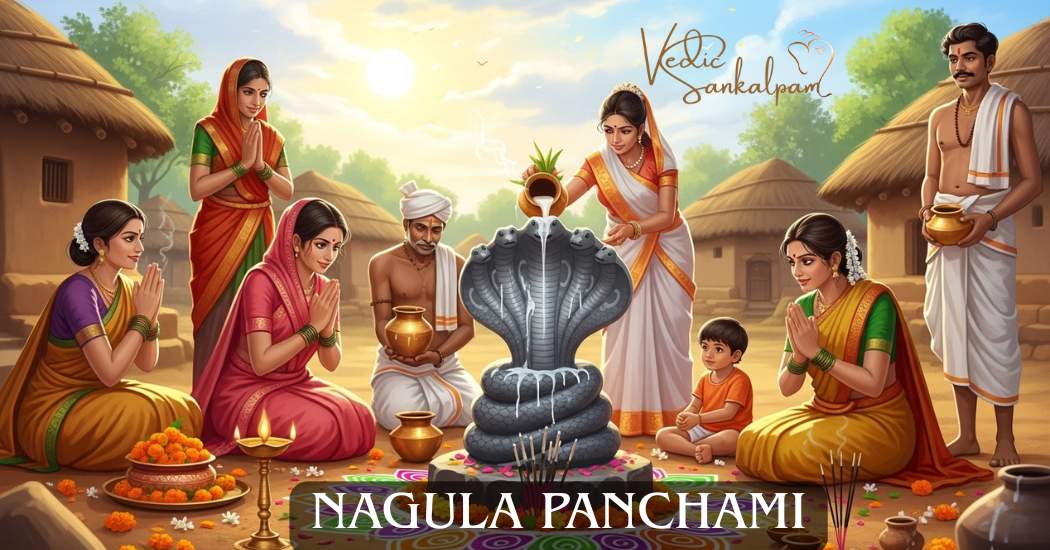
Introduction to Nagula Panchami
Nagula Panchami is a deeply revered Hindu festival dedicated to the worship of Nag Devatas (serpent deities). Celebrated with devotion and traditional rituals, this sacred observance holds immense spiritual significance across various regions of India, particularly in Andhra Pradesh, Telangana, Karnataka, and Maharashtra. The festival emphasizes fertility, prosperity, protection from snake-related fears, and ancestral blessings.
Nagula Panchami falls on the Panchami Tithi (fifth lunar day) of the bright fortnight in the Hindu month of Kartika, typically occurring after Deepavali. On this auspicious day, devotees worship snake idols, anthills, and sacred serpent representations, seeking divine blessings for family well-being and protection from negative energies.
Spiritual Significance of Nagula Panchami
The celebration of Nagula Panchami is rooted in ancient Vedic traditions where serpents are considered divine beings associated with cosmic power and nature’s balance. In Hindu scriptures, snakes symbolize kundalini energy, immortality, rebirth, and protection.
We observe that:
-
Lord Shiva adorns serpents around his neck, symbolizing mastery over fear and death.
-
Lord Vishnu rests upon Adi Shesha, the cosmic serpent.
-
The Nag Devatas are protectors of hidden treasures and guardians of the underworld (Patala).
Devotees believe that sincere worship on Nagula Panchami removes Sarpa Dosha, neutralizes Rahu-Ketu planetary afflictions, and brings harmony in married life. The festival also represents respect for ecological balance, particularly the protection of snakes and their habitats.
Nagula Panchami 2026 Date and Muhurat

Nagula Panchami is observed on the Shukla Paksha Panchami in Kartika month. The exact date varies each year according to the Hindu lunar calendar.
The most auspicious time for performing Nagula Panchami Puja is during the morning hours, especially during Panchami Tithi. Devotees avoid Rahu Kalam while performing rituals and ensure that offerings are made with purity and devotion.
Historical and Mythological Importance of Nagula Panchami
Several legends explain the origin of Nagula Panchami:
1. The Story of Lord Krishna and Kaliya
One prominent legend narrates how Lord Krishna subdued the serpent Kaliya, who had poisoned the Yamuna River. By dancing upon Kaliya’s hood, Krishna spared him after he repented. This story signifies the triumph of divine power over negativity and ego.
2. The Tale of the Farmer’s Daughter
Another widely told story speaks of a farmer who unknowingly destroyed a snake’s nest while plowing. The serpent later sought revenge, but the farmer’s daughter prayed sincerely to Nag Devata. Impressed by her devotion, the serpent forgave the family and restored their well-being.
This legend emphasizes devotion, forgiveness, and respect toward nature.
Rituals and Puja Vidhi of Nagula Panchami
The rituals of Nagula Panchami are performed with strict adherence to traditional customs. Devotees begin preparations early in the morning after taking a holy bath.
Step-by-Step Nagula Panchami Puja Vidhi
-
Cleaning and Decoration
Homes are cleaned thoroughly. The puja area is decorated with rangoli designs featuring snake motifs. -
Installation of Nag Idol
Devotees place idols or images of Nag Devata made of silver, stone, or clay. -
Offering Milk and Turmeric
Milk, turmeric, sandalwood paste, flowers, and vermillion are offered to the serpent deity. In rural areas, devotees pour milk near anthills. -
Recitation of Mantras
Chanting of Nag Gayatri Mantra and other Vedic hymns is performed for divine blessings. -
Fasting (Upvas)
Many devotees observe a strict fast throughout the day and consume food only after completing the puja. -
Offering of Naivedyam
Traditional dishes such as jaggery-based sweets, milk-based preparations, and fruits are offered.
Nagula Panchami Fasting Rules
Fasting during Nagula Panchami is believed to remove obstacles and ensure family prosperity. The key fasting guidelines include:
-
Avoid consuming fried or spicy food.
-
Many devotees abstain from eating salt.
-
Some observe a complete fast until sunset.
-
Pregnant women and children may follow a partial fast.
The fast is concluded after offering prayers and seeking blessings from elders.
Regional Celebrations of Nagula Panchami
Andhra Pradesh and Telangana
In these regions, Nagula Panchami is celebrated with immense devotion. Women visit nearby snake pits (anthills), offer milk and turmeric, and pray for their children’s protection and longevity.
Karnataka
Devotees worship serpent idols installed under sacred trees. Special prayers are conducted in temples dedicated to Subramanya Swamy, who is associated with serpent worship.
Maharashtra
Here, families prepare traditional sweets and perform elaborate rituals at home. Some communities conduct group prayers and cultural programs.
Importance of Nagula Panchami in Astrology
In Vedic astrology, serpent deities are closely linked to Rahu and Ketu, the shadow planets. Worship on Nagula Panchami is believed to:
-
Reduce Kaal Sarpa Dosha
-
Minimize delays in marriage
-
Resolve fertility issues
-
Protect against sudden misfortunes
-
Bring financial stability
Astrologers recommend special Sarpa Shanti Pujas on this day for individuals facing persistent obstacles.
Eco-Spiritual Relevance of Nagula Panchami
Nagula Panchami is not merely a religious observance but also a reminder of environmental conservation. Snakes play a crucial role in maintaining ecological balance by controlling rodent populations.
We recognize that:
-
Protecting snakes prevents agricultural damage.
-
Preserving snake habitats supports biodiversity.
-
Awareness reduces irrational fear and violence toward reptiles.
The festival promotes compassion toward all living beings and encourages coexistence with nature.
Nagula Panchami and Women’s Devotion
Married women observe this festival with deep faith for the health and prosperity of their children and husbands. Newly married brides are often introduced to this ritual as part of family tradition.
The prayers focus on:
-
Child protection
-
Family harmony
-
Removal of ancestral karmic obstacles
-
Blessings for future generations
This aspect strengthens the cultural and familial significance of the celebration.
Mantras for Nagula Panchami
Chanting sacred mantras enhances the spiritual benefits of the festival. Some commonly recited mantras include:
“Om Namo Bhagavate Vasuki Devaya”
“Om Sarpa Rajaya Namah”
Regular chanting is believed to remove fear and bring mental peace.
Dos and Don’ts on Nagula Panchami
Dos
-
Perform puja during Panchami Tithi.
-
Offer fresh milk and flowers.
-
Maintain cleanliness and purity.
-
Respect snake habitats.
Don’ts
-
Avoid harming snakes.
-
Do not dig earth unnecessarily.
-
Refrain from consuming non-vegetarian food.
-
Avoid cutting trees near snake habitats.
Scientific Perspective Behind Nagula Panchami
From a practical viewpoint, the timing of Nagula Panchami coincides with post-monsoon agricultural cycles when snakes are more visible due to waterlogged burrows. Worship rituals indirectly promote caution and respect, reducing snake-human conflicts.
The application of turmeric near anthills may also act as a mild antiseptic barrier. Traditional practices, though spiritual in nature, reflect a deep understanding of environmental harmony.
Why Nagula Panchami Remains Relevant Today
In modern society, where ecological imbalance and environmental destruction are rising concerns, festivals like Nagula Panchami carry renewed relevance. They:
-
Promote biodiversity awareness
-
Encourage respect for wildlife
-
Strengthen cultural identity
-
Reinforce spiritual discipline
The integration of faith and environmental responsibility makes this festival profoundly meaningful.
Conclusion
Nagula Panchami stands as a powerful blend of devotion, astrology, mythology, and ecological awareness. The worship of Nag Devatas symbolizes protection, renewal, and cosmic balance. Through fasting, rituals, mantra chanting, and environmental respect, devotees seek blessings for prosperity, harmony, and spiritual growth.
By honoring serpent deities, we uphold ancient traditions while embracing nature’s wisdom. The festival continues to inspire generations with its timeless spiritual depth and cultural richness.