Have you ever wondered about a day so sacred that simply observing it could open the gates of heaven? Welcome to the mystical world of Vaikuntha Ekadashi, one of the most revered days in the Hindu calendar. This isn’t just another festival—it’s considered a divine opportunity for spiritual transformation and liberation.
What is Vaikuntha Ekadashi?
Understanding the Significance of Ekadashi
Ekadashi refers to the eleventh day of both the waxing and waning lunar phases in the Hindu calendar. There are 24 Ekadashis throughout the year, but Vaikuntha Ekadashi holds a special place. Think of it as the crown jewel among all Ekadashis—the most powerful and spiritually significant.
The word “Ekadashi” literally means “eleven” in Sanskrit, but its spiritual significance goes far beyond numbers. It’s a day dedicated to Lord Vishnu, the preserver and protector in Hindu theology. Devotees believe that observing this day with devotion can wash away sins accumulated over many lifetimes.
The Spiritual Meaning of Vaikuntha
Vaikuntha is the celestial abode of Lord Vishnu, a realm of eternal bliss where there’s no suffering, birth, or death. It’s described in scriptures as a place of supreme peace, filled with divine light and endless devotion. On Vaikuntha Ekadashi, it’s believed that the gates to this heavenly realm open, offering devotees a direct pathway to divine grace.
Imagine having a VIP pass to the most exclusive destination in the universe—that’s what Vaikuntha Ekadashi represents in spiritual terms. The day symbolizes the opening of consciousness, where the mundane meets the sacred.
When is Vaikuntha Ekadashi Celebrated?

Based on the Hindu Panchang , here are the detailed timings for Vaikuntha Ekadashi 2025.
Since you have an interest in Vedic astrology, it is important to note the Tithi timings, as the Ekadashi Tithi begins after sunrise today. This creates a distinction between the Smartha (general) and Vaishnava observances.
Vaikuntha Ekadashi Date
-
Date: Today, Tuesday, December 30, 2025
-
Significance: This falls in the auspicious solar month of Dhanurmasa (Margashirsha/Pausha).
Tithi Timings (Lucknow Time)
-
Ekadashi Tithi Begins: Today, Dec 30 at 07:50 AM
-
Ekadashi Tithi Ends: Tomorrow, Dec 31 at 05:00 AM
Fasting & Parana (Breaking the Fast)
Because the Ekadashi Tithi begins after sunrise (Dashami Viddha), there are two observances:
1. For Smartha (General) Tradition:
-
Fasting Day: Observed Today, December 30, 2025.
-
Parana (Breaking Fast): Tomorrow, December 31, 2025.
-
Parana Time: 01:29 PM to 03:33 PM
-
Note: The Parana is delayed to the afternoon because the Hari Vasara (the first 25% of the Dwadashi Tithi) must end before breaking the fast. Since the Tithi ends early at 5:00 AM, the Hari Vasara period extends well into the morning.
-
2. For Vaishnava / ISKCON Tradition:
-
Fasting Day: Observed Tomorrow, December 31, 2025 (to avoid the Dashami overlap at sunrise today).
-
Parana (Breaking Fast): Thursday, January 1, 2026.
-
Parana Time: 07:14 AM to 09:18 AM (After sunrise).
The Lunar Calendar Connection
Vaikuntha Ekadashi falls on the eleventh day (Ekadashi) of the bright fortnight (Shukla Paksha) in the Hindu month of Margashirsha (December-January in the Gregorian calendar). This timing coincides with the winter season in India, a period traditionally associated with introspection and spiritual practices.
The exact date varies each year because the Hindu calendar follows lunar cycles rather than solar ones. This means that while the Gregorian date changes, the spiritual timing remains cosmically aligned.
Regional Variations in Celebration Dates
Different regions of India might observe slight variations in the celebration date due to differences in calculating the lunar calendar. In South India, particularly in Tamil Nadu and Kerala, grand celebrations take place with elaborate temple rituals. Northern states also observe the day with equal devotion, though the customs might differ slightly.
The Mythological Origins of Vaikuntha Ekadashi
The Story of Lord Vishnu and the Demon Muran
The origin of Vaikuntha Ekadashi is rooted in a fascinating mythological tale. According to the Padma Purana, there once lived a powerful demon named Mura who terrorized the gods and sages. His strength was so immense that even the devas (celestial beings) couldn’t defeat him.
Lord Vishnu took it upon himself to battle this demon. After an intense fight that lasted thousands of years, Vishnu entered a cave to rest. While he slept, Mura attempted to attack him. But from Vishnu’s divine energy emerged a young goddess who fought and defeated the demon.
The Birth of Ekadashi Devi
When Lord Vishnu awakened and saw the demon slain, he was pleased with the goddess who had emerged from his energy. He granted her a boon, asking what she desired. The goddess requested that devotees who fast and worship on this day be granted liberation from the cycle of birth and death.
Vishnu agreed and named this day “Ekadashi” after the goddess. He declared that anyone who observes this fast with devotion would be granted entry to Vaikuntha, his celestial abode. This is why the day is called Vaikuntha Ekadashi—literally, “the Ekadashi that opens the door to Vaikuntha.”
Religious Significance in Hinduism
Why This Day is Considered Most Auspicious
Vaikuntha Ekadashi isn’t just another religious observance—it’s considered the most spiritually potent day of the year. Ancient scriptures proclaim that observing this single Ekadashi equals the merit of observing all other Ekadashis combined.
The day is believed to cleanse the soul of past karmic debts. It’s like hitting a spiritual reset button, giving devotees a fresh start on their journey toward enlightenment. The power of this day lies not just in the rituals but in the sincere devotion and intention behind them.
The Promise of Moksha (Liberation)
The ultimate goal in Hindu philosophy is moksha—liberation from the endless cycle of birth, death, and rebirth (samsara). Vaikuntha Ekadashi is said to offer a direct path to this liberation. It’s not that the day magically erases all karma, but rather that the spiritual energy and divine grace available on this day can accelerate one’s spiritual progress dramatically.
Think of it as climbing a mountain—most days you take one step at a time, but on Vaikuntha Ekadashi, you get a boost that propels you several steps forward. The combination of fasting, prayer, and devotion creates a powerful spiritual synergy.
How is Vaikuntha Ekadashi Observed?
Fasting Rituals and Rules
The observance of Vaikuntha Ekadashi primarily involves fasting. But this isn’t just about skipping meals—it’s a comprehensive spiritual discipline. Devotees typically begin their fast at sunrise on Ekadashi and break it only after sunrise on the following day (Dwadashi).
There are different levels of fasting. The strictest form involves abstaining from all food and water (nirjala fast). A more moderate approach allows fruits, milk, and water. The minimum observance requires avoiding grains, beans, and certain vegetables. The key is to choose a fasting method that challenges you without compromising your health.
Prayer and Worship Practices
Beyond fasting, the day is filled with devotional activities. Devotees wake up early, often before sunrise, for a purifying bath. They then perform puja (worship) to Lord Vishnu, offering flowers, incense, and sacred tulsi leaves. Many spend the entire day chanting Vishnu’s names and reading sacred texts like the Bhagavad Gita or Vishnu Sahasranama.
Visiting Temples and the Vaikuntha Dwaram
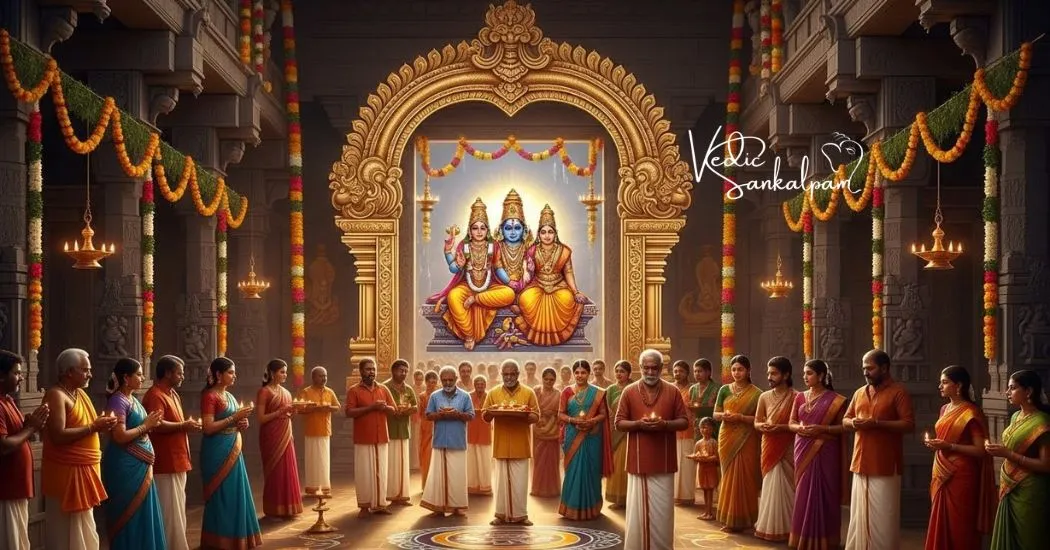
One of the most beautiful traditions is visiting Vishnu temples, where special decorations and rituals take place. The highlight is passing through the “Vaikuntha Dwaram”—a specially decorated doorway that symbolizes the gate to Vaikuntha. Devotees believe that passing through this gateway on Ekadashi brings divine blessings and spiritual merit.
Major temples like Tirupati, Guruvayur, and Srirangam witness massive crowds as thousands of devotees queue to pass through the Vaikuntha Dwaram. The atmosphere is electric with devotion, with continuous chanting and music filling the air.
Chanting Mantras and Reading Scriptures
Chanting specific mantras amplifies the spiritual benefits of the day. The most popular include the Vishnu Sahasranama (thousand names of Vishnu), the Hare Krishna mantra, and various stotras dedicated to Lord Vishnu. Reading scriptures, especially chapters from the Bhagavad Gita, is also highly recommended.
The Vaikuntha Dwaram: Heaven’s Gateway
What is the Vaikuntha Dwaram?
The Vaikuntha Dwaram is more than just a decorated doorway—it’s a powerful spiritual symbol. In temples, the northern entrance is usually designated as the Vaikuntha Dwaram and is opened only once a year on this auspicious day. The architecture often features intricate carvings of celestial scenes and divine beings.
Passing through this gateway is believed to symbolize the soul’s journey from the material world to the spiritual realm. It’s a physical representation of crossing the threshold from bondage to liberation, from darkness to light.
Temple Traditions Across India
Different temples have unique traditions surrounding the Vaikuntha Dwaram. At the famous Tirumala Venkateswara Temple, the doors open early in the morning amid Vedic chanting and instrumental music. In the Padmanabhaswamy Temple in Kerala, the ritual is accompanied by traditional percussion ensembles.
The Srirangam Temple in Tamil Nadu has one of the most elaborate celebrations, with the procession of the deity through the Vaikuntha Dwaram drawing hundreds of thousands of devotees. Each temple adds its regional flavor while maintaining the core spiritual essence of the observance.
Health Benefits of Fasting on Ekadashi
Physical Detoxification
While the primary purpose of Ekadashi fasting is spiritual, it offers tangible health benefits too. Giving your digestive system a 24-hour break allows your body to focus on detoxification and cellular repair. It’s like giving your internal organs a mini-vacation.
Regular Ekadashi fasting has been associated with improved digestion, weight management, and better metabolic health. The body gets a chance to eliminate toxins and reset its systems. Modern science increasingly recognizes the benefits of intermittent fasting, which aligns perfectly with the ancient Ekadashi tradition.
Mental Clarity and Spiritual Growth
Beyond physical benefits, fasting impacts mental and emotional well-being. When you’re not occupied with eating and digesting, your mind becomes clearer and more focused. Many practitioners report heightened awareness, better concentration, and deeper meditation experiences on Ekadashi.
The discipline required for fasting also builds willpower and self-control—qualities that extend beyond the fasting day into everyday life. It’s a practice in mastering desires rather than being mastered by them.
Food and Dietary Guidelines
What to Eat and What to Avoid
Understanding what you can and cannot eat during Ekadashi fasting is crucial. Foods to avoid include all grains (rice, wheat, barley), beans, lentils, onions, garlic, and certain vegetables like eggplant and mushrooms.
Permitted foods include fruits, milk and dairy products, nuts, root vegetables like potatoes and sweet potatoes, and certain grains like buckwheat and water chestnut flour. Sabudana (tapioca pearls) is a popular fasting food in many Indian households.
The principle behind these restrictions relates to the Vedic understanding of which foods support spiritual practice and which create heaviness or tamasic (dull) energy in the body.
Breaking the Fast (Parana) Properly
Breaking the fast correctly is as important as observing it. The fast should be broken during the appropriate parana time on Dwadashi, which is calculated based on the end of the Ekadashi tithi and sunrise. Breaking it too early or too late can negate the spiritual benefits.
Start with something light—perhaps water, fruit, or milk. Avoid immediately consuming heavy or oily foods. Gradually reintroduce regular meals throughout the day. This gentle approach prevents digestive discomfort and honors the body’s adjusted state.
Vaikuntha Ekadashi in Different Regions
Celebrations in South India
South India, particularly Tamil Nadu, Karnataka, Kerala, and Andhra Pradesh, observes Vaikuntha Ekadashi with extraordinary grandeur. The day is considered so important that government offices and many businesses close to allow people to participate in temple festivities.
Temples are decorated with thousands of flowers and lights. Special abhishekams (ritual baths) are performed to the deity. Classical music concerts and religious discourses continue throughout the night. The air fills with the fragrance of incense and the sound of devotional songs.
Observances in North India
While equally devout, North Indian observances tend to be more home-centered compared to the temple-focused South Indian celebrations. Families gather for collective prayers, bhajan singing, and scripture reading. Many organize satsangs (spiritual gatherings) where devotees share meals after breaking their fasts.
Vrindavan and Mathura, associated with Lord Krishna (an incarnation of Vishnu), see special celebrations in their numerous temples. The ISKCON temples across North India organize elaborate programs featuring kirtans, lectures, and prasadam distribution.
ISKCON and Global Celebrations
The International Society for Krishna Consciousness (ISKCON) has played a significant role in spreading awareness of Vaikuntha Ekadashi globally. ISKCON temples worldwide—from New York to Sydney, London to Singapore—organize special programs on this day.
These global celebrations have introduced Vaikuntha Ekadashi to non-Hindu audiences, creating a universal appreciation for its spiritual message. Thousands of international devotees now observe this fast, demonstrating how ancient wisdom transcends geographical and cultural boundaries.
The Spiritual Philosophy Behind Ekadashi
Detachment from Material Desires
At its core, Ekadashi fasting teaches detachment. By voluntarily giving up food—one of our most basic needs—we practice letting go of material attachments. It’s a reminder that we are not our bodies or our desires, but eternal souls on a spiritual journey.
This temporary renunciation creates psychological space. When we’re not constantly seeking pleasure through food and other sensory experiences, we become more aware of deeper sources of fulfillment. It’s like clearing the clutter from a room so you can see what was always there.
Devotion as the Path to Liberation
Ekadashi emphasizes bhakti (devotion) as the most accessible path to spiritual realization. You don’t need to be a scholar or a renunciate to benefit from this observance. Simple, heartfelt devotion to the divine is enough.
This democratization of spirituality is beautiful—it suggests that liberation isn’t reserved for spiritual elites but is available to anyone willing to open their heart. The physical practices of fasting and worship are merely vehicles for cultivating deeper devotion and consciousness.
Common Misconceptions About Vaikuntha Ekadashi
Several misconceptions surround Ekadashi observance. One common myth is that it’s only for elderly people or orthodox Hindus. In reality, people of all ages and backgrounds can observe Ekadashi according to their capacity.
Another misconception is that the benefits are automatic—that simply not eating guarantees spiritual rewards. The truth is that intention and devotion matter more than mechanical observance. A fast undertaken with resentment or pride loses its spiritual value, while even a partial observance done with sincere devotion bears fruit.
Some believe that accidentally consuming prohibited foods ruins the entire fast. While adherence is important, what matters most is the purity of intention. The Bhagavad Gita teaches that sincere effort, even if imperfect, is never wasted on the spiritual path.
How to Prepare for Vaikuntha Ekadashi
Mental and Physical Preparation
Preparation begins days before the actual fast. Mentally preparing yourself by reading about the significance of the day and setting clear intentions enhances the experience. Remind yourself why you’re fasting—not out of obligation but from a desire for spiritual growth.
Physically, it helps to eat lighter meals on the day before Ekadashi. Reduce your caffeine intake gradually if you’re a regular coffee or tea drinker to avoid withdrawal headaches during the fast. Stock your kitchen with approved fasting foods so you’re not tempted by what you shouldn’t eat.
Creating a Sacred Space at Home
Transform a corner of your home into a sacred space for prayer and meditation. Set up a small altar with pictures or statues of Lord Vishnu, decorate it with flowers, and keep your scriptures nearby. This dedicated space serves as a focal point for your devotional activities throughout the day.
Light a lamp or incense to create an atmosphere conducive to meditation and prayer. Having this physical representation of your spiritual practice helps maintain focus and devotion, especially if you’re unable to visit a temple.
The Scientific Perspective on Ekadashi Fasting
Modern science validates many benefits attributed to Ekadashi fasting. Research on intermittent fasting shows it triggers autophagy—a cellular cleanup process where the body breaks down and recycles damaged components. This cellular rejuvenation may contribute to longevity and disease prevention.
Fasting also affects brain function. It increases the production of brain-derived neurotrophic factor (BDNF), which supports learning, memory, and mood regulation. This might explain the mental clarity and heightened spiritual awareness many practitioners experience on Ekadashi.
The timing of Ekadashi according to lunar phases is also intriguing. Some researchers suggest that the moon’s gravitational pull affects bodily fluids and biological rhythms, making certain days more conducive to fasting. While this research is ongoing, it hints at the sophisticated understanding ancient sages had of cosmic rhythms.
Stories and Experiences from Devotees
Countless devotees have shared transformative experiences related to Vaikuntha Ekadashi. Some report profound spiritual experiences during meditation on this day—visions, deep peace, or overwhelming feelings of divine love. Others describe how regular Ekadashi observance gradually transformed their character, making them more patient, compassionate, and selfless.
One common theme in these testimonies is the sense of connection—to the divine, to fellow devotees, and to something greater than oneself. Many describe feeling “lighter” after the fast, not just physically but emotionally and spiritually. Problems that seemed insurmountable before the fast often appear more manageable afterward, seen through the lens of expanded perspective.
These personal stories remind us that while scriptures provide the framework, the real proof of Ekadashi’s power lies in lived experience. Each person’s journey is unique, yet all share the common thread of spiritual growth and transformation.
Conclusion
Vaikuntha Ekadashi stands as a powerful reminder that spiritual opportunities are woven into the fabric of time itself. This sacred day offers more than a religious ritual—it’s an invitation to transcend the ordinary and touch the divine. Whether you’re drawn by the promise of liberation, the health benefits of fasting, or simple curiosity about ancient traditions, Vaikuntha Ekadashi has something to offer.
The beauty of this observance lies in its accessibility. You don’t need to climb Himalayan peaks or spend years in isolated meditation. Simply through fasting, prayer, and devotion on this one day, you align yourself with powerful spiritual currents that have flowed for millennia. As you pass through the symbolic Vaikuntha Dwaram, whether physically in a temple or metaphorically in your consciousness, you’re participating in an ancient practice that connects you to countless seekers who came before.
In our modern world of constant distraction and material pursuit, Vaikuntha Ekadashi offers a pause—a chance to remember what truly matters. It asks us to temporarily set aside our usual patterns and turn our attention inward and upward. And in that turning, we might just discover that the gates to heaven were never locked; we simply forgot to look for them.
Vaikuntha Ekadasi some Important Tips
1. Can anyone observe Vaikuntha Ekadashi, or is it only for Hindus?
While Vaikuntha Ekadashi is rooted in Hindu tradition, its universal themes of fasting, devotion, and spiritual purification can be appreciated by anyone regardless of religious background. The practice focuses on inner transformation rather than mere religious identity. Many ISKCON centers worldwide welcome people of all backgrounds to participate in Ekadashi observances.
2. What if I have health conditions that prevent fasting?
Your health should always come first. If medical conditions like diabetes, pregnancy, or other concerns make fasting dangerous, consult your doctor. Many spiritual teachers emphasize that sincere devotion matters more than strict fasting. You can modify the observance by reducing food intake rather than complete fasting, or focus on the devotional aspects like prayer and scripture reading while maintaining your regular diet.
3. Is there a difference between Vaikuntha Ekadashi and other Ekadashis throughout the year?
Yes, while there are 24 Ekadashis annually, Vaikuntha Ekadashi is considered the most important. It’s believed to offer greater spiritual merit than other Ekadashis. The symbolism of the Vaikuntha Dwaram opening and the mythological significance gives this particular Ekadashi special status. However, regular observance of all Ekadashis is also highly beneficial for spiritual progress.
4. How do I calculate the correct time to break my fast?
The fast should be broken during the parana time on Dwadashi, after the Ekadashi tithi has ended and after sunrise. This specific time window varies based on your location and the lunar calendar. Many Hindu calendar apps and websites provide precise parana timing for your location. Breaking the fast at the correct time is considered important for maximizing the spiritual benefits.
5. Can children observe Vaikuntha Ekadashi?
Children under 12 years are generally not required to observe full fasts, as their growing bodies need regular nutrition. However, they can participate in age-appropriate ways—perhaps skipping one meal, avoiding certain foods, or joining in prayers and temple visits. The goal is to introduce them to spiritual practices gradually without causing physical strain. As they grow older, they can progressively increase their observance based on their capacity and understanding.