Have you ever wondered why certain patterns keep repeating in your life? Why do some relationships feel destined while others fizzle out? Your Vedic astrology birth chart might hold the answers. Think of it as a cosmic fingerprint—a unique map of the heavens at the exact moment you took your first breath. This ancient system doesn’t just predict your future; it reveals the very essence of who you are and the karmic blueprint you’ve brought into this lifetime.
What Is Vedic Astrology?
The Ancient Roots of Jyotish
Vedic astrology, also known as Jyotish (which translates to “the science of light”), has been practiced in India for over 5,000 years. It’s one of the six auxiliary disciplines connected to the Vedas, the ancient sacred texts of Hindu philosophy. Unlike modern horoscopes you might read in magazines, Vedic astrology is a sophisticated mathematical and spiritual science that requires precise birth data and complex calculations.
The sages who developed this system observed the heavens with remarkable accuracy, noting how planetary movements correlated with earthly events and human experiences. They understood that we’re not separate from the cosmos—we’re intimately connected to it.
How Vedic Astrology Differs from Western Astrology
If you’ve explored Western astrology, you might notice some differences when you dive into Vedic astrology. The most significant distinction is the zodiac system itself. Vedic astrology uses the sidereal zodiac, which accounts for the precession of the equinoxes—the wobble in Earth’s axis that causes the positions of constellations to shift over time.
Western astrology uses the tropical zodiac, which is fixed to the seasons. This means your sun sign in Vedic astrology might actually be different from what you’ve always believed! Additionally, Vedic astrology places greater emphasis on the moon sign and ascending sign, uses different house systems, and incorporates unique elements like nakshatras and planetary periods called dashas.
What Is a Birth Chart in Vedic Astrology?
The Blueprint of Your Soul
Your Vedic birth chart, called a Kundali or Janma Kundali, is essentially a snapshot of the sky at the precise moment and location of your birth. Imagine freezing time at that instant—where was the sun? The moon? What about Jupiter, Saturn, and the other planets? This celestial arrangement creates a unique energetic signature that influences your personality, relationships, career path, health tendencies, and spiritual journey.
The birth chart doesn’t dictate your fate with rigid certainty. Instead, it reveals your karmic tendencies, natural strengths, potential challenges, and the spiritual lessons you’re here to learn. Think of it as a roadmap rather than a predetermined route—you still have free will to navigate the terrain.
Key Components of a Vedic Birth Chart
A Vedic birth chart contains several essential elements working together like instruments in an orchestra. You have the twelve houses representing different life areas, nine planets showing various energies and influences, twelve zodiac signs coloring how those planets express themselves, and 27 nakshatras adding another layer of refinement to planetary placements.
Each component interacts with others, creating an intricate web of influences that makes your chart uniquely yours. Two people born even minutes apart in different locations will have different charts because the ascending sign changes approximately every two hours.
The Twelve Houses in Vedic Astrology
Understanding House Significance
The twelve houses in your birth chart represent different areas of your life experience. Unlike Western astrology which often uses the Placidus house system, Vedic astrology typically uses whole sign houses, where each house corresponds to an entire zodiac sign.
Each house has specific significations that remain consistent across all charts. The condition of planets placed in these houses, the signs occupying them, and which planets “own” or rule those signs all contribute to how that life area manifests for you.
Houses of Identity and Wealth
The first house, or Lagna, represents your physical body, personality, and overall life approach. It’s your window to the world and how others first perceive you. The second house governs wealth, family, speech, and food—basically, the resources you accumulate and how you nourish yourself physically and emotionally.
The third house relates to siblings, courage, communication, and short journeys. It shows your efforts and willpower. The fourth house represents your mother, home, emotional foundations, property, and inner peace. These foundational houses set the stage for your material and psychological security.
Houses of Relationships and Career
The fifth house governs creativity, children, romance, intelligence, and past-life merits. It’s where you express your unique talents and find joy. The sixth house deals with obstacles, enemies, health issues, daily work, and service—essentially, the challenges you must overcome.
The seventh house is your partnership sector, covering marriage, business partnerships, and how you relate to others one-on-one. The eighth house is transformative, ruling sudden events, inheritance, occult knowledge, longevity, and psychological depth. The ninth house represents your father, higher learning, spiritual beliefs, long journeys, and luck or fortune.
The tenth house governs your career, reputation, and public standing. The eleventh house relates to gains, friendships, aspirations, and elder siblings. Finally, the twelfth house represents losses, expenses, foreign lands, spirituality, isolation, and liberation—it’s where you transcend material concerns.
The Nine Planets (Navagrahas)
Sun and Moon: The Luminaries
In Vedic astrology, the Sun represents your soul, vitality, authority, father, and ego. It’s your core essence and life purpose. A strong Sun gives confidence, leadership ability, and recognition, while a weak or afflicted Sun might bring struggles with authority or self-esteem issues.
The Moon governs your mind, emotions, mother, and mental peace. Since it changes signs approximately every 2.5 days, it’s incredibly personal to your chart. A well-placed Moon brings emotional stability, nurturing abilities, and popularity, while a challenged Moon might indicate mood swings, anxiety, or emotional turbulence.
Mars, Mercury, Jupiter, Venus, and Saturn
Mars represents energy, courage, siblings, property, and your capacity for action. It’s the warrior planet that drives ambition and determination. Mercury governs intelligence, communication, business acumen, and analytical abilities. It’s neutral by nature and takes on the qualities of planets it associates with.
Jupiter is the great benefic, representing wisdom, expansion, children, teachers, and spiritual growth. It brings optimism, knowledge, and good fortune where it’s placed. Venus governs beauty, luxury, relationships, creativity, and pleasure. It’s about harmony, art, and what you value.
Saturn is often misunderstood but incredibly important. It represents discipline, structure, limitations, hard work, and karmic lessons. Where Saturn sits in your chart, you’ll face your greatest challenges but also achieve your most enduring accomplishments through perseverance.
Rahu and Ketu: The Shadow Planets
Rahu and Ketu aren’t physical planets—they’re the north and south lunar nodes, the points where the Moon’s orbit intersects the ecliptic. They’re always exactly opposite each other in your chart and represent your karmic axis.
Rahu is associated with worldly desires, obsessions, unconventional thinking, foreign influences, and sudden events. It amplifies whatever it touches and can bring success through unorthodox means. Ketu represents spiritual detachment, past-life talents, intuition, and liberation. It can indicate areas where you have innate abilities but may feel disinterested or disconnected.
The Twelve Zodiac Signs (Rashis)
Fire, Earth, Air, and Water Elements
The twelve zodiac signs in Vedic astrology are grouped by element, just as in Western astrology. Fire signs (Aries, Leo, Sagittarius) are enthusiastic, dynamic, and action-oriented. Earth signs (Taurus, Virgo, Capricorn) are practical, stable, and material-focused. Air signs (Gemini, Libra, Aquarius) are intellectual, communicative, and social. Water signs (Cancer, Scorpio, Pisces) are emotional, intuitive, and sensitive.
Each sign also has qualities: cardinal (initiating), fixed (sustaining), or mutable (adapting). These qualities describe how the signs operate and respond to life circumstances.
How Signs Influence Planetary Expression
When a planet occupies a zodiac sign, that sign colors how the planet expresses its energy. For example, Mars in fiery Aries is bold, direct, and competitive—it’s in its own sign and operates at full strength. But Mars in watery Cancer is in its debilitation, where the assertive, action-oriented energy becomes emotionally reactive and indirect.
Each planet has signs where it’s exalted (performing at its best), debilitated (struggling to express naturally), owns its own sign (comfortable and powerful), or is neutral. These relationships significantly impact how planetary energies manifest in your life.
Nakshatras: The Lunar Mansions
The 27 Nakshatras Explained
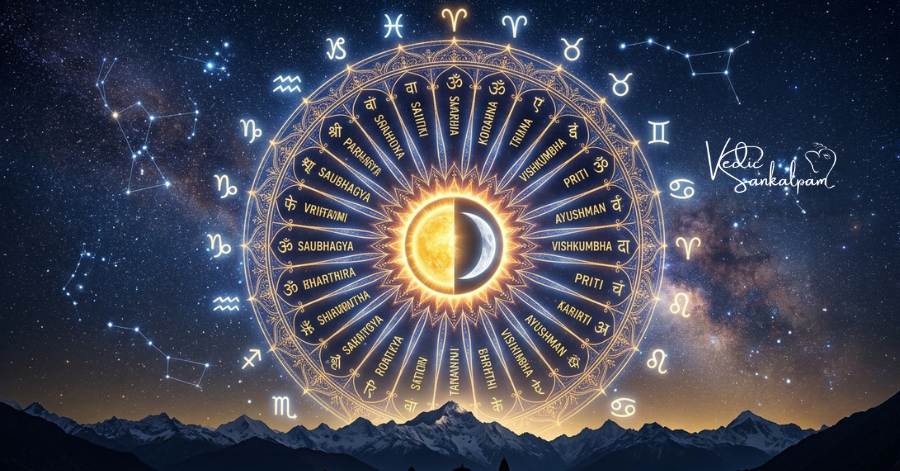
Here’s where Vedic astrology gets really precise. The zodiac is divided into 27 nakshatras or lunar mansions, each spanning 13°20′ of arc. Each nakshatra has its own ruling deity, symbol, qualities, and planetary ruler, adding incredible nuance to chart interpretation.
While your sun and moon might be in the same zodiac sign as someone else, your nakshatra placements could be completely different, explaining why you might express that energy so uniquely. Nakshatras are especially important for compatibility analysis, timing of events, and understanding the subtle psychological patterns in your personality.
Your Birth Star and Its Significance
Your birth star is the nakshatra where your Moon was placed at birth. This is considered one of the most important points in your chart for understanding your emotional nature and subconscious patterns. It influences your thinking style, habits, instinctive reactions, and even your health tendencies.
In Indian tradition, your birth star is used for naming ceremonies, matching horoscopes for marriage, and predicting auspicious timing for important life events. Each nakshatra has different characteristics—some are gentle and nurturing, others are fierce and transformative.
Ascendant (Lagna): Your Rising Sign
Why the Ascendant Matters Most
If you learn one thing about your Vedic chart, make it your ascendant or Lagna. This is the zodiac sign that was rising on the eastern horizon at your birth moment. It sets the entire structure of your chart, determining which signs occupy which houses.
Your Lagna represents your physical body, personality, life path, and overall chart strength. The planet that rules your Lagna sign (your Lagna lord) becomes the most important planet in your entire chart. Its placement and condition significantly influence your life circumstances and how you navigate challenges.
Calculating Your Lagna
The Lagna changes approximately every two hours, which is why accurate birth time is absolutely essential for Vedic astrology. Even a difference of a few minutes can shift your Lagna, changing your entire chart interpretation.
To calculate your Lagna, you need your exact birth time (ideally verified from your birth certificate), birth date, and birth location coordinates. Many online Vedic astrology calculators can generate your chart, but for serious analysis, it’s worth consulting with a knowledgeable astrologer who can verify your birth time through a process called rectification if needed.
Planetary Aspects (Drishti)
In Vedic astrology, planets don’t just influence the house they occupy—they also cast aspects (drishti) to other houses and planets. All planets aspect the seventh house from their position, meaning they influence whatever is directly opposite them in the chart.
Additionally, Mars aspects the fourth and eighth houses from its position, Jupiter aspects the fifth and ninth houses, and Saturn aspects the third and tenth houses. These special aspects add layers of influence throughout your chart. When planets aspect each other, they create relationships that can be harmonious, challenging, or neutral depending on their natural friendship and the aspects involved.
Yogas: Special Planetary Combinations
One of the most fascinating aspects of Vedic astrology is yogas—specific planetary combinations that create distinct life patterns. There are hundreds of yogas, ranging from extremely auspicious (Raja Yogas indicating power and success) to challenging (Duryogas indicating obstacles).
For example, when the lords of the first, ninth, and tenth houses connect through conjunction or aspect, they create powerful Raja Yogas that can indicate leadership, recognition, and achievement. Gaja Kesari Yoga forms when Jupiter and Moon are in mutual angles, bringing wisdom and prosperity.
Not all yogas manifest equally for everyone, though. Their effects depend on the overall chart strength, the planetary periods you’re running, and how you choose to work with these energies. Yogas are potentials, not guarantees—they show where opportunities exist if you align with them.
Dashas: The Planetary Periods
Understanding Vimshottari Dasha
This is where Vedic astrology really distinguishes itself from Western astrology. The Vimshottari Dasha system divides your life into planetary periods, with each of the nine planets ruling specific time periods in a 120-year cycle.
The sequence begins based on your Moon’s nakshatra at birth. You might be born into Mercury’s period, followed by Ketu, then Venus, and so on. Each major period (Mahadasha) lasts from 6 to 20 years depending on the planet, and within each Mahadasha are sub-periods (Antardashas) of all nine planets.
These dashas are incredibly accurate for timing life events. The planet whose period you’re running becomes activated in your chart, bringing forth whatever it promises based on its placement, condition, and the houses it rules. This is why two people with similar charts might experience very different lives—they’re running different planetary periods that activate different parts of their charts at different times.
How to Read Your Vedic Birth Chart

Step-by-Step Interpretation Guide
Reading your birth chart can seem overwhelming at first, but here’s a systematic approach. First, identify your Lagna (ascendant) and its ruling planet. Where is your Lagna lord placed? This gives you the primary narrative of your life path.
Next, examine your Moon sign and nakshatra for understanding your emotional nature and mind. Then look at your Sun placement for your soul purpose and vitality. Assess which planets are strong (in own sign, exalted, well-placed in benefic houses) versus weak (debilitated, combust, afflicted by malefics).
Consider which houses are occupied by planets and which are empty. Examine aspects between planets and their relationships. Look for prominent yogas. Finally, check which Mahadasha and Antardasha you’re currently running—this timing factor is crucial for understanding which parts of your chart are “switched on” right now.
Benefits of Understanding Your Birth Chart
Why should you invest time in understanding your Vedic birth chart? For starters, it provides profound self-awareness. You’ll understand why certain situations trigger you, why you’re naturally talented in specific areas, and where you need to put in extra effort.
Your chart reveals optimal timing for important decisions like career changes, marriage, investments, or relocation. It helps you understand relationship dynamics by comparing charts with partners, family members, or business associates. You’ll gain insight into health vulnerabilities and prevention strategies.
Perhaps most importantly, your birth chart illuminates your spiritual path and life purpose. It shows your karmic lessons, areas where you need to develop, and natural dharma (life purpose). This knowledge doesn’t limit you—it empowers you to work with your natural strengths and consciously address challenging patterns.
Common Misconceptions About Vedic Astrology
Let’s clear up some myths. First, Vedic astrology isn’t about fatalism or believing your life is predetermined. It’s about understanding probabilities and tendencies while maintaining your free will to make conscious choices.
Second, not everything negative in your chart will manifest. Many challenging planetary positions can be mitigated through awareness, remedial measures, and conscious effort. Your chart shows potentials, not certainties.
Third, Vedic astrology isn’t superstition—it’s a sophisticated system based on astronomical observations and mathematical calculations refined over millennia. Yes, it requires spiritual openness to appreciate fully, but it’s grounded in observable celestial mechanics.
Finally, you don’t need to be Hindu or believe in reincarnation to benefit from Vedic astrology, though understanding the concept of karma (cause and effect) enhances the depth of insight you can gain.
Getting Your Birth Chart Analyzed
While you can learn to read your own chart with study and practice, consulting an experienced Vedic astrologer provides invaluable insights. A skilled astrologer can see patterns and connections you might miss, offer remedial suggestions, and help you understand timing for important life decisions.
When seeking an astrologer, look for someone trained in traditional Vedic methods, preferably with several years of practice. Be wary of anyone who makes fear-based predictions or demands expensive remedies. Ethical astrologers empower you with knowledge rather than creating dependency.
Prepare for your consultation by having accurate birth details ready and specific questions you’d like addressed. The best astrological consultations are dialogues where the astrologer explains principles and guides you toward your own insights rather than just making predictions.
Conclusion
Your Vedic astrology birth chart is an extraordinary tool for self-discovery, offering a window into your karmic blueprint and life purpose. It reveals the intricate cosmic patterns that influence your personality, relationships, career, health, and spiritual journey. While the system might seem complex at first—with its houses, planets, signs, nakshatras, aspects, yogas, and dashas—each element contributes to a remarkably accurate portrait of who you are and the path you’re here to walk.
Remember, your chart doesn’t imprison you in fate’s grip. Instead, it illuminates the terrain of your life journey, showing where roads are smooth, where challenges await, and where your greatest opportunities lie. Armed with this cosmic map, you can navigate life’s ups and downs with greater wisdom, timing your actions harmoniously with celestial rhythms and consciously choosing how to express your chart’s potentials.
Whether you’re just beginning to explore Vedic astrology or deepening your understanding, approaching your birth chart with curiosity, humility, and an open heart will yield the most profound insights. The stars don’t compel—they guide. And in that guidance lies tremendous power for conscious living and spiritual evolution.
FAQs
1. What’s the difference between Vedic and Western astrology birth charts?
The primary difference is that Vedic astrology uses the sidereal zodiac based on actual constellation positions, while Western astrology uses the tropical zodiac aligned with seasons. This means your planetary positions will differ by approximately 23-24 degrees between the two systems. Vedic charts also emphasize the Moon and ascending sign more heavily, use whole sign houses, incorporate nakshatras, and employ the dasha timing system which Western astrology doesn’t use.
2. Can my Vedic birth chart predict when I’ll get married or have children?
Vedic astrology can indicate favorable periods for marriage and children by analyzing the seventh house (marriage), fifth house (children), relevant planetary periods, and transits. However, it shows timing of opportunities and favorable conditions rather than predetermined events. Your free will, readiness, circumstances, and choices ultimately determine when these life events occur. An astrologer can guide you toward windows of opportunity but cannot guarantee specific outcomes.
3. What if I don’t know my exact birth time?
An accurate birth time is crucial for Vedic astrology since the ascendant changes every two hours. Without it, astrologers can’t determine your Lagna, house placements, or accurately calculate dashas. If you don’t have your exact birth time, you might explore birth time rectification with an experienced astrologer who uses significant life events to work backward to your likely birth time. Alternatively, some analysis is possible using just your Moon chart, though it’s much less comprehensive.
4. Are bad planetary placements in my chart permanent problems?
Not at all. Challenging planetary positions indicate areas requiring conscious effort and growth rather than permanent limitations. Many successful people have difficult charts—they simply learned to work constructively with those energies. Additionally, planetary periods (dashas) change throughout life, activating different chart areas at different times. Vedic astrology also offers remedial measures including mantras, gemstones, charitable acts, and lifestyle adjustments that can help balance challenging influences.
5. How often should I consult my Vedic birth chart?
Your birth chart itself never changes, but planetary transits and dashas constantly evolve, creating different circumstances at various life stages. Many people find annual consultations helpful around their birthday to understand the year ahead. You might also seek guidance during major life transitions, when facing important decisions, or during particularly challenging periods. However, becoming overly dependent on astrological consultations isn’t healthy—use astrology as one tool for self-awareness and decision-making alongside practical wisdom and intuition.