loading

Category: Lagna

  • Home
  • Category: Lagna

Yogas and Doshas in Vedic Astrology: A Complete Guide to Understanding Your Cosmic Blueprint

Have you ever wondered why some people seem to effortlessly attract success while others struggle despite their best efforts? Or why certain phases of life feel like you’re swimming against the current? The ancient science of Vedic astrology might just hold the answers you’re looking for. At the heart of this profound system lie two fascinating concepts: Yogas and Doshas. These planetary combinations can reveal incredible insights about your life’s potential, challenges, and the cosmic forces shaping your destiny.

Let’s dive deep into this mystical world and discover what the stars have been trying to tell you all along.

What is Vedic Astrology?

Before we explore Yogas and Doshas, it’s essential to understand the foundation they’re built upon. Vedic astrology, also known as Jyotish Shastra, is an ancient Indian system of astronomy and astrology that has been practiced for over 5,000 years. Unlike the horoscopes you casually read in newspapers, Vedic astrology is a sophisticated mathematical system that maps the precise positions of celestial bodies at the exact moment of your birth.

The Origins and Philosophy Behind Jyotish

The word “Jyotish” comes from Sanskrit, meaning “science of light” or “lord of light.” Ancient Indian sages believed that the positions of planets and stars at the time of birth could illuminate the path of an individual’s life. This wasn’t mere superstition – it was considered a sacred science passed down through generations of learned scholars.

The philosophy behind Vedic astrology is deeply rooted in the concept of karma. Your birth chart, or Kundli, is essentially a snapshot of your karmic blueprint – reflecting the accumulated actions from past lives and indicating the lessons you’re meant to learn in this one. Think of it as a cosmic GPS that shows where you’ve been, where you are, and the various routes available to reach your destination.

How Vedic Astrology Differs from Western Astrology

You might be wondering how Vedic astrology differs from the Western system you’re probably more familiar with. The primary difference lies in the zodiac system used. Western astrology uses the Tropical zodiac, which is based on the seasons and the position of the Sun relative to the Earth. Vedic astrology, on the other hand, uses the Sidereal zodiac, which is based on the actual positions of constellations in the sky.

Due to a phenomenon called precession of the equinoxes, these two systems have drifted apart by approximately 24 degrees over the centuries. This means your Sun sign in Vedic astrology might be different from your Western sign – and that’s just the beginning of the differences.

Understanding Yogas in Vedic Astrology

Yogas and Doshas in Vedic astrology

Now, let’s get to the exciting part – Yogas. If you’ve ever had your Vedic chart read, you’ve probably heard the astrologer mention various Yogas present in your horoscope. But what exactly are they?

What Exactly Are Yogas?

In Sanskrit, “Yoga” means union or combination. In the context of Vedic astrology, Yogas refer to specific planetary combinations that produce particular results in a person’s life. Think of them as cosmic recipes – when certain planetary ingredients come together in specific ways, they cook up distinct outcomes.

There are literally hundreds of Yogas mentioned in classical Vedic texts, ranging from incredibly auspicious combinations that can bestow wealth, fame, and spiritual enlightenment, to challenging ones that may indicate obstacles and hardships. The beauty of understanding Yogas lies in recognizing your inherent potential and working with these cosmic energies rather than against them.

How Yogas Form in Your Birth Chart

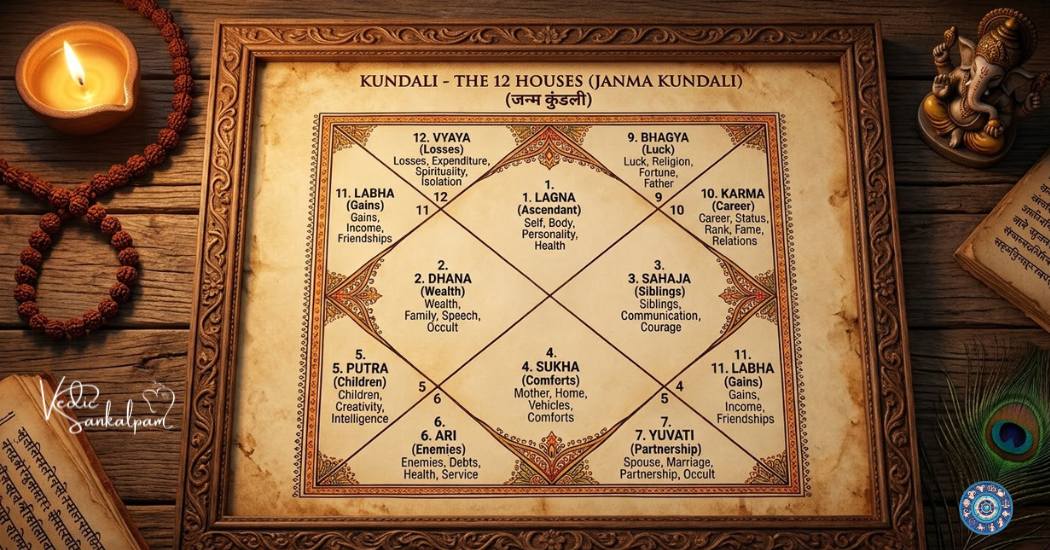
Yogas form based on the placement, conjunction, and aspects of planets in specific houses of your birth chart. The twelve houses in Vedic astrology represent different areas of life – from personality and wealth to relationships and spirituality. When planets interact in certain prescribed ways within these houses, Yogas are formed.

For instance, some Yogas require planets to be in angular houses (1st, 4th, 7th, and 10th), while others form when certain planets aspect each other from across the chart. The strength of a Yoga depends on factors like the dignity of the planets involved, their proximity to each other, and whether they’re afflicted by malefic influences.

Types of Beneficial Yogas (Shubh Yogas)

Let’s explore some of the most powerful and sought-after Yogas that can dramatically enhance different areas of your life.

Raj Yoga – The Yoga of Power and Success

Raj Yoga is perhaps the most celebrated combination in Vedic astrology. The term literally translates to “Royal Union,” and true to its name, this Yoga can bestow kingly status, authority, and tremendous success upon the native.

Raj Yoga forms when the lords of Kendra houses (1st, 4th, 7th, 10th) combine with the lords of Trikona houses (1st, 5th, 9th) through conjunction, mutual aspect, or exchange. When these planets come together harmoniously, they create a powerful synergy that can elevate a person to great heights in their chosen field.

However, here’s something many people don’t realize – having Raj Yoga in your chart doesn’t guarantee automatic success. The Yoga must be activated during the planetary periods (Dashas) of the involved planets, and the native must put in effort to actualize this potential.

Dhan Yoga – The Yoga of Wealth

Who doesn’t want financial prosperity? Dhan Yoga is the combination that indicates wealth accumulation and material abundance. This Yoga forms when there’s a connection between the lords of the 2nd, 5th, 9th, and 11th houses – all of which are associated with wealth, fortune, and gains in Vedic astrology.

The strength and nature of Dhan Yoga can vary significantly. Some combinations might indicate inherited wealth, others point toward self-earned prosperity, and some suggest wealth through speculation or sudden gains. Understanding the specific type of Dhan Yoga in your chart can help you align your financial strategies with your cosmic blueprint.

Gaja Kesari Yoga – The Yoga of Wisdom and Fame

Gaja Kesari Yoga is formed when Jupiter is in a Kendra (angular house) from the Moon. “Gaja” means elephant, and “Kesari” means lion – both symbols of power, dignity, and majesty in Indian culture. This beautiful combination bestows intelligence, wisdom, a good reputation, and lasting fame.

People with a strong Gaja Kesari Yoga often become leaders, teachers, or influential figures in their communities. They possess a natural charisma and the ability to inspire others with their knowledge and wisdom. This Yoga also indicates good relationships with family and a comfortable lifestyle.

Budhaditya Yoga – The Yoga of Intelligence

When Mercury (Budha) conjuncts the Sun (Aditya) in the same house, Budhaditya Yoga is formed. This combination enhances intellectual capabilities, communication skills, and analytical thinking. People blessed with this Yoga often excel in fields requiring mental acuity – such as writing, accounting, mathematics, astrology, or any profession where sharp thinking is paramount.

However, the effectiveness of this Yoga depends on the proximity of the two planets. If Mercury is too close to the Sun (combust), the benefits may be diminished. The house placement also matters significantly – this Yoga produces the best results in the 1st, 2nd, 4th, 5th, 9th, 10th, or 11th houses.

Understanding Doshas in Vedic Astrology

Now let’s turn our attention to the other side of the cosmic coin – Doshas. While Yogas represent beneficial combinations, Doshas indicate challenging planetary configurations that may create obstacles in various areas of life.

What Are Doshas and Why Do They Matter?

In Vedic astrology, “Dosha” literally means “fault” or “blemish.” Doshas are planetary combinations that can create difficulties, delays, or challenges in specific life areas. However, it’s crucial to understand that Doshas aren’t curses or doom sentences – they’re simply karmic indicators pointing toward areas that require extra attention and remedial measures.

Think of Doshas as road signs warning you of bumps ahead. Just because there’s a bump doesn’t mean you can’t continue your journey – it just means you need to slow down and navigate carefully. With proper awareness and remedies, the negative effects of most Doshas can be significantly reduced.

The Difference Between Yogas and Doshas

The fundamental difference between Yogas and Doshas lies in their outcomes. Yogas generally indicate areas where cosmic forces are aligned in your favor, creating opportunities for growth and success. Doshas, conversely, indicate areas where planetary energies may create friction or obstacles.

However, here’s an interesting perspective – even Doshas can have silver linings. The challenges they present often push individuals toward personal growth, spiritual development, and building resilience. Many highly successful people have significant Doshas in their charts, which they’ve overcome through determination and conscious effort.

Major Doshas You Should Know About

Let’s examine some of the most commonly discussed Doshas in Vedic astrology and understand their implications.

Mangal Dosha (Manglik Dosha)

Mangal Dosha, also known as Kuja Dosha or Manglik Dosha, is perhaps the most feared Dosha, especially in the context of marriage. This Dosha occurs when Mars (Mangal) is placed in the 1st, 4th, 7th, 8th, or 12th house from the Ascendant, Moon, or Venus.

Mars is a fiery, aggressive planet, and its placement in these houses is believed to create turbulence in marital life. The fear around Mangal Dosha has led to countless matches being rejected in traditional Indian matchmaking. However, it’s important to note that approximately 50% of the population has some form of Mangal Dosha, and most live perfectly happy married lives.

Several factors can cancel or reduce the effects of Mangal Dosha, including specific planetary aspects, the nature of the sign Mars occupies, and whether the prospective partner also has this Dosha (which is said to neutralize the effects).

Kaal Sarp Dosha

Kaal Sarp Dosha is formed when all seven planets are hemmed between Rahu (the North Node) and Ketu (the South Node) in the birth chart. This creates a serpentine pattern, hence the name “Kaal Sarp” (Serpent of Time).

This Dosha is associated with struggles, sudden setbacks, and feelings of being trapped in difficult circumstances. People with Kaal Sarp Dosha may experience delays in achieving their goals and may face unexpected obstacles just when success seems within reach.

However, many astrologers note that this Dosha also bestows a certain intensity and depth of character. Individuals with this configuration often develop strong spiritual inclinations and may achieve success later in life after overcoming significant challenges.

Pitra Dosha

Pitra Dosha relates to ancestral karma and is indicated by an affliction involving the Sun, Saturn, Rahu, and the 9th house in various combinations. “Pitra” means ancestors, and this Dosha suggests unresolved karmic debts from the paternal lineage.

People with Pitra Dosha may experience difficulties with their father, face obstacles in receiving ancestral property, or struggle with issues related to progeny. The remedy for this Dosha often involves honoring ancestors through specific rituals, charitable acts, and prayers.

Shani Dosha

When Saturn (Shani) is poorly placed or afflicting important houses in the birth chart, it creates what’s broadly termed Shani Dosha. Saturn is the planet of karma, discipline, and lessons learned through hardship. Its malefic influence can manifest as delays, chronic health issues, career setbacks, or relationship difficulties.

The most famous Saturn-related condition is “Sade Sati” – the seven-and-a-half-year period when Saturn transits through the 12th, 1st, and 2nd houses from your natal Moon. This period is often associated with significant life tests and transformations.

How to Identify Yogas and Doshas in Your Chart

Identifying Yogas and Doshas requires a careful analysis of your birth chart by a knowledgeable astrologer. While there are many software programs and online tools that can list the Yogas and Doshas in your chart, understanding their actual strength and impact requires expertise.

A competent Vedic astrologer will consider multiple factors: the strength of planets involved (through Shadbala calculations), the divisional charts (Vargas), the ongoing planetary periods (Dashas), and transits. They’ll also look at mitigating factors that might strengthen Yogas or weaken Doshas.

If you’re serious about understanding your cosmic blueprint, investing in a consultation with an experienced Vedic astrologer is highly recommended over relying solely on automated interpretations.

Remedies for Doshas in Vedic Astrology

The good news is that Vedic astrology doesn’t just diagnose problems – it also prescribes solutions. Various remedial measures can help mitigate the negative effects of Doshas.

Mantras and Prayers

Specific mantras dedicated to planetary deities can help appease malefic planets and strengthen benefic ones. For example, chanting the Hanuman Chalisa is recommended for those with Mars-related afflictions, while the Shani Stotra is prescribed for Saturn-related Doshas.

The key to mantra remedies is consistency and devotion. These aren’t magic spells but rather tools for focusing spiritual energy and aligning oneself with cosmic frequencies.

Gemstones and Their Healing Powers

Wearing specific gemstones corresponding to beneficial planets in your chart can help strengthen their positive influences. For instance, Yellow Sapphire strengthens Jupiter, Ruby enhances the Sun, and Pearl is associated with the Moon.

However, gemstone remedies must be prescribed carefully based on individual charts. Wearing the wrong gemstone can amplify negative energies instead of positive ones.

Charitable Acts and Rituals

Performing charitable acts related to specific planets is a powerful remedy accessible to everyone. Feeding crows on Saturdays (for Saturn), donating red lentils on Tuesdays (for Mars), or supporting educational initiatives (for Mercury) are examples of planet-specific charities.

Additionally, specific rituals like pujas, havans (fire ceremonies), and pilgrimages to sacred sites are traditionally recommended for severe Doshas.

Can Yogas Cancel Out Doshas?

This is a question many people ask, and the answer is nuanced. Yes, strong benefic Yogas can significantly mitigate the effects of Doshas. For instance, if someone has both Raj Yoga and Mangal Dosha, the positive effects of Raj Yoga may overshadow the challenges posed by the Mars affliction.

Additionally, certain planetary combinations naturally cancel Doshas. As mentioned earlier, Mangal Dosha has several cancellation conditions, and Kaal Sarp Dosha’s effects are said to reduce after the age of 33 or through specific spiritual practices.

The Role of Planetary Periods (Dashas) in Activating Yogas and Doshas

Here’s something crucial that many overlook – Yogas and Doshas don’t operate continuously throughout life. They get activated during specific planetary periods called Dashas and sub-periods called Antardashas.

This is why someone might have a powerful Raj Yoga in their chart but not experience its full benefits until the Dasha of the involved planet begins. Similarly, a Dosha might lie dormant for years until triggered by a related planetary period.

Understanding your current and upcoming Dashas can help you prepare for periods of opportunity as well as potential challenges.

Common Misconceptions About Yogas and Doshas

Let’s clear up some widespread misunderstandings. First, having a Yoga in your chart doesn’t guarantee its results – the Yoga must be strong, well-placed, and activated during the appropriate period. Second, Doshas aren’t death sentences – they indicate challenges, not inevitable disasters.

Third, and perhaps most importantly, your birth chart isn’t your fate set in stone. Vedic astrology believes in both destiny and free will. While certain karmic patterns are indicated in your chart, your conscious choices, efforts, and spiritual practices can significantly alter outcomes.

Conclusion

Yogas and Doshas represent the beautiful complexity of Vedic astrology – a system that acknowledges both the gifts and challenges written in our cosmic blueprint. Understanding these combinations isn’t about passively accepting fate; it’s about gaining insight into your inherent strengths and potential obstacles so you can navigate life more wisely.

Whether you have powerful Raj Yogas promising success or challenging Doshas indicating karmic lessons, remember that you are ultimately the author of your life story. The stars may incline, but they don’t compel. Use the wisdom of Vedic astrology as a tool for self-awareness and conscious living, and you’ll find that even the most challenging configurations can become stepping stones toward growth and fulfillment.


FAQs

1. Can Mangal Dosha be completely removed from my chart? Mangal Dosha cannot be “removed” as it’s a permanent feature of your birth chart. However, its effects can be significantly mitigated through remedies like specific pujas, wearing coral gemstones (if prescribed), marrying someone with similar Dosha, or performing charitable acts on Tuesdays.

2. How many Yogas can a person have in their birth chart? A single birth chart can contain multiple Yogas – sometimes dozens. However, the actual impact depends on their strength, the dignity of involved planets, and whether they get activated during your lifetime through planetary periods. Quality matters more than quantity.

3. Are Doshas always negative? Not necessarily. While Doshas indicate challenges, they often lead to personal growth, resilience, and spiritual development. Many successful individuals have significant Doshas that they’ve transmuted into sources of strength through conscious effort and remedial measures.

4. Can I check my Yogas and Doshas online? Yes, several websites and apps can generate your Vedic birth chart and list Yogas and Doshas. However, these automated interpretations often lack nuance. For accurate analysis, consulting an experienced Vedic astrologer who can assess the strength and actual impact of these combinations is recommended.

5. Do Yogas guarantee success and wealth? No, Yogas indicate potential, not guaranteed outcomes. For a Yoga to manifest its results, it must be strong in the chart, activated during the appropriate planetary period, and supported by the individual’s efforts. Think of Yogas as favorable winds – you still need to sail the ship.
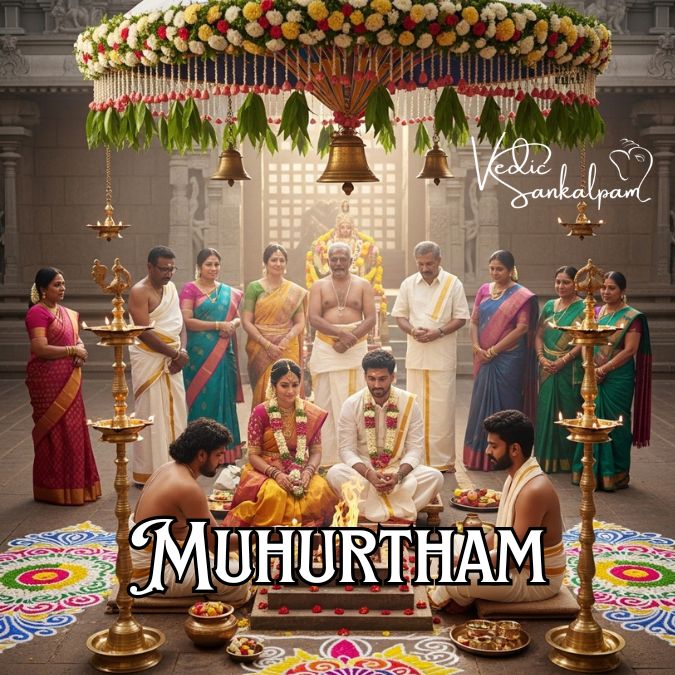
Muhurtham: The Ancient Art of Choosing the Perfect Moment

Have you ever wondered why your grandmother insists on starting important tasks at specific times? Or why Indian weddings happen at oddly precise hours, sometimes even before dawn? The answer lies in an ancient concept called Muhurtham – a practice that has guided millions of people for thousands of years. It’s not just superstition; it’s a sophisticated system of timing that connects us to cosmic rhythms in ways that might surprise you.

What Is Muhurtham?

Simply put, Muhurtham is the practice of selecting an auspicious time to begin important activities. Think of it like catching a wave at the perfect moment – timing is everything. Whether you’re getting married, starting a business, moving into a new home, or even taking medicine, traditional Hindu wisdom says that when you do something matters just as much as what you do.

The Sanskrit Origin and Meaning

The word Muhurtham comes from two Sanskrit roots: “Muhu” meaning moment or immediate, and “Rta” meaning order. Muhu means immediate or a moment, and Rta refers to an order. So essentially, Muhurtham refers to the natural order of moments – a recognition that time itself has different qualities at different points throughout the day.

Muhurtham as a Unit of Time

Here’s where it gets interesting. A Muhūrta denotes a division of time: 1/30 of a day, or a period of 48 minutes. That’s right – the ancient Hindus divided each day into 30 equal parts, each lasting about 48 minutes. Each muhūrta is further divided into 30 kalā, with 1 kalā equaling 1.6 minutes or 96 seconds. This incredibly precise system shows just how seriously our ancestors took the measurement of time.


The Historical Roots of Muhurtham

References in Vedic Scriptures

The concept of Muhurtham isn’t some recent invention – it goes back thousands of years. The term appears as early as the Ṛg Veda, where it means “a moment.” The ancient sages observed nature, studied the movements of celestial bodies, and developed this system through careful observation and spiritual insight.

It is stated in Manusmṛti that 18 nimeṣas (“twinklings of the eye”) are 1 kāṣṭhā, 30 kāṣṭhās are 1 kāla, 30 kālas are one muhūrta, and 30 muhūrtas are one day and night. The precision here is remarkable – they measured time starting from something as brief as the blink of an eye!

Evolution Through Ancient Texts

Over centuries, the understanding of Muhurtham evolved and became more sophisticated. In the Taittarīya Brāhmaṇa, the 15 names of the muhūrta of day and night have been given. Different texts offered varying perspectives, but the core idea remained constant – certain moments carry different energies, and aligning our actions with favorable times increases our chances of success.


Why Is Muhurtham Important in Hindu Culture?

The Science Behind Auspicious Timing

You might be wondering, “Is there any real science behind this?” Interestingly, there is. The gravitational force between the planets of the solar system makes a lot of difference on the living and nonliving things on the earth. For example, the gravitational force between the Moon and the earth causes the high and low tides in the ocean.

If the moon can move entire oceans, isn’t it reasonable to think it might affect us too? Our bodies are mostly water, after all. The effect of sun’s rays on biological activity and those of the moon on psychological processes is well-established.

Planetary Influences on Human Life

Muhurtham is a typical combination of the planets in the sky which make a favorable effect on the human beings. Ancient astrologers believed that different planetary alignments create different energetic conditions. Starting an activity during a favorable alignment is like sailing with the wind rather than against it.


Types of Muhurtham You Should Know

Muhurtham
Muhurtham

Not all Muhurthams are created equal. As per the ancient scriptures, the Muhurtas can either be auspicious, neutral, or inauspicious. Let’s explore the most important ones.

Brahma Muhurtham – The Creator’s Time

This is perhaps the most famous and revered of all Muhurthams. Brahma Muhurta literally means, The Creator’s Time! The Creator or Brahma is the ultimate knowledge and Muhurta means time period.

Brahma Muhurta starts exactly 2 Muhurta before sunrise. Hence, it begins 1 hr and 36 mins before sunrise and ends 48 mins before it. This period, typically falling between 4:00 AM and 5:30 AM, is considered the most sacred time of the day.

Why is it so special? During this peaceful time, the energy of the universe is in perfect balance and there are minimal distractions, making it easier to concentrate on practice. Yogis, meditators, and spiritual seekers have used this time for thousands of years to deepen their practice.

Abhijit Muhurtham – The Victorious Hour

Abhijit literally means victorious. Abhijit Muhurtham is the timing at which the event or activity initiated will make the native victorious. This powerful Muhurtham occurs around midday when the sun is at its peak.

The Astrological aspect behind the Abhijit Muhurtham is that this is the time when the Sun locates himself in the 10th house from the lagna, and the 10th represents the house of Karmas. Placement of the Sun means success.

This Muhurtham has no dependence on Tithi, Nakshatra, Rasi or month. This Muhurtham is present every day and its duration is around 48 minutes. It’s like a daily window of opportunity that’s available to everyone!

Choghadiya Muhurtham – For New Beginnings

Choghadiya Muhurta is an auspicious time best suited to start new work. Here each period is equal to one and a half hours. This system divides the day into different types of energy periods.

Shubh, Labh, and Amrit Muhurtham

The favorable Muhurtas are Shub, Labh, and Amrit. The inauspicious Muhurtas are Rog, Kal, and Udveg. Shubh means auspicious, Labh means profit, and Amrit means nectar – each carries its own special energy for different types of activities.


Muhurtham in Hindu Weddings

Perhaps nowhere is Muhurtham more important than in Hindu weddings. In the context of Indian weddings, “Muhurtham” refers to the auspicious or favorable time chosen for conducting the wedding ceremony.

How Wedding Muhurtham Is Calculated

Based on the couple’s horoscopes, the Priest determines the most auspicious day to conduct the marriage and time to start the ceremony. The calculation is derived from Hindu Vedic Astrology.

There is no fixed formula to calculate an auspicious Muhurat for marriage rituals. Even Hindu sages had different viewpoints on some of the elements considered while selecting auspicious marriage dates. The process considers multiple factors including lunar days, star positions, and planetary alignments.

The Role of Horoscopes and Astrology

Monday, Wednesday, Thursday, and Friday are considered best for marriage. Sunday and Saturday are moderate days. Tuesday should be avoided.

Taurus, Gemini, Cancer, Virgo, Libra, Sagittarius and Pisces are best lagnas for marriage. Jupiter or Venus should be in lagna or aspecting it for the best possible time.

The astrologer carefully examines both families’ charts, looking for compatibility and the most harmonious time for the union. The selection of an auspicious Muhurtham is believed to bring good luck, harmony, and blessings to the couple and their married life.


Benefits of Brahma Muhurtham for Meditation and Yoga

If you’re serious about spiritual practice, Brahma Muhurtham deserves your attention. Brahma muhurta is considered to be the ideal time to practice asanas, pranayama, or meditation.

Physical and Mental Health Benefits

Waking up at Brahma Muhurta will benefit your lungs in breathing fresh and unpolluted oxygen. The air quality at this time is generally better, with less pollution and higher oxygen content.

Research shows that high oxygen levels improve brain functioning and boost energy. Performing exercises or yoga during Brahma Muhurta increases lung capacity.

Modern science suggests that the natural production of melatonin is high during Brahma Muhurta. Melatonin is responsible for preparing our body for a conducive atmosphere, which is why meditation is more impactful in this period.

Spiritual Growth and Inner Peace

Spiritually, Brahma Muhurta is said to open a direct pathway to higher consciousness. The subtle energies present in this period make meditation deeper, prayers more effective, and intentions more powerful.

During Brahma Muhurta, Prana Vayu and Apana Vayu are the most active. Prana Vayu increases the intake of Cosmic energy, while Apana Vayu helps with the outward movement of air, detoxing us from negativity.

The only time when you are fresh, aware, and can easily tune within is Brahma Muhurta timing, making it a special time for yourself.


How to Calculate Your Own Muhurtham

Key Factors in Muhurtham Selection

When determining an auspicious time, several elements come into play:

Muhurta is only one of the four elements that play a role in the success of an event. The other three are Tithi, Nakshatra, and Karaṇa.

The key considerations include the weekday, lunar phase, star constellation the moon is passing through, and the rising sign at the moment the activity begins. All these factors must align favorably for a truly auspicious Muhurtham.

Modern Tools and Resources

While traditional calculations required deep astrological knowledge, today we have tools to help. Many websites and apps can calculate Muhurthams based on your location and the type of activity you’re planning. However, for important life events like weddings, consulting a learned astrologer is still recommended.

Panchang Shuddhi is the first step to decide an auspicious marriage day, and a learned scholar in astrology should be consulted before choosing a marriage date.


Common Misconceptions About Muhurtham

Many people think Muhurtham is pure superstition with no basis in reality. But as we’ve seen, there’s a complex system of astronomical observations behind it. Others believe that missing a good Muhurtham dooms an activity to failure – that’s also not true. While favorable timing can help, it’s not the only factor in success.

Some sages have said that if one’s mind is pure, all the planets will become favorable, and it is not necessary to find an auspicious time to do something. Your intentions and efforts matter too!


Muhurtham in Modern Life

In our fast-paced world, can Muhurtham still be relevant? Absolutely! Jakatdar suggests a shift in the contemporary temperament regarding the traditional approach to calculating such events, to accommodate the ever increasing complexity of modern life.

You don’t have to plan every activity around Muhurtham, but understanding these principles can help you make more conscious choices about timing. Even if you’re skeptical, there’s wisdom in the idea that timing matters – ask any successful person about the importance of good timing!


Conclusion

Muhurtham represents thousands of years of human observation, spiritual insight, and practical wisdom compressed into a system for choosing favorable moments. Whether you see it through the lens of science, spirituality, or simple respect for tradition, there’s something profound about the idea that time has quality, not just quantity.

From the sacred Brahma Muhurtham before dawn to the victorious Abhijit Muhurtham at midday, these ancient concepts continue to guide millions in their important life decisions. Even in our modern age of scientific rationalism, the practice endures – perhaps because at some deep level, we all sense that certain moments really are more special than others.

So the next time you’re about to start something important, take a moment to consider – is this the right time? You might just find that the ancient wisdom of Muhurtham has something valuable to offer your modern life.


FAQs

1. What is the best Muhurtham for starting a new business?

Abhijit Muhurtham, which occurs around midday, is considered excellent for new ventures as it’s associated with victory and success. Consulting a Panchang or astrologer for your specific date can help you find the most auspicious time.

2. How early should I wake up for Brahma Muhurtham?

Brahma Muhurtham begins approximately 1 hour and 36 minutes before sunrise and lasts for 48 minutes. Since sunrise times vary by location and season, you’ll need to calculate based on your local sunrise time.

3. Can I still succeed if I miss an auspicious Muhurtham?

Absolutely! While favorable timing can provide support, your effort, intention, and actions play crucial roles in any outcome. Many sages have taught that a pure mind and sincere effort can overcome any planetary challenges.

4. Is Muhurtham the same as Muhurat?

Yes, they’re the same concept – just different spellings. “Muhurtham” is more commonly used in South India, while “Muhurat” is the North Indian pronunciation. Both refer to the auspicious time period.

5. How do astrologers calculate wedding Muhurtham?

Astrologers consider multiple factors including the bride and groom’s birth charts, favorable nakshatras (star constellations), auspicious weekdays, lunar phases, and planetary positions to find the most harmonious time for the wedding ceremony.


Lagna: The Complete Guide to Understanding Your Ascendant in Vedic Astrology

Have you ever wondered why two people born under the same zodiac sign can have such different personalities? The answer often lies in something called Lagna. If you’ve dabbled in astrology, you’ve probably heard this term thrown around, but what does it really mean? And more importantly, why does it matter so much in understanding who you are?

Let’s dive deep into the fascinating world of Lagna and discover how this ancient concept can unlock secrets about your personality, life path, and destiny.

What Is Lagna?

Think of Lagna as your cosmic fingerprint. In Vedic astrology, Lagna refers to the zodiac sign that was rising on the eastern horizon at the exact moment you were born. It’s also commonly known as the Ascendant or Rising Sign. While your Sun sign gets all the spotlight in Western astrology, Vedic astrologers consider Lagna the foundation of your entire birth chart.

The Literal Meaning of Lagna

The word “Lagna” comes from Sanskrit and literally means “to attach” or “to connect.” It represents the point where your soul attached itself to the physical world at the moment of birth. Pretty profound, right? This connection point becomes the lens through which you experience life and how the world perceives you.

Lagna vs. Sun Sign: What’s the Difference?

Here’s where things get interesting. Your Sun sign represents your core identity and ego—it’s the essence of who you are at your deepest level. Your Lagna, on the other hand, is like the mask you wear when you meet the world. It’s your physical appearance, your first impressions, and how you naturally approach life’s challenges.

Imagine your Sun sign as your soul and your Lagna as your body and behavior. Both are crucial, but they serve different purposes. Someone with a fiery Aries Sun might appear calm and reserved if they have a Capricorn Lagna. This explains why you might not always “feel like” your Sun sign.


The Importance of Lagna in Your Birth Chart

Your birth chart is like a snapshot of the sky at your birth moment. And guess what sits at the very foundation of this cosmic map? That’s right—your Lagna.

Why Astrologers Prioritize Lagna

In Vedic astrology, practitioners often give more weight to Lagna than to the Sun sign. Why? Because Lagna determines the entire structure of your horoscope. It sets the stage for all twelve houses, positioning planets and predicting how different life areas will unfold for you.

When an experienced astrologer reads your chart, they start with Lagna. It’s like reading the first chapter of a book—everything else makes more sense once you understand this starting point.

How Lagna Shapes Your Personality

Your Lagna influences several key aspects of your life. First, there’s your physical appearance—certain ascendants tend to produce specific body types and facial features. Then there’s your temperament and how you instinctively react to situations. Your Lagna also affects your health predispositions and even your overall approach to life.

Ever notice how some people jump into new situations with enthusiasm while others prefer to observe first? Much of this behavioral tendency comes from their Lagna.


How Is Lagna Calculated?

Lagna
Lagna

Calculating your Lagna isn’t as simple as knowing your birthday. It requires precise information and some mathematical wizardry.

The Role of Birth Time and Location

Here’s the thing—your Lagna changes approximately every two hours. That’s why knowing your exact birth time is absolutely crucial. A difference of just a few minutes can sometimes shift your Lagna to an entirely different sign, completely changing your chart interpretation.

Your birth location matters too. The eastern horizon looks different depending on where you are on Earth. Someone born at the same moment in New York and Tokyo would have different Lagnas because they’re looking at different parts of the sky.

Understanding the Rising Sign Concept

Picture yourself standing outside at the moment of your birth, facing east. Whatever zodiac constellation was climbing over the horizon at that exact instant becomes your Lagna. The sky keeps rotating, so different signs rise throughout the day—making each two-hour window unique.

This is why twins born even minutes apart can have slightly different charts, and why astrologers need that precise birth time to give accurate readings.


The 12 Types of Lagna and Their Characteristics

Each zodiac sign brings its own flavor when it becomes your Lagna. Let’s explore what each ascending sign means for your personality and life approach.

Aries Lagna (Mesha)

If you have Aries rising, you’re a natural pioneer. You approach life with courage, enthusiasm, and sometimes impatience. People see you as confident and direct, sometimes even aggressive. You have strong leadership qualities and hate waiting around for things to happen.

Taurus Lagna (Vrishabha)

Taurus ascendants exude stability and reliability. You move through life at your own pace, and nobody can rush you. There’s an appreciation for beauty, comfort, and the finer things in life. People find you grounded and trustworthy, though sometimes stubborn.

Gemini Lagna (Mithuna)

With Gemini rising, you’re eternally curious and mentally agile. Communication comes naturally to you, and you can adapt to almost any social situation. You appear youthful regardless of age and have a way with words that draws people in.

Cancer Lagna (Karka)

Cancer ascendants approach the world with emotional sensitivity and nurturing instincts. Home and family often take center stage in your life. You have powerful intuition and can read people’s emotions effortlessly. There’s a protective shell you carry, but inside you’re incredibly caring.

Leo Lagna (Simha)

Leo rising individuals command attention without even trying. You carry yourself with dignity and natural authority. Creativity flows through you, and you have a generous spirit that wants to share your light with others. Pride matters to you—sometimes too much.

Virgo Lagna (Kanya)

Virgo ascendants possess sharp analytical minds and attention to detail that others miss. You approach life methodically, always looking for ways to improve and perfect. Health and wellness often become important themes. People see you as helpful, practical, and sometimes overly critical.

Libra Lagna (Tula)

With Libra rising, harmony and balance guide your actions. You have natural charm and diplomatic skills that make you excellent at handling people. Relationships take high priority, and you genuinely struggle with conflict and discord.

Scorpio Lagna (Vrishchika)

Scorpio ascendants possess an intensity that others can feel immediately. You’re perceptive, powerful, and unafraid of life’s darker corners. Transformation is a constant theme in your life. People either feel drawn to your magnetic presence or intimidated by it.

Sagittarius Lagna (Dhanu)

Sagittarius rising individuals radiate optimism and adventure. You approach life as a grand journey of learning and exploration. Philosophy, travel, and higher knowledge attract you naturally. There’s an honesty and openness about you that people find refreshing.

Capricorn Lagna (Makara)

Capricorn ascendants take life seriously from an early age. Ambition drives you, and you’re willing to work hard and long for your goals. You appear mature, responsible, and sometimes reserved. Success usually comes through patience and persistence.

Aquarius Lagna (Kumbha)

With Aquarius rising, you march to your own drum. Originality and independence define your approach to life. You think about humanity and the collective, often championing causes bigger than yourself. People find you unique, sometimes eccentric, always interesting.

Pisces Lagna (Meena)

Pisces ascendants possess deep spiritual sensitivity and creative imagination. You absorb emotions and energies around you like a sponge. There’s a dreamy quality to your presence, and you often feel connected to something greater than the material world.


Lagna and the Twelve Houses

Your Lagna doesn’t just stand alone—it creates the entire framework for your birth chart’s twelve houses.

How Lagna Determines House Placement

Once your Lagna is established, it becomes your First House. Every subsequent house follows in order around the zodiac. This means your Lagna sign determines which areas of life get governed by which planets.

The Connection Between Lagna and Life Areas

Let’s say you have Leo Lagna. Your First House of self and identity gets Leo energy. Virgo naturally falls into your Second House of wealth and values. Libra governs your Third House of communication, and so on around the wheel.

This positioning affects everything—from your career prospects to your relationships, from your health patterns to your spiritual journey. It’s like your Lagna sets up the playing field where the planetary game of life unfolds.


Lagna Lord: The Ruler of Your Chart

Every Lagna has a ruling planet, called the Lagna Lord or Ascendant Lord. This planet holds special significance in your chart.

Finding Your Lagna Lord

Each zodiac sign is ruled by a specific planet. Mars rules Aries, Venus rules Taurus, Mercury rules Gemini, and so forth. Whatever planet rules your rising sign becomes your Lagna Lord.

The Significance of Lagna Lord Placement

Your Lagna Lord’s position in your chart reveals crucial information about your life direction and physical vitality. A well-placed Lagna Lord brings strength, health, and success. A challenged Lagna Lord might indicate struggles that require extra effort to overcome.

Astrologers pay special attention to which house your Lagna Lord occupies, what aspects it receives, and whether it’s in a friendly or hostile sign. This single planet can tell volumes about your life story.


Different Types of Lagna in Vedic Astrology

Beyond the main Lagna, Vedic astrology uses several other reference points to deepen chart analysis.

Chandra Lagna (Moon Ascendant)

Chandra Lagna uses your Moon sign as the first house instead of the rising sign. Since the Moon represents your mind and emotions, this perspective reveals your emotional nature and mental patterns. Many astrologers analyze charts from both Lagna and Chandra Lagna for a complete picture.

Surya Lagna (Sun Ascendant)

Similarly, Surya Lagna places the Sun sign as the first house. This viewpoint illuminates your soul’s purpose, authority, and ego expression. It’s particularly useful for understanding career and public life.

Navamsa Lagna

The Navamsa chart is like a microscope for your birth chart. The Navamsa Lagna specifically relates to marriage, spiritual development, and the deeper layers of your destiny. Serious astrologers never skip examining this crucial divisional chart.


Common Misconceptions About Lagna

Let’s clear up some confusion that surrounds this topic.

First, Lagna is not the same as your Sun sign. Many people confuse these, but they’re entirely different concepts. Second, your Lagna doesn’t change throughout your life—it’s fixed at birth. What does change is how planetary transits affect your natal Lagna over time.

Another misconception is that one Lagna is “better” than another. Each ascendant has its strengths and challenges. There’s no cosmic ranking system that favors certain rising signs over others.


How to Use Your Lagna for Personal Growth

Understanding your Lagna opens doors for self-improvement. Once you know your ascending sign, you can work with its energy instead of against it.

If you have a fire Lagna, channel that energy into physical activity and leadership roles. Water Lagnas benefit from creative and emotional outlets. Earth Lagnas thrive with practical goals and tangible achievements. Air Lagnas need intellectual stimulation and social connections.

Your Lagna also highlights your vulnerabilities. Knowing these allows you to prepare, protect, and develop strategies for growth in challenging areas.


Conclusion

Lagna stands as one of the most important concepts in Vedic astrology. It’s far more than just another astrological term—it’s the foundation upon which your entire birth chart rests. Understanding your Lagna reveals why you approach life the way you do, how others perceive you, and what themes will color your life journey.

Whether you’re a skeptic or a believer, exploring your Lagna can offer fascinating insights into your personality and potential. It’s one piece of the cosmic puzzle that makes you uniquely you.


FAQs About Lagna

1. Can my Lagna and Sun sign be the same? Absolutely! If you were born around sunrise, your Sun and Lagna would be in the same sign. This alignment creates a more straightforward personality where your inner self and outer presentation match closely.

2. How do I find out my Lagna if I don’t know my exact birth time? Without an exact birth time, determining Lagna becomes challenging. Some astrologers use rectification techniques—working backward from life events to estimate your birth time. However, these methods require expertise and aren’t always precise.

3. Does Lagna affect compatibility in relationships? Yes, Lagna plays a significant role in compatibility analysis. In Vedic astrology, matching Lagnas and their lords helps assess how two people will interact and support each other in marriage or partnership.

4. Why is Lagna considered more important than Sun sign in Vedic astrology? Lagna determines the entire house structure of your chart, affecting how all planets express themselves in your life. It represents your physical existence and life approach, making it the practical starting point for all predictions.

5. Can I have traits from multiple Lagnas? While you have only one Lagna, planets in your first house or aspects to your ascendant can modify how your Lagna expresses itself. Additionally, examining Chandra Lagna and Navamsa Lagna reveals additional personality layers beyond your main ascendant.


Anuradha Nakshatra – Meaning, Traits & Complete Astrology Guide

Anuradha Nakshatra is one of the most mystical, magnetic, and spiritually awakened constellations in Vedic Astrology. People born under this star possess an aura of depth, mystery, charm, and emotional intensity. Ruled by Mitra, the deity of friendship and harmony, Anuradha represents balance, devotion, compassion, and the power of maintaining relationships even through hardships.

Let’s dive into everything you need to know about this fascinating nakshatra.


Introduction to Anuradha Nakshatra

What is Anuradha Nakshatra?

Anuradha Nakshatra is the 17th lunar constellation, falling entirely within the intense and mysterious sign of Scorpio. It represents spiritual devotion, emotional resilience, and the ability to grow through difficulties.

People born under this nakshatra often have strong intuition, a magnetic personality, and a naturally healing presence.

Symbol, Deities & Planetary Ruler

  • Symbol: A lotus flower or staff

  • Deity: Mitra – god of friendship, harmony & devotion

  • Planetary Ruler: Saturn

  • Element: Water

  • Nature: Soft, devotional, mystical

The lotus symbol signifies rising above struggles gracefully — which perfectly describes Anuradha natives.

Position in the Zodiac

Anuradha spans 3°20’ to 16°40’ in Scorpio, a sign known for intensity, transformation, and hidden power.


Mythological Background

Connection to Mitra

Mitra represents friendship, unity, and compassion. Under Mitra’s influence, Anuradha people:

  • value relationships deeply

  • are loyal and dependable

  • become natural peacemakers

The Healing & Devotional Energy of Anuradha

This nakshatra helps in:

  • emotional healing

  • spiritual growth

  • balancing intense emotions

Their life often revolves around overcoming emotional storms and emerging stronger.


Key Characteristics of Anuradha Nakshatra

Positive Personality Traits

People born in Anuradha are:

  • charming and magnetic

  • loyal and trustworthy

  • disciplined, determined, hardworking

  • spiritually sensitive

  • excellent at maintaining relationships

  • intuitive and emotionally deep

Challenging Traits

However, they may sometimes:

  • be overly emotional

  • struggle with jealousy or possessiveness

  • hide feelings

  • appear distant or mysterious

  • experience emotional ups and downs

Behavioral Patterns & Emotional Nature

Their emotions run deep, but they rarely show everything on the surface. They observe, analyze, and are often protective of their personal space.


Physical Appearance of Anuradha Natives

Common Body Features

  • sharp eyes

  • magnetic gaze

  • athletic or well-structured body

  • intense expressions

Aura, Expressions & Presence

Anuradha people have an unmistakable aura — a mysterious yet comforting presence. They attract attention without trying.


Career & Profession

Best Career Choices for Anuradha Nakshatra

They excel in careers involving:

  • research & investigation

  • psychology & counseling

  • medicine or healing

  • occult & astrology

  • politics

  • management

  • creative arts

  • technology

Natural Talents

  • leadership

  • emotional intelligence

  • deep focus

  • problem-solving

  • persuasive communication

Professional Weaknesses

  • overthinking

  • taking things personally

  • difficulty trusting colleagues


Love, Relationships & Marriage

Traits in Romance

Anuradha natives are passionate lovers. They value:

  • loyalty

  • emotional depth

  • trust

  • long-term stability

They may take time to open up but are deeply committed once they do.

Ideal Partner Compatibility

Best matches include:

  • Jyeshtha

  • Swati

  • Rohini

  • Uttara Phalguni

How Anuradha Handles Conflicts

They avoid fights but may become withdrawn when hurt. They need partners who understand their emotional depth.


Family Life & Friendships

Role Within Family

They often become:

  • emotional protectors

  • problem solvers

  • pillars of stability

Relationship With Parents & Siblings

Their bond may be emotionally complex but deeply loving.


Health & Wellness

Common Health Issues

  • reproductive issues

  • hormonal imbalances

  • anxiety or emotional burnout

  • throat-related problems

Emotional/Mental Health Traits

They feel emotions intensely and require healthy outlets like meditation, journaling, or therapy.


Anuradha Nakshatra Pada Analysis

Anuradha Nakshatra
Anuradha Nakshatra

Pada 1 (Leo Navamsa)

  • Ambitious

  • Strong leadership qualities

  • Attractive personality

Pada 2 (Virgo Navamsa)

  • Analytical

  • Perfection-seeking

  • Spiritually inclined

Pada 3 (Libra Navamsa)

  • Balanced

  • Charming

  • Excellent relationship-builders

Pada 4 (Scorpio Navamsa)

  • Deeply emotional

  • Mysterious

  • Highly intuitive


Male & Female Natives

Anuradha Nakshatra Male Traits

  • sincere

  • responsible

  • intelligent

  • respectful of relationships

Anuradha Nakshatra Female Traits

  • graceful

  • compassionate

  • charming

  • emotionally strong but sensitive


Compatibility With Other Nakshatras

Best Matches

  • Jyeshtha

  • Rohini

  • Swati

Average Matches

  • Ardra

  • Chitra

  • Purva Bhadrapada

Challenging Matches

  • Bharani

  • Krittika

  • Mula


Remedies & Strengthening Techniques

Mantras

Chanting the following helps:

  • “Om Mitraya Namaha”

  • “Om Sham Shanicharaya Namaha”

Recommended Gemstones

  • Blue Sapphire (only with expert guidance)

  • Amethyst

  • Pearl

Rituals & Lifestyle Practices

  • meditation

  • emotional journaling

  • practicing compassion

  • avoiding toxic relationships


Famous Personalities Born in Anuradha Nakshatra

  • Swami Vivekananda

  • Indira Gandhi

  • Shah Rukh Khan
    (These personalities display powerful emotional depth and leadership qualities.)


Conclusion

Anuradha Nakshatra is a powerful blend of devotion, discipline, mystery, and emotional resilience. People born under this star carry an inner strength that helps them rise above challenges, much like a lotus emerging from muddy waters. Their emotional depth, loyalty, and natural charisma make them unforgettable individuals who bring harmony and healing wherever they go.


FAQs

1. Is Anuradha Nakshatra good for marriage?

Yes, it is considered very auspicious due to its loyalty, devotion, and emotional maturity.

2. What is the ruling planet of Anuradha?

Saturn rules Anuradha Nakshatra.

3. Which god is associated with Anuradha?

Mitra, the god of friendship and devotion.

4. What careers suit Anuradha natives?

Fields involving research, healing, psychology, leadership, and creativity.

5. What are the main qualities of Anuradha people?

Loyal, intuitive, devoted, charismatic, and emotionally deep.

Shatabhisha Nakshatra – Meaning, Traits, Compatibility & Spiritual Significance

Introduction to Shatabhisha Nakshatra

Shatabhisha Nakshatra, also known as the “Hundred Healers,” is the 24th lunar constellation in Vedic Astrology. Positioned in the sign of Aquarius, this nakshatra is ruled by Rahu and blessed by Varuna, the cosmic god of rain, healing, and hidden truths. People born under this nakshatra are often mysterious, intellectual, and naturally inclined toward healing—be it physical, emotional, or spiritual.

If you’ve ever met someone deeply analytical yet spiritually curious, chances are they belong to Shatabhisha Nakshatra.


Mythological Background

The Ruling Deity Varuna

Varuna, the god of cosmic waters and universal law, governs Shatabhisha. He grants natives an innate understanding of hidden realms—mysticism, psychology, and spirituality. His influence also brings introspective abilities and a deep sense of accountability.

Symbolism of the “100 Physicians”

The name “Shatabhisha” literally translates to “hundred healers” or “hundred medicines.” This symbolizes the nakshatra’s association with healing, rejuvenation, and restoration. People Born under this star often develop an interest in medicine, research, therapy, alternative healing, or spiritual guidance.


Characteristics of Shatabhisha Nakshatra

Personality Traits

People of this nakshatra are:

  • Deep thinkers

  • Observant and detached

  • Emotionally complex

  • Highly intelligent

  • Mysterious and introverted

They prefer solitude, but when they interact, their words carry wisdom and clarity.

Strengths

  • Strong analytical mind

  • Excellent problem-solving

  • Spiritual depth

  • Ability to heal others

  • Visionary ideas

Weaknesses

  • Emotional detachment

  • Trust issues

  • Prone to loneliness

  • Overthinking

  • Sudden mood fluctuations


Male & Female Natives of Shatabhisha Nakshatra

Shatabhisha Nakshatra

Traits of Male Natives

Male natives are disciplined, hardworking, and intelligent. They are known for their independence and dislike restrictions. These men possess a sharp intellect and often succeed in research-based careers.

Traits of Female Natives

Females born under Shatabhisha are graceful, strong-willed, and insightful. They have a natural psychic intuition and often excel in creative or healing professions. These women value their privacy and are selective in relationships.


Career & Professional Life

Best Career Paths

Shatabhisha natives thrive in fields involving analysis, healing, and discovery:

  • Medical professions

  • Research & development

  • Psychology & counseling

  • Alternative medicine

  • IT, AI, and technology

  • Astrology & occult sciences

  • Marine-related careers

Workstyle & Strengths at Workplace

They work best independently and shine when given the freedom to innovate. Their ability to see beyond the obvious makes them valuable in complex tasks.


Love, Marriage & Relationship Compatibility

Compatible Nakshatras

Shatabhisha matches well with:

  • Swati

  • Shatabhisha (same nakshatra)

  • Ardra

These nakshatras resonate with similar intellectual and emotional frequencies.

Challenging Matches

  • Magha

  • Ashlesha

  • Purva Phalguni

Differences in emotional needs can make these matches more challenging.


Health & Wellness

Common Health Issues

Because of Rahu’s influence, natives may face:

  • Anxiety

  • Stomach-related issues

  • Sleep disorders

  • Nervous system problems

  • Sudden illnesses

Holistic Healing Tendencies

They respond well to:

  • Meditation

  • Yoga

  • Natural remedies

  • Energy healing

  • Water therapies


Spiritual Importance

Connection with Mystery & Healing

Shatabhisha natives naturally gravitate toward the occult, healing, and spiritual sciences. They possess a unique ability to sense energy and hidden truths.

Influence of Lord Varuna

Varuna brings purification, wisdom, and intuition. He helps the native overcome illusions and understand deeper life meanings.


Shatabhisha Nakshatra Padas

Pada 1 (Aquarius Navamsa)

Intellectual, introverted, spiritually curious.

Pada 2 (Pisces Navamsa)

Creative, emotional, intuitive, and compassionate.

Pada 3 (Aries Navamsa)

Bold, dynamic, leadership qualities, driven by ambition.

Pada 4 (Taurus Navamsa)

Practical, grounded, materialistic inclinations, strong focus on stability.


Positive & Negative Effects

When Well-Placed

  • Great wisdom

  • Successful career

  • Powerful intuition

  • Emotional and spiritual healing

When Afflicted

  • Confusion

  • Addiction tendencies

  • Isolation

  • Health issues


Remedies for Shatabhisha Nakshatra

Mantras

Chanting the following mantras helps calm Rahu’s energy:

  • “Om Ram Rahave Namah”

  • “Om Varunaya Namah”

Gemstones

  • Hessonite (Gomed) under proper guidance

  • Aquamarine for emotional balance

Rituals & Practices

  • Water donation

  • Meditation

  • Visiting temples of Varuna

  • Practicing emotional grounding


Famous Personalities Born in Shatabhisha

  • Many spiritual gurus

  • Technological innovators

  • Medical researchers
    (Actual names vary depending on chart accuracy.)


Conclusion

Shatabhisha Nakshatra is a powerful and mysterious star that blends intellect, healing, and deep spirituality. Natives possess a rare gift—an inquisitive mind paired with an intuitive heart. With the right guidance, they can become innovators, healers, and changemakers in society. Understanding their traits helps them embrace their true potential and live a balanced life.


FAQs

1. What is Shatabhisha Nakshatra known for?

It is known for healing, intelligence, and strong analytical abilities.

2. Which deity rules Shatabhisha Nakshatra?

Lord Varuna, the god of cosmic waters and truth.

3. What are common professions for Shatabhisha natives?

Medical, research, technology, psychology, and spiritual fields.

4. Which planet rules this nakshatra?

Rahu is the ruling planet.

5. What is the symbol of Shatabhisha?

A circle or hundred physicians representing healing energies.


Arudha Lagna: A Complete Guide to Your Manifested Self in Vedic Astrology

Introduction to Arudha Lagna

When people talk about astrology, they usually refer to the ascendant or zodiac signs. But there is another powerful concept in Vedic astrology that reveals how the world perceives you — the Arudha Lagna. While your ascendant shows your true self, Arudha Lagna shows your public image, reputation, and the “projected version” of your personality.

What is Arudha Lagna in Vedic Astrology?

Arudha Lagna is not about who you truly are. It is about how people think you are.

Literal Meaning of Arudha

The word Arudha means:

  • Mounted

  • Raised

  • Elevated

  • Projected

It represents something that is seen or visible.

The Concept of “Manifested Image”

Arudha Lagna reflects:

  • Your social presence

  • Your public reputation

  • What people assume about your personality

  • Your fame or influence

  • The outer image you display

Think of it like your “brand image” — the version of you that the world believes in, whether accurate or not.


How Arudha Lagna is Calculated

Step-by-Step Calculation

The calculation might sound technical, but here’s the simple method:

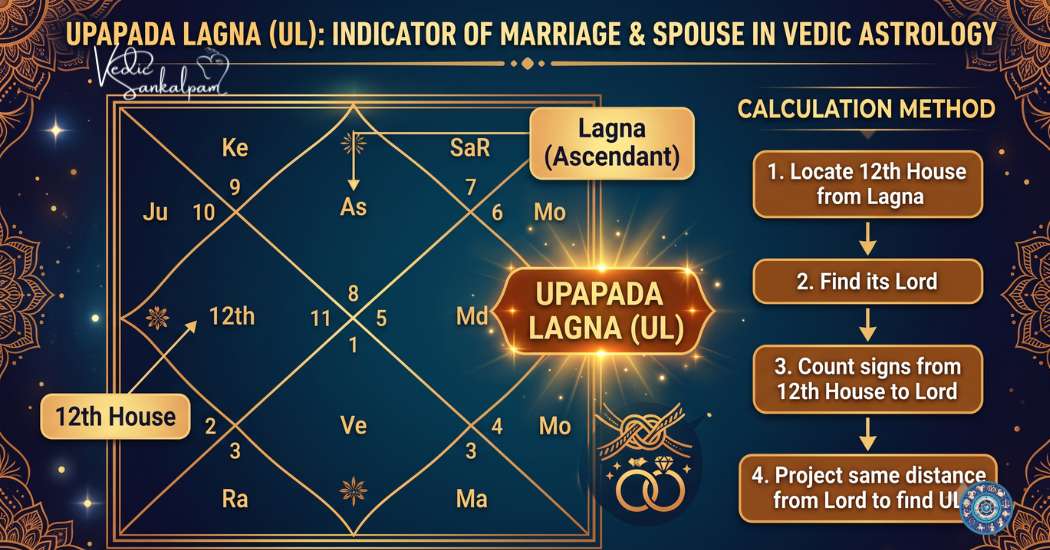
  1. Check the Lagna (ascendant) house.

  2. See where the Lagna lord is placed.

  3. Count the number of houses from Lagna to its lord.

  4. Count the same number of houses forward from the lord’s house.

  5. The resulting house becomes your Arudha Lagna (AL).

Special Exceptions

There is one major rule:

  • Arudha Lagna cannot be in the same house as Lagna or 7th house from Lagna.

    • If it lands there, then move it to the 10th house from Lagna.

This exception ensures the Arudha represents projection, not reality.


Importance of Arudha Lagna

Arudha Lagna
Arudha Lagna

Why is Arudha Lagna so important in astrology?
Because it deals with perception, which often matters more than truth in society.

Arudha Lagna vs Ascendant (Lagna)

Aspect Lagna Arudha Lagna
Represents True nature Public image
Shows Inner self Outer projection
Related to Character Reputation
Controlled by You Society

Both are important, but Arudha Lagna helps understand how people evaluate you.

Arudha Lagna and Material Success

Material success depends on:

  • External impression

  • Influence

  • Reputation

  • Social acceptance

These are Arudha-related factors, making AL vital for career and wealth analysis.


Meaning of Arudha Lagna in Different Houses

Arudha Lagna in 1st House

People see you exactly as you appear.
You have a strong personality and visible presence.

Arudha Lagna in 2nd House

People perceive you as wealthy or family-oriented.
You may appear stable, resourceful, or financially wise.

Arudha Lagna in 3rd House

People see you as bold, confident, and courageous.
You seem adventurous or skillful.

Arudha Lagna in 4th House

You appear:

  • Calm

  • Stable

  • Nurturing

  • Family-centric

People see you as someone who values comfort and home.

Arudha Lagna in 5th House

This creates an aura of intelligence and creativity.
People think you’re smart, artistic, or knowledgeable.

Arudha Lagna in 6th House

You might appear:

  • Hardworking

  • Competitive

  • Strong in challenges

People may also perceive you as someone with hidden enemies.

Arudha Lagna in 7th House

You are often perceived based on relationships.
People tend to notice your partnerships or marriage first.

Arudha Lagna in 8th House

People may find you mysterious, secretive, or intense.
You appear transformative and deep.

Arudha Lagna in 9th House

You appear spiritual, lucky, or philosophical.
People think you have strong values and wisdom.

Arudha Lagna in 10th House

This is one of the most powerful placements.
People see you as:

  • Ambitious

  • Successful

  • Authoritative

  • Career-focused

It brings fame and recognition.

Arudha Lagna in 11th House

People perceive you as influential and socially connected.
You appear friendly, popular, and goal-oriented.

Arudha Lagna in 12th House

You may appear introverted, spiritual, or detached.
Others may see you as mysterious or unconventional.


Arudha Lagna and Career

Arudha Lagna strongly influences:

  • How employers view you

  • Your market value

  • Your public authority

  • Your professional reputation

A strong AL can significantly boost career opportunities.


Arudha Lagna and Relationships

In relationships, Arudha Lagna shows:

  • What your partner thinks of you

  • Your relationship image in society

  • Attraction factors

  • Emotional impression

It helps understand how you present yourself romantically.


Arudha Lagna and Wealth

Wealth is connected to:

  • Public trust

  • Business reputation

  • Material image

Arudha Lagna helps determine if others view you as financially reliable or successful.


Arudha Lagna and Personality Image

Your internal personality may differ from your public personality.
Arudha Lagna explains this contrast and helps you understand how people interpret your behavior, style, and actions.


Conclusion

Arudha Lagna is a fascinating and essential part of Vedic astrology. While your Lagna shows who you really are, your Arudha Lagna shows who people think you are. This perception shapes your success, relationships, career, and social standing. Understanding your Arudha Lagna can help you improve your public image and align your inner and outer worlds.


FAQs

1. What does Arudha Lagna represent?

It represents your public image, social reputation, and how people perceive you.

2. Is Arudha Lagna more important than Lagna?

Both are important — Lagna shows your true nature, while Arudha reveals how society sees you.

3. Is calculating Arudha Lagna difficult?

No, it follows a simple counting method, with a few exceptions.

4. Does Arudha Lagna affect career?

Yes, it strongly influences professional reputation and public recognition.

5. Can Arudha Lagna change your life?

Understanding it can help you manage your public image, improving success and relationships.


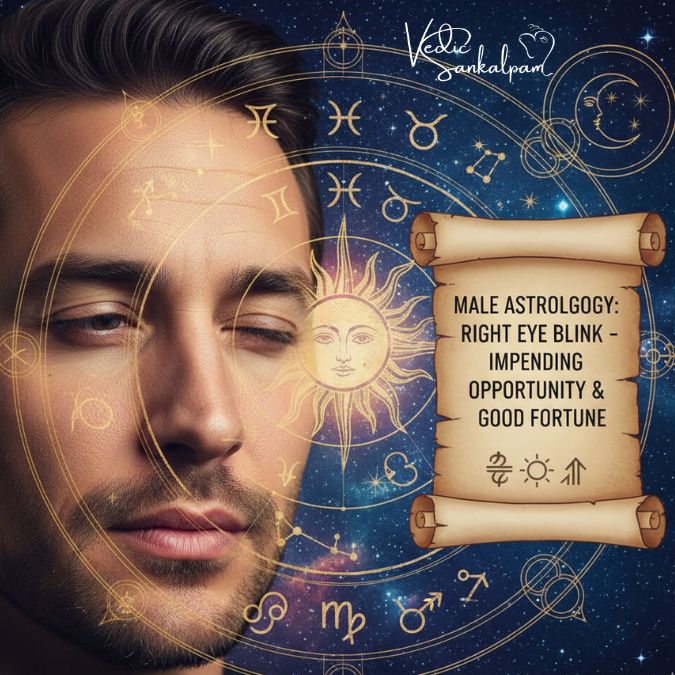
Right Eye Blinking for Male Astrology Meaning – A Detailed Spiritual Insight

In Vedic astrology, every small bodily movement carries deep cosmic significance. One such fascinating phenomenon is the blinking of the right eye for males. This seemingly simple act is often linked to astrological predictions, spiritual messages, and omens that can hint at upcoming events in one’s life. Across various cultures and ancient traditions, the twitching or blinking of the eye has been interpreted as a sign from the universe or divine forces.

Let us explore the astrological, cultural, and spiritual meaning of right eye blinking for males, along with its symbolism and predictive interpretations in different contexts.


Astrological Meaning of Right Eye Blinking for Males

Right Eye Blinking for Male Astrology

According to Vedic astrology, the right side of the body represents positive energy and auspiciousness for men. Therefore, when a man’s right eye blinks involuntarily, it is often regarded as a good omen. The event is believed to signify that positive changes, good news, or prosperity may be approaching soon.

In contrast, the left eye blinking for males is usually considered inauspicious, signaling caution or minor challenges ahead. The interpretation, however, depends on which part of the eye twitches, the time of the day, and the astrological position of the planets at that moment.


Spiritual Significance of Right Eye Blinking

Spiritually, eye blinking is not just a physical reflex but a cosmic signal. The right eye is often associated with the Sun (Surya) in astrology, symbolizing power, success, authority, and clarity. When your right eye twitches, it can mean that the Sun’s energy is interacting with your spiritual vibrations, possibly alerting you to a significant change in your destiny.

For men, this may suggest:

  • Career advancement or new opportunities at work.
  • Recognition or fame for efforts or achievements.
  • Financial growth or unexpected gains.
  • Good news from family or distant relatives.
  • Positive outcomes in personal or professional ventures.

Thus, the blinking of the right eye is often a spiritual wake-up call, encouraging one to stay optimistic and ready to receive blessings.


Scientific Perspective and Ancient Beliefs

While modern science attributes eye twitching to muscle strain, stress, caffeine intake, or fatigue, ancient cultures saw it as an energetic vibration from the soul. According to Ayurveda and astrology, the body and mind are deeply interconnected, and involuntary actions like eye blinking reflect changes in internal energy influenced by the planets.

In Hindu philosophy, the right eye of men is connected with Surya Nadi (solar energy channel), which governs action, willpower, and positivity. Therefore, the twitching of the right eye is said to activate masculine energy, often leading to auspicious outcomes.


Right Eye Blinking Meaning Based on Time of Day

The time of day plays an important role in determining the meaning of right eye blinking for males:

Morning Time

If the right eye blinks in the morning, it is a highly favorable sign. It can indicate that a long-awaited wish will soon be fulfilled or good fortune will enter your life.

Afternoon

In the afternoon, a blinking right eye often suggests financial benefits or growth in business. It may also signal positive interactions with influential people or superiors.

Evening

During evening hours, this may be a message from your guardian deities or ancestors, showing spiritual protection and blessings.

Night

If it occurs at night, it may symbolize unexpected news or travel opportunities. Sometimes, it also hints at a reunion or emotional connection from your past resurfacing.


Right Eye Blinking for Males in Different Cultures

Indian Beliefs

In Indian astrology, for males, right eye blinking is considered auspicious, while for females, it often signals challenges or delays. This belief has its roots in ancient scriptures where the Sun and Moon are symbolic of masculine and feminine energies respectively.

Chinese Culture

In Chinese superstition, the meaning changes based on which part of the eye blinks:

  • Upper eyelid twitching often predicts incoming wealth or good luck.
  • Lower eyelid twitching can mean someone is thinking about you or unexpected guests may arrive.

African and Middle Eastern Traditions

In several African and Middle Eastern traditions, the blinking of the right eye is interpreted as a sign of good news or prosperity, while the left eye may denote sorrow or trouble.


Astrological Remedies for Inauspicious Eye Blinking

Though right eye blinking is generally favorable for men, sometimes it may cause discomfort or occur frequently, leading to negative energy imbalance. Here are a few astrological remedies to harmonize this vibration:

  1. Chant the Surya Mantra – “Om Suryaya Namaha” daily at sunrise to invoke solar blessings.
  2. Offer water to the Sun – Every morning, pour water from a copper vessel facing the east.
  3. Wear gemstones like Ruby (Manikya) to strengthen Sun’s influence.
  4. Meditate or practice yoga to calm the nervous system and align energy channels.
  5. Maintain positive thoughts – since mental energy directly affects physical signs.

These remedies help maintain the balance of energy, ensuring that cosmic signals remain positive and beneficial.


Right Eye Blinking and Future Predictions

Astrologically, the right eye blinking for males can be a precursor to future events. When interpreted alongside planetary transits and horoscope charts, it can reveal subtle hints about:

  • Professional success or promotion
  • Arrival of financial gains or profits
  • Victory over obstacles or enemies
  • Invitations to auspicious occasions
  • Good health and mental clarity

However, interpretations should always be made considering the individual’s birth chart, planetary period (Dasha), and ongoing transits, as these influence the overall outcome.


Final Thoughts

In essence, right eye blinking for males in astrology is an auspicious sign symbolizing progress, good fortune, and divine protection. It serves as a cosmic reminder that the universe communicates through subtle bodily movements, guiding us toward our destined path. While science may explain it as a mere muscle twitch, astrology sees it as an energetic vibration carrying important spiritual messages.

So, next time your right eye blinks, pause for a moment — it could be the universe whispering a message of luck, success, or opportunity your way.


Birth Yogas: Unlocking the Hidden Patterns of Destiny

Introduction

Have you ever wondered why some people seem destined for success while others face endless challenges? In Vedic astrology, the answer often lies in Birth Yogas — special planetary combinations that shape your destiny, talents, and life experiences.

These Yogas are not mere coincidences; they are cosmic blueprints revealing the karmic design you’re born with. Understanding them can help you decode your strengths and overcome challenges with clarity.


What Are Birth Yogas?

Birth Yogas
Birth Yogas

In simple terms, Birth Yogas are specific combinations or alignments of planets in your natal chart that influence your life path. The Sanskrit word “Yoga” means union — in astrology, it refers to the union of planets that produce certain outcomes in one’s life.

Each Yoga holds unique energy. Some bring wealth and fame, while others bring lessons through struggle and transformation.


How Yogas Are Formed in a Birth Chart

A Yoga forms when certain planets occupy specific houses or aspects of each other. The strength, sign, and relationship between planets determine whether a Yoga becomes benefic (positive) or malefic (challenging).

For example:

  • When Jupiter and Moon are in conjunction or aspect each other, Gaj Kesari Yoga forms, bringing wisdom and prosperity.

  • When Moon is alone without any planetary influence, it creates Kemadruma Yoga, often linked with emotional instability or loneliness.


Types of Birth Yogas

Benefic Yogas

These Yogas bless the native with wealth, status, intelligence, and happiness.

Malefic Yogas

These create obstacles, financial troubles, or delays but often bring growth through hardship.

Mixed Yogas

They can produce fluctuating results depending on the Dasha (planetary period) and overall chart strength.


Auspicious Birth Yogas

1. Gaj Kesari Yoga

Formed by Jupiter and Moon, this Yoga brings fame, respect, and wisdom. The person is intelligent and often rises to high positions in life.

2. Budh-Aditya Yoga

Created when Sun and Mercury are together, it blesses the native with intellect, communication skills, and business acumen.

3. Raja Yoga

Occurs when the Lagna lord combines with a Kendra (1st, 4th, 7th, 10th) or Trikona (5th, 9th) lord. It signifies success, authority, and leadership.

4. Dhana Yoga

This wealth-giving Yoga arises when the 2nd, 5th, 9th, or 11th house lords are connected. It brings financial stability and abundance.

5. Lakshmi Yoga

Linked to fortune and prosperity, it happens when Venus and the lord of the 9th house are strong and well-placed.

6. Chandra-Mangal Yoga

Formed by Moon and Mars conjunction, it gives business acumen and the ability to generate wealth.


Inauspicious Birth Yogas

1. Kemadruma Yoga

Occurs when the Moon has no planets on either side. It can cause mental stress or emotional imbalance.

2. Daridra Yoga

Linked to poverty or loss of wealth, it happens when malefic planets influence the 2nd or 11th houses.

3. Grahan Yoga

When the Sun or Moon is eclipsed by Rahu or Ketu, it can create instability or confusion in life.

4. Shakata Yoga

Involves the Moon and Jupiter placed six or eight houses apart, often causing ups and downs in fortune.

5. Pitra Dosha

Caused by afflicted Sun, it indicates ancestral karma that needs resolution through spiritual remedies.


Rare and Powerful Yogas

1. Pancha Mahapurusha Yogas

These are five extraordinary Yogas formed by Mars, Mercury, Jupiter, Venus, or Saturn in their own or exalted sign in Kendra houses. They bring immense power, intelligence, and influence.

2. Neecha Bhanga Raja Yoga

When a debilitated planet gets canceled due to special placements, the native rises after struggles, achieving success and recognition.

3. Vipareeta Raja Yoga

This Yoga forms when the lords of the 6th, 8th, or 12th houses are placed in each other’s houses — turning difficulties into blessings.


Planetary Influence on Yogas

Benefic planets like Jupiter, Venus, and Mercury generally strengthen Yogas.
Malefic planets such as Saturn, Mars, Rahu, and Ketu can distort results but also bring hidden blessings when well-placed.


Lagna-Based Yogas

Every Ascendant (Lagna) responds differently to Yogas. For example:

  • Aries Lagna: Strong Mars enhances leadership Yogas.

  • Cancer Lagna: Moon-related Yogas define emotional strength.

  • Libra Lagna: Venus gives charm and luxury-oriented Yogas.


Yogas and Dasha Periods

A Yoga becomes active during the Dasha or Antardasha of its forming planet. Even a powerful Yoga might stay dormant until the right time, much like a seed waiting for rain to sprout.


Karma and Yogas

Your Yogas are direct reflections of your past karma. Benefic Yogas signify good deeds of past lives, while challenging ones indicate karmic debts meant for resolution.


Remedies for Malefic Yogas

  • Chant mantras like Maha Mrityunjaya or Gayatri.

  • Wear gemstones based on planetary strength (consult an astrologer first).

  • Donate to the poor and perform spiritual practices to reduce karmic burdens.


Birth Yogas in Modern Context

Even in today’s fast-paced world, Yogas remain relevant. They can guide you toward the right career, relationships, and self-development path — blending ancient wisdom with modern psychology.


Common Myths About Yogas

  • Not all malefic Yogas ruin life — many lead to spiritual growth.

  • A single Yoga can’t define your fate — the entire chart must be analyzed.

  • Remedies genuinely help when done with faith and intention.


Conclusion

Birth Yogas are divine blueprints, revealing not just your destiny but your soul’s purpose. By understanding and aligning with them, you can transform challenges into stepping stones and unlock your highest potential.


FAQs

1. Can a person have multiple Yogas in their chart?
Yes, most people have several Yogas — both benefic and malefic — influencing different life areas.

2. Do Yogas guarantee success?
Not always. The strength of planets and Dasha periods determine how fully a Yoga manifests.

3. Can malefic Yogas be neutralized?
Yes, through remedies, devotion, and positive karma, their effects can be lessened.

4. Are Yogas scientifically proven?
While astrology is not a science in the modern sense, it’s a time-tested metaphysical system observed for millennia.

5. Which Yoga is considered most powerful?
Raja Yogas and Pancha Mahapurusha Yogas are among the most powerful, often found in charts of influential leaders.


Mula Nakshatra – Traits, Meaning, and Astrological Significance

Mula Nakshatra, one of the most intense and mysterious stars in Vedic astrology, holds deep spiritual meaning and transformative energy. Falling under the Sagittarius zodiac sign (Dhanu Rashi) and ruled by Ketu, the planet of detachment and spirituality, Mula represents the root or foundation of existence. In Sanskrit, “Mula” literally means root, symbolizing the power to dig deep, uncover truths, and understand life from its very core.


Astrological Overview of Mula Nakshatra

Mula Nakshatra astrology
  • Zodiac Sign: Sagittarius (Dhanu Rashi)

  • Ruling Planet: Ketu (South Node of the Moon)

  • Symbol: A bunch of roots tied together

  • Deity: Nirriti – Goddess of destruction and dissolution

  • Ruling Element: Air

  • Nakshatra Number: 19th among 27 Nakshatras

  • Gender: Female

  • Gana: Rakshasa (Demonic)

  • Dosha: Vata

  • Lucky Letters: Ye, Yo, Bha, Bhi

  • Lucky Stone: Cat’s Eye (Lehsunia)

Mula Nakshatra is located in the galactic center, often associated with the cosmic void or the point of origin of the universe. This powerful position makes Mula natives deeply curious, philosophical, and often drawn toward uncovering hidden or spiritual truths.


Symbolism and Meaning of Mula Nakshatra

The symbol of Mula Nakshatra – a bunch of roots tied together – perfectly captures its essence. It signifies the search for the root cause, both in worldly and spiritual matters. Natives born under this star often display an intense drive to go beyond surface-level understanding.

The presiding deity, Nirriti, represents destruction and transformation. This influence gives Mula natives the courage to face chaos, endure life’s upheavals, and rise stronger. While Mula Nakshatra may seem unsettling, it ultimately leads to rebirth, purification, and wisdom.


Characteristics of Mula Nakshatra Natives

Characteristics of Mula Nakshatra

1. Personality Traits

Individuals born under Mula Nakshatra are inquisitive, fearless, and spiritually inclined. They have an innate desire to uncover life’s mysteries and are never satisfied with superficial answers. Their strong analytical abilities make them excellent researchers, philosophers, and spiritual seekers.

They tend to question norms, traditions, and established systems, which sometimes leads to misunderstandings. However, this questioning nature often helps them uncover profound truths that others overlook.

2. Positive Traits

  • Deeply spiritual and introspective

  • Courageous and determined

  • Strong sense of independence

  • Charismatic and philosophical

  • Skilled in research and analysis

  • Natural healers with intuitive power

3. Negative Traits

  • Can be overly skeptical or critical

  • Prone to emotional detachment

  • Experience sudden ups and downs in life

  • Might face early struggles or loss

  • Impulsiveness can lead to conflict

Mula natives are often tested early in life. Through these challenges, they develop resilience and a profound understanding of impermanence and spiritual truth.


Mula Nakshatra Pada (Quarters)

Mula Nakshatra
Mula Nakshatra

Each Nakshatra is divided into four padas or quarters. These determine the subtle variations in personality and destiny.

Pada 1 (00°00′ – 3°20′ Sagittarius)

Ruled by Mars, this pada gives courage and ambition. Individuals here are bold, confident, and goal-oriented. However, they must learn patience and emotional control.

Pada 2 (3°20′ – 6°40′ Sagittarius)

Ruled by Venus, this pada enhances charm, creativity, and emotional intelligence. Natives tend to have artistic talents and may enjoy luxury, relationships, and beauty.

Pada 3 (6°40′ – 10°00′ Sagittarius)

Ruled by Mercury, this quarter bestows intelligence, communication skills, and curiosity. Such natives excel in teaching, writing, and research fields.

Pada 4 (10°00′ – 13°20′ Sagittarius)

Ruled by Moon, this pada brings emotional depth, empathy, and spiritual insight. These individuals are compassionate and may engage in healing or humanitarian work.


Mula Nakshatra and Career Prospects

Mula natives often thrive in careers that involve investigation, discovery, and transformation. They are not afraid to confront complex subjects and can excel in fields like:

  • Research and Science

  • Psychology and Healing

  • Forensic Analysis

  • Philosophy and Theology

  • Astrology and Mysticism

  • Medical and Alternative Medicine

  • Law and Justice

  • Archeology and History

Their analytical mind and fearless spirit make them natural truth-seekers who can shine in professions that demand deep insight and courage.


Mula Nakshatra in Relationships and Marriage

Relationships for Mula natives can be intense. They seek depth and emotional honesty but may struggle with attachment due to Ketu’s influence. While they love deeply, they often value personal freedom and spiritual growth above worldly attachments.

In marriage, they need a partner who respects their individuality and understands their spiritual journey. With mutual understanding and patience, Mula Nakshatra natives can form strong, transformative relationships.

Compatibility: Best with Purva Ashadha, Uttara Ashadha, and Ashwini Nakshatra natives.


Health and Wellbeing

Because of the Vata influence, Mula natives might experience issues related to the nervous system, joints, and digestion. Stress and emotional turbulence can also affect their health. Practicing meditation, yoga, and grounding exercises can help maintain balance.

They should avoid overindulgence in negative thinking or detachment from reality, as it can lead to mental strain.


Spiritual Meaning of Mula Nakshatra

Spiritually, Mula Nakshatra represents the journey from destruction to enlightenment. It teaches the soul that to attain higher wisdom, one must first let go of illusions and false attachments. Ketu, as the ruling planet, guides Mula natives toward liberation (Moksha), urging them to embrace detachment and spiritual truth.

This Nakshatra is deeply connected with karma cleansing and spiritual awakening. It challenges individuals to accept loss as a means to transformation, helping them realize the eternal essence beyond material existence.


Remedies and Worship for Mula Nakshatra

To balance the intense energy of Mula Nakshatra, natives can perform certain remedies:

  • Worship Lord Ganesha or Goddess Nirriti on Thursdays or Saturdays.

  • Chant the Ketu mantra: “Om Ketave Namah”.

  • Perform Rudrabhishek or Ketu Shanti Puja for peace and protection.

  • Wear a Cat’s Eye gemstone (Lehsunia) after consulting a qualified astrologer.

  • Engage in charity, meditation, and spiritual practices regularly.

Performing these remedies can help Mula natives harness their powerful energy constructively and lead a balanced, purposeful life.


Conclusion

Mula Nakshatra is a symbol of transformation, truth-seeking, and spiritual evolution. Though life may bring turbulence and deep challenges, those born under this star possess the strength to overcome and rebuild from the roots. Their journey is not just about destruction but rebirth, enlightenment, and ultimate liberation.

By embracing introspection, detachment, and spiritual growth, Mula Nakshatra natives uncover the true essence of existence — the root of all creation itself.

Bava Karana in Astrology: Meaning, Significance, and Hidden Secrets

Bava Karana in Astrology: Meaning, Significance, and Hidden Secrets

Introduction to Bava Karana in Astrology

In Vedic astrology, every moment carries a unique energy that influences life events. One such subtle yet powerful factor is the Karana, and among them, Bava Karana stands out for its positive and vibrant influence. Understanding Bava Karana helps you tune into the cosmic rhythm of time and make wiser decisions in life.

Understanding the Concept of Karana

In astrology, Karana represents half of a Tithi (lunar day). A full Tithi is divided into two Karanas, and each Karana carries its own energy that affects human actions and thoughts.

There are 11 Karanas in total — 7 movable (Chara) and 4 fixed (Sthira). Each plays a crucial role in Panchang, the traditional Hindu calendar used for determining auspicious timings.

Classification of Karanas

The movable Karanas are:
Bava, Balava, Kaulava, Taitila, Gara, Vanija, and Vishti.

The fixed Karanas are:
Shakuni, Chatushpada, Naga, and Kimstughna.

Each Karana influences personality, emotions, and the success of endeavors undertaken during its period.

What is Bava Karana?

Bava Karana
Bava Karana

The word “Bava” comes from the Sanskrit root “bhava”, meaning “existence” or “being”. Thus, Bava Karana represents growth, creation, and new beginnings. It signifies a time filled with enthusiasm, emotional expression, and creative energy.

Characteristics of Bava Karana

People born during Bava Karana are often:

  • Cheerful and optimistic

  • Emotionally expressive

  • Spiritually inclined

  • Adaptive and outgoing

They tend to enjoy social interaction, build connections easily, and possess a natural curiosity about the world.

Astrological Significance of Bava Karana

In astrology, Bava Karana is considered auspicious. Activities like starting a new business, initiating education, or performing sacred rituals are favorable during this time.

The energy of Bava Karana promotes growth, peace, and positivity, making it ideal for endeavors that require emotional stability and inspiration.

Bava Karana and Personality Traits

Those influenced by Bava Karana often display:

  • Optimism: They see the bright side of situations.

  • Curiosity: They love exploring and learning.

  • Empathy: They understand others’ emotions deeply.

  • Communication skills: They are expressive and persuasive.

This combination makes them great leaders, teachers, and healers.

Effects of Bava Karana in Different Houses

  • In Lagna (Ascendant): Enhances confidence and attractiveness.

  • In the 5th House: Brings creativity and strong romantic tendencies.

  • In the 7th House: Encourages harmony in relationships.

  • In the 10th House: Boosts career growth and recognition.

Wherever Bava Karana appears in the chart, it brings emotional intelligence and positive movement.

Spiritual Meaning of Bava Karana

Spiritually, Bava Karana encourages introspection and divine connection. It teaches individuals to embrace emotions as a path toward spiritual growth. During Bava Karana, meditation, chanting, and helping others bring powerful karmic benefits.

Bava Karana and Relationships

People influenced by Bava Karana are affectionate partners and loyal friends. Their emotional warmth helps them maintain balance in love life. However, their sensitivity may sometimes make them overthink or feel hurt easily.

Remedies and Rituals for Bava Karana

To align with the positive energy of Bava Karana:

  • Chant “Om Namah Shivaya” or “Om Namo Narayanaya”

  • Meditate on water elements for calmness

  • Perform acts of kindness

  • Avoid anger or impulsive decisions

Bava Karana in Panchang

You can find Bava Karana listed in the daily Panchang under the “Karana” section. It usually occurs early in the lunar cycle and lasts around 6 hours.

Tasks started in this Karana often bring fruitful and lasting outcomes.

Positive and Negative Effects

Positive Effects:

  • Boosts creativity and productivity

  • Fosters understanding and emotional growth

  • Promotes success in partnerships

Negative Effects (if afflicted):

  • Emotional over-sensitivity

  • Over-dependence on others

  • Mood swings

Balancing through meditation and grounding helps neutralize the negatives.

Comparison: Bava Karana vs Other Karanas

  • Bava vs Balava: Both are auspicious, but Bava focuses more on emotions, while Balava enhances stability.

  • Bava vs Kaulava: Bava encourages beginnings; Kaulava suits completing tasks.

  • Bava vs Taitila: Taitila is more practical, while Bava is emotional and creative.

Understanding these distinctions helps in selecting the right Muhurta (timing) for different activities.

Conclusion

In astrology, Bava Karana symbolizes life, growth, and emotional depth. Its energy inspires creativity, empathy, and optimism. Whether seen in a birth chart or chosen as a Muhurta, Bava Karana offers an excellent time for starting new ventures or strengthening relationships.

When embraced consciously, it becomes a powerful ally in both spiritual and worldly success.


FAQs

1. What does Bava Karana mean in astrology?
Bava Karana signifies existence, growth, and emotional expression. It’s an auspicious period ideal for new beginnings.

2. Is Bava Karana good or bad?
Bava Karana is considered highly positive and supportive of prosperity and happiness.

3. How can one use Bava Karana for success?
Start new projects, perform rituals, or make important decisions during Bava Karana for favorable outcomes.

4. Which deity rules Bava Karana?
Lord Shiva is often associated with Bava Karana, symbolizing creation and transformation.

5. What to avoid during Bava Karana?
Avoid arguments, impulsive behavior, and emotionally charged decisions to maintain balance.