Introduction
Chhath Puja, one of the most revered Hindu festivals, begins with Nahay Khay, a day filled with spiritual cleansing and devotion. It marks the first day of Chhath Puja 2025, a festival dedicated to Surya Dev (Sun God) and Chhathi Maiya, celebrated primarily in Bihar, Jharkhand, Eastern Uttar Pradesh, and parts of Nepal.
What is Nahay Khay?
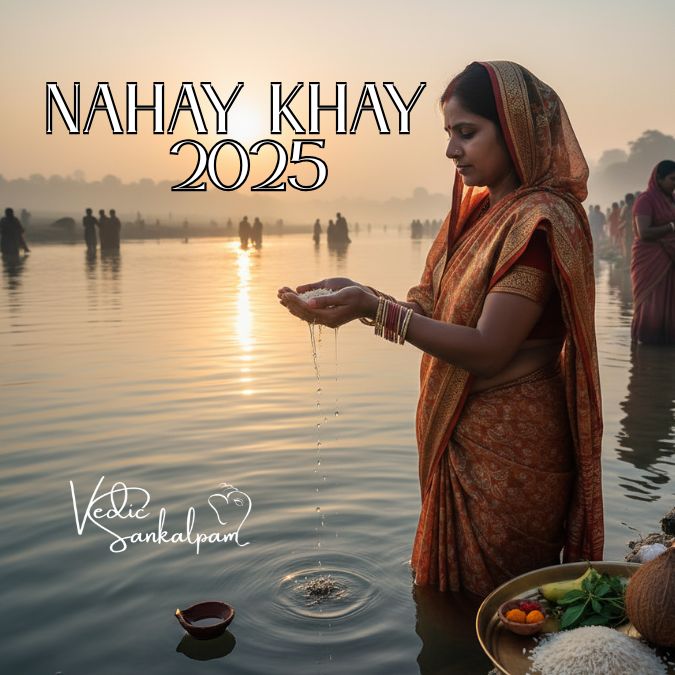
The term “Nahay Khay” literally translates to “Bath and Eat.” On this day, devotees purify their body and soul by taking a holy dip in sacred rivers or ponds and consuming only satvik (pure vegetarian) food prepared without onion or garlic. It symbolizes the beginning of a spiritual journey leading up to Chhath Puja, emphasizing purity, discipline, and devotion.
Nahay Khay 2025 Date and Time
In 2025, Nahay Khay will be observed on Wednesday, October 22, 2025. This auspicious day falls during the Shukla Paksha of Kartik month, according to the Hindu lunar calendar.
-
Nahay Khay Date: Wednesday, October 22, 2025
-
Sunrise Time: Around 6:06 AM
-
Sunset Time: Around 5:35 PM
This marks the official start of the four-day-long Chhath Puja 2025 celebrations.
Chhath Puja 2025 Overview
Chhath Puja is a four-day festival filled with devotion, fasting, and rituals:
-
Nahay Khay – Purification and preparation.
-
Lohanda and Kharna – Devotees observe a fast and prepare special prasad.
-
Sandhya Arghya – Evening offerings to the setting sun.
-
Usha Arghya – Morning offerings to the rising sun, concluding the festival.
Each day carries profound spiritual significance and connects devotees with the natural elements of sunlight, water, and earth.
Day 1: Nahay Khay Rituals
The first day sets the tone for the entire puja. Devotees begin by:
-
Bathing in holy rivers like Ganga, Kosi, or Yamuna.
-
Cleaning their homes thoroughly.
-
Preparing satvik food, often lauki-bhaat (bottle gourd with rice) cooked in pure ghee.
-
Offering prayers to Lord Surya and Chhathi Maiya for purification.
Only after performing these rituals do devotees consume their first meal, marking the beginning of their spiritual fast.
What Devotees Eat on Nahay Khay
The meal on Nahay Khay is simple yet divine. Devotees typically eat:
-
Lauki (bottle gourd) cooked with rock salt and ghee
-
Chana dal (split chickpeas)
-
Boiled rice (bhaat)
-
Tulsi water or pure river water
This pure meal represents simplicity, cleansing, and the removal of impurities from both the body and the mind.
Spiritual Significance of Nahay Khay
Nahay Khay symbolizes inner purification. The ritual of bathing and consuming satvik food reflects:
-
Cleansing of negative energies
-
Detachment from material desires
-
Beginning a path of discipline and devotion
It’s believed that by observing Nahay Khay sincerely, devotees invite divine blessings from Surya Dev and Chhathi Maiya.
Nahay Khay in Bihar and Uttar Pradesh
In Bihar, especially in Patna, Gaya, and Bhagalpur, Nahay Khay is celebrated with immense devotion. Riversides become vibrant with rituals, chants, and offerings. In Uttar Pradesh, cities like Varanasi and Ballia also witness grand preparations for the beginning of Chhath Puja. Families gather, cook traditional meals, and clean homes to welcome divine energy.
Preparation for the Following Days
After Nahay Khay, devotees begin preparing for Kharna, the second day of Chhath Puja. It involves:
-
Fasting for the entire day
-
Breaking the fast after sunset with gud-kheer (jaggery pudding) and fruits
-
Preparing offerings for the next day’s Sandhya Arghya
This gradual process strengthens mental discipline and devotion.
Rules and Observances
To maintain the sanctity of the ritual, devotees follow strict rules:
-
No onion, garlic, or non-vegetarian food
-
Maintain cleanliness in the kitchen and household
-
Wear freshly washed clothes
-
Avoid negative emotions and arguments
Such discipline helps devotees maintain spiritual balance and focus.
Symbolism of Water in Nahay Khay
Water symbolizes purity and renewal. Bathing in rivers during Nahay Khay is not just physical cleaning but also a metaphorical purification—washing away past sins and preparing oneself for divine connection. The flow of water represents the continuous journey of life and spiritual evolution.
Community and Togetherness
Nahay Khay isn’t just a personal ritual—it’s a community celebration. Families come together to cook, clean, and pray. Neighbors share food, stories, and blessings, strengthening the social fabric. It reflects India’s deep-rooted values of unity and devotion.
Environmental and Cultural Aspects
The rituals of Nahay Khay emphasize harmony with nature. Devotees ensure the rivers are kept clean, use eco-friendly materials for offerings, and avoid plastic waste. It’s a spiritual reminder of humanity’s responsibility towards preserving the environment.
Modern Observance of Nahay Khay
In cities, many people celebrate Nahay Khay even without access to rivers. They perform rituals using clean water at home and maintain the same devotion. Social media and online communities have also made it easier for urban devotees to stay connected with traditional practices.
Conclusion
Nahay Khay 2025 marks the beginning of one of India’s most spiritual festivals—Chhath Puja. It’s not merely a ritual; it’s a journey of purity, faith, and gratitude towards the divine forces of nature. Whether celebrated by the riverbank or at home, Nahay Khay reminds us of the importance of cleanliness, devotion, and discipline in life.
FAQs
1. When is Nahay Khay in 2025?
Nahay Khay will be celebrated on Wednesday, October 22, 2025, marking the start of Chhath Puja.
2. What food is prepared on Nahay Khay?
Devotees eat lauki-bhaat and chana dal, prepared with pure ghee and rock salt.
3. Why do people bathe in rivers on Nahay Khay?
Bathing in rivers symbolizes spiritual cleansing and the removal of impurities.
4. Is Nahay Khay only celebrated in Bihar?
No, it’s also widely celebrated in Uttar Pradesh, Jharkhand, and Nepal among devotees of Chhathi Maiya.
5. Can Nahay Khay be performed at home?
Yes, devotees living in cities often perform rituals at home using clean water and sincere devotion.