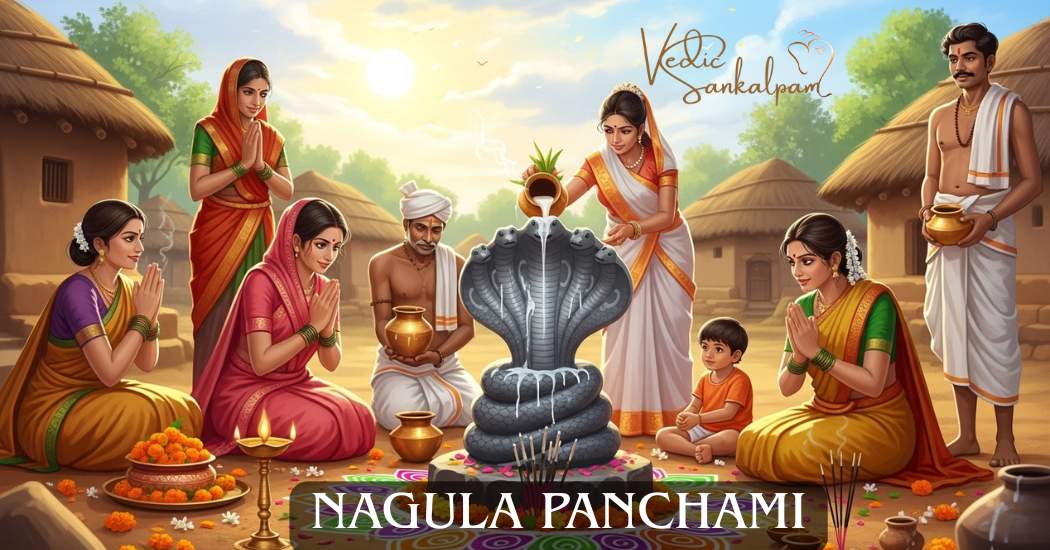
Nagula Panchami is a deeply revered Hindu festival dedicated to the worship of Nag Devatas (serpent deities). Celebrated with devotion and traditional rituals, this sacred observance holds immense spiritual significance across various regions of India, particularly in Andhra Pradesh, Telangana, Karnataka, and Maharashtra. The festival emphasizes fertility, prosperity, protection from snake-related fears, and ancestral blessings.
Nagula Panchami falls on the Panchami Tithi (fifth lunar day) of the bright fortnight in the Hindu month of Kartika, typically occurring after Deepavali. On this auspicious day, devotees worship snake idols, anthills, and sacred serpent representations, seeking divine blessings for family well-being and protection from negative energies.
Spiritual Significance of Nagula Panchami
The celebration of Nagula Panchami is rooted in ancient Vedic traditions where serpents are considered divine beings associated with cosmic power and nature’s balance. In Hindu scriptures, snakes symbolize kundalini energy, immortality, rebirth, and protection.
We observe that:
Lord Shiva adorns serpents around his neck, symbolizing mastery over fear and death.
Lord Vishnu rests upon Adi Shesha, the cosmic serpent.
The Nag Devatas are protectors of hidden treasures and guardians of the underworld (Patala).
Devotees believe that sincere worship on Nagula Panchami removes Sarpa Dosha, neutralizes Rahu-Ketu planetary afflictions, and brings harmony in married life. The festival also represents respect for ecological balance, particularly the protection of snakes and their habitats.
Nagula Panchami 2026 Date and Muhurat
Nagula Panchami
Nagula Panchami is observed on the Shukla Paksha Panchami in Kartika month. The exact date varies each year according to the Hindu lunar calendar.
The most auspicious time for performing Nagula Panchami Puja is during the morning hours, especially during Panchami Tithi. Devotees avoid Rahu Kalam while performing rituals and ensure that offerings are made with purity and devotion.
Historical and Mythological Importance of Nagula Panchami
Several legends explain the origin of Nagula Panchami:
1. The Story of Lord Krishna and Kaliya
One prominent legend narrates how Lord Krishna subdued the serpent Kaliya, who had poisoned the Yamuna River. By dancing upon Kaliya’s hood, Krishna spared him after he repented. This story signifies the triumph of divine power over negativity and ego.
2. The Tale of the Farmer’s Daughter
Another widely told story speaks of a farmer who unknowingly destroyed a snake’s nest while plowing. The serpent later sought revenge, but the farmer’s daughter prayed sincerely to Nag Devata. Impressed by her devotion, the serpent forgave the family and restored their well-being.
This legend emphasizes devotion, forgiveness, and respect toward nature.
Rituals and Puja Vidhi of Nagula Panchami
The rituals of Nagula Panchami are performed with strict adherence to traditional customs. Devotees begin preparations early in the morning after taking a holy bath.
Step-by-Step Nagula Panchami Puja Vidhi
Cleaning and Decoration Homes are cleaned thoroughly. The puja area is decorated with rangoli designs featuring snake motifs.
Installation of Nag Idol Devotees place idols or images of Nag Devata made of silver, stone, or clay.
Offering Milk and Turmeric Milk, turmeric, sandalwood paste, flowers, and vermillion are offered to the serpent deity. In rural areas, devotees pour milk near anthills.
Recitation of Mantras Chanting of Nag Gayatri Mantra and other Vedic hymns is performed for divine blessings.
Fasting (Upvas) Many devotees observe a strict fast throughout the day and consume food only after completing the puja.
Offering of Naivedyam Traditional dishes such as jaggery-based sweets, milk-based preparations, and fruits are offered.
Nagula Panchami Fasting Rules
Fasting during Nagula Panchami is believed to remove obstacles and ensure family prosperity. The key fasting guidelines include:
Avoid consuming fried or spicy food.
Many devotees abstain from eating salt.
Some observe a complete fast until sunset.
Pregnant women and children may follow a partial fast.
The fast is concluded after offering prayers and seeking blessings from elders.
Regional Celebrations of Nagula Panchami
Andhra Pradesh and Telangana
In these regions, Nagula Panchami is celebrated with immense devotion. Women visit nearby snake pits (anthills), offer milk and turmeric, and pray for their children’s protection and longevity.
Karnataka
Devotees worship serpent idols installed under sacred trees. Special prayers are conducted in temples dedicated to Subramanya Swamy, who is associated with serpent worship.
Maharashtra
Here, families prepare traditional sweets and perform elaborate rituals at home. Some communities conduct group prayers and cultural programs.
Importance of Nagula Panchami in Astrology
In Vedic astrology, serpent deities are closely linked to Rahu and Ketu, the shadow planets. Worship on Nagula Panchami is believed to:
Reduce Kaal Sarpa Dosha
Minimize delays in marriage
Resolve fertility issues
Protect against sudden misfortunes
Bring financial stability
Astrologers recommend special Sarpa Shanti Pujas on this day for individuals facing persistent obstacles.
Eco-Spiritual Relevance of Nagula Panchami
Nagula Panchami is not merely a religious observance but also a reminder of environmental conservation. Snakes play a crucial role in maintaining ecological balance by controlling rodent populations.
We recognize that:
Protecting snakes prevents agricultural damage.
Preserving snake habitats supports biodiversity.
Awareness reduces irrational fear and violence toward reptiles.
The festival promotes compassion toward all living beings and encourages coexistence with nature.
Nagula Panchami and Women’s Devotion
Married women observe this festival with deep faith for the health and prosperity of their children and husbands. Newly married brides are often introduced to this ritual as part of family tradition.
The prayers focus on:
Child protection
Family harmony
Removal of ancestral karmic obstacles
Blessings for future generations
This aspect strengthens the cultural and familial significance of the celebration.
Mantras for Nagula Panchami
Chanting sacred mantras enhances the spiritual benefits of the festival. Some commonly recited mantras include:
“Om Namo Bhagavate Vasuki Devaya”
“Om Sarpa Rajaya Namah”
Regular chanting is believed to remove fear and bring mental peace.
Dos and Don’ts on Nagula Panchami
Dos
Perform puja during Panchami Tithi.
Offer fresh milk and flowers.
Maintain cleanliness and purity.
Respect snake habitats.
Don’ts
Avoid harming snakes.
Do not dig earth unnecessarily.
Refrain from consuming non-vegetarian food.
Avoid cutting trees near snake habitats.
Scientific Perspective Behind Nagula Panchami
From a practical viewpoint, the timing of Nagula Panchami coincides with post-monsoon agricultural cycles when snakes are more visible due to waterlogged burrows. Worship rituals indirectly promote caution and respect, reducing snake-human conflicts.
The application of turmeric near anthills may also act as a mild antiseptic barrier. Traditional practices, though spiritual in nature, reflect a deep understanding of environmental harmony.
Why Nagula Panchami Remains Relevant Today
In modern society, where ecological imbalance and environmental destruction are rising concerns, festivals like Nagula Panchami carry renewed relevance. They:
Promote biodiversity awareness
Encourage respect for wildlife
Strengthen cultural identity
Reinforce spiritual discipline
The integration of faith and environmental responsibility makes this festival profoundly meaningful.
Conclusion
Nagula Panchami stands as a powerful blend of devotion, astrology, mythology, and ecological awareness. The worship of Nag Devatas symbolizes protection, renewal, and cosmic balance. Through fasting, rituals, mantra chanting, and environmental respect, devotees seek blessings for prosperity, harmony, and spiritual growth.
By honoring serpent deities, we uphold ancient traditions while embracing nature’s wisdom. The festival continues to inspire generations with its timeless spiritual depth and cultural richness.
Have you ever wondered about the mysterious beads that have captivated spiritual seekers for thousands of years? Among the sacred Rudraksha beads, the 18 Mukhi Rudraksha stands as one of the rarest and most powerful. This divine bead isn’t just a piece of religious jewelry—it’s considered a spiritual powerhouse that connects you directly with the energies of Mother Earth herself.
In the vast ocean of spiritual tools and sacred objects, the 18 Mukhi Rudraksha shines like a rare gem. It’s not something you’ll find on every street corner, and that’s exactly what makes it so special. Think of it as nature’s own blessing, wrapped in a tiny seed that carries the wisdom of ages.
What is 18 Mukhi Rudraksha?
Let’s break this down in simple terms. A Rudraksha is a seed that comes from the Elaeocarpus ganitrus tree, which grows primarily in the Himalayan regions, Indonesia, and parts of Southeast Asia. The word “Rudraksha” literally means “tears of Lord Shiva” in Sanskrit, and these beads have been venerated in Hindu and Buddhist traditions for millennia.
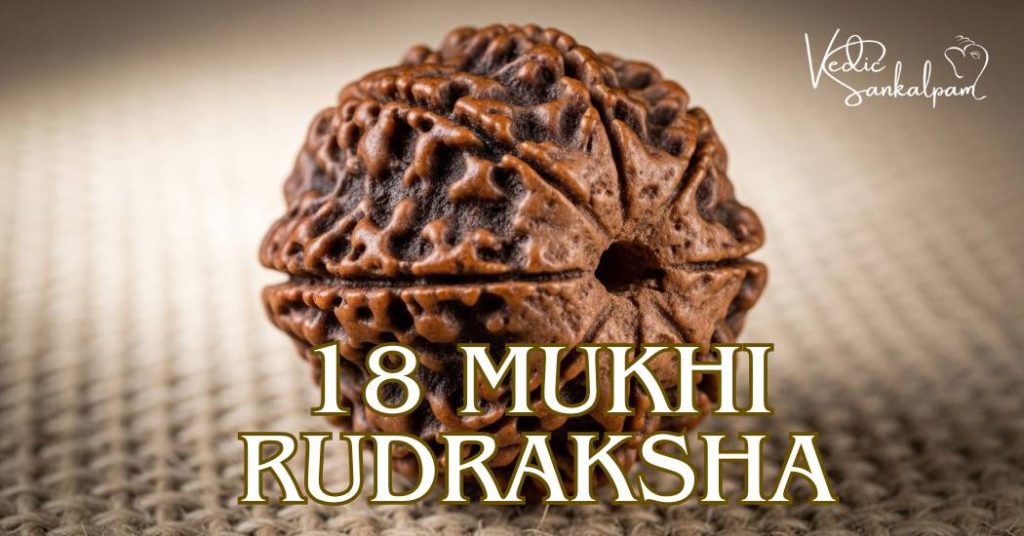
Now, the “18 Mukhi” part refers to the number of facets or lines (called mukhis) on the bead’s surface. Each mukhi represents a specific energy channel, and an 18 Mukhi Rudraksha has—you guessed it—18 natural divisions running from top to bottom. These aren’t carved or artificially created; they’re completely natural formations.
What makes this particular bead extraordinary is its extreme rarity. While you might find five-faced or six-faced Rudraksha beads relatively easily, the 18 Mukhi variety is exceptionally uncommon. It’s like finding a four-leaf clover in a field of three-leaf ones—possible, but definitely special.
The Spiritual Significance of 18 Mukhi Rudraksha
Connection with Goddess Earth (Bhumi Devi)
The 18 Mukhi Rudraksha is directly associated with Bhumi Devi, or Mother Earth. Can you think of a more grounding energy than the very planet we stand on? This bead is believed to channel the nurturing, stable, and abundant energy of the Earth itself.
In Hindu mythology, Bhumi Devi represents fertility, prosperity, patience, and unconditional support. She’s the one who literally holds us up, provides for us, and absorbs all our negativity. Wearing an 18 Mukhi Rudraksha is like carrying a piece of this divine maternal energy with you wherever you go.
Symbolic Meaning and Energy
The number 18 itself carries profound significance. In numerology, 18 reduces to 9 (1+8=9), which represents completion, wisdom, and universal love. The 18 Mukhi Rudraksha embodies material and spiritual abundance, grounding energy, and protection from negative influences.
This bead is said to balance all the elements within your body and environment. It’s like having a personal harmonizer that keeps you aligned with natural rhythms and cosmic energies. Pretty amazing for something so small, right?
Benefits of Wearing 18 Mukhi Rudraksha
18 Mukhi Rudraksha
Spiritual Benefits
From a spiritual standpoint, the 18 Mukhi Rudraksha is nothing short of transformative. It’s believed to:
Enhance your connection with divine energies and higher consciousness
Strengthen your intuition and inner wisdom
Remove obstacles from your spiritual path
Balance your chakras, particularly the root chakra (Muladhara)
Provide protection from negative energies and psychic attacks
Deepen meditation practices and spiritual awareness
Think of it as a spiritual anchor. Just as a ship needs an anchor to stay steady in turbulent waters, this bead helps you remain grounded even when life throws challenges your way.
Health Benefits
While spiritual benefits are paramount, many wearers report tangible health improvements as well. The 18 Mukhi Rudraksha is associated with:
Enhanced vitality and energy levels
Better immune system function
Relief from stress and anxiety
Improved focus and mental clarity
Support for bone health and physical strength
Balance in hormonal functions
Remember, though, that Rudraksha beads aren’t medical devices. They’re complementary tools that work alongside proper healthcare, not replacements for it.
Material and Professional Benefits
Here’s where things get really interesting. The 18 Mukhi Rudraksha is particularly renowned for attracting material prosperity. It’s believed to:
Bring success in business ventures and professional endeavors
Attract wealth and financial stability
Enhance leadership qualities and decision-making abilities
Open doors to new opportunities
Provide stability in property and land-related matters
Boost confidence and charisma
It’s like having a lucky charm, but one that’s backed by centuries of spiritual tradition and countless testimonials from believers worldwide.
Who Should Wear 18 Mukhi Rudraksha?
So, is this divine bead right for you? The beautiful thing about the 18 Mukhi Rudraksha is that it’s beneficial for almost anyone, regardless of age, gender, or religious background. However, certain individuals may find it particularly powerful:
Business owners and entrepreneurs seeking growth and prosperity
People dealing with property or land matters who need positive energy in real estate
Those feeling ungrounded or disconnected from reality
Individuals seeking material stability alongside spiritual growth
Anyone working in earth-related professions like agriculture, mining, or construction
Spiritual seekers wanting to deepen their connection with Mother Earth
That said, if you’re drawn to this bead, that attraction itself might be a sign that it’s meant for you. Trust your intuition—it’s often wiser than you think.
How to Identify Genuine 18 Mukhi Rudraksha
Physical Characteristics
Given the rarity and value of authentic 18 Mukhi Rudraksha beads, the market unfortunately has its share of fakes. Here’s how to spot the real deal:
Natural lines: The 18 mukhis should be clearly visible, running from top to bottom
Size: Genuine 18 Mukhi beads are typically larger, ranging from 18mm to 25mm
Weight: Authentic Rudraksha beads have a certain heft to them
Texture: The surface should feel slightly rough, not perfectly smooth
Color: Natural beads are usually brown to dark brown, sometimes with reddish tones
Testing Methods
Want to verify authenticity? Here are some traditional methods:
The Water Test: A genuine Rudraksha will sink in water, while many fakes will float.
The Copper Coin Test: Place the bead between two copper coins. Some believe genuine beads will rotate slightly due to magnetic properties, though this isn’t scientifically proven.
Magnification: Use a magnifying glass to check if the mukhis are natural formations or artificial cuts.
X-ray or CT scan: The most reliable method—professional testing can reveal the internal structure and confirm authenticity.
Your best bet? Purchase from reputable dealers who provide certificates of authenticity and have a solid track record.
How to Wear 18 Mukhi Rudraksha
Best Day and Time
Timing matters when it comes to energizing and wearing your 18 Mukhi Rudraksha. Traditional wisdom suggests:
Best day: Monday, which is associated with Lord Shiva
Best time: Early morning, preferably during Brahma Muhurta (approximately 4:30-5:30 AM)
Moon phase: Some practitioners recommend starting during a waxing moon for growth-oriented intentions
Mantra for Energization
Before wearing your bead for the first time, it should be energized with specific mantras. The primary mantra for the 18 Mukhi Rudraksha is:
“Om Hreem Shreem Vasudhaye Swaha”
This mantra invokes the blessings of Bhumi Devi (Goddess Earth). Chant it 108 times while holding the bead. You can wear it as a pendant, bracelet, or keep it in your pocket or purse. Many prefer wearing it close to the skin, as this is believed to enhance its energetic connection with your body.
Astrological Significance
From an astrological perspective, the 18 Mukhi Rudraksha is associated with all nine planets (Navagrahas) due to its completeness. However, it has special connections with:
Earth element: Providing grounding and stability
Saturn: Bringing discipline, structure, and karmic balance
Rahu: Offering protection from negative planetary influences
If your birth chart shows challenging planetary positions, especially related to property, wealth, or stability, the 18 Mukhi Rudraksha might be particularly beneficial for you. Consulting with a knowledgeable Vedic astrologer can provide personalized insights.
Price and Availability
Let’s talk money. Because of its extreme rarity, an authentic 18 Mukhi Rudraksha doesn’t come cheap. Prices can range significantly based on:
Origin: Indonesian beads are generally less expensive than Nepali ones
Size: Larger beads command higher prices
Quality: Clearer mukhis and better-shaped beads cost more
Certification: Properly certified beads are more expensive but worth it
You might find prices ranging from several hundred to several thousand dollars for a genuine piece. If someone’s offering you an 18 Mukhi Rudraksha for $50, alarm bells should be ringing. Remember: if it seems too good to be true, it probably is.
Care and Maintenance
Your 18 Mukhi Rudraksha is a sacred object that deserves proper care:
Cleaning: Gently clean with lukewarm water and a soft brush occasionally
Oiling: Apply a light coating of natural oil (sandalwood or almond oil) every few months to prevent drying
Storage: When not wearing, keep it in a clean, dedicated space—preferably in a silk or cotton cloth
Avoid: Don’t expose it to harsh chemicals, extreme temperatures, or rough handling
Respect: Treat it as a sacred object, not just jewelry
With proper care, your Rudraksha can last for generations, potentially becoming a cherished family heirloom.
Common Myths and Misconceptions
Let’s clear up some confusion:
Myth 1: “Only Hindus can wear Rudraksha.” Truth: Anyone from any faith can benefit from Rudraksha beads. Spiritual energy doesn’t discriminate.
Myth 2: “Women shouldn’t wear Rudraksha during menstruation.” Truth: This is an outdated belief. There’s no spiritual reason for such restrictions.
Myth 3: “Rudraksha beads work like magic overnight.” Truth: While some people report immediate effects, for most, the benefits unfold gradually over time.
Myth 4: “You must be vegetarian to wear Rudraksha.” Truth: While some traditions recommend it, your diet doesn’t invalidate the bead’s power.
Myth 5: “More mukhis always mean more power.” Truth: Different mukhis serve different purposes. It’s about finding what’s right for your needs, not just the highest number.
Scientific Perspective on Rudraksha
You might be wondering: is there any science behind these claims? While spiritual benefits can’t always be measured in a laboratory, some interesting research has been conducted:
Electromagnetic properties: Studies suggest Rudraksha beads have unique electromagnetic properties that may interact with the human body’s bioelectric field
Capacitance: Research has shown that Rudraksha beads can store electric charge, potentially influencing nerve impulses
Stress reduction: Some studies indicate that wearing Rudraksha may reduce stress markers and promote calmness
That said, much of the Rudraksha’s power lies in the realm of faith, tradition, and personal experience—areas where science and spirituality often part ways. And honestly? That’s perfectly okay. Not everything that matters can be measured.
Important Info
The 18 Mukhi Rudraksha is more than just a rare bead—it’s a bridge between the earthly and the divine, a tool for transformation, and a symbol of abundance in all its forms. Whether you’re seeking spiritual growth, material prosperity, or simply a deeper connection with the nurturing energy of Mother Earth, this powerful bead offers a path forward.
Remember, though, that no spiritual tool is a substitute for hard work, ethical living, and genuine spiritual practice. The 18 Mukhi Rudraksha is best understood as a companion on your journey—a supportive energy that amplifies your intentions and efforts, not a magic solution that does the work for you.
If you feel called to explore the world of Rudraksha, particularly this rare 18 Mukhi variety, approach it with respect, authenticity, and an open heart. The journey might just surprise you in the most beautiful ways.
FAQs
Q1: Can I wear 18 Mukhi Rudraksha with other Rudraksha beads?
Absolutely! In fact, many people create combinations of different Mukhi Rudraksha beads to address multiple life areas. The 18 Mukhi works harmoniously with other beads and can enhance their collective energy. Just ensure you’re wearing them with clear intention and proper energization.
Q2: How long does it take to experience the benefits of 18 Mukhi Rudraksha?
This varies from person to person. Some individuals report feeling a shift in energy within days, while for others, the transformation is more gradual, unfolding over weeks or months. Consistency in wearing the bead and maintaining a positive mindset can accelerate the process.
Q3: What’s the difference between Indonesian and Nepali 18 Mukhi Rudraksha?
Nepali Rudraksha beads are generally larger, more powerful, and rarer, commanding higher prices. Indonesian beads are smaller and more readily available but still effective. Both are authentic—the choice often comes down to personal preference and budget.
Q4: Can I remove my 18 Mukhi Rudraksha while sleeping or bathing?
Yes, you can remove it during these times, though it’s not necessary. Some people prefer to keep it on at all times to maintain the energetic connection, while others remove it during sleep or bathing. Follow what feels right for you—there’s no strict rule here.
Q5: What should I do if my 18 Mukhi Rudraksha breaks?
If your bead breaks, don’t panic. Some traditions believe this means the Rudraksha has absorbed negative energy meant for you, essentially sacrificing itself for your protection. You can either respectfully immerse the broken pieces in a natural water body or bury them in soil. Then, if you feel called to, acquire a new one.
षटतिला एकादशी (Shattila Ekadashi)व्रत कथा: तिथि, महत्व, विधि और संपूर्ण पौराणिक कथा
षटतिला एकादशी (Shattila Ekadashi) का परिचय
हमारे सनातन धर्म में एकादशी व्रत का विशेष महत्व है। इन्हीं एकादशियों में से षटतिला एकादशी (Shattila Ekadashi)को अत्यंत पुण्यदायी माना गया है। यह व्रत माघ मास के कृष्ण पक्ष की एकादशी को मनाया जाता है। इस दिन तिल (तिलहन) का विशेष महत्व होता है, इसी कारण इसे षटतिला एकादशी (Shattila Ekadashi) कहा जाता है। “षट” का अर्थ छह होता है, अर्थात इस दिन तिल का छह प्रकार से प्रयोग किया जाता है।
हम इस लेख में षटतिला एकादशी व्रत कथा, इसका धार्मिक महत्व, पूजा विधि, नियम, लाभ और पौराणिक कथा को विस्तारपूर्वक प्रस्तुत कर रहे हैं।
षटतिला एकादशी (Shattila Ekadashi) का धार्मिक महत्व
षटतिला एकादशी का व्रत करने से व्यक्ति के सभी पापों का नाश होता है और उसे मोक्ष की प्राप्ति होती है। यह व्रत विशेष रूप से दरिद्रता, रोग, ग्रह दोष और पितृ दोष से मुक्ति दिलाने वाला माना गया है।
शास्त्रों के अनुसार, इस एकादशी का व्रत करने से हजारों अश्वमेध यज्ञों के समान पुण्य प्राप्त होता है। भगवान श्री विष्णु और माता लक्ष्मी की कृपा से जीवन में सुख-समृद्धि आती है।
षटतिला एकादशी (Shattila Ekadashi) व्रत में तिल का महत्व
इस व्रत में तिल का विशेष स्थान है। शास्त्रों में तिल को पवित्र, शुद्ध और पाप नाशक माना गया है। इस दिन तिल का छह प्रकार से उपयोग किया जाता है:
तिल का दान: गरीबों या ब्राह्मणों को तिल का दान करना।
तिल से स्नान: तिल मिश्रित जल से स्नान करना।
तिल का उबटन: शरीर पर तिल का उबटन (लेप) लगाना।
तिल का हवन: तिल से हवन करना।
तिल मिश्रित जल का पान: पितरों को तिल मिला हुआ जल अर्पित करना।
तिल से बना भोजन ग्रहण करना : तिल से बने व्यंजन खाना।
इन छह कर्मों के कारण ही इसे षटतिला एकादशी कहा जाता है।
षटतिला एकादशी (Shattila Ekadashi) व्रत कथा
पौराणिक कथा का वर्णन
पद्म पुराण के अनुसार, एक बार देवर्षि नारद ने भगवान श्रीकृष्ण से षटतिला एकादशी के महत्व और कथा के बारे में पूछा। तब भगवान श्रीकृष्ण ने यह कथा सुनाई:
प्राचीन काल में पृथ्वी पर एक ब्राह्मणी रहती थी। वह भगवान विष्णु की परम भक्त थी। वह बड़ी श्रद्धा से व्रत और पूजा-पाठ करती थी। उसकी भक्ति इतनी गहरी थी कि वह कठोर से कठोर व्रत भी आसानी से कर लेती थी। लेकिन उसमें एक कमी थी—वह कभी भी किसी गरीब या जरूरतमंद को अन्न (अनाज) का दान नहीं करती थी। वह कपड़े और गहने तो दान करती थी, लेकिन भोजन का दान करने में उसे संकोच होता था।
भगवान विष्णु ने उसकी परीक्षा लेने का निश्चय किया। वे एक गरीब भिक्षु का वेश धारण करके उसके पास पहुंचे और भिक्षा मांगी। ब्राह्मणी ने झुंझलाकर उन्हें भिक्षा देने से मना कर दिया। जब भगवान ने बार-बार आग्रह किया, तो उसने गुस्से में आकर एक मिट्टी का ढेला उठाकर उनके भिक्षापात्र में डाल दिया। भगवान वह मिट्टी लेकर मुस्कुराते हुए चले गए।
कुछ समय बाद, अपने पुण्य कर्मों और व्रतों के प्रभाव से ब्राह्मणी मृत्यु के बाद बैकुंठ लोक (स्वर्ग) पहुंची। वहां उसे रहने के लिए एक सुंदर और भव्य महल मिला। लेकिन जब उसने महल के अंदर देखा, तो वह हैरान रह गई। महल पूरी तरह खाली था—न वहां खाने के लिए अन्न था, न धन, और न ही कोई सामान।
दुखी होकर उसने भगवान विष्णु से प्रार्थना की, “हे प्रभु! मैंने जीवन भर आपकी भक्ति की और कठिन व्रत किए, फिर मुझे यह खाली महल क्यों मिला?”
भगवान विष्णु प्रकट हुए और बोले, “देवी, तुमने व्रत और तपस्या तो बहुत की, जिससे तुम्हें स्वर्ग और यह महल मिला। लेकिन तुमने कभी किसी भूखे को अन्न का दान नहीं किया। जब मैं भिक्षा मांगने आया, तो तुमने मुझे मिट्टी का ढेला दिया। इसलिए तुम्हें तुम्हारे कर्मों के अनुसार ही फल मिला है।”
ब्राह्मणी ने अपनी गलती मानी और इसका उपाय पूछा। भगवान ने कहा, “शीघ्र ही देवकन्याएं तुमसे मिलने आएंगी। तुम तब तक अपना द्वार मत खोलना जब तक वे तुम्हें षटतिला एकादशी के व्रत और विधि का वर्णन न कर दें।”
जब देवकन्याएं आईं, तो ब्राह्मणी ने वैसा ही किया। उन्होंने उसे षटतिला एकादशी का महत्व और तिल दान की महिमा बताई। ब्राह्मणी ने विधि-विधान से षटतिला एकादशी का व्रत रखा और तिल का दान किया। इसके प्रभाव से उसका महल धन-धान्य और भोजन से भर गया।
षटतिला एकादशी (Shattila Ekadashi) व्रत की पूजा विधि
Shattila Ekadashi Vrat Katha
हम इस व्रत की सरल और शास्त्रसम्मत पूजा विधि प्रस्तुत कर रहे हैं:
प्रातःकाल तिल मिश्रित जल से स्नान
स्वच्छ वस्त्र धारण करें
भगवान विष्णु की प्रतिमा या चित्र स्थापित करें
तिल, पुष्प, धूप, दीप और नैवेद्य अर्पित करें
“ॐ नमो भगवते वासुदेवाय” मंत्र का जाप करें
तिल से हवन करें
दिनभर उपवास रखें
रात्रि में षटतिला एकादशी व्रत कथा का पाठ करें
अगले दिन द्वादशी को पारण करें
षटतिला एकादशी (Shattila Ekadashi) व्रत के नियम
इस व्रत में कुछ विशेष नियमों का पालन आवश्यक है:
क्रोध, झूठ और निंदा से बचें
ब्रह्मचर्य का पालन करें
तामसिक भोजन का त्याग करें
गरीबों और ब्राह्मणों को तिल, वस्त्र और अन्न का दान करें
षटतिला एकादशी (Shattila Ekadashi) व्रत के लाभ
षटतिला एकादशी व्रत करने से निम्न लाभ प्राप्त होते हैं:
सभी पापों से मुक्ति
आर्थिक संकट का नाश
पितृ दोष से छुटकारा
दीर्घायु और उत्तम स्वास्थ्य
मोक्ष की प्राप्ति
भगवान विष्णु की विशेष कृपा
षटतिला एकादशी (Shattila Ekadashi) और मोक्ष का संबंध
शास्त्रों में कहा गया है कि जो भक्त श्रद्धा और नियमपूर्वक षटतिला एकादशी व्रत करता है, वह वैकुंठ लोक को प्राप्त करता है। यह व्रत विशेष रूप से उन लोगों के लिए अत्यंत फलदायी है जो जीवन में कष्ट, दरिद्रता और बाधाओं से जूझ रहे हैं।
निष्कर्ष
हम निष्कर्ष रूप में यह कह सकते हैं कि षटतिला एकादशी व्रत कथा केवल एक धार्मिक कथा नहीं, बल्कि यह धर्म, दान और भक्ति का संदेश देती है। तिल के माध्यम से किया गया यह व्रत हमें सिखाता है कि छोटी-सी श्रद्धा भी महान फल दे सकती है।
जो भी श्रद्धालु इस व्रत को विधिपूर्वक करता है, उसके जीवन में सुख, शांति और समृद्धि का वास होता है।
We present a comprehensive and authoritative guide to Shri Ram Stuti lyrics, crafted for devotees, scholars, and spiritual seekers who wish to immerse themselves in the divine glory of Lord Shri Ram, the eternal embodiment of dharma, compassion, courage, and truth. Shri Ram Stuti is a revered devotional hymn that praises the virtues, divine acts, and cosmic role of Lord Rama, the seventh incarnation of Lord Vishnu. Reciting or listening to this stuti is believed to bring inner peace, moral strength, and spiritual clarity.
Shri Ram Stuti occupies a central place in Hindu devotion, especially within the Ram Bhakti tradition, and is widely recited during Ram Navami, daily puja, Akhand Ramayan, and personal meditation practices.
The Spiritual Essence of Shri Ram Stuti
Shri Ram Stuti Lyrics
Shri Ram Stuti is not merely a hymn; it is a spiritual invocation that aligns the devotee with the highest ideals of righteous living. Through rhythmic verses and profound expressions, the stuti glorifies Lord Rama as:
Maryada Purushottam – the ideal human being
Protector of Dharma – the preserver of cosmic order
Embodiment of Compassion – merciful to devotees
Destroyer of Evil – slayer of adharma and injustice
The recitation of Shri Ram Stuti strengthens faith, patience, humility, and devotion, making it an essential part of Vaishnav spiritual discipline.
Shri Ram Stuti Lyrics (Sacred Text)
Below we present the authentic and widely recited Shri Ram Stuti lyrics in Sanskrit transliteration, preserving devotional purity and rhythmic flow.
Shri Ramachandra Kripalu Bhajuman, Harana Bhava Bhaya Darunam । Navakanja Lochana Kanja Mukha, Kara Kanja Pada Kanja Arunam ॥
Verse 1: O Mind, worship the compassionate Shri Ram, who dispels the terrible fears of life and death. His eyes, face, hands, and feet are like red lotus flowers.
Verse 2: His beauty exceeds that of countless Kamadevas (Cupids). He looks like a fresh blue cloud. His yellow robes shine like lightning. I bow to the consort of Janaki (Sita).
Verse 3: Worship the friend of the poor, the Sun of the Raghu dynasty, the destroyer of demons. He is the source of joy, the moon of Kosala, and the son of Dasharatha.
Verse 4: He wears a crown, earrings, and a tilak. His long arms (reaching his knees) hold a bow and arrow. He is the conqueror of the demons Khar and Dushan.
Verse 5: Tulsidas says: O Lord, who delights the minds of Shiva and Sheshnag, please reside in the lotus of my heart and destroy the wicked vices like lust and anger.
We offer a clear and devotional English interpretation to help devotees understand the depth of each verse.
The hymn begins by invoking Lord Rama as the destroyer of fear and worldly suffering, possessing lotus-like eyes, hands, and feet that symbolize purity and divine grace. His beauty surpasses even Kamadeva, the god of love, radiating serenity like a fresh rain cloud.
The stuti praises Rama as the son of King Dasharatha and the eternal joy of the Raghu dynasty, adorned with a radiant crown, sacred ornaments, and wielding the divine bow that conquered powerful demons. The poet Goswami Tulsidas humbly prays for Lord Rama to reside eternally within his heart and eliminate all inner evils such as lust, anger, and ignorance.
Historical Origin and Authorship
Shri Ram Stuti is traditionally attributed to Goswami Tulsidas, the legendary 16th-century saint-poet and author of the Ramcharitmanas. Written during a golden era of Bhakti literature, this stuti reflects the core philosophy of Ram Bhakti, emphasizing surrender, devotion, and moral righteousness.
The language and poetic style demonstrate profound scriptural knowledge, devotional intensity, and accessibility for common devotees, which explains its enduring popularity across centuries.
Importance of Shri Ram Stuti in Daily Worship
We recognize Shri Ram Stuti as a powerful devotional practice with tangible spiritual benefits when recited regularly:
Mental clarity and emotional balance
Protection from fear, negativity, and obstacles
Strengthening of moral character
Deepening of devotion toward Lord Rama
Positive transformation of karmic influences
Many devotees recite Shri Ram Stuti during Brahma Muhurta, before important life decisions, or during times of distress to seek divine guidance.
Best Time and Method to Recite Shri Ram Stuti
For maximum spiritual benefit, we recommend the following practice:
Time: Early morning or evening
Direction: Facing east or north
Posture: Seated calmly with focused awareness
Preparation: Light a diya, incense, and offer flowers
Mindset: Pure intention, devotion, and humility
Chanting the stuti aloud or mentally, with full concentration, enhances its spiritual potency.
Shri Ram Stuti and Its Role in Ram Bhakti Tradition
Within the broader Ram Bhakti movement, Shri Ram Stuti serves as a concise yet profound expression of devotion. It complements other sacred texts such as:
Ramcharitmanas
Ram Raksha Stotra
Hanuman Chalisa
Valmiki Ramayana
Together, these works form a complete spiritual framework centered on Lord Rama’s divine life and teachings.
Why Shri Ram Stuti Continues to Inspire Millions
We observe that Shri Ram Stuti transcends religious boundaries by promoting universal values such as truth, duty, compassion, and self-discipline. Its timeless relevance lies in its ability to guide individuals toward ethical living and inner peace, even in the modern world.
The stuti remains deeply embedded in temple rituals, household worship, spiritual gatherings, and cultural traditions across India and beyond.
Conclusion: Eternal Glory of Shri Ram Stuti
We conclude by affirming that Shri Ram Stuti lyrics are a spiritual treasure that illuminate the path of righteousness and devotion. Through sincere recitation and understanding, devotees can experience the transformative grace of Lord Rama, cultivating inner strength, peace, and unwavering faith.
This sacred hymn stands as a testament to the enduring power of devotion and the eternal presence of Shri Ram in the hearts of humanity.
हमारे सनातन धर्म में सोमवार व्रत का विशेष महत्व है। यह व्रत भगवान शिव को समर्पित होता है और श्रद्धा, नियम तथा विश्वास के साथ किया गया यह व्रत जीवन की अनेक समस्याओं का समाधान प्रदान करता है। हम इस लेख में सोमवार व्रत कथा, उसकी विधि, महत्व, नियम, लाभ और आध्यात्मिक प्रभाव को विस्तार से प्रस्तुत कर रहे हैं, जिससे पाठक पूर्ण जानकारी प्राप्त कर सकें।
सोमवार व्रत का धार्मिक महत्व
सोमवार का दिन चंद्रदेव और महादेव शिव को प्रिय है। शास्त्रों के अनुसार सोमवार को किया गया व्रत मानसिक शांति, पारिवारिक सुख और वैवाहिक जीवन की समस्याओं को दूर करता है। हम मानते हैं कि यह व्रत विशेष रूप से कुंवारी कन्याओं, विवाहित महिलाओं और शिव भक्तों के लिए अत्यंत फलदायी है।
सोमवार व्रत करने का उद्देश्य
भगवान शिव की कृपा प्राप्त करना
मनोकामनाओं की पूर्ति
विवाह में आने वाली बाधाओं का निवारण
दांपत्य जीवन में सुख-शांति
मानसिक तनाव से मुक्ति
सोमवार व्रत के नियम
व्रत के दिन सात्विक आहार ही ग्रहण करें
मांस, मदिरा, तामसिक भोजन से दूर रहें
झूठ, क्रोध और नकारात्मक विचारों से बचें
शिव भक्ति में मन लगाएं
सोमवार व्रत कथा
सोमवार व्रत कथा
एक समय की बात है, किसी नगर में एक साहूकार रहता था। उसके घर में धन-धान्य की कोई कमी नहीं थी, लेकिन वह संतान न होने के कारण बहुत दुखी रहता था। पुत्र प्राप्ति की कामना से वह हर सोमवार को भगवान शिव का व्रत रखता और शिवालय जाकर पूरी श्रद्धा के साथ भगवान शिव और माता पार्वती की पूजा करता था।
माता पार्वती का आग्रह और शिवजी का वरदान उसकी भक्ति देखकर एक दिन माता पार्वती प्रसन्न हो गईं और भगवान शिव से साहूकार की मनोकामना पूर्ण करने का आग्रह किया। शिवजी ने कहा, “हे पार्वती! यह संसार कर्मक्षेत्र है, जो जैसा कर्म करता है, उसे वैसा ही फल मिलता है।” लेकिन माता पार्वती के बार-बार आग्रह करने पर शिवजी ने कहा, “ठीक है, मैं इसे पुत्र-प्राप्ति का वरदान देता हूं, लेकिन इसकी आयु केवल 12 वर्ष होगी।”
साहूकार यह सब सुन रहा था। उसे न तो खुशी हुई और न ही दुख। वह पहले की तरह ही भगवान शिव की पूजा करता रहा। कुछ समय बाद उसके घर एक सुंदर पुत्र का जन्म हुआ। जब वह बालक 11 वर्ष का हुआ, तो साहूकार ने उसे शिक्षा के लिए काशी भेजने का निर्णय लिया।
काशी यात्रा और विवाह साहूकार ने बालक के मामा को बुलाया और कहा, “इसे विद्या प्राप्ति के लिए काशी ले जाओ और रास्ते में यज्ञ कराते और ब्राह्मणों को भोजन कराते हुए जाना।”
रास्ते में एक नगर पड़ा जहाँ के राजा की कन्या का विवाह था। जिस राजकुमार से विवाह होना था, वह एक आंख से काना था। राजकुमार के पिता ने सोचा कि क्यों न इस सुंदर बालक (साहूकार के पुत्र) को दूल्हा बनाकर तोरण मरवा दूँ और विवाह के बाद इसे विदा कर दूँगा। साहूकार के पुत्र का विवाह राजकुमारी से हो गया।
विदा होने से पहले साहूकार के पुत्र ने राजकुमारी की चुनरी पर लिखा:
“तुम्हारा विवाह मेरे साथ हुआ है, लेकिन जिस राजकुमार के साथ तुम्हें भेजा जाएगा, वह एक आंख से काना है। मैं तो काशी पढ़ने जा रहा हूँ।”
जब राजकुमारी ने यह पढ़ा, तो उसने जाने से मना कर दिया। बारात वापस लौट गई।
बालक की मृत्यु और पुनर्जीवन उधर, मामा और भांजा काशी पहुँच गए। जिस दिन बालक की आयु 12 वर्ष पूरी हुई, उस दिन उसने मामा से कहा कि मेरी तबीयत ठीक नहीं है। मामा ने उसे अंदर सुला दिया और कुछ ही देर में उसके प्राण निकल गए। मामा विलाप करने लगे।
संयोगवश शिवजी और माता पार्वती उधर से गुजर रहे थे। माता पार्वती ने शिवजी से कहा, “प्रभु, यह रोदन मुझसे देखा नहीं जा रहा। इस कष्ट को दूर करें।” शिवजी ने समीप जाकर देखा तो बोले, “यह तो उसी साहूकार का पुत्र है जिसे मैंने 12 वर्ष की आयु दी थी।”
माता पार्वती ने फिर आग्रह किया, “प्रभु! इसकी आयु बढ़ा दें, अन्यथा इसके माता-पिता तड़पकर मर जाएंगे।” माता पार्वती के कहने पर भगवान शिव ने उसे जीवनदान दे दिया। वह बालक जीवित हो उठा।
घर वापसी शिक्षा पूरी करके जब वह वापस लौटा, तो रास्ते में वही नगर पड़ा। राजा ने उसे पहचान लिया और बड़े सम्मान के साथ अपनी पुत्री को उसके साथ विदा किया।
साहूकार और उसकी पत्नी घर की छत पर बैठे अपने पुत्र की प्रतीक्षा कर रहे थे। उन्होंने प्रण लिया था कि यदि पुत्र सकुशल नहीं लौटा तो वे प्राण त्याग देंगे। तभी पुत्र के लौटने और बहू के आने का समाचार मिला। साहूकार ने दौड़कर बेटे-बहू का स्वागत किया।
व्रत का फल
उसी रात भगवान शिव ने साहूकार के स्वप्न में आकर कहा:
“हे श्रेष्ठी! मैंने तेरे सोमवार के व्रत और कथा सुनने से प्रसन्न होकर तेरे पुत्र को लंबी आयु प्रदान की है।”
जो कोई भी सोमवार का व्रत करता है और इस कथा को सुनता है, उसके सभी दुख दूर होते हैं और समस्त मनोकामनाएं पूर्ण होती हैं।
सोमवार व्रत पूजा विधि (संक्षेप में)
स्नान: सुबह जल्दी उठकर स्नान करें और स्वच्छ वस्त्र (हो सके तो सफेद) धारण करें।
संकल्प: हाथ में जल लेकर व्रत का संकल्प लें।
अभिषेक: घर के मंदिर या शिवालय में शिवलिंग पर जल, दूध, बेलपत्र, धतूरा और गंगाजल चढ़ाएं।
मंत्र: ‘ॐ नमः शिवाय’ मंत्र का जाप करें।
कथा: ऊपर दी गई कथा पढ़ें या सुनें।
आरती: अंत में भगवान शिव की आरती (जय शिव ओंकारा) गाएं।
भोजन: दिन में एक बार सात्विक भोजन (फलाहार या मीठा भोजन) ग्रहण करें।
सोमवार व्रत के लाभ
विवाह योग सुदृढ़ होता है
दांपत्य जीवन में मधुरता आती है
संतान सुख की प्राप्ति होती है
आर्थिक समस्याओं से मुक्ति मिलती है
मानसिक शांति और आत्मबल बढ़ता है
कुंवारी कन्याओं के लिए सोमवार व्रत
हमारे शास्त्रों में वर्णन है कि कुंवारी कन्याएं यदि सोलह सोमवार का व्रत करती हैं, तो उन्हें मनचाहा वर प्राप्त होता है। यह व्रत विशेष रूप से शिव-पार्वती की कृपा दिलाता है।
विवाहित महिलाओं के लिए सोमवार व्रत
विवाहित स्त्रियों के लिए यह व्रत पति की दीर्घायु, स्वास्थ्य और पारिवारिक सुख प्रदान करता है। हम मानते हैं कि यह व्रत गृहस्थ जीवन को सुदृढ़ करता है।
सोमवार व्रत में पढ़े जाने वाले मंत्र
ॐ नमः शिवाय
ॐ त्र्यम्बकं यजामहे
शिव गायत्री मंत्र
इन मंत्रों का जाप व्रत को अधिक प्रभावशाली बनाता है।
सोमवार व्रत से जुड़ी मान्यताएं
हमारे धर्मग्रंथों के अनुसार, जो भक्त नियमित रूप से सोमवार व्रत करता है, उसके जीवन में रोग, शोक और कष्ट नहीं टिकते। शिव कृपा से जीवन में सकारात्मक परिवर्तन आता है।
निष्कर्ष
हम निष्कर्ष रूप में यह कहते हैं कि सोमवार व्रत कथा केवल एक धार्मिक कथा नहीं, बल्कि श्रद्धा, विश्वास और आत्मबल का प्रतीक है। जो व्यक्ति सच्चे मन से यह व्रत करता है, उसके जीवन में भगवान शिव की असीम कृपा सदैव बनी रहती है।
बृहस्पति देव को देवताओं का गुरु, ज्ञान, धर्म, नीति और वैदिक विद्या का अधिष्ठाता माना जाता है। सनातन धर्म में गुरु ग्रह को अत्यंत शुभ और कल्याणकारी ग्रह माना गया है। जब किसी जातक की कुंडली में गुरु मजबूत होता है, तो उसे धन, संतान, शिक्षा, विवाह, यश और सौभाग्य की प्राप्ति होती है। बृहस्पति व्रत विशेष रूप से गुरुवार के दिन किया जाता है और यह व्रत जीवन की अनेक समस्याओं का समाधान माना जाता है।
हम मानते हैं कि बृहस्पति व्रत न केवल आध्यात्मिक उन्नति देता है, बल्कि गृहस्थ जीवन को भी स्थिरता और सुख प्रदान करता है।
बृहस्पति व्रत का उद्देश्य
बृहस्पति व्रत का मुख्य उद्देश्य गुरु ग्रह को प्रसन्न करना है। इस व्रत को करने से:
विवाह में आ रही बाधाएं दूर होती हैं
संतान सुख की प्राप्ति होती है
धन, ऐश्वर्य और वैभव में वृद्धि होती है
शिक्षा और करियर में सफलता मिलती है
गुरु दोष का निवारण होता है
हम यह मानते हैं कि जो भक्त श्रद्धा और नियम से यह व्रत करता है, उसके जीवन में सकारात्मक परिवर्तन निश्चित रूप से आता है।
बृहस्पति व्रत कब और कितने गुरुवार करें
बृहस्पति व्रत सामान्यतः 16 गुरुवार तक किया जाता है। कुछ भक्त इसे 7, 9 या 11 गुरुवार तक भी करते हैं। व्रत का प्रारंभ शुक्ल पक्ष के गुरुवार से करना श्रेष्ठ माना गया है।
व्रत एक बार प्रारंभ करने के बाद उसे निरंतर करना अत्यंत आवश्यक माना जाता है।
बृहस्पति व्रत की पूजा विधि
हम बृहस्पति व्रत की सरल लेकिन प्रभावी पूजा विधि इस प्रकार बताते हैं:
प्रातःकाल की तैयारी
प्रातः ब्रह्म मुहूर्त में उठकर स्नान करें
पीले वस्त्र धारण करें
घर के मंदिर या पूजा स्थान को स्वच्छ करें
पूजन सामग्री
पीले फूल
चने की दाल
पीला फल (केला विशेष)
गुड़
हल्दी
केसर
घी का दीपक
बृहस्पति देव की मूर्ति या चित्र
पूजा विधि
भगवान बृहस्पति देव का ध्यान करें
दीप प्रज्वलित करें
पीले पुष्प अर्पित करें
चने की दाल और गुड़ का भोग लगाएं
“ॐ बृं बृहस्पतये नमः” मंत्र का 108 बार जप करें
अंत में बृहस्पति व्रत कथा का पाठ करें
बृहस्पति व्रत कथा
बृहस्पति व्रत कथा
बृहस्पतिवार (गुरुवार) व्रत कथा हिंदू धर्म में अत्यंत फलदायी मानी जाती है। यह व्रत भगवान विष्णु और देवगुरु बृहस्पति को समर्पित है। इसे करने से धन, विद्या, पुत्र और सुख-शांति की प्राप्ति होती है।
यहाँ विस्तृत कथा, पूजा विधि और आरती दी गई है:
📖 पौराणिक व्रत कथा
प्राचीन काल में एक बहुत ही प्रतापी और दानी राजा राज्य करता था। वह प्रत्येक गुरुवार को व्रत रखता और गरीबों को दान देता था। परंतु, उसकी रानी को यह बिल्कुल पसंद नहीं था। न वह व्रत करती थी और न ही किसी को दान देने देती थी।
एक दिन राजा शिकार खेलने वन को गए हुए थे। महल में रानी अकेली थी। उसी समय स्वयं बृहस्पति देव एक साधु के भेष में महल के द्वार पर आए और भिक्षा मांगी।
रानी ने भिक्षा देने से मना कर दिया और कहा, “हे साधु महाराज! मैं इस धन-दौलत से परेशान हो गई हूं। इसे संभालने में ही मेरा सारा समय नष्ट हो जाता है। आप कोई ऐसा उपाय बताएं जिससे यह सारा धन नष्ट हो जाए और मैं आराम से रह सकूं।”
साधु (बृहस्पति देव) ने समझाया, “देवी! धन और संतान तो पुण्य से प्राप्त होते हैं। यदि तुम्हारे पास अतिरिक्त धन है, तो इसे शुभ कार्यों में लगाओ, भूखों को भोजन कराओ, प्याऊ लगवाओ। इससे तुम्हारा यश फैलेगा।”
किंतु रानी नहीं मानी। तब साधु ने कहा, “ठीक है, यदि तुम्हारी ऐसी ही इच्छा है, तो जैसा मैं कहता हूं वैसा करना। सात गुरुवार तक घर को गोबर से लीपना, अपने केश (बाल) पीली मिट्टी से धोना, राजा से हजामत बनवाने को कहना, भोजन में मांस-मदिरा का सेवन करना और कपड़े धोबी के यहां धुलने डालना। ऐसा करने से तुम्हारा सारा धन नष्ट हो जाएगा।”
रानी ने ऐसा ही किया। केवल तीन गुरुवार बीतने पर ही राजा का सारा धन-पाट नष्ट हो गया और वे दाने-दाने को मोहताज हो गए।
पश्चाताप और व्रत का प्रारंभ अब रानी को अपनी भूल का अहसास हुआ। उसने साधु को खोजा और उनसे क्षमा मांगी। उसने प्रार्थना की, “महाराज! कोई ऐसा उपाय बताएं जिससे हमारा खोया हुआ धन वापस मिल जाए।”
बृहस्पति देव ने दया करके कहा, “रानी! तुम घबराओ मत। अब तुम विधि-विधान से बृहस्पतिवार का व्रत करो।
चने की दाल और मुनक्का (या गुड़) से केले के पेड़ की पूजा करो।
पीले वस्त्र धारण करो और पीली चीजों का भोजन करो (बिना नमक का)।
कथा सुनो और दूसरों को सुनाओ।”
रानी ने और राजा ने विधि-विधान से यह व्रत करना शुरू किया। कुछ ही समय में उनका सारा धन वापस आ गया और वे पुनः सुख-पूर्वक रहने लगे।
सार: भगवान बृहस्पति की कृपा से रंक भी राजा बन सकता है और अहंकार करने पर राजा भी रंक बन सकता है।
🙏 गुरुवार व्रत और पूजा विधि
इस व्रत को करने के कुछ विशेष नियम हैं, जिनका पालन करने से शीघ्र फल मिलता है:
सूर्योदय से पूर्व स्नान: सुबह जल्दी उठकर स्नान करें और पीले रंग के वस्त्र धारण करें।
पूजा स्थान: घर के मंदिर में या केले के पेड़ (केले के पौधे में साक्षात विष्णु जी का वास माना जाता है) के पास दीपक जलाएं।
भोग: भगवान को चने की दाल और गुड़ का भोग लगाएं। हल्दी मिला जल केले की जड़ में चढ़ाएं।
कथा: हाथ में चने की दाल और पीले फूल लेकर ऊपर दी गई कथा पढ़ें या सुनें।
भोजन: दिन में एक समय भोजन करें। भोजन में पीली वस्तुएं (जैसे बेसन की कढ़ी, चने की दाल, पपीता आदि) खाएं।
विशेष सावधानी: इस व्रत में नमक का सेवन वर्जित माना जाता है।
वर्जित कार्य: गुरुवार के दिन बाल धोना, बाल कटवाना, नाखून काटना और घर में पोंछा लगाना वर्जित माना जाता है (मान्यता है कि इससे गुरु कमजोर होता है)।
🔔 श्री बृहस्पति देव की आरती
ॐ जय बृहस्पति देवा, जय बृहस्पति देवा। छिन-छिन भोग लगाऊं, कदली फल मेवा॥ ॐ जय बृहस्पति देवा॥
सकल मनोरथ दायक, सब संशय तारो। विषय विकार मिटाओ, संतन सुखकारी॥ ॐ जय बृहस्पति देवा॥
बृहस्पति व्रत में क्या खाएं
व्रत के दिन भोजन में विशेष सावधानी रखी जाती है:
पीली दाल
केसर युक्त खीर
हल्दी मिश्रित भोजन
फलाहार
नमक रहित भोजन करना श्रेष्ठ माना जाता है।
बृहस्पति व्रत में क्या न करें
हम बृहस्पति व्रत के दौरान निम्न बातों से परहेज करने की सलाह देते हैं:
बाल और नाखून न काटें
काले और नीले वस्त्र न पहनें
क्रोध, झूठ और निंदा से बचें
शराब और मांसाहार न करें
बृहस्पति व्रत के ज्योतिषीय लाभ
ज्योतिष शास्त्र के अनुसार:
गुरु ग्रह की शांति होती है
कुंडली में गुरु मजबूत होता है
विवाह योग प्रबल होता है
संतान संबंधित दोष दूर होते हैं
हम मानते हैं कि यह व्रत विशेष रूप से उन लोगों के लिए लाभकारी है जिनकी कुंडली में गुरु कमजोर या पीड़ित हो।
बृहस्पति व्रत उद्यापन विधि
व्रत पूर्ण होने पर उद्यापन करना आवश्यक माना जाता है:
ब्राह्मण को पीले वस्त्र, चने की दाल और दक्षिणा दें
पीले भोजन का प्रसाद वितरित करें
बृहस्पति देव का आभार व्यक्त करें
बृहस्पति व्रत से जुड़े सामान्य प्रश्न
क्या महिलाएं बृहस्पति व्रत कर सकती हैं?
हाँ, यह व्रत महिलाओं के लिए अत्यंत फलदायी माना जाता है, विशेषकर विवाह और संतान सुख के लिए।
क्या अविवाहित व्यक्ति यह व्रत कर सकते हैं?
हाँ, अविवाहित व्यक्ति यह व्रत कर सकते हैं और इससे विवाह में आ रही बाधाएं दूर होती हैं।
निष्कर्ष
बृहस्पति व्रत कथा और उसका विधिपूर्वक पालन जीवन में स्थिरता, धर्म, ज्ञान और समृद्धि लाता है। हम यह मानते हैं कि जो व्यक्ति श्रद्धा, नियम और विश्वास के साथ इस व्रत को करता है, उसके जीवन में सकारात्मक बदलाव अवश्य आता है। गुरु कृपा से जीवन के सभी क्षेत्रों में उन्नति संभव होती है।
यदि आप अपने जीवन में धन, विवाह, संतान और ज्ञान से जुड़े कष्टों से मुक्ति चाहते हैं, तो बृहस्पति व्रत अवश्य करें और गुरु देव की कृपा प्राप्त करें।
सकट चौथ 2026: तिथि, शुभ मुहूर्त, पूजा विधि, व्रत नियम, महत्व और संपूर्ण जानकारी
सकट चौथ 2026 क्या है
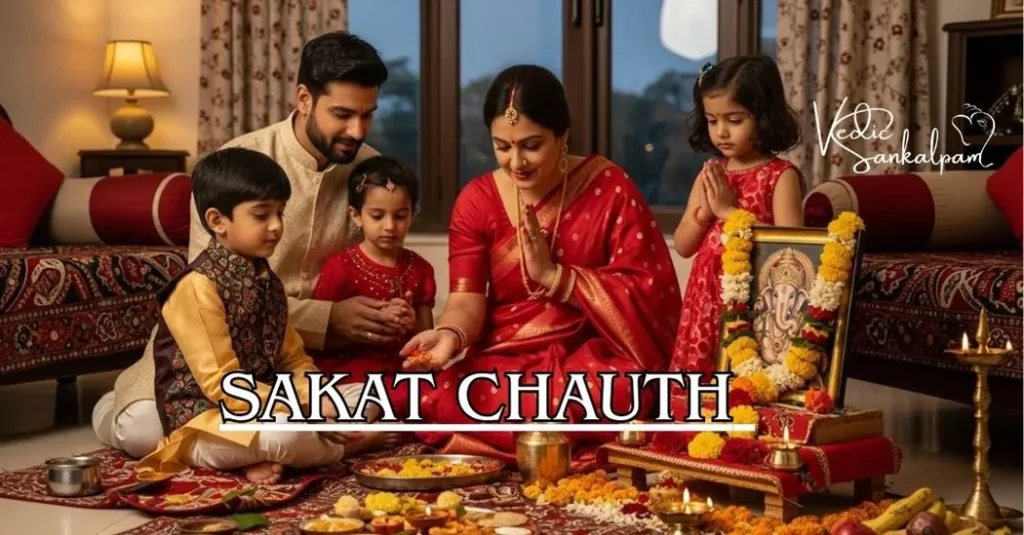
सकट चौथ, जिसे तिलकुटा चौथ, माघी चौथ और संकष्टी चौथ भी कहा जाता है, हिंदू धर्म का एक अत्यंत महत्वपूर्ण व्रत है। यह व्रत मुख्य रूप से संतान की दीर्घायु, स्वास्थ्य और सुख-समृद्धि के लिए किया जाता है। हम इस व्रत को माघ मास के कृष्ण पक्ष की चतुर्थी तिथि को मनाते हैं। वर्ष 2026 में सकट चौथ का धार्मिक, ज्योतिषीय और आध्यात्मिक महत्व और भी अधिक माना जा रहा है।
सकट चौथ 2026 की तिथि और वार
सकट चौथ 2026 की तिथि हिंदू पंचांग के अनुसार माघ माह की कृष्ण पक्ष की चतुर्थी को पड़ेगी। यह पर्व जनवरी 2026 के महीने में मनाया जाएगा।
सकट चौथ 2026 तिथि:6 जनवरी 2026
सकट चौथ आरंभ- 06 जनवरी 2026 को प्रातः 08:01 बजे से
सकट चौथ समाप्त – 07 जनवरी 2026 को प्रातः 06:52 बजे
वार: बुधवार (संभावित, पंचांग अनुसार पुष्टि आवश्यक)
हम इस दिन विशेष रूप से भगवान गणेश और देवी सकट माता की पूजा करते हैं।
सकट चौथ 2026 का शुभ मुहूर्त
शुभ मुहूर्त में पूजा करने से व्रत का फल कई गुना बढ़ जाता है।
पूजा का शुभ समय: प्रातः ब्रह्म मुहूर्त से चंद्रोदय तक
चंद्रोदय समय: रात्रि में (स्थानानुसार अलग-अलग)
चंद्र दर्शन के बिना यह व्रत पूर्ण नहीं माना जाता।
सकट चौथ व्रत का धार्मिक महत्व
हमारे शास्त्रों के अनुसार, सकट चौथ व्रत विशेष रूप से माताओं द्वारा अपनी संतान के लिए किया जाता है। यह व्रत—
संतान की रक्षा करता है
गणेश कृपा प्राप्त करने का सर्वोत्तम साधन है
विघ्न-बाधाओं को दूर करता है
घर में सुख-शांति लाता है
भगवान गणेश को विघ्नहर्ता कहा गया है और इस दिन उनकी पूजा करने से जीवन की सभी बाधाएं दूर होती हैं।
सकट चौथ 2026 की पूजा विधि (स्टेप-बाय-स्टेप)
सकट चौथ 2026
हम सकट चौथ की पूजा पूर्ण विधि-विधान से करते हैं ताकि व्रत का संपूर्ण फल प्राप्त हो।
1. प्रातःकाल की तैयारी
प्रातः जल्दी उठकर स्नान करें
स्वच्छ पीले या लाल वस्त्र धारण करें
व्रत का संकल्प लें
2. पूजा स्थान की व्यवस्था
चौकी पर भगवान गणेश की मूर्ति या चित्र स्थापित करें
देवी सकट माता का चित्र रखें
कलश, दीपक, धूप की व्यवस्था करें
3. पूजा सामग्री
तिल, गुड़, चावल
फल, फूल
दूर्वा घास
मोदक या लड्डू
तिल से बने पकवान
4. पूजा मंत्र
हम पूजा के समय गणेश मंत्र और सकट चौथ कथा का पाठ करते हैं।
मंत्र: ॐ गण गणपतये नमः
सकट चौथ व्रत कथा (संक्षेप में)
पौराणिक कथाओं के अनुसार, एक समय देवताओं पर संकट आ गया था। तब उन्होंने देवी सकट माता और भगवान गणेश की आराधना की। देवी की कृपा से सभी संकट दूर हुए। तभी से यह व्रत संकटों से मुक्ति के लिए किया जाने लगा।
सकट चौथ 2026 में क्या खाएं और क्या न खाएं
व्रत में क्या खाएं
तिल और गुड़ से बने व्यंजन
फलाहार
दूध और मेवे
क्या न खाएं
अन्न
नमक (कुछ स्थानों पर निषेध)
तामसिक भोजन
हम पूरे दिन निर्जला या फलाहार व्रत रखते हैं।
सकट चौथ पर चंद्र दर्शन का महत्व
चंद्र दर्शन इस व्रत का सबसे महत्वपूर्ण भाग है।
चंद्रमा को अर्घ्य दिया जाता है
तिल और जल से चंद्र पूजा होती है
चंद्र दर्शन के बाद ही व्रत खोला जाता है
सकट चौथ 2026 में विशेष योग
वर्ष 2026 में सकट चौथ पर बनने वाले शुभ योग इसे और भी फलदायी बनाते हैं।
सर्वार्थ सिद्धि योग
बुध-चंद्र योग
गणेश कृपा योग
इन योगों में किया गया व्रत अत्यंत शुभ फल देता है।
सकट चौथ से जुड़े ज्योतिषीय लाभ
हमारे ज्योतिष शास्त्र के अनुसार—
यह व्रत संतान दोष को शांत करता है
चंद्र दोष में राहत देता है
मानसिक तनाव को कम करता है
पारिवारिक कलह को दूर करता है
सकट चौथ 2026 के उपाय
हम इस दिन कुछ विशेष उपाय अपनाकर जीवन की समस्याओं से मुक्ति पा सकते हैं—
तिल का दान करें
गणेश जी को 21 दूर्वा अर्पित करें
गरीब बच्चों को भोजन कराएं
गाय को गुड़ खिलाएं
सकट चौथ 2026 का सामाजिक और सांस्कृतिक महत्व
यह व्रत केवल धार्मिक ही नहीं बल्कि सामाजिक एकता और मातृत्व भाव का प्रतीक भी है। हम परिवार के साथ मिलकर यह व्रत करते हैं, जिससे संस्कार और परंपराएं आगे बढ़ती हैं।
निष्कर्ष
सकट चौथ 2026 एक ऐसा पावन पर्व है जो हमें श्रद्धा, विश्वास और धैर्य की सीख देता है। हम यदि इस व्रत को सच्चे मन, विधि-विधान और श्रद्धा से करें, तो भगवान गणेश और सकट माता की कृपा निश्चित रूप से प्राप्त होती है। यह व्रत न केवल संतान सुख प्रदान करता है, बल्कि जीवन के सभी संकटों से रक्षा करता है।
Sakat Chauth 2026 is one of the most spiritually significant Hindu observances dedicated to Lord Ganesha, revered as the remover of obstacles and the protector of children. This sacred fast is primarily observed by married women and mothers who pray for the long life, prosperity, and well-being of their children. Celebrated during the Krishna Paksha Chaturthi of the Magha month, Sakat Chauth holds deep devotional, astrological, and cultural importance across India.
We present a comprehensive, precise, and authoritative guide to Sakat Chauth 2026, covering every essential aspect including rituals, fasting rules, moonrise timing relevance, mythological stories, regional customs, and spiritual benefits.
Sakat Chauth 2026 Date and Tithi Details
Sakat Chauth is observed on the fourth lunar day (Chaturthi) after the full moon in the Hindu month of Magha. In 2026, Sakat Chauth will be observed in January, aligning with the Krishna Paksha Chaturthi as per the Hindu Panchang.
Sakat Chauth Start – 08:01 AMon Jan 06, 2026
Sakat Chauth Ends – 06:52 AMon Jan 07, 2026
Devotees strictly follow the lunar calendar, and rituals are performed based on Chandrodaya (moonrise) rather than sunrise. The fast is broken only after sighting the moon and offering prayers.
Religious Significance of Sakat Chauth
The spiritual essence of Sakat Chauth 2026 lies in its deep association with Lord Ganesha, also known as Sakat Ganesh, Vighnaharta, and Lambodara. Observing this vrat is believed to:
Remove obstacles and negative energies
Protect children from illness, misfortune, and fear
Bring peace, prosperity, and harmony to the household
Strengthen maternal devotion and spiritual discipline
The word “Sakat” signifies deliverance from hardship, symbolizing divine protection during challenging times.
Mythological Story of Sakat Chauth
According to sacred scriptures, a devoted mother once observed a strict fast for Lord Ganesha to protect her child from impending danger. Pleased by her unwavering faith, Lord Ganesha appeared and blessed her child with longevity and health. Since then, Sakat Chauth has been observed as a powerful maternal vrat.
Another legend narrates that Goddess Parvati observed this vrat for Lord Ganesha, which enhanced his divine powers and ensured his invincibility. This story reinforces the belief that Sakat Chauth strengthens familial bonds and divine grace.
Sakat Chauth Puja Vidhi 2026
Sakat Chauth 2026
The Puja Vidhi of Sakat Chauth is performed with utmost purity and devotion. We outline the step-by-step ritual process followed traditionally:
Morning Rituals
Devotees wake up before sunrise and take a ritual bath
The house and puja area are cleaned and sanctified
A sankalp is taken to observe the vrat with devotion
Day-long Fasting
Observers maintain a nirjala vrat or consume fruits and water only
Grains and salt are strictly avoided
Evening Puja
An idol or image of Lord Ganesha is placed on a clean altar
Offerings include til (sesame seeds), gur (jaggery), modak, laddoo, durva grass, and red flowers
Ganesh Mantras and Sakat Chauth Katha are recited with devotion
Moonrise Ritual
The fast is broken only after sighting the moon
Arghya is offered to the moon using water, milk, or rice
Devotees seek blessings for their children before consuming food
Vrat Rules and Fasting Guidelines
To gain the full spiritual benefits of Sakat Chauth 2026, devotees adhere to traditional fasting rules:
Complete abstinence from grains and cereals
Avoidance of negative thoughts and harsh speech
Observance of celibacy and purity
Maintaining devotion and mental discipline throughout the day
The vrat emphasizes self-control, patience, and unwavering faith.
Importance of Moonrise on Sakat Chauth
Unlike other fasts, Sakat Chauth is uniquely associated with moonrise rather than sunrise. The moon symbolizes emotional strength, maternal instincts, and nurturing energy. Offering prayers to the moon before breaking the fast enhances the spiritual potency of the vrat and ensures divine blessings.
Regional Traditions and Variations
Sakat Chauth is observed across India with regional variations:
In North India, it is known as Sakat Chauth or Til Chauth
In Maharashtra, it is celebrated as Angarki Chaturthi when it falls on a Tuesday
In Bihar and Uttar Pradesh, sesame-based offerings are emphasized
In Rajasthan, women observe strict nirjala vrat and perform elaborate rituals
Despite variations, the core devotion to Lord Ganesha remains constant.
Spiritual Benefits of Observing Sakat Chauth 2026
Observing Sakat Chauth 2026 is believed to bestow numerous spiritual and worldly benefits:
Enhanced divine protection for children
Removal of doshas and planetary obstacles
Strengthening of family unity and maternal bonds
Attainment of inner peace and emotional stability
The vrat is especially recommended for those facing challenges related to children’s health, education, or future prospects.
Common Offerings and Bhog for Lord Ganesha
The most auspicious offerings on Sakat Chauth include:
Til-Gur Laddoos
Modaks
Coconut
Durva Grass
Red Hibiscus Flowers
These offerings symbolize prosperity, purity, and devotion.
Conclusion: Embracing the Divine Grace of Sakat Chauth 2026
Sakat Chauth 2026 is more than a ritualistic observance; it is a profound expression of faith, maternal devotion, and spiritual discipline. By observing this sacred vrat with sincerity, devotees invite divine blessings that protect their families and remove life’s obstacles. The festival reinforces timeless values of patience, devotion, and unconditional love.
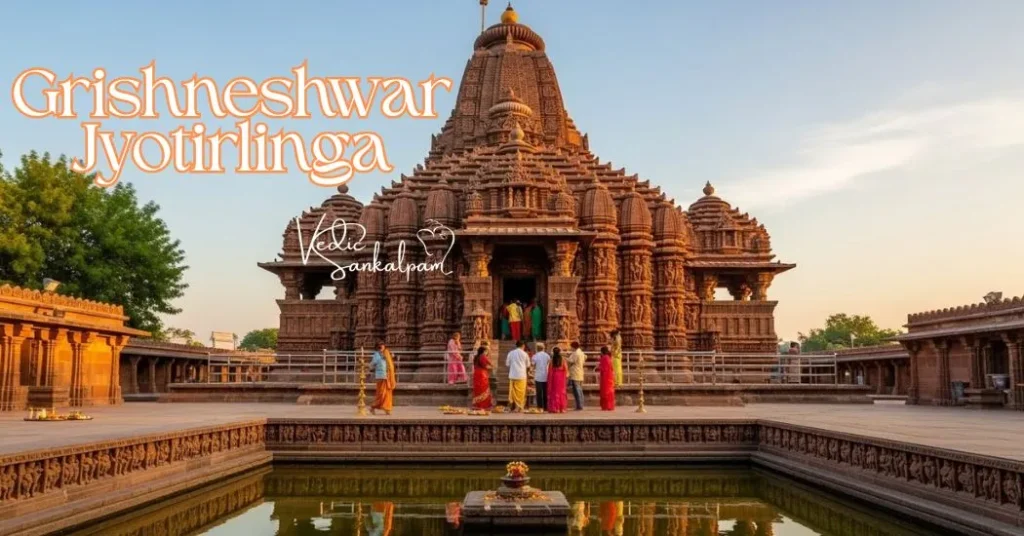
Have you ever felt that inexplicable pull toward something divine, something that transcends the ordinary hustle of everyday life? That’s exactly what pilgrims experience when they approach Grishneshwar Jyotirlinga, one of the twelve sacred Jyotirlingas dedicated to Lord Shiva. Nestled in the picturesque village of Verul, near Aurangabad in Maharashtra, this ancient temple stands as a testament to unwavering faith and architectural brilliance.
Grishneshwar, also known as Ghushmeshwar, isn’t just another temple—it’s a spiritual powerhouse that has drawn devotees for centuries. Whether you’re a devout believer seeking blessings or a curious traveler exploring India’s rich cultural heritage, this sacred site offers something profound for everyone. The temple’s serene atmosphere, combined with its fascinating legends, creates an experience that lingers in your heart long after you’ve left its premises.
The Legend and Mythology Behind Grishneshwar
Every sacred site has a story, and Grishneshwar’s tale is particularly touching. The mythology surrounding this Jyotirlinga revolves around devotion, sacrifice, and divine intervention—themes that resonate deeply with Hindu philosophy.
The Story of Ghushma’s Devotion
The legend begins with a pious Brahmin named Sudharma who lived with his wife Sudeha in the village of Devagiri. Since Sudeha couldn’t bear children, she suggested that Sudharma marry her sister, Ghushma. Unlike many tales where such arrangements lead to discord, Ghushma was incredibly devoted—not just to her husband, but particularly to Lord Shiva.
Every day, Ghushma would wake up early, craft a Shivalinga from clay, worship it with complete devotion, and then immerse it in the nearby lake. Her dedication was so pure and unwavering that it attracted divine attention. When she was finally blessed with a son, Sudeha’s jealousy consumed her. In a fit of rage, she murdered the child and threw his body into the same lake where Ghushma performed her daily rituals.
The Divine Manifestation of Lord Shiva
Can you imagine discovering such a tragedy and still maintaining your faith? That’s exactly what Ghushma did. When she learned of her son’s death, instead of breaking down, she continued her worship with the same devotion. Moved by her unshakeable faith, Lord Shiva appeared before her, restored her son to life, and manifested himself as a Jyotirlinga at that very spot.
This divine manifestation came to be known as Grishneshwar—derived from “Ghushma” and “Ishwar” (Lord). The story beautifully illustrates that true devotion never goes unrewarded, and that the divine is always watching over those who maintain their faith through the darkest times.
Historical Significance of Grishneshwar Temple
The temple’s history stretches back through the mists of time, making it one of the most historically significant religious sites in India.
Ancient References in Sacred Texts
Grishneshwar finds mention in several ancient Hindu scriptures, including the Shiva Purana. These texts describe it as the last or twelfth Jyotirlinga, though some scholars debate its exact position among the twelve. The temple is referenced in various historical accounts dating back over a thousand years, establishing its importance in the Hindu religious landscape.
The Jyotirlinga concept itself is deeply rooted in Hindu theology. According to tradition, these twelve sites represent places where Lord Shiva manifested as a fiery column of light, demonstrating his infinite nature and supreme power. Grishneshwar’s inclusion in this sacred dozen elevates it to the highest echelon of Shiva temples.
Architectural Evolution Through the Ages
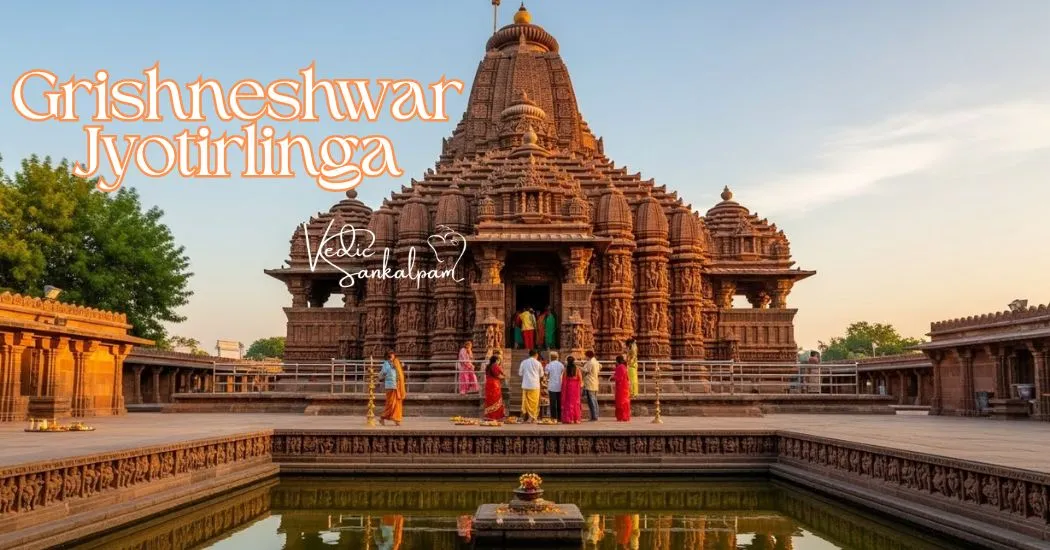
Like many ancient temples, Grishneshwar has undergone several reconstructions throughout history. The current structure was rebuilt in the 18th century by Maloji Raje Bhosale and later renovated by Ahilyabai Holkar, the legendary queen of the Maratha Empire known for her devotion and her extensive temple renovation projects across India.
The temple showcases classic South Indian architectural style, which is somewhat unique for this region of Maharashtra. This architectural choice reflects the diverse cultural influences that have shaped the temple over centuries, creating a structure that’s both historically significant and aesthetically stunning.
Location and How to Reach Grishneshwar
Planning a pilgrimage requires practical information, and getting to Grishneshwar is thankfully quite straightforward.
Geographic Location Near Ellora Caves
Grishneshwar Temple enjoys a prime location in the village of Verul, approximately 11 kilometers from Daulatabad and about 30 kilometers from Aurangabad city. One of its biggest advantages is its proximity to the world-famous Ellora Caves—just 500 meters away! This means you can combine your spiritual journey with a cultural expedition, experiencing both divine devotion and human artistic achievement in a single trip.
The temple sits in a region blessed with natural beauty, surrounded by hills and greenery that create a peaceful atmosphere conducive to meditation and reflection. The geographical setting itself seems designed to elevate your spiritual experience.
Transportation Options for Pilgrims
Reaching Grishneshwar is convenient regardless of your starting point. Aurangabad, the nearest major city, is well-connected by air, rail, and road to major Indian cities. The Aurangabad Airport receives flights from Mumbai, Delhi, and other metropolitan areas regularly.
From Aurangabad, you can hire a taxi, take a local bus, or join organized pilgrimage tours that often include both the temple and the Ellora Caves. The journey takes about 45 minutes to an hour by road, and the route is generally well-maintained. Many pilgrims prefer hiring private vehicles for the flexibility it offers, especially if you’re traveling with family or planning to visit multiple sites in the area.
Architectural Marvel of Grishneshwar Temple
Walking into Grishneshwar Temple is like stepping into a living sculpture—every surface tells a story, every pillar demonstrates mastery.
The Red Stone Structure
The temple’s most striking feature is its construction from red stone, which gives it a distinctive appearance that stands out against the surrounding landscape. The five-tier shikhara (temple tower) rises majestically, drawing your eyes upward and symbolizing the ascent from earthly concerns to divine consciousness.
The temple complex is relatively compact but incredibly efficient in its use of space. Despite its modest size compared to some sprawling temple complexes, it creates an atmosphere of grandeur through intelligent architectural design and artistic execution.
Intricate Carvings and Sculptures
What truly sets Grishneshwar apart is the stunning detail work covering virtually every surface. The walls, pillars, and ceilings are adorned with intricate carvings depicting various Hindu deities, mythological scenes, and decorative patterns. These aren’t just random embellishments—each carving has symbolic significance, telling stories from Hindu scriptures or representing different aspects of divine energy.
The craftsmanship displays exceptional skill, with some carvings so delicate they seem impossible to achieve in hard stone. You’ll find representations of various forms of Lord Shiva, along with other deities from the Hindu pantheon, all rendered with remarkable artistic sensitivity.
The Sanctum Sanctorum Design
The inner sanctum, where the Jyotirlinga resides, follows traditional temple architecture principles. It’s designed to create a sense of intimate connection with the divine—the space is deliberately kept small and somewhat dark, illuminated primarily by oil lamps and small windows. This design choice isn’t accidental; it represents moving from the external world of light and distraction into the internal world of meditation and spiritual focus.
The Shivalinga itself is relatively simple, which is characteristic of Jyotirlingas. Its power doesn’t come from ornate decoration but from its spiritual significance and the faith of millions who have worshipped there over centuries.
Religious Importance in Hinduism
Understanding why Grishneshwar holds such a revered position requires exploring broader Hindu theological concepts.
The Twelve Jyotirlingas and Their Significance
In Hindu tradition, the twelve Jyotirlingas represent the most sacred abodes of Lord Shiva. Each Jyotirlinga is believed to be a manifestation of Shiva himself, not merely a representation or symbol. Visiting all twelve Jyotirlingas is considered an extremely meritorious pilgrimage that can lead to spiritual liberation.
The concept of Jyotirlinga—literally “pillar of light”—comes from the story where Shiva manifested as an endless pillar of light to settle a dispute between Brahma and Vishnu about who was supreme. This manifestation demonstrated that divinity is infinite and beyond complete human comprehension.
Grishneshwar’s position as the twelfth Jyotirlinga gives it particular importance for pilgrims attempting to complete the entire circuit. Many devotees visit Grishneshwar as either the beginning or culmination of their journey through all twelve sacred sites.
Spiritual Benefits of Visiting Grishneshwar
Hindu tradition holds that visiting Grishneshwar with sincere devotion can bestow numerous spiritual benefits. Devotees believe that darshan (viewing the deity) at this Jyotirlinga can wash away sins, fulfill righteous desires, and progress one’s spiritual journey toward moksha (liberation from the cycle of rebirth).
Beyond these traditional beliefs, many visitors report experiencing a profound sense of peace and spiritual renewal at Grishneshwar. There’s something about the combination of the temple’s sacred energy, its beautiful architecture, and the devotion of fellow pilgrims that creates a transformative atmosphere.
Rituals and Worship Practices
The temple follows a structured schedule of rituals that have been maintained for generations, creating a rhythm of worship that connects modern devotees with ancient traditions.
Daily Puja Schedule
Grishneshwar Temple opens early in the morning, typically around 5:30 AM, to allow devotees to participate in the morning aarti (ritual of worship with lamps). The day proceeds with various pujas performed by the temple priests at specific times, including the Abhishekam (ritual bathing of the Shivalinga) which is particularly popular among devotees.
The temple closes for a few hours in the afternoon, then reopens in the evening for additional rituals before the final aarti of the day. This schedule mirrors the daily rhythm in many Hindu temples, marking the passage of time through devotional practice rather than merely secular measurement.
Special Ceremonies and Festivals
Maha Shivaratri stands out as the most significant festival celebrated at Grishneshwar. On this night dedicated to Lord Shiva, the temple sees an enormous influx of pilgrims who stay awake throughout the night, participating in special pujas and chanting hymns. The atmosphere becomes electric with devotion, creating an experience that long-time visitors describe as unforgettable.
Other important occasions include the Shravan month (July-August), considered especially auspicious for Shiva worship. During this time, devotees pour holy water on the Shivalinga—some traveling great distances specifically for this purpose. The temple also celebrates festivals like Diwali and Holi with special ceremonies that blend religious tradition with joyful community celebration.
Best Time to Visit Grishneshwar Temple
Grishneshwar Jyotirlinga
Timing your visit can significantly impact your experience, so it’s worth considering both practical and spiritual factors.
Seasonal Considerations
The most comfortable time to visit Grishneshwar is during the winter months from October to March. The weather is pleasant—neither too hot nor too cold—making both the temple visit and the nearby Ellora Caves exploration enjoyable. The clear skies and moderate temperatures also make for better photography if you’re documenting your journey.
Summer months (April to June) can be quite hot in this region, with temperatures soaring above 40°C. If you’re planning a summer visit, go early in the morning or late in the evening to avoid the midday heat. The monsoon season (July to September) brings relief from the heat but can make travel slightly challenging due to occasional heavy rains.
Festival Times and Crowd Management
While festivals like Maha Shivaratri offer the most intense spiritual atmosphere, they also attract the largest crowds. If you prefer a more peaceful, contemplative experience, consider visiting during non-festival periods on weekdays. You’ll have more time for personal prayer and meditation without the rush of large crowds.
However, don’t let crowd concerns prevent you from experiencing a major festival if that interests you. There’s something powerful about being part of a massive gathering of devotees, all united in faith and devotion. The energy during these times is palpable and can be deeply moving.
Nearby Attractions and Pilgrimage Sites
One of Grishneshwar’s advantages is its proximity to several other significant sites, allowing you to create a rich, multifaceted journey.
The Magnificent Ellora Caves
Just a short walk from the temple lies the UNESCO World Heritage Site of Ellora Caves, one of the most impressive rock-cut monastery-temple cave complexes in the world. These 34 caves represent Buddhist, Hindu, and Jain monuments carved between the 6th and 10th centuries CE, showcasing remarkable religious tolerance and artistic achievement.
The Kailasa Temple (Cave 16) is particularly spectacular—a massive structure carved from a single rock, representing Mount Kailash, the abode of Lord Shiva. Visiting both Grishneshwar and Ellora in the same trip offers a perfect balance of active worship and cultural appreciation, connecting living religious tradition with historical artistic legacy.
Other Temples in the Vicinity
The region around Grishneshwar hosts several other significant temples worth exploring. The Ghrishneshwar Temple complex itself includes smaller shrines dedicated to various deities. Nearby, you’ll find other ancient temples reflecting the area’s long religious history.
Aurangabad city, about 30 kilometers away, offers additional attractions including the Bibi Ka Maqbara (often called the “Mini Taj Mahal”), the Aurangabad Caves, and several historic gates and monuments from the Mughal period. These sites add historical and architectural diversity to your pilgrimage journey.
Accommodation Options for Pilgrims
Finding suitable accommodation is crucial for a comfortable pilgrimage experience, and the Grishneshwar area offers various options.
The temple itself provides basic accommodation for pilgrims at very reasonable rates, allowing devotees to stay close to the sacred site. These facilities are simple but clean, offering essential amenities for those who prioritize proximity over luxury.
For more comfortable options, Aurangabad city offers hotels across all budget ranges—from budget guesthouses to luxury properties. Staying in Aurangabad gives you access to better amenities, more dining options, and makes it easier to explore other attractions in the region. Many hotels offer specific packages for pilgrims that include transportation to the temple and other nearby religious sites.
Some visitors prefer staying in smaller hotels or guesthouses near the Ellora Caves, which puts them equidistant between the caves and the temple. This option works particularly well if you’re planning to spend significant time exploring both sites.
Local Culture and Traditions
The area around Grishneshwar is rich with Maharashtrian culture, offering insights into local traditions and ways of life.
The local people are known for their hospitality toward pilgrims, reflecting a long tradition of welcoming religious travelers. Many families in the surrounding villages have provided services to pilgrims for generations, creating a culture deeply connected to the temple’s presence.
Local cuisine offers delicious vegetarian options typical of Maharashtrian cooking—think spicy curries, freshly made rotis, and sweet treats like puran poli. Many small restaurants and food stalls near the temple serve prasad (sanctified food) and simple meals that sustain pilgrims throughout their visit.
The region also has a tradition of handicrafts, particularly items related to religious worship like small Shivalingas, prayer beads, and images of deities. These make meaningful souvenirs that carry spiritual significance beyond mere tourist trinkets.
Tips for First-Time Visitors
A few practical tips can help ensure your visit to Grishneshwar is as smooth and meaningful as possible.
First, dress modestly and respectfully—this is an active place of worship, not merely a tourist site. Remove your shoes before entering the temple premises, as is customary in Hindu temples. Photography inside the sanctum sanctorum is typically not permitted, so respect these restrictions.
Arrive early if possible, especially during festival times or weekends. Early morning visits offer a more peaceful atmosphere and allow you to participate in the morning rituals. The temple can get quite crowded later in the day, particularly when tour groups arrive from Aurangabad.
Consider hiring a local guide if you’re interested in deeper understanding of the temple’s history, architecture, and religious significance. Knowledgeable guides can point out details you might otherwise miss and explain the symbolism embedded in various architectural elements.
Keep some cash handy for donations and purchasing prasad. While the temple doesn’t charge an entry fee, donations are appreciated and help maintain the sacred site. You can also purchase offerings like flowers, coconuts, and incense from vendors near the temple entrance.
Finally, maintain a respectful demeanor throughout your visit. This means speaking softly, not pushing or rushing, and being mindful of devotees who are deep in prayer. Remember, you’re visiting someone’s spiritual home, and your behavior should reflect that understanding.
The Spiritual Experience at Grishneshwar
What makes Grishneshwar truly special transcends architecture, history, or even mythology—it’s the intangible spiritual atmosphere that permeates the place.
Many visitors describe feeling an immediate shift in energy when they enter the temple premises, as if stepping into a space where the boundary between material and spiritual becomes thinner. The sound of bells, the fragrance of incense, the sight of oil lamps flickering before the deity—all these sensory experiences combine to create something greater than their individual parts.
Whether you approach it as a devotee seeking blessings or as a spiritual seeker exploring different paths, Grishneshwar offers opportunities for connection and reflection. The very act of pilgrimage—journeying to a sacred site with intention—can be transformative, separating you from daily routines and creating space for deeper contemplation.
The devotion you witness in fellow pilgrims can itself be moving. Watching someone offer prayers with complete absorption, or seeing families introduce young children to their religious heritage, reminds us of faith’s enduring power to give meaning and connection across generations.
Preservation and Conservation Efforts
Maintaining ancient temples for future generations requires constant effort and resources.
The Archaeological Survey of India (ASI) plays an active role in preserving Grishneshwar Temple, given its historical and religious significance. Regular maintenance work ensures that the structure remains sound while preserving its authentic character. This balancing act—allowing continued worship while protecting the physical structure—requires careful planning and expertise.
Temple authorities also work to manage the environmental impact of increased pilgrim traffic. Efforts to maintain cleanliness, manage waste, and preserve the surrounding area help ensure that the temple remains a beautiful and sacred space for years to come.
Devotees themselves play a crucial role in conservation through their donations and by treating the temple with respect during their visits. When pilgrims are mindful about not damaging architectural elements, properly disposing of offerings, and supporting legitimate preservation efforts, they become partners in protecting this heritage site.
Conclusion
Grishneshwar Jyotirlinga stands as more than just a temple—it’s a living connection to centuries of faith, a masterpiece of architectural achievement, and a beacon for spiritual seekers. Whether you’re drawn by the compelling mythology of Ghushma’s devotion, the exquisite artistry of its red stone carvings, or simply the call to experience one of Hinduism’s most sacred sites, Grishneshwar offers something profound.
The temple’s proximity to the Ellora Caves makes it an ideal destination for those who appreciate both spiritual and cultural heritage. Its accessibility from Aurangabad ensures that modern pilgrims can undertake this sacred journey with relative ease, while the temple itself maintains its ancient character and spiritual potency.
Visiting Grishneshwar isn’t just about checking off another destination on a travel list. It’s about connecting with something larger than yourself—whether you conceptualize that as the divine, as cultural continuity, or simply as the accumulated devotion of countless souls who have stood in that same spot over the centuries. In our fast-paced modern world, places like Grishneshwar remind us of deeper dimensions to existence, inviting us to pause, reflect, and perhaps touch something eternal.
So whether you’re planning your first visit or your fiftieth, Grishneshwar awaits with open arms, ready to share its blessings, its beauty, and its timeless spiritual energy with all who approach with respect and an open heart.
FAQs
1. What is the best time to visit Grishneshwar Temple to avoid crowds?
The best time to visit with minimal crowds is during weekdays in the winter months (October to March), excluding major festivals like Maha Shivaratri and the month of Shravan. Early morning visits, particularly right when the temple opens around 5:30 AM, offer the most peaceful experience regardless of season.
2. How much time should I allocate for visiting Grishneshwar Temple?
A basic visit to offer prayers and explore the temple premises typically takes 1-2 hours. However, if you want to participate in specific rituals, spend time in meditation, or thoroughly appreciate the architectural details, consider allocating 2-3 hours. Most visitors combine this with a trip to the nearby Ellora Caves, making it a full-day excursion.
3. Are there any specific dress code requirements for visiting the temple?
While there’s no strictly enforced dress code, modest clothing is expected and appreciated as a sign of respect. Avoid wearing shorts, short skirts, or sleeveless tops. Both men and women should cover their shoulders and knees. Traditional Indian clothing like sarees or kurta-pajamas is ideal, but conservative Western clothing is also acceptable.
4. Can non-Hindus visit Grishneshwar Temple?
Yes, Grishneshwar Temple is open to people of all faiths and backgrounds. The temple welcomes everyone who approaches with respect and genuine interest. However, visitors should be mindful of ongoing religious ceremonies and maintain appropriate behavior throughout their visit.
5. Is photography allowed inside Grishneshwar Temple?
Photography is generally allowed in the outer areas of the temple complex, but it’s typically prohibited inside the main sanctum sanctorum where the Jyotirlinga is housed. Always look for signs indicating photography restrictions, and when in doubt, ask temple staff or priests for permission before taking photos. Respect other devotees’ privacy, and never photograph people without their consent.
Kaal Sarp Dosh is one of the most discussed and influential astrological combinations in Vedic astrology, believed to significantly impact an individual’s life, destiny, and karmic journey. This dosh occurs when all seven planets (Sun, Moon, Mars, Mercury, Jupiter, Venus, and Saturn) are positioned between Rahu (North Node) and Ketu (South Node) in a birth chart (Kundli). The symbolic representation of Rahu and Ketu as a serpent swallowing all planets gives rise to the term “Kaal Sarp”, where Kaal denotes time and Sarp signifies a snake.
We observe that this dosh is associated with delays, obstacles, mental unrest, financial instability, relationship issues, and repeated struggles, especially during Rahu and Ketu Mahadasha or Antardasha periods.
Astrological Formation of Kaal Sarp Dosh
Kaal Sarp Dosh forms when:
Rahu occupies one house of the horoscope
Ketu occupies the opposite house
All remaining planets are confined between Rahu and Ketu
The house placement, strength of Rahu-Ketu, and aspect of benefic or malefic planets determine the intensity of the dosh. Not all Kaal Sarp Dosh charts yield negative outcomes; the results vary depending on planetary dignity, conjunctions, and dashas.
Types of Kaal Sarp Dosh and Their Effects
Kaal Sarp Dosh
There are 12 primary types of Kaal Sarp Dosh, each linked to the house placement of Rahu and Ketu. Below is a detailed explanation of each type:
1. Anant Kaal Sarp Dosh
Occurs when Rahu is in the 1st house and Ketu in the 7th house. Effects: Health concerns, lack of confidence, marital discord, delays in success.
2. Kulik Kaal Sarp Dosh
Rahu in 2nd house, Ketu in 8th house. Effects: Financial instability, family disputes, speech-related issues.
3. Vasuki Kaal Sarp Dosh
Rahu in 3rd house, Ketu in 9th house. Effects: Struggles in communication, lack of sibling support, hurdles in higher education.
4. Shankhpal Kaal Sarp Dosh
Rahu in 4th house, Ketu in 10th house. Effects: Disturbed domestic life, property issues, career instability.
5. Padma Kaal Sarp Dosh
Rahu in 5th house, Ketu in 11th house. Effects: Delays in childbirth, problems in love life, fluctuating income.
6. Mahapadma Kaal Sarp Dosh
Rahu in 6th house, Ketu in 12th house. Effects: Legal disputes, debts, health complications, anxiety.
7. Takshak Kaal Sarp Dosh
Rahu in 7th house, Ketu in 1st house. Effects: Marriage delays, partner conflicts, emotional imbalance.
8. Karkotak Kaal Sarp Dosh
Rahu in 8th house, Ketu in 2nd house. Effects: Sudden losses, inheritance issues, fear and insecurity.
9. Shankhnaad Kaal Sarp Dosh
Rahu in 9th house, Ketu in 3rd house. Effects: Weak luck, strained relations with mentors, lack of spiritual clarity.
10. Ghatak Kaal Sarp Dosh
Rahu in 10th house, Ketu in 4th house. Effects: Career obstacles, professional dissatisfaction, family stress.
11. Vishdhar Kaal Sarp Dosh
Rahu in 11th house, Ketu in 5th house. Effects: Unfulfilled desires, problems with children, unstable friendships.
12. Sheshnag Kaal Sarp Dosh
Rahu in 12th house, Ketu in 6th house. Effects: Expenditure issues, sleep disorders, hidden enemies.
Common Symptoms of Kaal Sarp Dosh
We frequently identify the presence of Kaal Sarp Dosh through the following life patterns:
Repeated failures despite hard work
Delayed marriage or unstable relationships
Financial ups and downs
Mental stress, fear, or depression
Career stagnation
Health issues without clear diagnosis
Lack of peace and spiritual disconnect
Is Kaal Sarp Dosh Always Harmful?
Contrary to widespread belief, Kaal Sarp Dosh is not always destructive. Many renowned personalities have had this dosh and achieved extraordinary success. When benefic planets aspect Rahu or Ketu, or when strong yogas coexist, the negative effects reduce significantly. In some cases, Kaal Sarp Dosh enhances focus, ambition, research abilities, and spiritual growth.
Powerful Remedies for Kaal Sarp Dosh
Astrology offers several effective remedies to balance the energies of Rahu and Ketu:
1. Kaal Sarp Dosh Nivaran Puja
Performed at spiritually potent locations such as Ujjain, Trimbakeshwar, Nasik, and Haridwar, this puja pacifies Rahu-Ketu energies and reduces karmic burdens.
2. Maha Mrityunjaya Mantra
Regular chanting helps in overcoming fear, illness, and psychological stress.
3. Rahu-Ketu Beej Mantra
Chanting these mantras strengthens planetary harmony and mental stability.
4. Charity and Donations
Offering food, black sesame seeds, blankets, or donating on Saturdays and Amavasya yields positive karmic results.
5. Wearing Gemstones
Under expert guidance, gemstones like Gomed (Hessonite) and Cat’s Eye (Lehsunia) may help stabilize Rahu and Ketu effects.
Best Time to Perform Kaal Sarp Dosh Puja
The most auspicious days include:
Amavasya (New Moon)
Nag Panchami
Rahu-Ketu transit periods
Shravan month
Performing remedies during these times amplifies their effectiveness.
Scientific and Psychological Perspective
From a psychological standpoint, belief in Kaal Sarp Dosh can intensify stress if misunderstood. However, when approached constructively, remedies function as ritualistic therapy, promoting discipline, hope, and inner balance. Astrology, when used wisely, serves as a guidance system rather than a fear mechanism.
Transforming Challenges into Strength
Kaal Sarp Dosh symbolizes intense karmic lessons, not permanent misfortune. With correct astrological interpretation, timely remedies, and conscious effort, individuals can convert struggles into stepping stones for growth. We believe that understanding this dosh empowers individuals to navigate life with clarity, resilience, and spiritual awareness.