loading

Category: Puja

  • Home
  • Category: Puja

Makar Sankranti 2026: A Complete Guide to India’s Harvest Festival

There’s something magical about the way India celebrates its festivals, isn’t there? Each one tells a story, carries traditions that span centuries, and brings people together in the most beautiful ways. Among these vibrant celebrations, Makar Sankranti holds a special place in the hearts of millions. As we look ahead to Makar Sankranti 2026, let’s dive deep into everything that makes this festival so extraordinary.

What is Makar Sankranti?

Makar Sankranti is one of the few Indian festivals celebrated according to the solar calendar rather than the lunar calendar. This makes it fall on the same date almost every year, typically around January 14th or 15th. But what exactly does this festival represent?

The Astronomical Significance

The term “Makar Sankranti” literally translates to the transition of the sun into the zodiac sign of Capricorn (Makar). This celestial movement marks the end of the winter solstice and the beginning of longer, warmer days. It’s nature’s way of telling us that spring is just around the corner. From this day onwards, the sun begins its northward journey, known as Uttarayan, which is considered highly auspicious in Hindu tradition.

Cultural and Religious Importance

Beyond astronomy, Makar Sankranti carries profound spiritual meaning. It symbolizes the victory of light over darkness, knowledge over ignorance, and good over evil. Think of it as nature’s celebration of renewal and hope. The festival encourages us to leave behind negativity and embrace positivity, making it the perfect time for new beginnings.


When is Makar Sankranti 2026?

Date and Timing

Makar Sankranti 2026 will be celebrated on Wednesday, January 14, 2026. The exact timing of the sun’s transition into Capricorn is crucial for determining the most auspicious moments for rituals and ceremonies. Devotees often consult almanacs or pandits to know the precise muhurat (auspicious time) for taking holy dips and performing prayers.

Why the Date Changes Every Year

You might wonder why some years the festival falls on January 14th and occasionally on the 15th. This happens because our Gregorian calendar doesn’t perfectly align with the solar calendar. The sun’s transition occurs at specific astronomical moments, causing slight variations. However, the festival remains anchored around mid-January, making it a reliable marker of seasonal change.


The History and Mythology Behind Makar Sankranti

Ancient Origins

Makar Sankranti has been celebrated for thousands of years, with references found in ancient Hindu texts and scriptures. The Puranas mention this day as particularly sacred for spiritual practices and charity. Archaeological evidence suggests that even ancient civilizations recognized the importance of this solar transition.

Legends Associated with the Festival

Several fascinating stories surround Makar Sankranti. One popular legend tells of Lord Surya (the Sun God) visiting his son Shani (Saturn), who rules Capricorn. This divine visit symbolizes the resolution of conflicts and the strengthening of relationships.

Another beloved tale involves Bhishma Pitamah from the Mahabharata. After being fatally wounded in battle, Bhishma waited on a bed of arrows for Makar Sankranti to arrive before leaving his mortal body. He chose this day because it’s believed that souls departing during Uttarayan attain moksha (liberation) more easily. Powerful, isn’t it?


How is Makar Sankranti Celebrated Across India?

Makar Sankranti 2026: A Complete Guide to India's Harvest Festival
Makar Sankranti 2026

Here’s where things get really interesting. India’s diversity shines brilliantly during Makar Sankranti, as different regions celebrate it in their own unique ways.

Regional Variations and Names

Pongal in Tamil Nadu

In Tamil Nadu, the festival is called Pongal and lasts for four days. It’s essentially a thanksgiving celebration for the harvest. Families prepare a special dish called Pongal (made with freshly harvested rice, milk, and jaggery) in earthen pots, allowing it to overflow as a symbol of abundance. Homes are decorated with beautiful kolam (rangoli) designs, and there’s a special day dedicated to honoring cattle.

Lohri in Punjab

Punjabis celebrate Lohri on January 13th, the evening before Makar Sankranti. Communities gather around bonfires, singing traditional folk songs and performing bhangra. People throw popcorn, rewari (sesame candy), and puffed rice into the fire, symbolizing gratitude for abundance. It’s particularly significant for newlyweds and newborn babies.

Uttarayan in Gujarat

Gujarat takes kite flying to a whole new level during Uttarayan. The skies become a canvas filled with colorful kites of all shapes and sizes. International kite festivals attract participants from around the world. The competitive spirit is palpable as people try to cut each other’s kites with specially coated strings. The rooftops buzz with excitement as families spend entire days under the sun.

Magh Bihu in Assam

In Assam, the festival is known as Magh Bihu or Bhogali Bihu (the festival of feasting). Communities build makeshift huts called meji and bhelaghar using bamboo and thatch. These structures are burned in ceremonial bonfires, and people prepare traditional Assamese delicacies like til pitha (sesame cakes) and laru (coconut sweets).


Traditional Rituals and Customs

Holy Dips in Sacred Rivers

Taking a dip in sacred rivers during Makar Sankranti is considered extremely auspicious. Rivers like the Ganges, Yamuna, Godavari, Krishna, and Cauvery witness millions of devotees who come to cleanse their sins and seek blessings. The confluence of rivers, particularly at Prayagraj (formerly Allahabad), becomes a major pilgrimage site.

Can you imagine the energy of thousands of people united in faith, all seeking purification and renewal? It’s a sight that touches the soul.

Prayers and Offerings to the Sun God

Surya Narayana, the Sun God, receives special worship on this day. Devotees offer water (arghya) to the rising sun, along with flowers and prayers. The sun is seen as the source of all life and energy, making this ritual a way of expressing gratitude for sustenance and vitality.


Special Foods of Makar Sankranti

Food plays a central role in Makar Sankranti celebrations, and there’s a delicious reason behind every traditional dish.

Tilgul and Sesame-Based Sweets

In Maharashtra and many parts of India, people exchange tilgul (sesame and jaggery sweets) with the phrase “Tilgul ghya, god god bola” which means “Accept this tilgul and speak sweet words.” Why sesame and jaggery? These ingredients provide warmth to the body during winter and are nutritionally rich.

Sesame seeds symbolize the quality of maintaining attachments even in adversity (they stick together), while jaggery represents sweetness in relationships. It’s food with philosophy!

Regional Delicacies

Each region has its specialties:

  • Khichdi in Uttar Pradesh and Bihar (made with rice and lentils)
  • Undhiyu and chikkis in Gujarat
  • Puran poli in Maharashtra
  • Ellu bella (sesame and jaggery mixture) in Karnataka
  • Til ke ladoo across North India

These dishes aren’t just delicious; they’re carefully chosen to provide warmth and nutrition during the cold winter months.


Kite Flying: The Sky-High Tradition

Origin of Kite Flying During Sankranti

Why kites? This tradition has both health and cultural significance. Spending time outdoors flying kites exposes people to sunlight, which is beneficial after the cold winter months. The vitamin D from sun exposure strengthens immunity and lifts moods. Additionally, kite flying has been a social activity that brings communities together on rooftops.

Kite Festivals Across India

The International Kite Festival in Ahmedabad is world-famous, attracting kite enthusiasts from over 40 countries. The sky becomes a spectacular display of colors, shapes, and designs. From traditional diamond-shaped kites to elaborate designs depicting characters and symbols, the variety is astounding. The competitive spirit, friendly banter, and shouts of “Kai po che!” (We’ve cut it!) create an atmosphere of pure joy.


Spiritual Significance of Makar Sankranti

Transition from Darkness to Light

Makar Sankranti represents a spiritual awakening. The sun’s northward journey symbolizes the soul’s journey toward enlightenment. Just as days become longer and brighter, this festival encourages us to illuminate our inner selves with knowledge and wisdom.

Charity and Good Deeds

This is considered one of the most auspicious times for dana (charity). Donating food, clothes, blankets, and money to those in need is believed to bring great merit. Many people organize community meals and distribute essentials to the underprivileged. The act of giving becomes a form of worship, reminding us that true joy comes from sharing our blessings.


Makar Sankranti and Agriculture

Celebrating the Harvest Season

At its core, Makar Sankranti is a harvest festival. It marks the end of the winter crop season and the beginning of preparations for the spring harvest. Farmers give thanks for successful yields and pray for continued prosperity. The festival acknowledges the hard work of farmers and the bounty nature provides.

Gratitude to Nature

In our modern, urbanized lives, we sometimes forget our connection to the earth. Makar Sankranti serves as a beautiful reminder of our dependence on natural cycles. It teaches us to respect agricultural rhythms and honor those who toil in fields to feed the nation.


Best Places to Celebrate Makar Sankranti 2026

Planning to experience Makar Sankranti in its full glory? Here are some top destinations:

Prayagraj (Allahabad)

The Triveni Sangam (confluence of Ganges, Yamuna, and mythical Saraswati) becomes a major pilgrimage site. Millions gather for holy dips, especially during the Magh Mela. The spiritual atmosphere is unparalleled.

Ahmedabad

If you’re a kite enthusiast, Ahmedabad during Uttarayan is a must-visit. The International Kite Festival showcases incredible kite designs and flying techniques. The entire city participates in this colorful celebration.

Jaipur

The Pink City offers a royal backdrop to Sankranti celebrations. Kite flying on Jaipur’s rooftops, combined with traditional Rajasthani hospitality and cuisine, creates an unforgettable experience.


Modern Celebrations and Changing Traditions

While core traditions remain intact, Makar Sankranti celebrations have evolved with time. Urban celebrations might be more contained compared to rural festivities, but the spirit remains unchanged. Social media has added a new dimension, with people sharing their celebrations, recipes, and kite-flying victories online.

Virtual celebrations became common during the pandemic, proving that the essence of togetherness can transcend physical boundaries. Families separated by distance now connect via video calls to celebrate together, maintaining bonds despite geographical separations.


Environmental Concerns During the Festival

With increased awareness about environmental issues, some aspects of Makar Sankranti celebrations need reconsideration. Glass-coated kite strings (manja) have caused injuries to humans and deaths of birds. Many states have banned these dangerous strings, promoting cotton threads instead.

The pollution from bonfires and the waste generated from mass gatherings also raise concerns. Eco-friendly celebrations are gaining popularity, with biodegradable decorations, sustainable food practices, and responsible disposal of festival waste becoming priorities.


How to Celebrate Makar Sankranti at Home

You don’t need elaborate arrangements to celebrate meaningfully. Here are simple ways to observe Makar Sankranti at home:

  1. Wake up early and offer prayers to the Sun God
  2. Prepare traditional foods like tilgul or khichdi
  3. Donate to those in need, even if it’s something small
  4. Fly kites with family (using eco-friendly strings)
  5. Share sweets with neighbors, spreading joy
  6. Reflect on the past year and set positive intentions
  7. Spend time outdoors soaking in winter sunshine

The beauty of this festival lies in its simplicity and accessibility. It doesn’t require expensive rituals or elaborate setups—just a grateful heart and a spirit of community.


Astrological Importance of Makar Sankranti

According to Vedic astrology, Makar Sankranti marks a significant shift in cosmic energies. The sun’s entry into Capricorn is believed to strengthen determination, discipline, and focus. It’s considered an excellent time for starting new ventures, making important decisions, and pursuing spiritual practices.

Uttarayan, the six-month period beginning on this day, is considered more auspicious than Dakshinayan (the sun’s southward journey). Marriages, housewarmings, and other ceremonies scheduled during this period are believed to bring greater blessings and success.


Conclusion

Makar Sankranti 2026 promises to be another beautiful chapter in India’s rich tapestry of celebrations. Whether you’re taking a holy dip in sacred rivers, flying colorful kites against the winter sky, sharing tilgul with loved ones, or simply spending time in gratitude and reflection, this festival offers something special for everyone.

What makes Makar Sankranti truly remarkable is how it connects us—to nature’s rhythms, to our cultural roots, to our communities, and to our higher selves. In a world that often feels fragmented and rushed, this festival reminds us of timeless values: gratitude, generosity, joy, and the eternal cycle of renewal.

As January 14, 2026 approaches, let’s embrace the spirit of Makar Sankranti wholeheartedly. Let’s fly our kites high, share our blessings generously, and welcome the longer, brighter days ahead with open hearts. After all, isn’t life itself a journey from darkness to light?


FAQs

1. Why is Makar Sankranti celebrated on January 14 every year?

Makar Sankranti is based on the solar calendar and marks the sun’s transition into the zodiac sign of Capricorn (Makar). This astronomical event typically occurs around January 14th, though occasionally it falls on the 15th due to calendar variations. Unlike most Hindu festivals that follow the lunar calendar and change dates annually, Makar Sankranti remains fixed around this period, making it one of the few Indian festivals with a consistent date.

2. What is the significance of flying kites during Makar Sankranti?

Kite flying during Makar Sankranti has both health and cultural significance. Spending hours outdoors under the winter sun provides beneficial exposure to vitamin D, which strengthens immunity and uplifts mood. Historically, this tradition also served as a social activity that brought communities together. The colorful kites filling the sky symbolize the victory of light over darkness and create a festive atmosphere of joy and friendly competition.

3. What foods are traditionally eaten during Makar Sankranti?

Traditional Makar Sankranti foods vary by region but commonly include sesame and jaggery-based sweets like tilgul, til ke ladoo, and chikki. These ingredients provide warmth and energy during winter. Other popular dishes include khichdi (rice and lentil preparation), undhiyu (mixed vegetable curry), puran poli (sweet flatbread), and various regional specialties. Each dish is chosen for its nutritional value and warming properties during the cold season.

4. Is taking a holy bath on Makar Sankranti necessary?

While taking a holy dip in sacred rivers like the Ganges is considered highly auspicious on Makar Sankranti, it’s not mandatory. The ritual symbolizes purification and spiritual cleansing. If you cannot visit a sacred river, taking a bath at home with added sacred substances like Ganga jal (holy water) or tulsi leaves, while offering prayers to the Sun God, is equally meaningful. The essence lies in the spiritual intention rather than just the physical act.

5. How is Makar Sankranti different from other harvest festivals in India?

While India celebrates many harvest festivals, Makar Sankranti is unique because it’s based on solar movements rather than lunar phases, making it predictable in date. It’s celebrated across India with different regional names and customs (Pongal, Lohri, Uttarayan, Magh Bihu), showcasing the country’s diversity while maintaining common themes of gratitude, renewal, and community. Additionally, it has deep astrological significance, marking the beginning of Uttarayan, which is considered especially auspicious in Hindu tradition.


Gayatri Mantra Meaning in English – Complete Explanation, Significance, and Spiritual Depth

Introduction to the Gayatri Mantra

The Gayatri Mantra is one of the most ancient, powerful, and revered Vedic mantras in Hindu philosophy. Originating from the Rig Veda (Mandala 3.62.10), this sacred chant has been recited for thousands of years as a source of spiritual illumination, wisdom, and inner awakening. We present a comprehensive, authoritative, and precise explanation of the Gayatri Mantra meaning in English, ensuring clarity, depth, and authenticity for seekers, scholars, and devotees alike.


Gayatri Mantra in Sanskrit

ॐ भूर्भुवः स्वः
तत्सवितुर्वरेण्यं
भर्गो देवस्य धीमहि
धियो यो नः प्रचोदयात्


Gayatri Mantra Meaning in English

Gayatri Mantra Meaning in English – Complete Explanation, Significance, and Spiritual Depth
Gayatri Mantra meaning in English

We meditate on the divine radiance of the Supreme Creator, who has created the three realms of existence—physical, mental, and spiritual. May that divine light illuminate our intellect and guide our understanding toward righteousness and truth.


Word-by-Word Meaning of Gayatri Mantra

  • Om – The primordial sound, the essence of ultimate reality

  • Bhur – Physical realm or Earth

  • Bhuvah – Mental or astral realm

  • Svah – Celestial or spiritual realm

  • Tat – That Supreme Reality

  • Savitur – The divine Sun, source of life and energy

  • Varenyam – Most adorable, worthy of reverence

  • Bhargo – Divine light that removes ignorance

  • Devasya – Of the Supreme Divine

  • Dhimahi – We meditate upon

  • Dhiyo – Intellect or consciousness

  • Yo – Who

  • Nah – Our

  • Prachodayat – May inspire and guide


Spiritual Significance of the Gayatri Mantra

The Gayatri Mantra is not merely a prayer but a direct invocation of divine intelligence. It aligns the chanter with cosmic consciousness, purifying thoughts, speech, and actions. The mantra emphasizes inner awakening rather than material gain, making it universally relevant across time and belief systems.


Why the Gayatri Mantra Is Universally Revered

  • Symbol of divine wisdom and enlightenment

  • Universal prayer without sectarian boundaries

  • Foundation of Vedic education and discipline

  • Pathway to mental clarity and moral strength


Gayatri Mantra and the Power of the Sun (Savitur)

The Sun, or Savitur, symbolizes life force, knowledge, and spiritual brilliance. By meditating on Savitur, we align ourselves with cosmic order (Rta) and invite clarity, vitality, and higher understanding into our lives.


Benefits of Chanting Gayatri Mantra

Mental and Intellectual Benefits

  • Enhances concentration and memory

  • Sharpens intellectual abilities

  • Promotes mental calmness and emotional stability

Spiritual Benefits

  • Awakens higher consciousness

  • Removes ignorance and negativity

  • Strengthens spiritual discipline and devotion

Physical and Energetic Benefits

  • Regulates breathing and nervous system

  • Promotes overall vitality

  • Harmonizes body-mind balance


Scientific Perspective on Gayatri Mantra

Modern research highlights how rhythmic chanting influences brain waves, inducing a state of deep relaxation and alert awareness. The mantra’s vibrational frequency positively affects the hypothalamus, improving emotional regulation and stress response.


Gayatri Mantra in Daily Life

We integrate the Gayatri Mantra into daily routines to cultivate discipline, clarity, and ethical living. Traditionally chanted during sunrise, noon, and sunset, it aligns the practitioner with natural cosmic rhythms.


Correct Method of Chanting Gayatri Mantra

  • Sit in a calm, clean environment

  • Maintain steady posture and relaxed breathing

  • Chant with focused intention and reverence

  • Repeat 108 times using a mala for enhanced concentration


Gayatri Mantra and Goddess Gayatri

Goddess Gayatri embodies the five elements, five senses, and five vital energies. She is considered the Mother of the Vedas, guiding seekers toward truth, purity, and enlightenment.


Gayatri Mantra and Education

In ancient Gurukuls, chanting the Gayatri Mantra marked the beginning of formal education. It symbolizes the awakening of intellect, reinforcing values of discipline, humility, and lifelong learning.


Global Relevance of the Gayatri Mantra

The universal message of the Gayatri Mantra transcends religion, emphasizing light over darkness, knowledge over ignorance, and unity over division. It continues to inspire millions worldwide as a spiritual and philosophical cornerstone.


Gayatri Mantra as a Tool for Inner Transformation

Regular chanting gradually transforms:

  • Thought patterns

  • Moral decision-making

  • Emotional resilience

  • Spiritual awareness


Conclusion

The Gayatri Mantra meaning in English reveals a profound invocation for divine guidance, intellectual illumination, and spiritual awakening. Rooted in ancient wisdom yet timeless in relevance, it stands as a pillar of inner growth and universal harmony. Through disciplined chanting and sincere understanding, we align with the supreme light that guides all existence.

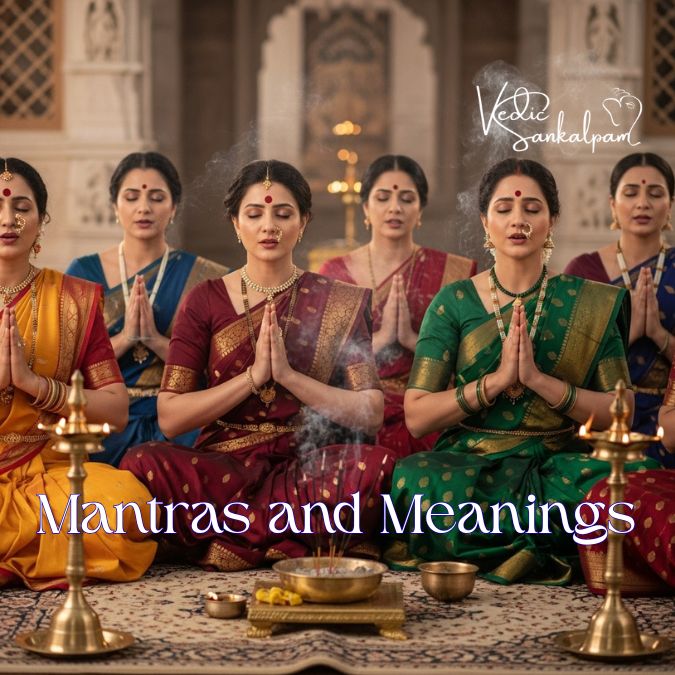
Mantras and Meanings: Unlocking the Power of Sacred Sounds

Have you ever wondered why certain words or sounds seem to resonate deep within your soul? Why does repeating a simple phrase bring peace to a restless mind? Welcome to the fascinating world of mantras—ancient tools that have been used for thousands of years to transform consciousness, heal the spirit, and connect us with something greater than ourselves.

What Are Mantras?

At their core, mantras are sacred sounds, words, or phrases that are repeated during meditation or prayer. Think of them as spiritual formulas—concentrated packets of energy wrapped in syllables. But they’re much more than just words you say out loud or in your head.

The Origins of Mantras

Mantras trace their roots back to ancient India, where they emerged from the Vedic traditions over 3,000 years ago. The sages and seers of that time discovered that specific sound vibrations could influence both the physical and spiritual realms. These weren’t random discoveries—they came from deep meditation and an intimate understanding of the universe’s energetic fabric.

The word “mantra” itself comes from two Sanskrit words: “man,” meaning mind, and “tra,” meaning tool or instrument. So essentially, a mantra is a tool for the mind. Pretty straightforward, right? But the simplicity of the definition doesn’t diminish its profound power.

The Science Behind Mantras

You might be thinking, “Okay, but does science back this up?” Surprisingly, yes! Modern neuroscience has shown that repetitive sound patterns can actually alter brain wave activity. When you chant a mantra, you’re essentially giving your brain a focal point, which helps reduce the mental chatter that normally dominates our thoughts.

Studies using brain imaging have revealed that mantra meditation activates areas associated with attention, emotional regulation, and even pain management. The rhythmic repetition creates a kind of neurological harmony that brings about measurable physiological changes—lower blood pressure, reduced stress hormones, and improved immune function.

Understanding the Deeper Meaning of Mantras

So what makes mantras different from just repeating any old word over and over? It all comes down to intention and vibration.

Vibration and Energy

Everything in the universe vibrates at different frequencies—from the chair you’re sitting on to the thoughts in your head. Ancient yogis understood this concept long before quantum physics came along. They believed that certain sound vibrations could align our personal energy with universal energy.

When you chant a mantra, you’re not just making noise. You’re creating specific vibrations that resonate through your body, mind, and the space around you. It’s like tuning a guitar—when the strings vibrate at the right frequency, you get beautiful music. When your energy vibrates at the right frequency, you experience harmony and peace.

Intention and Focus

But vibration alone isn’t enough. The real magic happens when you combine sound with intention. Your intention acts as the steering wheel, directing the energy of the mantra toward a specific purpose—whether that’s healing, wisdom, compassion, or spiritual awakening.

Have you ever noticed how the same song can affect you differently depending on your mood? That’s because your internal state influences how you receive and interpret vibrations. Similarly, approaching mantras with sincerity, respect, and clear intention amplifies their effectiveness exponentially.

Types of Mantras

Not all mantras are created equal. There are different categories, each serving unique purposes and coming from various spiritual traditions.

Vedic Mantras

These are the oldest mantras, originating from the Vedas—ancient Indian scriptures. They’re typically in Sanskrit and are often quite lengthy and complex. Vedic mantras were traditionally passed down from teacher to student in an unbroken lineage, ensuring their pronunciation and power remained intact.

Examples include the Gayatri Mantra and the Mahamrityunjaya Mantra, both of which carry deep spiritual significance and are believed to offer protection, enlightenment, and liberation.

Buddhist Mantras

Buddhism adopted the practice of mantra recitation and developed its own collection of sacred sounds. Buddhist mantras often focus on cultivating compassion, wisdom, and the awakening of Buddha-nature within all beings.

The most famous Buddhist mantra is probably “Om Mani Padme Hum,” which embodies the compassion of all Buddhas. Tibetan Buddhism especially emphasizes mantra practice as a core part of spiritual development.

Personal Affirmations

In modern times, the concept of mantras has expanded to include personal affirmations—positive statements that you repeat to reprogram your subconscious mind. While these aren’t traditional mantras in the spiritual sense, they operate on similar principles of repetition and focused intention.

Phrases like “I am worthy of love” or “I trust in the process of life” might not have the ancient lineage of Sanskrit mantras, but they can still be powerful tools for personal transformation.

Popular Mantras and Their Meanings

Let’s dive into some of the most well-known mantras and unpack what they actually mean.

Om (Aum)

If mantras had a king, Om would wear the crown. This single syllable is considered the primordial sound of the universe—the vibration from which all creation emerges. When you chant Om, you’re aligning yourself with the fundamental frequency of existence itself.

The sound is actually composed of three parts: “A-U-M,” representing the waking state, dream state, and deep sleep state of consciousness. The silence that follows represents the fourth state—pure consciousness or enlightenment.

Om Mani Padme Hum

This six-syllable Tibetan Buddhist mantra is all about compassion. While translations vary, it’s often interpreted as meaning something along the lines of honoring the jewel in the lotus of the heart. Each syllable purifies a different negative emotion: pride, jealousy, desire, ignorance, greed, and anger.

Tibetan Buddhists believe that reciting this mantra, even once, can bring tremendous benefit. Imagine it as a spiritual shower that cleanses your mind and heart of impurities.

Gayatri Mantra

This is one of the most revered Vedic mantras, traditionally chanted at sunrise and sunset. It’s a prayer to the sun god Savitr, asking for enlightenment and the removal of darkness from our minds.

Breaking Down the Gayatri Mantra

The mantra acknowledges the divine light that illuminates the three worlds (earth, atmosphere, and heaven) and asks that this light guide our intellect and understanding. It’s essentially saying, “May the divine light illuminate my mind and lead me toward truth.”

The beauty of the Gayatri Mantra lies not just in its meaning but in its rhythm and vibration. Many practitioners report feeling an immediate shift in consciousness when they chant it with devotion.

How Do Mantras Work?

You’ve probably gathered by now that mantras are more than just words. But what’s actually happening when you practice them?

The Role of Repetition

Repetition is key to mantra practice. When you repeat a mantra over and over, you’re essentially training your mind to focus. Think of it like building a muscle—the more you practice, the stronger your concentration becomes.

This repetitive practice also helps to bypass the critical, analytical mind and access deeper levels of consciousness. It’s like sneaking past a guard to enter a secret garden—the guard being your busy, chattering mind.

Neurological Benefits

From a neuroscience perspective, mantra repetition activates the brain’s default mode network, which is associated with self-referential thinking and mind-wandering. By giving the mind a single point of focus, mantras help quiet this network, leading to a state of calm awareness.

Research has also shown that mantra meditation increases grey matter in the brain, particularly in areas responsible for emotional regulation and self-awareness. Over time, regular practice can literally reshape your brain in positive ways.

Benefits of Chanting Mantras

Unlock ancient wisdom with mantras and meanings. Explore popular mantras like Om, their benefits for mental clarity, emotional healing, and meditation techniques.
Mantras and Meanings

So what can you actually expect from incorporating mantras into your life? The benefits are both immediate and cumulative.

Mental Clarity and Focus

In our distraction-filled world, maintaining focus feels like trying to hold water in your hands—it just slips away. Mantras provide an anchor for your attention, helping you develop laser-like concentration.

Many practitioners report that after just a few weeks of regular mantra practice, they notice improvements in their ability to focus at work, remember information, and stay present in conversations.

Emotional Healing

Emotions can be overwhelming, can’t they? Like waves that threaten to pull you under. Mantras act as a life raft, giving you something stable to hold onto during emotional storms.

The vibrations of certain mantras are believed to release stored emotional trauma from the body’s energy centers. Whether you believe in chakras or not, there’s something undeniably therapeutic about the rhythmic repetition of sacred sounds when you’re feeling anxious, sad, or angry.

Spiritual Growth

Beyond the practical benefits, mantras are fundamentally spiritual tools. They’re designed to connect you with something greater than your individual self—whether you call that God, the Universe, Source, or simply your highest potential.

Regular mantra practice cultivates qualities like compassion, humility, devotion, and inner peace. It’s like watering a spiritual garden—with patience and consistency, beautiful things begin to bloom.

How to Practice Mantra Meditation

Ready to give it a try? Here’s how to get started with your own mantra practice.

Choosing Your Mantra

The first step is selecting a mantra that resonates with you. You might feel drawn to a traditional Sanskrit mantra, or you might prefer something in your native language. Some people receive mantras from spiritual teachers, while others choose their own.

Trust your intuition here. If a particular mantra gives you goosebumps or brings tears to your eyes, that’s a good sign it’s right for you. You can always change mantras later if your needs evolve.

Creating the Right Environment

While you can technically practice mantras anywhere, creating a dedicated space can enhance your experience. Find a quiet spot where you won’t be disturbed. Some people like to create a small altar with candles, incense, or meaningful objects.

The key is consistency. Try to practice at the same time and place each day. This trains your mind and body to enter a meditative state more easily over time.

Techniques for Chanting

There are several ways to practice mantras:

Vocal chanting: Speaking or singing the mantra out loud. This is the most powerful method for creating vibrations in the physical body.

Whisper chanting: Softly repeating the mantra in a whisper. This creates subtle vibrations and is useful when you want to practice quietly.

Mental repetition: Silently repeating the mantra in your mind. This is the most subtle form and is said to be the most powerful for spiritual advancement.

Many practitioners use mala beads (similar to a rosary) to count repetitions—traditionally 108 times. The tactile sensation of moving the beads helps maintain focus.

Common Misconceptions About Mantras

Let’s clear up some confusion about mantras.

First, you don’t need to be religious or follow a specific spiritual path to benefit from mantras. While many mantras have religious origins, the practice itself is non-denominational. You can honor the tradition while adapting it to your personal beliefs.

Second, you don’t need to understand Sanskrit or the exact meaning of every syllable for a mantra to work. The vibration itself carries power. That said, understanding the meaning can certainly deepen your connection and intention.

Third, mantras aren’t magic spells that instantly solve all your problems. They’re tools that work gradually through consistent practice. Think of them as spiritual exercise—you wouldn’t expect to get fit after one trip to the gym, right?

Integrating Mantras into Daily Life

The real transformation happens when you bring mantras off the meditation cushion and into everyday life.

You might repeat your mantra while stuck in traffic, waiting in line at the grocery store, or before an important meeting. Some people use mantras to help them fall asleep or to shift their energy when they notice themselves spiraling into negative thought patterns.

The beauty is that mantras are portable—you carry them with you wherever you go. No equipment necessary, no special clothing required. Just you and the sacred sound vibrating through your consciousness.

Conclusion

Mantras are much more than ancient words from faraway lands. They’re living tools that bridge the gap between our ordinary human experience and the extraordinary potential that lies within us. Whether you’re seeking mental clarity, emotional healing, or spiritual awakening, mantras offer a proven path forward.

The key is to approach them with an open heart, consistent practice, and patience. You might not experience instant enlightenment, but over time, you’ll likely notice subtle shifts—more peace, greater focus, deeper compassion, and a sense of connection to something meaningful.

So why not give it a try? Choose a mantra that speaks to you, set aside just five minutes a day, and see what unfolds. You might be surprised by the transformation that awaits in the simple repetition of sacred sound.


FAQs

1. How long should I chant a mantra for it to be effective?

Most traditions suggest a minimum of 108 repetitions (one mala) per session, which typically takes about 10-15 minutes. However, even 5 minutes of sincere practice can bring benefits. Consistency matters more than duration—daily practice of 10 minutes is more effective than occasional hour-long sessions.

2. Can I create my own mantra or should I stick to traditional ones?

Both approaches work! Traditional mantras carry the power of thousands of years of collective practice, but personal affirmations in your native language can also be powerful tools for transformation. If you’re drawn to traditional mantras, honor that. If creating your own feels more authentic, that’s equally valid.

3. Do I need to chant mantras out loud or can I repeat them silently?

All three methods—vocal, whisper, and mental repetition—are effective, just in different ways. Vocal chanting creates the strongest physical vibrations, while mental repetition is considered most powerful for advanced spiritual practice. Many practitioners use all three methods at different times.

4. What’s the difference between a mantra and an affirmation?

Traditional mantras are sacred sounds passed down through spiritual lineages, often in Sanskrit, and are believed to carry inherent spiritual power through their vibration. Affirmations are personal, positive statements in any language designed to reprogram thinking patterns. Both use repetition, but mantras typically have a spiritual dimension that affirmations may lack.

5. Can mantras help with anxiety and stress?

Absolutely! Scientific research has shown that mantra meditation effectively reduces anxiety, lowers stress hormones, and promotes relaxation. The rhythmic repetition gives your mind something to focus on besides anxious thoughts, while the vibrations help regulate your nervous system. Many people find mantras especially helpful during panic attacks or high-stress situations.

Rudrabhishek Puja: A Sacred Ritual to Invoke Lord Shiva’s Blessings

Have you ever felt the need to connect with something greater than yourself? To seek blessings, peace, and divine intervention in your life? If so, Rudrabhishek Puja might be exactly what your soul is searching for. This ancient Hindu ritual dedicated to Lord Shiva has been practiced for thousands of years, offering devotees a profound way to honor the destroyer of evil and the embodiment of ultimate consciousness.

What is Rudrabhishek Puja?

Rudrabhishek Puja is a sacred Hindu ritual performed to worship Lord Shiva in his Rudra form. The term “Rudra” refers to the fierce aspect of Shiva, while “Abhishek” means the ceremonial bathing of the deity. During this puja, the Shiva Lingam is bathed with various sacred substances like milk, honey, ghee, yogurt, and water while chanting powerful Vedic mantras.

Think of it as giving the divine a royal bath, but with deep spiritual intentions. Each substance poured over the lingam carries symbolic meaning and invokes specific blessings. It’s not just a ritual—it’s a conversation with the cosmos, a way to cleanse your karma and invite divine grace into your life.

The Spiritual Significance of Rudrabhishek

Why do millions of devotees perform this ritual with such devotion? The spiritual significance runs deeper than ocean currents. Rudrabhishek is believed to purify the mind, body, and soul. When you perform or witness this puja, you’re not just observing a ceremony—you’re participating in an energy exchange with the universe.

Lord Shiva, in his Rudra form, represents both destruction and creation. He destroys negativity, ego, and obstacles while creating pathways for growth, peace, and enlightenment. The abhishek ritual symbolizes washing away your sins, karmic debts, and mental impurities. It’s like hitting the reset button on your spiritual journey.

Historical and Mythological Origins

The Story Behind Rudrabhishek

The origins of Rudrabhishek are rooted in ancient Hindu mythology. According to sacred texts, once during a divine gathering, Lord Brahma and Lord Vishnu were arguing about who was superior. Suddenly, a massive pillar of fire appeared—an endless column with no beginning or end. This was Lord Shiva manifesting as the infinite lingam.

To settle the dispute, both gods tried to find the ends of this pillar. Brahma flew upward as a swan, and Vishnu dove downward as a boar, but neither could reach the end. When they realized the futility of their ego-driven quest, they surrendered to Shiva’s supreme power. This is when the tradition of worshipping the Shiva Lingam through abhishek began—as a gesture of surrender and recognition of the infinite divine.

References in Ancient Scriptures

Rudrabhishek finds mention in several ancient Hindu scriptures, particularly in the Shiva Purana and the Rudram, part of the Krishna Yajurveda. The Rudram hymns are considered among the most powerful Vedic chants, invoking Shiva’s benevolence and protection. These texts describe the glory of Lord Shiva and outline the proper methods of worship through abhishek.

Benefits of Performing Rudrabhishek Puja

Spiritual Benefits

Performing Rudrabhishek opens doors to spiritual awakening. It helps you develop a deeper connection with the divine, enhances meditation practices, and accelerates your journey toward self-realization. Many practitioners report experiencing profound inner peace, clarity of thought, and heightened intuition after participating in this ritual.

The vibrations created by the Vedic mantras during Rudrabhishek purify the surrounding environment and your personal energy field. It’s like tuning a musical instrument—bringing your frequency into harmony with universal consciousness.

Material and Worldly Benefits

While spirituality is the primary focus, Rudrabhishek is also believed to bring worldly prosperity. Devotees perform this puja to overcome financial difficulties, achieve success in business ventures, resolve family conflicts, and remove obstacles from important life endeavors.

Lord Shiva is known as the giver of both material and spiritual wealth. When you honor him with sincere devotion through Rudrabhishek, he removes the blockages preventing abundance from flowing into your life.

Health and Well-being

Many devotees turn to Rudrabhishek when facing health challenges. The ritual is believed to promote healing, reduce stress, and protect against negative energies that might be affecting physical or mental health. The calming effect of the mantras and the positive vibrations generated during the puja contribute to overall well-being.

Think of it as holistic medicine for the soul—addressing not just symptoms but the root spiritual causes of ailments.

When Should You Perform Rudrabhishek Puja?

Rudrabhishek Puja: significance, benefits, procedure, mantras, and best days to perform this ancient Lord Shiva worship ritual at home.
Rudrabhishek Puja

Auspicious Days and Timings

Timing matters when it comes to Rudrabhishek. The most auspicious day for this ritual is Monday, which is dedicated to Lord Shiva. Performing Rudrabhishek on Mondays, especially during the month of Shravan (July-August), is considered highly beneficial.

Other favorable times include:

  • Maha Shivaratri (the great night of Shiva)
  • Pradosh Vrat (13th day of lunar fortnight)
  • Solar and lunar eclipses
  • Your birthday or important life transitions

The early morning hours, particularly during Brahma Muhurta (approximately 4-6 AM), are ideal for conducting the puja.

Special Occasions for Rudrabhishek

Beyond regular worship, Rudrabhishek is performed during significant life events such as weddings, childbirth, starting a new business, moving into a new home, or when facing major challenges. It’s also recommended when seeking relief from planetary afflictions in your astrological chart.

Items Required for Rudrabhishek Puja

Essential Puja Materials

To perform a proper Rudrabhishek, you’ll need several sacred items:

  • A Shiva Lingam (or image/murti of Lord Shiva)
  • A copper vessel for abhishek
  • Fresh water from a holy source
  • Panchamrit (mixture of milk, yogurt, honey, sugar, and ghee)
  • Bilva (bael) leaves
  • Flowers (white or red)
  • Incense sticks and camphor
  • A bell
  • Sacred thread
  • Sandalwood paste
  • Rice grains

Offerings to Lord Shiva

Lord Shiva is known for accepting simple, heartfelt offerings. The substances used for abhishek each carry special significance:

  • Milk symbolizes purity and prosperity
  • Honey represents sweetness in speech and relationships
  • Ghee signifies victory and strength
  • Yogurt brings harmony and peace
  • Sugar invites happiness and positive experiences
  • Water purifies and refreshes

Additionally, offering bilva leaves is particularly dear to Lord Shiva. According to tradition, offering a single bilva leaf with devotion can bring immense blessings.

Step-by-Step Guide to Performing Rudrabhishek Puja

Preparation and Purification

Before beginning the puja, take a bath to purify yourself physically. Wear clean, preferably white or light-colored clothes. Clean the puja area thoroughly and arrange all the required items systematically. Light a lamp and incense to create a sacred atmosphere.

Calm your mind through a few minutes of meditation or deep breathing. Remember, the purity of your intention matters more than the perfection of your procedure.

Invoking Lord Shiva

Begin by invoking Lord Ganesha to remove obstacles from your puja. Then, with folded hands, mentally invite Lord Shiva to accept your worship. Ring the bell to announce the beginning of the sacred ritual and to ward off negative energies.

Place the Shiva Lingam on a clean plate or pedestal. If you don’t have a lingam, you can perform abhishek on a Shiva image or even create a symbolic lingam from clay.

The Abhishek Process

Now comes the heart of the ritual. Pour each substance slowly over the Shiva Lingam while chanting mantras:

  1. Start with water to cleanse the lingam
  2. Pour milk while chanting “Om Namah Shivaya”
  3. Follow with yogurt, then honey, then ghee, then sugar water
  4. Repeat with water to cleanse
  5. Apply sandalwood paste
  6. Offer bilva leaves (in sets of three)
  7. Shower flowers over the lingam
  8. Finally, pour pure water as a concluding ablution

Each pouring should be done with focused devotion, visualizing the divine accepting your offering.

Reciting Mantras and Prayers

Throughout the abhishek, continuously chant “Om Namah Shivaya”—the most powerful Shiva mantra. This five-syllable mantra represents the five elements of nature and the five aspects of Shiva.

Rudra Mantra and Its Power

For a more elaborate ritual, recite the Rudram or Chamakam hymns from the Vedas. These ancient chants carry tremendous spiritual power. The Rudram consists of powerful verses that praise Lord Shiva in his various forms and seek his protection and blessings.

Even if you can’t pronounce the Sanskrit perfectly, chanting with sincere devotion matters most. The vibrations created by these mantras resonate with cosmic frequencies, creating positive transformations in your life.

Different Types of Rudrabhishek

Laghu Rudrabhishek

Laghu Rudrabhishek is the simplified version, suitable for individual worship at home or temples. It involves reciting the Rudram once and performing abhishek with the standard substances. This typically takes about 30-45 minutes and is perfect for regular devotees.

Maha Rudrabhishek

Maha Rudrabhishek is more elaborate, involving the recitation of Rudram eleven times. This is usually performed by trained priests in temples during special occasions. The ritual can last several hours and involves more extensive offerings and ceremonies.

This version is recommended when seeking major blessings or during significant life challenges.

Ati Rudrabhishek

Ati Rudrabhishek is the most elaborate form, where Rudram is chanted 121 times. This grand ritual requires multiple priests and can take an entire day to complete. It’s usually performed during major festivals or for community welfare.

The spiritual energy generated during Ati Rudrabhishek is believed to be immensely powerful, bringing collective blessings and removing negative influences from the environment.

Common Mistakes to Avoid During Rudrabhishek

Even with the best intentions, devotees sometimes make mistakes during the ritual:

  • Rushing through the process: Rudrabhishek requires patience and mindfulness. Hurrying diminishes its spiritual impact.
  • Incorrect mantra pronunciation: While perfection isn’t expected, making an effort to learn correct pronunciation shows respect.
  • Using impure substances: Always use fresh, clean materials for abhishek.
  • Performing without understanding: Take time to understand the meaning behind the ritual rather than mechanically going through motions.
  • Lack of devotion: The most important ingredient is your sincere devotion—without it, the ritual becomes an empty gesture.

Remember, Lord Shiva looks at your heart, not your performance perfection.

Can You Perform Rudrabhishek at Home?

Absolutely! While elaborate versions are best performed in temples with trained priests, you can certainly perform Laghu Rudrabhishek at home. In fact, performing puja in your own space can create an intimate connection with the divine.

Start simple. You don’t need expensive materials or perfect Sanskrit pronunciation. A small Shiva Lingam, basic puja items, sincere devotion, and the “Om Namah Shivaya” mantra are sufficient. As you grow in your practice, you can gradually incorporate more elements.

Many devotees find that home worship allows for deeper personal connection, as you can perform the ritual at your own pace without external pressure.

The Role of a Priest in Rudrabhishek Puja

For elaborate versions like Maha Rudrabhishek or Ati Rudrabhishek, having a trained priest is highly recommended. Priests bring:

  • Proper knowledge of Vedic rituals: They understand the intricate details and correct procedures.
  • Accurate mantra recitation: Their years of training ensure proper pronunciation and intonation.
  • Spiritual energy: Experienced priests channel divine energy effectively through their practice.
  • Guidance: They can explain the significance of each step and answer your questions.

However, don’t feel discouraged if you can’t access a priest. Lord Shiva is known as Bholenath—the simple one who accepts devotion in any form. Your sincere effort matters more than ritualistic perfection.

Rudrabhishek and Modern Devotion

In today’s fast-paced world, ancient rituals like Rudrabhishek remain surprisingly relevant. Modern devotees are rediscovering these practices not as superstitious rituals but as powerful tools for mindfulness, stress relief, and spiritual growth.

Many people incorporate shortened versions into their daily routine, spending just 15-20 minutes in morning worship. The meditative aspects of the ritual—the repetitive mantras, the focused actions, the symbolic offerings—provide a much-needed anchor in our chaotic lives.

Technology has also made Rudrabhishek more accessible. You can watch tutorial videos, listen to recorded Vedic chants, or even participate in virtual pujas conducted by temples worldwide. While nothing replaces direct participation, these resources help maintain spiritual connection when physical attendance isn’t possible.

Personal Experiences and Testimonials

Countless devotees share transformative experiences after performing Rudrabhishek regularly. Some report sudden solutions to long-standing problems, others describe experiencing deep peace and clarity, while many notice gradual positive shifts in their circumstances.

One devotee shared how performing Monday Rudrabhishek for forty consecutive weeks helped resolve a bitter family dispute that had lasted years. Another described experiencing spiritual visions during the ritual that profoundly changed their life perspective.

These experiences remind us that Rudrabhishek isn’t just about ritual—it’s about opening ourselves to divine grace and transformation.

Conclusion

Rudrabhishek Puja is more than an ancient ritual—it’s a living tradition that connects us with the infinite consciousness of Lord Shiva. Whether you’re seeking spiritual growth, worldly success, health, or simply peace of mind, this powerful practice offers a pathway to divine blessings.

The beauty of Rudrabhishek lies in its accessibility. You don’t need to be a scholar, a priest, or even particularly religious. All you need is an open heart, sincere devotion, and the willingness to connect with something greater than yourself.

In our modern world filled with stress and disconnection, taking time to honor the divine through practices like Rudrabhishek can be deeply healing. It reminds us that we’re part of something vast and beautiful, that we’re never truly alone, and that divine grace is always available to those who seek it with sincerity.

So why not give it a try? Start simple, be consistent, and watch how this ancient practice transforms your life in ways both subtle and profound. Lord Shiva awaits your devotion with open arms—or should we say, with his eternal cosmic dance.


FAQs About Rudrabhishek Puja

1. Can women perform Rudrabhishek Puja during menstruation?

This is a common question with varying traditional perspectives. Some strict traditional views suggest avoiding temple visits during menstruation, while more progressive interpretations emphasize that devotion transcends physical states. Many modern temples and spiritual leaders welcome all devotees regardless of biological cycles, recognizing that Lord Shiva, the universal consciousness, doesn’t differentiate. Ultimately, follow what feels right for your personal belief system and the specific temple’s guidelines if performing there.

2. How long does a typical Rudrabhishek Puja take?

The duration varies based on the type. A simple Laghu Rudrabhishek at home can be completed in 30-45 minutes. Maha Rudrabhishek performed by priests typically takes 2-3 hours, while the elaborate Ati Rudrabhishek can extend to 5-8 hours or even longer. For beginners, starting with a simple 20-30 minute version is perfectly acceptable and still spiritually beneficial.

3. What if I don’t have all the materials for Rudrabhishek?

Don’t worry! Lord Shiva is known for accepting devotion in its simplest form. If you lack specific items, you can perform abhishek with just water while chanting “Om Namah Shivaya.” The most important elements are your sincere devotion and pure intention. Even offering water with heartfelt devotion is considered highly auspicious. As the saying goes, “Shiva looks at the heart, not the hand.”

4. Can Rudrabhishek remove negative planetary influences?

According to Vedic astrology, yes. Rudrabhishek is particularly recommended for appeasing malefic planets, especially Saturn (Shani) and Rahu. Regular performance of this ritual is believed to mitigate doshas (afflictions) in one’s horoscope. However, it should be viewed as a spiritual practice that works in conjunction with positive actions and right living, not as a magical solution that bypasses personal responsibility.

5. How often should I perform Rudrabhishek Puja?

The frequency depends on your circumstances and commitment level. Ideally, performing Rudrabhishek every Monday is highly beneficial. During the month of Shravan, daily abhishek is traditional. For specific wishes or challenges, many devotees commit to performing it for a set period—such as 40 consecutive Mondays. Even monthly or occasional performance during festivals brings blessings. Quality and devotion matter more than strict frequency, so choose a schedule you can maintain with genuine dedication.

Bagalamukhi – The Divine Goddess of Power and Protection

Introduction to Bagalamukhi

Have you ever felt like you needed divine intervention to overcome seemingly impossible challenges? In the rich tapestry of Hindu spirituality, there exists a powerful deity whose very name instills fear in enemies and comfort in devotees. Bagalamukhi, often called Pitambara Maa, stands as one of the most formidable goddesses in the Hindu pantheon. She’s not just another deity in the vast collection of Hindu gods and goddesses – she’s a force that can literally stop opponents in their tracks.

Think of her as the ultimate protector, like a spiritual bodyguard who doesn’t just defend you but completely immobilizes any threat coming your way. Intrigued? Let’s dive deep into understanding this mysterious and powerful goddess.

Who is Goddess Bagalamukhi?

Origin and Mythology

Bagalamukhi’s origin story reads like an epic cosmic drama. According to ancient scriptures, when the universe was threatened by a devastating storm created by a demon, the gods appealed to the supreme divine feminine energy. In response, Goddess Bagalamukhi manifested from the sacred Haridra Sarovar, a celestial lake filled with turmeric-colored waters.

The moment she appeared, her golden-yellow aura illuminated the cosmos. Her very presence was enough to still the violent storm and silence the demon Madan who had threatened to destroy creation. This wasn’t just a physical victory – it represented the triumph of cosmic order over chaos, of divine will over destructive forces.

The Eighth Mahavidya

In Tantric traditions, Bagalamukhi holds the distinguished position as the eighth Mahavidya among the ten great wisdom goddesses. The Mahavidyas represent different aspects of the divine feminine, and each embodies unique powers and teachings. Where goddesses like Kali represent transformation through destruction and Tara symbolizes compassion, Bagalamukhi represents the power to immobilize, control, and ultimately transform enemies into allies.

She’s like the strategic mastermind in the divine council, the one you call upon when you need not just protection but complete control over adverse situations.

The Symbolism Behind Bagalamukhi

Iconography and Appearance

When you visualize Bagalamukhi, imagine a radiant goddess dressed in brilliant yellow garments, her entire being emanating golden light. She typically sits on a golden throne or upon a lotus, sometimes depicted with a crane nearby – a bird known for its patience and stillness, perfectly symbolizing her power to freeze and immobilize.

Her face shows fierce determination mixed with protective compassion. She has two or four arms depending on the depiction, and in her hands, she holds specific weapons and tools that aren’t just decorative – each carries profound symbolic meaning.

The Color Yellow and Its Significance

Why is yellow so central to Bagalamukhi’s identity? In Hindu symbolism, yellow represents knowledge, learning, and auspiciousness. It’s the color of turmeric, which itself has protective and purifying properties in Indian culture. The yellow associated with Bagalamukhi specifically represents Stambhana Shakti – the paralyzing power that stops enemies in their tracks.

Think of it this way: when you see a yellow traffic light, you stop, right? Similarly, Bagalamukhi’s yellow energy creates a divine “stop” command for anyone attempting to harm her devotees.

Sacred Weapons and Tools

In her hands, Bagalamukhi typically holds a club or mace (gada), which she uses to strike down enemies and negativity. She also holds the tongue of a demon or enemy, pulling it forcefully – a graphic but powerful symbol of her ability to silence opponents, stop gossip, and prevent harmful speech.

Some depictions show her holding a noose, representing her power to bind and restrain negative forces. These aren’t instruments of cruelty but rather tools of cosmic justice and protection.

The Powers of Bagalamukhi

Bagalamukhi Devi guide: Discover the yellow goddess's powers, sacred mantras, worship methods, and how she helps devotees overcome obstacles and enemies.
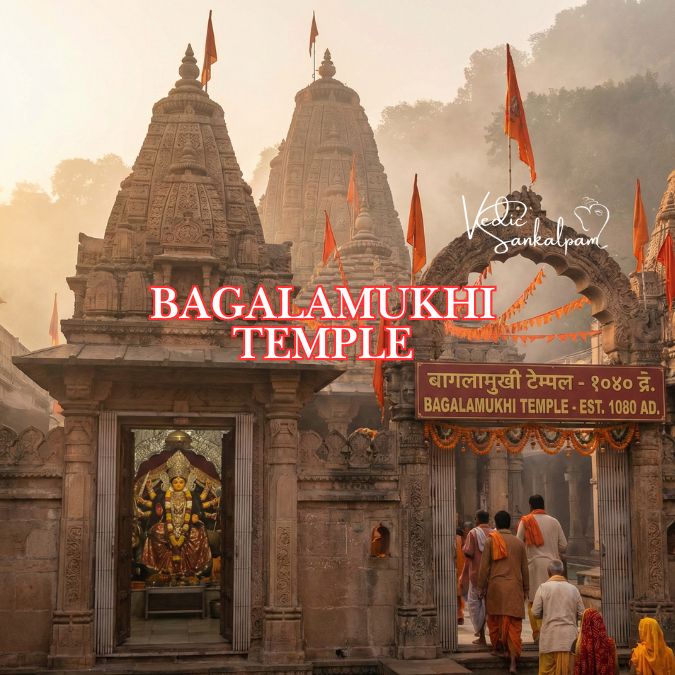
Bagalamukhi Temple

Stambhana Shakti – The Power to Paralyze

This is Bagalamukhi’s signature power – Stambhana Shakti literally means “the power to stun or paralyze.” Imagine having the ability to freeze your problems mid-action, like hitting pause on a threatening situation. That’s essentially what this divine power represents.

In practical terms, devotees believe this power manifests as the ability to stop enemies, halt legal proceedings, silence false accusations, and neutralize opposition. It’s not about harming others but about creating a protective space where negativity simply cannot function.

Protection from Enemies

Throughout history, Bagalamukhi has been revered as the goddess who protects devotees from both visible and invisible enemies. These enemies aren’t just people who wish you harm – they include negative energies, evil spirits, black magic, jealousy, and even your own self-destructive tendencies.

She acts as a spiritual shield, deflecting negativity before it can reach you. Many devotees report experiencing sudden resolutions to conflicts, unexpected withdrawals of legal cases, or enemies mysteriously losing interest in pursuing harmful agendas.

Victory in Legal Matters

Here’s where Bagalamukhi’s reputation really shines in modern times. Lawyers, judges, and those involved in legal disputes often worship her for favorable outcomes. Why? Because courts are battlegrounds where truth must overcome falsehood, where justice must prevail over injustice.

Bagalamukhi’s energy is believed to help devotees present their case clearly, silence false witnesses, and help the truth emerge victorious. She doesn’t manipulate justice – she ensures that justice is served by removing obstacles to truth.

Bagalamukhi Temples and Sacred Sites

Bagalamukhi Temple in Himachal Pradesh

The most famous Bagalamukhi temple sits in the serene Kangra Valley of Himachal Pradesh, in a place called Bankhandi. This isn’t some massive architectural marvel – it’s a relatively modest temple, yet it pulses with intense spiritual energy.

Devotees from across India and beyond make pilgrimages here, especially when facing serious legal troubles, business rivalries, or threats from enemies. The temple environment itself feels charged, with priests performing powerful rituals throughout the day.

Other Important Shrines

While Bankhandi remains the primary pilgrimage site, Bagalamukhi shrines exist throughout India. Many Shakti Peethas and tantric temples include smaller shrines dedicated to her. In Datia, Madhya Pradesh, there’s another significant temple complex where devotees gather for specialized pujas.

Interestingly, many private practitioners and tantric experts maintain personal Bagalamukhi shrines where they perform intensive sadhana and offer ritual services to devotees seeking her intervention.

Bagalamukhi Mantra and Sadhana

The Power of Mantras

In Hindu practice, mantras aren’t just words – they’re vibrational formulas that connect you directly to divine frequencies. Bagalamukhi’s mantras carry specific sonic patterns designed to invoke her protective and paralyzing powers.

The most commonly chanted Bagalamukhi mantra is: “Om Hleem Bagalamukhi Sarva Dushtanam Vacham Mukham Padam Stambhaya Jihvam Kilaya Buddham Vinashaya Hleem Om Swaha.”

This powerful mantra essentially calls upon the goddess to paralyze the speech, face, and feet of enemies, to bind their tongues, and to destroy their harmful intentions. Even if you don’t understand Sanskrit, the sound vibrations themselves are believed to create protective energy fields.

How to Perform Bagalamukhi Sadhana

Sadhana refers to dedicated spiritual practice. Bagalamukhi sadhana typically involves disciplined daily mantra repetition (japa), usually for a specific count like 108 times, 1,008 times, or even 125,000 times for serious practitioners.

The practice usually requires maintaining purity – both physical cleanliness and mental focus. Practitioners often face east or north, sit on a yellow cloth, use a yellow mala (prayer beads), and visualize the goddess in her golden-yellow form.

Guidelines for Beginners

If you’re new to this practice, don’t be intimidated. Start small. Even chanting the mantra 11 or 21 times daily with sincere devotion creates a connection. You don’t need elaborate rituals initially – just a clean space, a picture or image of the goddess, perhaps a lamp or candle, and genuine intention.

Consistency matters more than intensity. Daily practice, even if brief, builds stronger spiritual connections than occasional marathon sessions. And remember, the attitude is crucial – approach with respect, humility, and clarity about why you’re seeking her help.

Benefits of Worshipping Bagalamukhi

Spiritual Growth and Inner Strength

Beyond the immediate practical benefits, worshipping Bagalamukhi cultivates profound inner transformation. Her energy teaches you to become immovable in your convictions, to stand firm against adversity, and to develop the kind of inner strength that no external force can shake.

Devotees often report developing better emotional control, clearer decision-making abilities, and a sense of fearlessness when facing challenges. It’s like building spiritual muscles that help you handle life’s difficulties with grace.

Overcoming Obstacles

Life throws curveballs constantly, doesn’t it? Job losses, relationship troubles, financial setbacks, health issues – the list goes on. Bagalamukhi’s energy is particularly effective at removing obstacles that seem insurmountable.

Think of her as a divine problem-solver who specializes in situations where you feel stuck or powerless. Her intervention often manifests as sudden breakthroughs, unexpected solutions, or the mysterious disappearance of problems that once seemed permanent.

Protection from Negativity

We live in a world filled with various energies, not all of them positive. Whether it’s jealousy from colleagues, negative intentions from competitors, or even unconscious harmful thoughts from those around you, these energies can affect your wellbeing.

Bagalamukhi creates a protective shield around her devotees. Many practitioners describe feeling energetically “sealed” or protected after regular worship, as if negative vibrations simply bounce off without penetrating their space.

Bagalamukhi Puja Rituals

Essential Items Required

Performing a proper Bagalamukhi puja requires specific items, each with symbolic significance. You’ll need yellow flowers (marigolds work beautifully), yellow cloth, turmeric, yellow sandalwood paste, yellow rice, yellow sweets, ghee lamp, incense, and offerings of yellow fruits.

The predominance of yellow isn’t coincidental – it resonates with her energy signature. You’ll also need her image or yantra (sacred geometric diagram), a clean copper or brass plate for offerings, and preferably a yellow mala for mantra chanting.

Step-by-Step Puja Process

The puja typically begins with purification – bathing and wearing clean, preferably yellow or bright-colored clothes. You clean the puja space, place the goddess’s image or yantra, and establish a protective circle.

After invoking Ganesha (to remove obstacles from the ritual itself), you welcome Bagalamukhi with traditional hospitality offerings – symbolic seat, water for washing feet, water for sipping, bath, clothes, ornaments, fragrance, flowers, incense, lamp, and food offerings.

Throughout the process, you chant her mantras, state your intentions clearly, and offer flowers with each mantra repetition. The ritual concludes with an aarti (circling of lamps), receiving the blessed offerings as prasad, and seeking her continued blessings.

When to Worship Bagalamukhi?

Auspicious Days and Times

While Bagalamukhi can be worshipped any time with devotion, certain days carry special potency. Tuesday is traditionally associated with her energy. Many devotees observe fasts and perform special pujas on Tuesdays.

The eighth day (Ashtami) of any lunar fortnight holds particular significance, as she is the eighth Mahavidya. Performing intensive worship on Ashtami is believed to yield amplified results.

Early morning, particularly the Brahma Muhurta period (approximately 90 minutes before sunrise), is considered ideal for spiritual practices. However, for protective or urgent matters, devotees may perform worship at any time with proper preparation.

Festivals Associated with the Goddess

Vasant Panchami, the spring festival celebrating knowledge and learning, is especially significant for Bagalamukhi worship. Since both the festival and the goddess are associated with yellow and wisdom, this day sees special celebrations at Bagalamukhi temples.

Navaratri, the nine-night festival celebrating the divine feminine, includes a day dedicated to Bagalamukhi during which elaborate rituals are performed. Additionally, Bagalamukhi Jayanti, celebrating her manifestation, is observed with great devotion at temples dedicated to her.

Stories and Legends of Bagalamukhi

The Demon Madan and His Defeat

The most famous legend describes the demon Madan, whose severe penance granted him immense powers. Drunk on these abilities, he created catastrophic storms that threatened to destroy the universe. The gods, unable to stop him, sought help from the supreme goddess.

From the cosmic waters, Bagalamukhi emerged. With a simple gesture, she froze the demon mid-attack. Grabbing his tongue, she literally stopped his ability to utter destructive mantras. This wasn’t merely physical defeat – she transformed his rage into submission, his destructive intent into devotion.

The story illustrates a profound truth: real power isn’t about destruction but about transformation and control. Bagalamukhi doesn’t annihilate enemies; she neutralizes them and, when possible, converts negative energy into positive force.

Tales of Divine Intervention

Countless devotees have shared experiences of miraculous intervention. Stories circulate about impossible legal cases suddenly resolving in the devotee’s favor, dangerous enemies inexplicably withdrawing, business rivals mysteriously losing interest in destructive competition.

One famous account describes a devotee facing a false criminal case who performed 40 days of intensive Bagalamukhi sadhana. On the final day of worship, the person who filed the false case voluntarily withdrew it, claiming a change of heart. Such stories reinforce faith among believers.

Bagalamukhi in Modern Spirituality

Relevance in Contemporary Times

You might wonder: does an ancient goddess have relevance in our modern, technology-driven world? Absolutely. Perhaps more than ever. The fundamental human challenges haven’t changed – we still face enemies (though now they might be corporate competitors or online trolls), we still need protection (from cyber threats and energy vampires), and we still seek victory over adversity.

Bagalamukhi represents timeless principles: standing firm in truth, protecting yourself from harm, silencing false narratives, and transforming negative energy. These are universal needs that transcend eras.

How Devotees Connect Today

Modern devotees adapt traditional practices to contemporary lifestyles. Virtual darshans (viewing the deity online), digital mantras played during commutes, smartphone apps for puja reminders, and online communities for sharing experiences – technology serves spirituality rather than replacing it.

Social media has created global networks of Bagalamukhi devotees who share experiences, arrange group prayers, and offer support. The essence remains unchanged; only the methods of connection have evolved.

Common Misconceptions About Bagalamukhi

Let’s clear up some confusion. First, Bagalamukhi worship isn’t “black magic” or harmful tantra. While some practitioners misuse spiritual practices for selfish or harmful purposes, genuine Bagalamukhi worship focuses on protection and justice, not causing undeserved harm.

Second, you don’t need to perform complex tantric rituals to connect with her. Simple, sincere devotion works wonders. The elaborate ceremonies serve a purpose, but they’re not prerequisites for divine connection.

Third, worshipping Bagalamukhi doesn’t mean you’re trying to harm anyone. Most devotees simply seek protection and the resolution of unjust situations. The goddess’s power to immobilize enemies is defensive, not aggressive.

Finally, results don’t always appear as dramatic interventions. Sometimes, her blessing manifests as inner strength to handle situations, wisdom to navigate challenges, or simple peace of mind despite external chaos.

Conclusion

Bagalamukhi stands as a powerful symbol of divine protection, cosmic justice, and the transformative power of the feminine divine. Whether you approach her as a devout practitioner or simply someone curious about Hindu spirituality, understanding her significance opens windows into profound spiritual concepts.

She teaches us that true power lies not in aggression but in control, not in destroying enemies but in neutralizing threats, not in seeking revenge but in establishing justice. In our chaotic world filled with visible and invisible challenges, having such a divine ally offers tremendous comfort and strength.

Whether you choose to worship her formally or simply contemplate the principles she represents, Bagalamukhi’s energy offers gifts of protection, strength, and transformation. She reminds us that we’re never truly powerless, that divine help is available when we seek it with sincere hearts, and that even the most formidable obstacles can be overcome with the right spiritual support.

In the end, isn’t that what we all seek? Protection from harm, strength to face challenges, and the assurance that justice will ultimately prevail? That’s precisely what Bagalamukhi offers to those who turn to her with faith and devotion.


FAQs

1. Can anyone worship Goddess Bagalamukhi, or are there restrictions?

Anyone with sincere devotion can worship Bagalamukhi. While certain intensive tantric practices might require initiation from a guru, simple prayers, mantra chanting, and basic puja can be performed by anyone regardless of gender, caste, or background. The key requirement is approaching her with respect, purity of intention, and genuine faith.

2. How long does it take to see results from Bagalamukhi worship?

Results vary based on individual karma, the sincerity of practice, and the nature of the problem. Some devotees report immediate shifts in energy or circumstances, while others might practice for weeks or months before experiencing tangible changes. Remember, sometimes the blessing manifests as inner strength rather than external changes. Consistency and faith matter more than timelines.

3. Is it necessary to visit a temple, or can worship be done at home?

Both options are valid and effective. Temple visits carry special energy due to collective worship and consecrated spaces, but home worship with proper setup and devotion is equally powerful. Many practitioners maintain home shrines for daily practice and visit temples for special occasions or when seeking intensified blessings.

4. What’s the difference between Bagalamukhi and other protective deities like Kali or Durga?

While all represent aspects of the divine feminine and offer protection, each has distinct specializations. Durga represents the warrior aspect fighting against evil, Kali embodies transformation through destruction of ego and ignorance, while Bagalamukhi specifically specializes in paralyzing opponents, silencing false speech, and providing protection through immobilization rather than destruction. Think of them as different specialists in the divine cosmic team.

5. Can Bagalamukhi mantras be chanted without formal initiation?

Basic Bagalamukhi mantras can be chanted by anyone with devotion. However, certain powerful tantric mantras traditionally require initiation (diksha) from a qualified guru for maximum effectiveness and to ensure proper understanding of their use. If you’re new to the practice, starting with commonly available mantras while maintaining respectful intentions is perfectly acceptable. As you progress, you might seek formal guidance for deeper practices.

Hanuman Ashtami 2025: A Complete Guide to This Sacred Hindu Festival

Have you ever felt that surge of devotion when you hear the name of Lord Hanuman? There’s something incredibly powerful about this beloved deity who represents unwavering faith, immense strength, and selfless service. Hanuman Ashtami is that special day when millions of devotees come together to celebrate the birth of this mighty warrior god. Let me walk you through everything you need to know about Hanuman Ashtami 2025.

What is Hanuman Ashtami?

Hanuman Ashtami is a Hindu festival that celebrates the birth anniversary of Lord Hanuman, one of the most revered deities in Hindu mythology. This auspicious day falls on the eighth day (Ashtami) of the Krishna Paksha (waning phase of the moon) in the Hindu month of Margashirsha or Chaitra, depending on regional traditions.

  • The Spiritual Significance of Hanuman Ashtami

Think of Hanuman Ashtami as more than just a birthday celebration. It’s a day when the cosmic energy of devotion, courage, and unwavering faith becomes amplified. Devotees believe that worshipping Lord Hanuman on this day brings divine blessings that help overcome life’s obstacles. It’s like having a spiritual superhero in your corner, ready to help you tackle whatever challenges come your way.

  • Why Devotees Celebrate This Day

Why do people celebrate Hanuman Ashtami with such fervor? Well, Lord Hanuman isn’t just any deity. He’s the epitome of bhakti (devotion), the symbol of strength, and the remover of troubles. Devotees celebrate this day to seek his blessings for courage, wisdom, and protection from evil forces. It’s a day to reconnect with that inner strength we all possess but sometimes forget we have.

When is Hanuman Ashtami 2025?

  • Date and Timings

In 2025, Hanuman Ashtami will be observed with great devotion across India and worldwide. The festival typically falls in either November-December (Margashirsha month) or March-April (Chaitra month). Many communities observe both occasions, though the Chaitra Hanuman Ashtami is considered more significant in certain regions.

  • Ashtami Tithi Details

The Ashtami Tithi (eighth lunar day) is crucial for the celebrations. The puja is most auspicious when performed during this specific tithi. Devotees often consult their local panchang (Hindu calendar) to determine the exact timing, as it can vary by a few hours depending on your geographical location. It’s like catching the perfect wave – timing matters!

The Legend Behind Hanuman Ashtami

  • Birth of Lord Hanuman

The story of Hanuman’s birth is nothing short of miraculous. According to Hindu mythology, Hanuman was born to Anjana, an apsara (celestial nymph) who was cursed to be born as a monkey, and Kesari, the king of monkeys. But here’s where it gets fascinating – Hanuman is also considered the spiritual son of Vayu, the wind god, which explains his incredible powers and ability to fly.

  • The Story of Anjana and Kesari

Anjana and Kesari performed intense penance to Lord Shiva, seeking a son who would be powerful and devoted. Their prayers were answered when Vayu delivered a divine prasad (blessed offering) to Anjana, which led to Hanuman’s birth. The moment he was born, baby Hanuman mistook the sun for a ripe fruit and leaped towards it – talk about an adventurous start to life! This incident showcased his extraordinary powers from day one.

Religious Importance of Hanuman Ashtami

  • Hanuman’s Role in the Ramayana

If the Ramayana were a movie, Hanuman would undoubtedly be the scene-stealer. His unwavering devotion to Lord Rama, his heroic journey to Lanka, and his role in rescuing Sita make him an unforgettable character. He carried an entire mountain of medicinal herbs to save Lakshmana’s life, burned down Lanka with his tail, and demonstrated that true strength lies in humble service. Pretty impressive, right?

  • Symbolism of Strength and Devotion

Hanuman represents the perfect blend of physical strength and spiritual devotion. He’s like that friend who’s incredibly strong yet incredibly humble. His character teaches us that true power comes from selfless service and unwavering faith. When you’re facing your own battles, channeling Hanuman’s energy means combining courage with compassion, strength with surrender.

How to Celebrate Hanuman Ashtami 2025

Hanuman Ashtami 2025: Learn when and how to celebrate, puja procedures, fasting traditions, and significance. Your complete guide to Lord Hanuman worship.
Hanuman Ashtami 2025
  • Morning Rituals and Puja Vidhi

The day typically begins before sunrise. Devotees wake up early, take a purifying bath, and wear clean clothes – preferably in red or orange, colors associated with Hanuman. The morning is dedicated to elaborate puja ceremonies, where the idol or image of Hanuman is worshipped with deep devotion.

  • Fasting Traditions

Fasting on Hanuman Ashtami is a common practice, though the strictness varies from person to person. Some devotees observe a complete fast without water (nirjala), while others consume fruits and milk.

Types of Fasts Observed

You’ve got options when it comes to fasting:

  • Complete fast: No food or water until evening prayers
  • Fruit fast: Only fruits and water throughout the day
  • Single meal: One meal eaten after the evening puja
  • Sattvic diet: Avoiding grains, onion, and garlic but eating dairy and fruits

Choose what works for your body and spiritual practice. Remember, it’s about devotion, not deprivation!

  • Temple Visits and Prayers

Visiting a Hanuman temple on this day is considered highly auspicious. Temples are beautifully decorated, and special programs including bhajan sessions, recitation of Hanuman Chalisa, and distribution of prasad take place throughout the day. The atmosphere is electric with devotion and positive energy.

Hanuman Ashtami Puja Procedure

  • Items Required for Puja

Before you start the puja, gather these essential items:

  • Image or idol of Lord Hanuman
  • Red flowers (hibiscus is especially favored)
  • Sindoor (vermillion)
  • Incense sticks and camphor
  • Coconut, betel leaves, and betel nuts
  • Fruits and sweets for prasad
  • Diya (oil lamp)
  • Hanuman Chalisa book
  • Bell
  • Step-by-Step Puja Guide

Here’s how to perform the puja:

  1. Clean the puja area and place Hanuman’s idol or picture on a clean cloth
  2. Light the diya and incense sticks
  3. Offer water to Lord Hanuman (abhishekam)
  4. Apply sindoor to the deity
  5. Offer red flowers, especially hibiscus
  6. Present fruits, sweets, and betel leaves
  7. Ring the bell and perform aarti
  8. Recite Hanuman Chalisa and other mantras
  9. Offer prayers with pure devotion
  10. Distribute prasad to everyone present
  • Mantras and Chants

The most powerful mantras for Hanuman Ashtami include:

  • Hanuman Beej Mantra: “Om Hanumate Namah”
  • Hanuman Gayatri Mantra: Invoke his divine qualities
  • Complete recitation of Hanuman Chalisa (40 verses)
  • Bajrang Baan for protection

Chanting these mantras with sincere devotion amplifies the spiritual benefits manifold.

Special Offerings to Lord Hanuman

  • Prasad and Bhog

Lord Hanuman has a sweet tooth! Traditional prasad includes:

  • Besan ladoo (gram flour sweet balls)
  • Churma (sweetened crumbled wheat)
  • Panchamrit (mixture of milk, yogurt, honey, ghee, and sugar)
  • Fresh fruits, especially bananas
  • Jaggery preparations
  • Flowers and Decorations

Red flowers are Hanuman’s favorite, particularly hibiscus (japa kusuma). Marigolds and roses also work beautifully. Decorate the altar with mango leaves, red cloth, and arrange the flowers with love and devotion. The visual beauty enhances the spiritual atmosphere.

Regional Celebrations Across India

  • North Indian Traditions

In North India, especially in states like Uttar Pradesh, Rajasthan, and Madhya Pradesh, Hanuman Ashtami sees massive gatherings at famous Hanuman temples. The Sankat Mochan temple in Varanasi becomes a pilgrimage hub. Devotees perform elaborate pujas, organize bhandara (community feasts), and hold wrestling competitions to honor Hanuman’s strength.

  • South Indian Customs

South Indian celebrations, particularly in Andhra Pradesh, Tamil Nadu, and Karnataka, include special abhishekam ceremonies with panchamrit and oil. Devotees recite Sundara Kanda from the Ramayana, which narrates Hanuman’s heroic deeds. Temple processions with decorated chariots are common.

  • West and East Indian Practices

In Maharashtra and Gujarat, devotees visit Hanuman temples during Brahma Muhurta (pre-dawn hours). In West Bengal and Odisha, the celebration combines with local traditions, including cultural programs showcasing Hanuman’s stories through dance and drama.

Benefits of Observing Hanuman Ashtami

  • Spiritual Growth

Observing Hanuman Ashtami accelerates your spiritual journey. It’s like getting a spiritual upgrade! The focused devotion, fasting, and prayers help purify the mind and deepen your connection with the divine. You’ll find yourself experiencing greater peace and clarity.

  • Physical and Mental Strength

Lord Hanuman is the ultimate symbol of strength – both physical and mental. Devotees believe that sincere worship on this day grants courage to face life’s challenges, mental fortitude during tough times, and physical vitality. It’s like having a divine gym membership!

  • Removal of Obstacles

Hanuman is called Sankat Mochan – the remover of troubles. Worshipping him on Ashtami is believed to clear obstacles from your path, protect you from negative energies, and bring success in endeavors. Think of it as spiritual problem-solving!

Hanuman Chalisa: The Heart of Devotion

  • Importance of Reciting Hanuman Chalisa

The Hanuman Chalisa, composed by the poet-saint Tulsidas, is a 40-verse hymn that captures the essence of Hanuman’s glory. Reciting it is considered one of the most powerful spiritual practices. Many devotees recite it 11, 21, or even 108 times on Hanuman Ashtami. The vibrations created by these verses are believed to create a protective shield around the devotee.

  • Best Times to Chant

While Hanuman Chalisa can be recited anytime, certain times are considered especially auspicious:

  • Brahma Muhurta (approximately 4-6 AM)
  • Tuesday and Saturday evenings
  • During sunrise and sunset
  • On Hanuman Ashtami, throughout the day

Regular recitation cultivates discipline and devotion in your daily life.

Dos and Don’ts on Hanuman Ashtami

What to Do

  • Wake up before sunrise and take a bath
  • Wear clean clothes, preferably red or orange
  • Maintain celibacy if observing a strict fast
  • Visit a Hanuman temple
  • Recite Hanuman Chalisa with devotion
  • Offer red flowers and sindoor
  • Practice kindness and help others
  • Feed monkeys and the needy
  • Maintain positive thoughts throughout the day

What to Avoid

  • Consuming non-vegetarian food and alcohol
  • Engaging in arguments or negative conversations
  • Being lazy or lethargic
  • Disrespecting elders or being rude
  • Eating tamasic foods like onion and garlic if fasting
  • Wearing black clothes (traditionally discouraged)
  • Gossiping or speaking ill of others

Hanuman Ashtami and Modern Life

Balancing Tradition with Contemporary Living

Living in the modern world doesn’t mean abandoning traditions. You can observe Hanuman Ashtami even with a busy schedule. Wake up 30 minutes early for a quick puja, listen to Hanuman Chalisa during your commute, or take a half-day to visit a temple. The key is sincere intention, not elaborate rituals.

Virtual Celebrations and Online Pujas

Technology has made devotion more accessible! Can’t visit a temple? Join virtual darshan sessions. Many temples live-stream their celebrations. You can participate in online satsangs, watch spiritual discourses, or use apps to recite mantras with correct pronunciation. Distance doesn’t diminish devotion.

Famous Hanuman Temples to Visit

Hanuman Temples in India

India is dotted with magnificent Hanuman temples:

  • Sankat Mochan Hanuman Temple, Varanasi: One of the most revered temples
  • Hanuman Garhi, Ayodhya: Located in Ram’s birthplace
  • Jakhu Temple, Shimla: Features a towering Hanuman statue
  • Hanuman Temple, Connaught Place, Delhi: Open 24/7
  • Salangpur Hanuman Temple, Gujarat: Famous for wish fulfillment

International Hanuman Shrines

Hanuman’s devotion has crossed borders:

  • Trinidad and Tobago: Home to the tallest Hanuman statue outside India
  • Kuala Lumpur, Malaysia: Beautiful Hanuman shrine
  • London, UK: Several Hindu temples with Hanuman deities
  • USA: Multiple temples across states like California, Texas, and New York

Astrological Significance

Planetary Influences

Astrologically, Hanuman is associated with Mars (Mangal), the planet of courage and strength. Worshipping Hanuman on Ashtami is believed to pacify malefic Mars effects in one’s horoscope. It also strengthens the positive influences of Mars, bringing courage and success.

Remedies and Solutions

Facing Mangal Dosha or other astrological challenges? Hanuman worship offers powerful remedies:

  • Recite Hanuman Chalisa daily
  • Visit Hanuman temple on Tuesdays and Saturdays
  • Offer sindoor to Hanuman
  • Donate red items to the needy
  • Wear red coral (consult an astrologer first)

These practices help balance planetary energies and bring positive transformations.

Conclusion

Hanuman Ashtami 2025 is more than just a festival – it’s an opportunity to connect with the divine qualities within yourself. Through the worship of Lord Hanuman, we’re reminded that true strength comes from devotion, courage comes from faith, and success comes from selfless service. Whether you observe elaborate rituals or offer a simple prayer, what matters is the sincerity of your heart.

As you prepare for Hanuman Ashtami this year, remember that Hanuman’s greatest teaching is about unwavering devotion and humble service. He had the power to leap across oceans, yet he chose to serve with complete humility. That’s the real magic – combining strength with surrender, power with devotion.

So, are you ready to invite Hanuman’s blessings into your life? Start preparing now, and may this Hanuman Ashtami bring you strength, wisdom, and boundless devotion!


FAQs

1. Can I observe Hanuman Ashtami fast if I have health issues?

Absolutely! Fasting is about devotion, not deprivation. If you have health conditions like diabetes, blood pressure issues, or are pregnant, modify your fast accordingly. You can consume fruits, milk, and light foods. What matters most is your sincere devotion and mental discipline, not the strictness of the fast.

2. Is it necessary to visit a temple on Hanuman Ashtami, or can I worship at home?

While visiting a temple is auspicious and offers a powerful collective energy, worshipping at home is equally valid and beneficial. Create a clean, dedicated space, perform the puja with devotion, and recite Hanuman Chalisa. God resides everywhere, especially in a sincere heart. Your devotion matters more than the location.

3. What should I do with the prasad after the puja?

Prasad is considered blessed food and should be distributed to family members, friends, and neighbors. You can also offer it to cows, dogs, or birds. Never throw prasad in the trash – it’s disrespectful. If you have excess prasad, share it with those in need or consume it yourself with reverence over the next day.

4. Can women worship Lord Hanuman during their menstrual cycle?

This is a topic with varying opinions across different communities. However, many modern spiritual leaders affirm that devotion has no gender-based restrictions or biological boundaries. If you feel comfortable, you can continue your prayers from a distance or meditate on Hanuman’s qualities. Follow what resonates with your personal beliefs and comfort level.

5. How many times should I recite Hanuman Chalisa on Hanuman Ashtami for maximum benefits?

Traditionally, devotees recite Hanuman Chalisa 11, 21, 51, or 108 times on Hanuman Ashtami. However, quality trumps quantity. Even reciting it once with complete focus and devotion is more powerful than reciting it 100 times mechanically. Start with what feels comfortable – perhaps 3 or 7 times – and gradually increase. The key is consistent, heartfelt devotion rather than just numbers.

The Sacred 12 Jyotirlinga: A Complete Spiritual Guide

Introduction to Jyotirlinga

Have you ever wondered what makes certain temples in India so spiritually powerful that millions of devotees travel across continents to visit them? The answer lies in the concept of Jyotirlinga, one of the most revered manifestations of Lord Shiva in Hindu tradition.

A Jyotirlinga literally means “pillar of light.” According to Hindu scriptures, these are sacred shrines where Lord Shiva manifested as a fiery column of light, proving his supremacy over other gods. The word “Jyoti” means light, and “linga” represents the formless aspect of Lord Shiva. These aren’t just ordinary temples; they’re considered self-manifested representations of the divine, making them incredibly powerful places of worship.

In Hindu mythology, visiting all 12 Jyotirlingas is believed to wash away sins and lead devotees toward moksha or spiritual liberation. Each temple has its own unique story, architectural beauty, and spiritual significance that draws pilgrims from around the world.

The Legend Behind the 12 Jyotirlingas

Discover the 12 Jyotirlinga temples of Lord Shiva across India. Complete guide with locations, legends, travel tips, and spiritual significance for pilgrims.
12 Jyotirlinga names and location

The origin story of the Jyotirlingas is fascinating and deeply rooted in Hindu mythology. According to the Shiva Purana, once Lord Brahma and Lord Vishnu had an argument about who was superior. To settle this dispute, Lord Shiva manifested as an infinite pillar of light that pierced through the earth and soared into the heavens.

Brahma took the form of a swan and flew upward to find the top of the column, while Vishnu transformed into a boar and dug downward to find its base. After searching for thousands of years, neither could find the beginning or end of this cosmic pillar. This proved Shiva’s supremacy as the infinite, formless reality beyond all comprehension.

Impressed by Vishnu’s honesty in admitting defeat, but angered by Brahma’s false claim of having found the top, Shiva cursed Brahma to not be worshipped in temples. He then manifested in 12 different locations across India as Jyotirlingas, where devotees could experience his divine presence directly.

List of the 12 Jyotirlingas

1. Somnath Jyotirlinga (Gujarat)

Somnath Jyotirlinga
Somnath Jyotirlinga

Located in Prabhas Patan near Veraval in Gujarat, Somnath is considered the first among the 12 Jyotirlingas. The name “Somnath” means “Lord of the Moon,” and legend has it that the moon god Chandra worshipped Shiva here to be freed from a curse.

This temple has been destroyed and rebuilt multiple times throughout history, standing as a symbol of resilience and faith. The current structure, built in 1951, showcases beautiful Chalukya-style architecture. Positioned along the Arabian Sea coastline, the temple offers breathtaking views, especially during sunset.

The best time to visit is between October and March when the weather is pleasant. The evening aarti here is particularly mesmerizing, with the sound of waves complementing the devotional chants.

2. Mallikarjuna Jyotirlinga (Andhra Pradesh)

Mallikarjuna Jyotirlinga

Situated on the Srisailam mountain along the banks of the Krishna River in Andhra Pradesh, Mallikarjuna is unique because it’s also one of the 18 Shakti Peethas. This means both Lord Shiva and Goddess Parvati are worshipped here together, making it doubly auspicious.

The temple complex is surrounded by dense forests that are now part of the Srisailam Tiger Reserve. The architecture reflects the Dravidian style with intricate carvings and towering gopurams. According to legend, when Lord Ganesha got married before his brother Kartikeya, an angry Kartikeya left Kailash and came to this mountain. Shiva and Parvati followed him here and manifested as Mallikarjuna and Bhramaramba.

The temple remains open throughout the year, but visiting during Maha Shivaratri offers a particularly intense spiritual experience with lakhs of devotees gathering for special pujas.

3. Mahakaleshwar Jyotirlinga (Madhya Pradesh)

Mahakaleshwar Jyotirlinga

Mahakaleshwar in Ujjain, Madhya Pradesh, holds a special distinction among the 12 Jyotirlingas. The lingam here is said to be Swayambhu, meaning self-manifested, and faces south, unlike most Shiva lingams which face east. This southward-facing orientation is called Dakshinamurti, representing Shiva as the supreme guru and teacher.

What makes Mahakaleshwar truly unique is the famous Bhasma Aarti performed every morning at 4 AM. During this ritual, the lingam is adorned with fresh ash from a cremation ground, symbolizing the cycle of death and rebirth. Witnessing this aarti is considered extremely auspicious, though you need to book in advance as permits are required.

The temple sits on the banks of the Shipra River, and Ujjain itself is one of the four cities that host the Kumbh Mela, the world’s largest religious gathering. The spiritual energy here is palpable, especially during the early morning hours.

4. Omkareshwar Jyotirlinga (Madhya Pradesh)

Omkareshwar Jyotirlinga

Omkareshwar is located on an island called Mandhata or Shivapuri in the Narmada River in Madhya Pradesh. The island’s shape resembles the Hindu symbol “Om,” which gives this Jyotirlinga its name. Actually, there are two temples here: Omkareshwar and Mamleshwar, and both are considered sacred.

The journey to Omkareshwar involves crossing the river, which adds to the spiritual experience. The temple architecture is a beautiful blend of Hindu and Mughal styles, with a five-story structure and ornate carvings. The surrounding ghats and the holy Narmada River create a serene atmosphere perfect for meditation and reflection.

Legend says that the gods once worshipped Shiva here to gain victory over demons. Pleased with their devotion, Shiva manifested as Omkareshwar. The parikrama (circumambulation) around the island is considered highly meritorious and takes about 2-3 hours to complete.

5. Kedarnath Jyotirlinga (Uttarakhand)

Kedarnath Jyotirlinga

Nestled in the majestic Garhwal Himalayas at an altitude of 3,583 meters, Kedarnath is perhaps the most challenging Jyotirlinga to reach. This remote location adds to its mystique and spiritual significance. The temple stands against a backdrop of snow-capped peaks, creating a breathtaking sight that feels like the gateway to heaven.

According to the Mahabharata, after the great war, the Pandavas sought Lord Shiva’s blessings to absolve themselves of the sin of killing their relatives. Shiva, avoiding them, took the form of a bull and dove into the ground at Kedarnath. The hump of the bull remained above ground, which is worshipped as the Kedarnath Jyotirlinga.

The temple opens only from April to November due to extreme winter conditions. The 16-kilometer trek from Gaurikund to Kedarnath is arduous but spiritually rewarding. For those unable to trek, helicopter services are available. The 2013 floods devastated the region, but the temple miraculously survived, standing as a testament to divine protection.

6. Bhimashankar Jyotirlinga (Maharashtra)

Bhimashankar Jyotirlinga

Located in the Sahyadri hills of Maharashtra, about 110 kilometers from Pune, Bhimashankar is surrounded by dense forests that are now a wildlife sanctuary. This sanctuary is home to the Indian Giant Squirrel and various rare species of flora and fauna.

The temple’s architecture follows the Nagara style with intricate stone carvings depicting scenes from Hindu mythology. The bell-shaped shikhara and the carved pillars showcase exceptional craftsmanship. According to legend, Lord Shiva defeated the demon Tripurasura here, and from his sweat, the Bhima River originated.

The trek through the forest to reach the temple is an experience in itself, with lush greenery and the sounds of nature creating a meditative atmosphere. The best time to visit is during the monsoon or winter when the forest is at its most beautiful. The annual fair during Maha Shivaratri sees thousands of devotees trekking to seek Shiva’s blessings.

7. Kashi Vishwanath Jyotirlinga (Uttar Pradesh)

Kashi Vishwanath Jyotirlinga

In the ancient city of Varanasi, Kashi Vishwanath stands as one of the most revered temples in India. Varanasi itself is considered the holiest city in Hinduism, and having a Jyotirlinga here makes it doubly sacred. The temple has been destroyed and rebuilt several times over centuries, with the current structure dating back to 1780, built by Maharani Ahilyabai Holkar.

What makes Kashi Vishwanath extraordinary is its location in the spiritual capital of India. The temple’s golden spire and domes, which were donated by Maharaja Ranjit Singh, gleam above the narrow lanes of the old city. The Ganga Aarti at the nearby ghats combined with a visit to this Jyotirlinga creates an overwhelming spiritual experience.

Hindus believe that dying in Kashi leads directly to moksha, and many devotees spend their final days here. The temple sees an endless stream of pilgrims year-round, with special significance during Shrawan month and Maha Shivaratri. The energy here is unlike anywhere else—a perfect blend of ancient tradition, devotion, and the eternal presence of Shiva.

8. Trimbakeshwar Jyotirlinga (Maharashtra)

Trimbakeshwar Jyotirlinga

Trimbakeshwar, located near Nashik in Maharashtra, is unique because the lingam here has three faces representing Brahma, Vishnu, and Shiva—the holy trinity. This is the only Jyotirlinga with this distinctive feature. The temple sits at the foothills of the Brahmagiri mountain, from where the sacred Godavari River originates.

The architecture here is exceptional, with black stone construction and intricate carvings throughout. The crown-shaped shikhara is particularly impressive. The lingam is installed in a depression on the floor, and priests perform puja by pouring holy water from the Godavari over it.

Trimbakeshwar holds special significance for performing the Narayan Nagbali ritual, which is believed to absolve ancestors of sins. The Kumbh Mela is held here every 12 years, drawing millions of pilgrims. The journey to the origin of the Godavari at Brahmagiri mountain is considered highly auspicious, though it involves a challenging trek.

9. Vaidyanath Jyotirlinga (Jharkhand)

Vaidyanath Jyotirlinga

Located in Deoghar, Jharkhand, Vaidyanath means “Lord of Physicians,” and this Jyotirlinga is believed to have healing powers. According to legend, when Ravana performed intense penance to please Lord Shiva, he offered his ten heads one by one. Impressed, Shiva granted him immense power but placed a condition that if Ravana placed the lingam he carried on the ground, it would remain fixed there forever.

The temple complex contains 22 other temples, creating a significant pilgrimage site. The main temple’s architecture is simple yet elegant, with a pyramidal tower and a gold-plated kalash on top. During the month of Shrawan, millions of devotees called “Bhole Baba” or “Kanwariyas” carry holy water from the Ganges at Sultanganj and walk over 100 kilometers to offer it at Vaidyanath.

This annual pilgrimage is a sight to behold, with devotees dressed in orange, chanting “Bol Bam,” creating an electrifying atmosphere of devotion. The temple remains crowded throughout the year, but visiting during this period offers a unique cultural and spiritual experience.

10. Nageshwar Jyotirlinga (Gujarat)

Nageshwar Jyotirlinga

Situated near Dwarka in Gujarat, Nageshwar is believed to be the first Jyotirlinga on earth according to some texts. The temple is relatively modern, with a large complex that includes a 25-meter tall statue of Lord Shiva in a seated posture, which is one of the tallest Shiva statues in India.

The name “Nageshwar” means “Lord of Serpents,” and the temple is associated with protection from all poisons, particularly snake venom. Legend tells of a demon named Daruka who imprisoned a Shiva devotee named Supriya. When Supriya prayed to Lord Shiva, he manifested as Nageshwar and destroyed the demon.

The peaceful coastal location adds to the temple’s charm, making it a serene place for worship. The temple architecture is relatively simple compared to other ancient Jyotirlingas, but the spiritual significance remains profound. The nearby Dwarka, one of the four Char Dham pilgrimage sites, makes this location doubly important for pilgrims.

11. Rameshwaram Jyotirlinga (Tamil Nadu)

Rameshwaram Jyotirlinga

Located on Pamban Island in Tamil Nadu, Rameshwaram holds a unique position as both a Jyotirlinga and one of the Char Dham pilgrimage sites. The temple is intimately connected with the Ramayana epic. After defeating Ravana in Lanka, Lord Rama wanted to absolve himself of the sin of killing a Brahmin (as Ravana was a learned scholar). He established a lingam here and worshipped Lord Shiva.

The Ramanathaswamy Temple is an architectural marvel with the longest corridor among all Hindu temples in India—nearly 1,220 meters. The temple has 22 theerthams (holy water bodies), and devotees take a holy dip in all of them before worshipping the main deity. The ritual of pouring water from each theertham over yourself is believed to wash away sins.

The temple’s intricate corridors with elaborately carved pillars create a mesmerizing effect. The location on an island, connected to mainland India by the iconic Pamban Bridge, adds to the spiritual journey. Visiting both Varanasi (in the north) and Rameshwaram (in the south) is considered essential for a complete Hindu pilgrimage.

12. Grishneshwar Jyotirlinga (Maharashtra)

Grishneshwar Jyotirlinga

Located near the famous Ellora Caves in Aurangabad, Maharashtra, Grishneshwar is the last and smallest of the 12 Jyotirlingas, but certainly not the least in significance. The temple was reconstructed by Rani Ahilyabai Holkar in the 18th century and showcases beautiful red rock architecture.

The legend behind this temple involves a devoted woman named Kusuma whose prayers brought her dead son back to life. Impressed by her devotion, Lord Shiva manifested here as Grishneshwar. The temple’s proximity to the Ellora Caves, a UNESCO World Heritage Site, makes it a popular stop for both pilgrims and tourists.

Despite being small in size, the temple’s spiritual atmosphere is powerful. The intricate carvings on the red stone depict various forms of Shiva and scenes from Hindu mythology. The temple’s shikhara is beautifully designed, and the peaceful surroundings create an ideal environment for meditation and prayer.

Spiritual Benefits of Visiting the 12 Jyotirlingas

Why do millions of devotees undertake the challenging journey to visit all 12 Jyotirlingas? The answer lies in the profound spiritual benefits associated with this pilgrimage. According to Hindu scriptures, visiting these sacred shrines purifies the soul and brings devotees closer to moksha—liberation from the cycle of birth and death.

Each Jyotirlinga represents a different aspect of Lord Shiva’s infinite power. When you visit these temples with pure devotion and intention, you’re not just visiting physical locations; you’re connecting with different frequencies of divine energy. Think of it like tuning into different radio stations—each Jyotirlinga broadcasts a unique spiritual frequency that resonates with different aspects of your consciousness.

Devotees who have completed the pilgrimage often report profound personal transformations. Many speak of finding solutions to long-standing problems, experiencing healing of physical ailments, gaining mental peace, and developing a deeper understanding of life’s purpose. The journey itself becomes a meditation, stripping away worldly concerns and focusing the mind on the divine.

Beyond personal benefits, the pilgrimage strengthens your connection with India’s rich spiritual heritage. You witness the incredible diversity of landscapes, cultures, and architectural styles across the country, all united by devotion to Lord Shiva. This journey becomes not just a religious obligation but a life-changing adventure that broadens your perspective and deepens your faith.

Planning Your Jyotirlinga Pilgrimage

Best Route for Visiting All 12 Jyotirlingas

Planning a pilgrimage to all 12 Jyotirlingas requires careful consideration of geography, weather, and logistics. The temples are spread across India from the Himalayas to the southern tip, so completing the circuit can take anywhere from two weeks to several months, depending on your pace and travel style.

A practical route might start in Gujarat with Somnath and Nageshwar (both near Dwarka), then move to Maharashtra for Bhimashankar, Trimbakeshwar, and Grishneshwar. From there, head to Madhya Pradesh for Mahakaleshwar and Omkareshwar, before moving north to Uttar Pradesh for Kashi Vishwanath. Next, tackle the challenging Kedarnath in Uttarakhand, followed by Vaidyanath in Jharkhand. Continue south to Andhra Pradesh for Mallikarjuna, and finally complete your journey at Rameshwaram in Tamil Nadu.

Some pilgrims prefer to do the circuit in segments over several years, while others organize it as one continuous journey. Travel agencies specializing in religious tourism offer packaged tours that handle all logistics, though independent travel allows for more flexibility and personal reflection time.

Travel Tips and Accommodation

Each Jyotirlinga location offers different types of accommodation, from simple dharamshalas (pilgrim rest houses) to comfortable hotels. Booking in advance is essential, especially during peak pilgrimage seasons like Shrawan month, Maha Shivaratri, and major festivals.

Pack comfortable clothes suitable for temple visits—traditional attire is appreciated, and many temples have dress codes. Carry a small bag for offerings like flowers, coconuts, and incense. Keep yourself hydrated and carry necessary medications, especially if you’re visiting high-altitude temples like Kedarnath.

Most temples have specific darshan (viewing) timings that vary by season. Early morning darshan often offers a more peaceful experience with fewer crowds. Some temples like Mahakaleshwar require advance booking for special rituals. Check official temple websites or contact temple authorities for current information.

Respect local customs and traditions at each location. Photography may be restricted inside temple sanctums. Maintain silence and reverence within temple premises. Consider hiring local guides who can share fascinating stories and historical details about each temple.

Rituals and Offerings

While visiting the Jyotirlingas, understanding basic rituals enhances your spiritual experience. The most common offering is Jalabhishek—pouring water or milk over the lingam. Many devotees bring holy Ganga water for this purpose. Other offerings include bilva leaves (sacred to Shiva), flowers (especially white), fruits, and coconuts.

The Rudrabhishek puja is a powerful ritual performed at Jyotirlingas where the lingam is bathed with various sacred items including milk, yogurt, honey, ghee, and sugar while Vedic mantras are chanted. This elaborate ritual can be arranged through temple priests and is believed to fulfill wishes and remove obstacles.

Participation in the evening aarti (devotional ceremony) is a must at every Jyotirlinga. The combination of ringing bells, devotional songs, and the fragrance of incense creates an atmosphere charged with divine energy. This is often the most emotionally powerful part of the pilgrimage experience.

Circumambulation (parikrama) around the temple is considered highly auspicious. At some locations like Omkareshwar, the parikrama around the entire island is particularly significant. Performing these rituals with faith and devotion, rather than as mere routine, makes all the difference in your spiritual journey.

Conclusion

The 12 Jyotirlingas represent more than just religious monuments; they’re living embodiments of India’s spiritual heritage and Lord Shiva’s infinite grace. Each temple tells a unique story, set against diverse landscapes ranging from coastal shores to dense forests to towering Himalayan peaks. Together, they create a sacred circuit that has drawn pilgrims for thousands of years.

Undertaking this pilgrimage is not just about checking off destinations on a list. It’s about transformation—of shedding your worldly identity and reconnecting with your divine essence. Whether you complete the journey in one trip or spread it over a lifetime, each Jyotirlinga you visit will leave an indelible mark on your soul.

In our fast-paced modern world, these ancient temples offer something precious—a chance to slow down, reflect, and reconnect with something greater than ourselves. The journey to the 12 Jyotirlingas is ultimately a journey within, where the destination isn’t a place but a state of consciousness. As Lord Shiva himself is formless and infinite, so too does this pilgrimage open us to infinite possibilities of spiritual awakening.

So, are you ready to embark on this transformative journey? Remember, the path to these sacred shrines begins not with the first step outside your door, but with the first stirring of devotion in your heart.


FAQs

1. How much time does it take to visit all 12 Jyotirlingas?

Completing the entire circuit typically takes between 15 to 30 days if done continuously, depending on your mode of transport and the time spent at each location. However, many devotees spread the pilgrimage over several years, visiting a few temples at a time. Factors like weather (Kedarnath is inaccessible in winter), personal schedule, and budget play important roles in planning. Organized tour packages usually complete the journey in about 20-25 days.

2. Which is the most difficult Jyotirlinga to reach?

Kedarnath in Uttarakhand is undoubtedly the most challenging due to its high-altitude location at 3,583 meters in the Himalayas. It requires a 16-kilometer trek from Gaurikund through steep mountain paths, though helicopter services are available for those unable to trek. The temple is also only accessible from April to November due to heavy snowfall. Proper physical preparation and acclimatization are essential for this part of the journey.

3. Can I visit the Jyotirlingas in any order?

Yes, there’s no prescribed order for visiting the 12 Jyotirlingas. While some traditional texts suggest specific sequences, most pilgrims plan their route based on practical considerations like geography, weather, and personal circumstances. What matters most is the devotion and sincerity with which you undertake the pilgrimage, not the sequence in which you visit the temples.

4. What is the best time of year for the Jyotirlinga pilgrimage?

The ideal time depends on which temples you’re visiting. Generally, October to March offers pleasant weather for most locations. However, avoid visiting Kedarnath during this period as it remains closed. The month of Shrawan (July-August) is considered especially auspicious for Shiva worship, though this is monsoon season and some locations may be challenging to access. Avoid peak summer (April-June) for temples in central and southern India due to extreme heat.

5. Are there any special rules or restrictions when visiting Jyotirlingas?

Most temples have basic guidelines: dress modestly (traditional attire preferred), remove shoes before entering, maintain silence and cleanliness, and respect photography restrictions. Some temples don’t allow leather items inside. Non-Hindus are generally welcome at most Jyotirlingas, though some may have restrictions in the inner sanctum. During peak times, you may need to book darshan slots in advance. Women are welcomed at all Jyotirlingas, though menstruating women traditionally avoid entering the sanctum as per temple customs.

Pooja Mandir for Home: Creating Your Sacred Space

Have you ever felt the need for a quiet corner in your home where you can connect with the divine? A pooja mandir for home serves exactly that purpose—it’s your personal sanctuary, a sacred space where spirituality meets tranquility. Whether you’re deeply religious or simply seeking a peaceful spot for meditation, having a dedicated pooja mandir can transform your daily spiritual practice.

What is a Pooja Mandir?

A pooja mandir is essentially a small temple or altar designed for home worship. It’s a designated space where you place idols, pictures, or symbols of deities you worship. Think of it as your personal connection to the divine—a place where you can offer prayers, light incense, and find inner peace away from the chaos of daily life.

These mandirs come in various shapes, sizes, and designs, ranging from elaborate wooden structures to simple wall-mounted units. The beauty of a pooja mandir lies not just in its aesthetic appeal but in the sacred energy it brings to your home.

Why Do You Need a Pooja Mandir at Home?

Spiritual Significance

Having a pooja mandir at home goes beyond just following tradition. It creates a focal point for your spiritual energy and helps establish a routine for daily prayers. When you have a designated space, you’re more likely to maintain consistency in your spiritual practices. It’s like having a gym at home—the convenience encourages regular use.

A mandir also serves as a visual reminder of your faith and values. Every time you pass by it, you’re subtly reminded to stay grounded and connected to your spiritual roots.

Creating a Dedicated Prayer Space

Let’s be honest—in today’s fast-paced world, finding time for spirituality can be challenging. A pooja mandir solves this problem by providing a ready-to-use space for worship. You don’t have to set up and pack away prayer items daily. Everything has its place, making your spiritual practice more accessible and less of a chore.

Types of Pooja Mandirs for Home

Wall-Mounted Mandirs

Short on floor space? Wall-mounted mandirs are your best friend. These space-saving designs attach directly to your wall, making them perfect for apartments or smaller homes. They typically feature shelves and compartments for storing prayer essentials while keeping your deities at eye level.

Freestanding Mandirs

If you have more space to work with, freestanding mandirs offer grandeur and presence. These standalone units often feature intricate carvings, multiple levels, and ample storage. They become a statement piece in your home while serving their spiritual purpose.

Compact and Portable Mandirs

For those who travel frequently or live in temporary accommodations, compact portable mandirs offer flexibility. These lightweight designs can be easily moved or packed, ensuring you never have to compromise on your spiritual practices, wherever life takes you.

Traditional Wooden Mandirs

Wooden mandirs exude warmth and authenticity. Crafted from materials like teak, sheesham, or mango wood, these mandirs often feature traditional Indian architectural elements like pillars, domes, and intricate jaali work. They’re timeless pieces that can be passed down through generations.

Materials Used in Pooja Mandirs

Wooden Mandirs

Wood remains the most popular choice for pooja mandirs. It’s durable, easy to carve, and adds natural warmth to any space. Different woods offer different benefits—teak is known for its longevity, while sheesham offers beautiful grain patterns.

Marble Mandirs

Marble mandirs bring elegance and purity to your prayer space. They’re cool to touch, easy to clean, and create a temple-like atmosphere. While they’re heavier and more expensive, their aesthetic appeal and durability justify the investment.

Metal Mandirs

Brass and Copper Variations

Metal mandirs, particularly those made from brass or copper, offer a traditional yet modern look. They’re relatively lightweight, resistant to wear, and develop a beautiful patina over time. Brass mandirs are especially popular in South Indian homes.

Choosing the Right Location for Your Pooja Mandir

Vastu Shastra Guidelines

According to Vastu Shastra, the ancient Indian science of architecture, the placement of your pooja mandir significantly impacts the energy flow in your home. While you don’t have to be a Vastu expert, understanding basic principles can help you make informed decisions.

Ideal Directions for Placement

The northeast corner is considered the most auspicious location for a pooja mandir. This direction is associated with positive energy and spiritual growth. The east and north directions are also favorable. Avoid placing your mandir in bedrooms, bathrooms, or under staircases, as these locations are considered inauspicious.

When positioning your mandir, ensure you face east or north while praying. This orientation is believed to enhance concentration and spiritual connection.

Design Elements to Consider

Size and Space Requirements

Before purchasing a mandir, measure your available space carefully. Consider not just the mandir’s dimensions but also the space needed to sit or stand comfortably during prayers. You’ll want some breathing room around the mandir for movement and to prevent it from feeling cramped.

Storage and Compartments

A well-designed mandir includes storage for prayer essentials—incense sticks, diyas, prasad containers, prayer books, and more. Look for designs with drawers, shelves, and closed compartments to keep your prayer space organized and clutter-free.

Lighting and Ambiance

Lighting plays a crucial role in creating the right ambiance. Many modern mandirs come with built-in LED lights that illuminate the deities beautifully. If your mandir doesn’t have lighting, consider adding small lamps or spotlights to highlight the sacred space, especially for evening prayers.

How to Set Up Your Pooja Mandir

Discover the perfect pooja mandir for home with our comprehensive guide. Learn about types, materials, Vastu placement, design tips, and how to create your sacred prayer space at home.
Pooja Mandir for Home Designs

Essential Items for Your Mandir

Setting up a pooja mandir isn’t complicated, but having the right items makes the experience complete. Essential items include idols or pictures of deities, a bell, incense holder, diya (lamp), kalash (water vessel), flowers, prasad plate, and sacred texts if you use them during prayers.

Arranging Deities and Idols

When arranging multiple deities, place the primary deity you worship at the center and at a slightly higher level. Smaller idols can be arranged on either side. Ensure all deities face you when you’re praying. Keep the mandir clean and orderly—it reflects your respect and devotion.

Maintenance and Care Tips

Maintaining your pooja mandir is an act of devotion in itself. Clean the mandir regularly using a soft, dry cloth for wooden surfaces. For marble mandirs, use a damp cloth with mild soap. Polish metal mandirs occasionally to maintain their shine.

Change flowers daily and dispose of them respectfully. Clean brass items with tamarind paste or lemon to remove tarnish. Ensure the area around your mandir remains dust-free and organized.

Modern vs. Traditional Pooja Mandirs

The debate between modern and traditional designs often boils down to personal preference and home décor. Traditional mandirs feature intricate carvings, dome structures, and classic Indian architectural elements. They work beautifully in homes with ethnic or traditional interiors.

Modern mandirs embrace minimalism with clean lines, simple designs, and contemporary materials. They blend seamlessly with modern home décor without compromising functionality. Some designs cleverly combine both aesthetics, offering traditional elements with modern finishes.

Budget Considerations

Affordable Options

You don’t need to break the bank to bring spirituality into your home. Affordable pooja mandirs made from engineered wood or MDF are widely available and surprisingly durable. Wall-mounted designs and compact units generally cost less than elaborate freestanding structures.

Premium and Custom Designs

If budget isn’t a constraint, premium mandirs crafted from solid wood, marble, or featuring custom designs offer unmatched beauty and durability. Custom mandirs allow you to incorporate specific design elements, dimensions, and features that perfectly match your space and spiritual needs.

Where to Buy Pooja Mandirs

You’ll find pooja mandirs at furniture stores specializing in ethnic furniture, online marketplaces like Amazon and Flipkart, and dedicated spiritual stores. Local carpenters can also create custom designs based on your specifications.

Online shopping offers convenience and variety, but visiting physical stores lets you assess quality firsthand. Check reviews, compare prices, and don’t hesitate to negotiate, especially for custom pieces.

DIY Pooja Mandir Ideas

Feeling creative? Building your own pooja mandir can be a fulfilling project. Simple designs using wooden crates, floating shelves, or repurposed furniture can create beautiful prayer spaces. You can personalize every aspect—from dimensions to finishes to decorative elements.

DIY mandirs also work great for rental homes where permanent installations aren’t possible. Use command strips for wall-mounted elements, and keep designs modular for easy disassembly when moving.

Common Mistakes to Avoid

Don’t rush into buying the first mandir you see. Common mistakes include choosing a size that doesn’t fit your space, ignoring Vastu guidelines completely, compromising on quality for price, or selecting designs that clash with your home décor.

Another mistake is creating a mandir that’s difficult to maintain. If you can’t easily reach all areas for cleaning, or if the design collects dust in hard-to-reach corners, your beautiful mandir will become a maintenance headache.

Conclusion

A pooja mandir for home is more than just furniture—it’s a bridge between your daily life and spiritual aspirations. Whether you choose a grand traditional design or a sleek modern unit, what matters most is the devotion and peace it brings to your life. The right mandir creates a sacred atmosphere, encourages regular spiritual practice, and becomes a cherished part of your home.

Remember, there’s no one-size-fits-all solution. Your perfect pooja mandir depends on your space, budget, aesthetic preferences, and spiritual needs. Take your time, explore options, and choose something that resonates with your heart. After all, this sacred space will be where you seek solace, offer gratitude, and connect with the divine for years to come.


FAQs

1. What is the ideal height for a pooja mandir? The ideal height positions the deities at or slightly above eye level when you’re seated for prayers. Typically, this means the main platform should be between 3 to 5 feet from the ground, but adjust based on your comfort and whether you pray sitting or standing.

2. Can I place my pooja mandir in the bedroom? While traditionally discouraged, modern space constraints sometimes necessitate bedroom placement. If you must place it in a bedroom, ensure it’s in the northeast corner, keep it covered when not in use, and maintain the sanctity by keeping the area clean and respectful.

3. How often should I clean my pooja mandir? Daily light dusting and weekly thorough cleaning are recommended. Remove old flowers daily, wipe surfaces, and deep clean monthly. Regular maintenance not only preserves the mandir’s appearance but also shows respect for the sacred space.

4. What’s the difference between wooden and marble mandirs? Wooden mandirs offer warmth, are easier to customize, and generally cost less. Marble mandirs are more durable, easier to clean, and provide a temple-like appearance but are heavier and more expensive. Choose based on your budget, space, and aesthetic preferences.

5. Can I customize a pooja mandir according to Vastu requirements? Absolutely! Custom mandirs allow you to incorporate specific Vastu elements like proper dimensions, appropriate materials, and correct positioning of compartments. Many carpenters and manufacturers specialize in Vastu-compliant designs and can guide you through the process.

Mahad Ganpati: A Sacred Journey Through History and Devotion

Introduction to Mahad Ganpati

Have you ever felt that magnetic pull toward a sacred place, where history whispers through ancient walls and devotion fills the air? That’s exactly what Mahad Ganpati offers to every soul that steps through its threshold. Nestled in the picturesque town of Mahad in Maharashtra’s Raigad district, this temple isn’t just another religious site—it’s a living testament to centuries of unwavering faith and cultural richness.

Mahad Ganpati holds a special place in the hearts of Lord Ganesha’s devotees across India. While thousands of Ganpati temples dot the Indian landscape, there’s something uniquely captivating about this particular shrine. It’s like finding that perfect cup of chai on a rainy day—familiar yet extraordinarily special. The temple draws pilgrims from far and wide, each seeking blessings, peace, or simply a moment of connection with the divine.

The Historical Significance of Mahad

Ancient Roots and Cultural Heritage

Mahad isn’t just famous for its Ganpati temple; the town itself is steeped in history that dates back several centuries. The region has witnessed the rise and fall of empires, from the Marathas to the colonial British era. Walking through Mahad feels like flipping through the pages of a history book, where every street corner has a story to tell.

The town’s strategic location along ancient trade routes made it a significant hub for commerce and culture. Merchants, travelers, and pilgrims have passed through these lands for generations, each leaving behind traces of their presence. This rich tapestry of interactions has shaped Mahad into the culturally vibrant place it is today.

Mahad’s Role in Indian History

Beyond its religious significance, Mahad holds an important place in India’s social reform movement. The town was the site of the famous Mahad Satyagraha in 1927, led by Dr. B.R. Ambedkar, which fought for equal rights and access to public resources. This historical event reminds us that Mahad has always been a place where transformative change takes root—both spiritual and social.

The Legend of Mahad Ganpati

The Divine Origin Story

Every sacred place has its origin story, and Mahad Ganpati’s tale is as enchanting as the deity itself. According to local legends passed down through generations, the idol of Ganpati at Mahad is believed to be self-manifested (Swayambhu). Devotees believe that Lord Ganesha himself chose this location to reside and bless his followers.

The story goes that long ago, a devout priest had a divine vision where Lord Ganesha appeared and instructed him to establish a temple at this exact spot. When excavations began, they discovered a naturally formed idol of Ganesha, confirming the divine message. Isn’t it fascinating how faith and mystery intertwine in such stories?

Miracles and Sacred Tales

Over the centuries, countless devotees have reported experiencing miracles at Mahad Ganpati. From answered prayers to unexplained healings, these stories have become part of the temple’s living folklore. While skeptics might question such accounts, for believers, these experiences reinforce their faith and deepen their connection to the divine.

One particularly popular tale involves a childless couple who, after years of prayers at Mahad Ganpati, were blessed with a child. Such stories aren’t just about miracles—they’re about hope, perseverance, and the human need to believe in something greater than ourselves.

Architecture and Temple Design

Traditional Marathi Temple Architecture

The Mahad Ganpati temple showcases classic Marathi architectural style, which beautifully blends functionality with spiritual aesthetics. The structure features intricate carvings, traditional domes, and pillars that reflect the craftsmanship of bygone eras. Every architectural element serves both a practical and symbolic purpose, creating a space that naturally induces reverence.

The entrance gateway, or gopuram, welcomes visitors with detailed sculptures depicting various forms of Lord Ganesha and scenes from Hindu mythology. As you walk through, you’re essentially entering a three-dimensional storybook where art and spirituality merge seamlessly.

Sacred Spaces Within the Temple

The temple complex consists of several sections, each designed for specific purposes. The main sanctum, where the primary idol of Ganpati resides, is the heart of the temple. The atmosphere here is charged with devotional energy, especially during aarti times when hundreds of lamps illuminate the deity’s face.

Surrounding the main shrine are smaller shrines dedicated to other deities, prayer halls, and meditation spaces. There’s also a beautiful courtyard where devotees gather for community prayers and festivals. The entire layout encourages a natural flow of movement, guiding visitors through a complete spiritual experience.

Religious Importance in Hindu Tradition

Ganpati Worship in Maharashtra

In Maharashtra, Ganpati worship isn’t just a religious practice—it’s a cultural phenomenon deeply woven into the state’s identity. Lord Ganesha, the remover of obstacles and patron of arts and sciences, holds a special place in every Maharashtrian household. The tradition of Ganpati worship gained massive popularity during the freedom struggle when Lokmanya Tilak transformed it into a public celebration that united people across social divisions.

Mahad Ganpati represents one of the ancient centers of this worship tradition, predating even the modern Ganesh Chaturthi celebrations that have made Maharashtra famous worldwide. Visiting this temple connects you to an unbroken chain of devotion spanning centuries.

Rituals and Ceremonies at Mahad Temple

Daily worship at Mahad Ganpati follows traditional Vedic rituals that have remained largely unchanged over generations. The day begins with the Kakad Aarti (dawn prayer), followed by various pujas throughout the day, and concludes with the Shej Aarti (night prayer). Each ritual involves specific mantras, offerings, and ceremonial procedures that create a rhythmic spiritual routine.

Special ceremonies are performed on auspicious days according to the Hindu lunar calendar. These include Sankashti Chaturthi (occurring once every lunar month), Angarki Chaturthi, and of course, the grand Ganesh Chaturthi festival. Participating in these rituals offers devotees a structured way to express their devotion and seek divine blessings.

The Spiritual Experience

What Devotees Experience

Ask anyone who’s visited Mahad Ganpati, and they’ll tell you there’s something intangible yet powerful about the place. Many describe feeling an immediate sense of peace upon entering the temple premises, as if the outside world’s chaos simply melts away. It’s like stepping into a bubble of tranquility where time moves differently.

Devotees often speak of experiencing a deep emotional connection during prayers—some feel overwhelming gratitude, others find clarity about life’s challenges, and many simply experience a profound sense of being heard and supported. These aren’t necessarily dramatic experiences, but rather subtle shifts in consciousness that leave lasting impressions.

Meditation and Prayer Practices

The temple environment naturally supports meditative practices. Many visitors arrive early in the morning when the atmosphere is particularly serene, finding quiet corners for personal meditation. The rhythmic chanting of mantras, the gentle ringing of bells, and the fragrance of incense create a multi-sensory experience that facilitates deeper states of awareness.

For those new to meditation, simply sitting in the temple and observing your breath while focusing on the deity can be a powerful practice. Think of it as giving your mind a vacation from its constant chatter—a reset button for your soul.

Festivals and Celebrations

Ganesh Chaturthi at Mahad

Ganesh Chaturthi at Mahad Ganpati is nothing short of spectacular. The entire town transforms into a vibrant celebration of devotion, with decorations, music, and an infectious festive energy that touches everyone. The ten-day festival attracts thousands of pilgrims who come to seek Lord Ganesha’s blessings and participate in the communal celebrations.

Special rituals, cultural programs, and processions mark each day of the festival. The final day, when Lord Ganesha’s idols are immersed in water bodies (Visarjan), is particularly emotional, symbolizing the cyclical nature of life—birth, celebration, and eventual dissolution back into the cosmic source.

Other Important Religious Events

Beyond Ganesh Chaturthi, the temple celebrates numerous other festivals throughout the year. Maghi Ganesh Jayanti, Diwali, and various Chaturthi days see increased devotee footfall and special ceremonies. Each festival brings its own unique flavor to the temple atmosphere, offering visitors different aspects of Hindu cultural and spiritual traditions.

Pilgrimage to Mahad Ganpati

Planning Your Visit

Thinking about making the pilgrimage to Mahad Ganpati? Here’s what you need to know. The temple is open to visitors throughout the year, though timing your visit around specific festivals can enhance the experience. However, if you prefer a quieter, more personal visit, weekdays outside festival periods might suit you better.

Best Time to Visit

The ideal time to visit Mahad depends on what you’re seeking. For the full festival experience, Ganesh Chaturthi (usually falling in August or September) is unbeatable. For pleasant weather and comfortable sightseeing, the post-monsoon months from October to February offer cool temperatures and lush green surroundings. The monsoon season (June to September) brings its own charm, with the Western Ghats coming alive with waterfalls and verdant landscapes.

How to Reach Mahad

Mahad is well-connected by road and rail, making it accessible from major cities in Maharashtra. The town is located approximately 170 kilometers from Mumbai and 130 kilometers from Pune. Regular bus services operate from both cities, and the journey itself is quite scenic, passing through the beautiful Sahyadri mountain ranges.

If you’re traveling by train, Mahad Road railway station is the nearest railhead, though it’s about 25 kilometers from the main town. From there, local transportation like auto-rickshaws and taxis can take you to the temple. Many pilgrims also choose to drive, which offers flexibility and the opportunity to explore nearby attractions.

Accommodation and Facilities

Mahad offers various accommodation options ranging from budget lodges to comfortable hotels. During festival seasons, it’s wise to book accommodation well in advance as the town sees a surge in visitors. Many devotees also prefer staying in temple guest houses or dharmashalas, which offer basic but clean accommodations at nominal rates.

The temple itself provides basic amenities like drinking water, restrooms, and prasad (blessed food) distribution. Several shops near the temple sell flowers, coconuts, and other puja materials, so you don’t need to carry everything from home.

Local Culture and Traditions

Mahad’s Cultural Identity

Mahad’s culture is quintessentially Maharashtrian, with strong influences from Konkani traditions due to its coastal proximity. The people are known for their warm hospitality and deep-rooted religious values. Traditional festivals, folk arts, and local customs are still actively practiced, giving visitors a genuine glimpse into Maharashtra’s cultural heritage.

The local language is Marathi, though Hindi and English are also commonly understood, especially in areas frequented by tourists. Don’t be surprised if locals strike up conversations with you—Maharashtrians are generally friendly and take pride in sharing their cultural traditions with visitors.

Food and Local Cuisine

No pilgrimage is complete without savoring local flavors, and Mahad doesn’t disappoint. The town offers authentic Maharashtrian cuisine that’s both delicious and soul-satisfying. Must-try dishes include misal pav, vada pav, bhakri with zunka, and the famous Kolhapuri-style spicy curries.

For those with a sweet tooth, modak (Lord Ganesha’s favorite sweet) is available year-round but especially during Ganesh Chaturthi. Other popular sweets include puran poli, shrikhand, and basundi. Many small eateries near the temple serve simple, hygienic vegetarian meals that hit just the right spot after temple visits.

The Temple’s Social Impact

Visit Mahad Ganpati: Ancient temple, powerful legends, vibrant festivals. Everything you need to know about this Maharashtra pilgrimage destination.
Mahad Ganpati

Community Services

Mahad Ganpati temple isn’t just a place of worship—it’s a community institution that actively contributes to social welfare. The temple management runs various programs including food distribution (annadaan) for pilgrims and the needy, medical camps during major festivals, and support for local educational institutions.

This social dimension of temple activities reflects the Hindu philosophical principle of seva (selfless service). By serving the community, the temple fulfills a broader spiritual mission beyond just conducting religious rituals.

Educational Initiatives

The temple also supports educational initiatives, including scholarship programs for underprivileged students and sponsorship of religious education classes where children learn about Hindu scriptures, values, and traditions. These programs ensure that cultural and spiritual knowledge passes to younger generations while also providing practical educational support.

Conservation and Preservation Efforts

Like many ancient temples, Mahad Ganpati faces the challenge of balancing preservation with modernization. The temple authorities have undertaken several conservation projects to maintain the structural integrity of the building while preserving its historical and artistic elements. These efforts include restoration of ancient carvings, proper documentation of temple history, and implementation of sustainable practices.

Environmental consciousness has also become part of the temple’s operations, with initiatives to reduce plastic usage, promote eco-friendly prasad packaging, and educate devotees about maintaining cleanliness in and around the sacred premises.

Personal Stories from Devotees

The true essence of Mahad Ganpati lives in the personal stories of devotees who’ve experienced transformative moments here. There’s the businessman from Pune who credits his recovery from bankruptcy to regular prayers at the temple. A student from Mumbai who found clarity about her career path during a quiet morning visit. A family that makes an annual pilgrimage to express gratitude for blessings received.

These aren’t just anecdotal experiences—they represent the living relationship between devotees and the divine. Whether you’re a believer or a skeptic, these stories remind us of the profound impact that faith, hope, and sacred spaces can have on human lives.

Comparing Mahad Ganpati with Other Ganpati Temples

Maharashtra is home to the famous Ashtavinayak temples—eight sacred Ganpati shrines that form a popular pilgrimage circuit. While Mahad Ganpati might not be part of this specific group, it holds its own unique position in the pantheon of important Ganesh temples. Each temple has distinct characteristics, legends, and architectural styles, making temple visits a journey of discovering diverse expressions of devotion to the same deity.

What sets Mahad Ganpati apart is its combination of historical significance, architectural beauty, and the relatively less commercialized atmosphere compared to more famous shrines. It offers a more intimate spiritual experience while still maintaining all the traditional elements that make Ganpati worship meaningful.

Modern Developments and Future Vision

As with many traditional institutions, Mahad Ganpati temple is navigating the path between tradition and modernity. Recent years have seen improvements in infrastructure, better facilities for devotees, and increased digital presence through websites and social media platforms that share temple activities and important announcements.

The temple management is also exploring ways to enhance the visitor experience through better crowd management during festivals, improved accessibility for elderly and differently-abled devotees, and educational programs that help younger generations understand and appreciate their cultural heritage.

Looking ahead, the vision is to maintain the temple’s sacred character while ensuring it remains relevant and accessible to future generations. It’s a delicate balance—honoring the past while embracing necessary changes for the future.

Conclusion

Mahad Ganpati stands as more than just a religious destination—it’s a bridge between past and present, a keeper of traditions, and a source of comfort for countless devotees. Whether you approach it with deep religious conviction or simple curiosity about India’s cultural heritage, the temple offers something meaningful to everyone who visits.

The true magic of Mahad Ganpati lies not just in its ancient stones or beautiful rituals, but in the continuous stream of human devotion that has flowed through its doors for centuries. It reminds us that in our fast-paced, constantly changing world, there are still places where time slows down, where we can pause, reflect, and reconnect with something eternal.

So whether you’re planning a pilgrimage, exploring Maharashtra’s spiritual landscape, or simply seeking a moment of peace, Mahad Ganpati welcomes you with open doors and the timeless blessings of Lord Ganesha—the remover of obstacles and the giver of wisdom. After all, isn’t that what we all need sometimes? A little divine intervention, a moment of clarity, and the reassurance that we’re not walking our paths alone.


FAQs

1. What makes Mahad Ganpati different from other Ganesh temples in Maharashtra?

Mahad Ganpati offers a unique combination of historical significance, beautiful traditional architecture, and a less commercialized atmosphere compared to more famous shrines. The temple is believed to house a self-manifested idol and has centuries of uninterrupted worship tradition. Its location in the historically important town of Mahad adds another layer of cultural significance to the spiritual experience.

2. What is the best time of year to visit Mahad Ganpati temple?

While the temple is open year-round, the best time depends on your preferences. For the vibrant festival experience, visit during Ganesh Chaturthi (August/September). For pleasant weather and comfortable sightseeing, October through February is ideal. If you prefer a quieter, more personal visit, weekdays outside major festivals work best. Each season and occasion offers its own unique charm.

3. Are there any specific rituals or dress codes visitors should follow?

Visitors should dress modestly as a sign of respect—covering shoulders and knees is recommended. Remove footwear before entering the main temple area. While there’s no mandatory ritual participation, joining in the aarti (prayer ceremony) enhances the experience. Photography restrictions may apply in certain areas, so check with temple authorities. Maintaining silence and respectful behavior within the sanctum is expected.

4. How much time should I allocate for visiting Mahad Ganpati?

A basic temple visit including darshan (viewing of the deity) and prayer typically takes 1-2 hours during normal days. However, if you’re visiting during festivals or want to explore the surrounding areas and experience the local culture, consider spending 4-6 hours or even a full day. Many devotees also combine their visit with trips to nearby attractions like the Mahad fort or local waterfalls.

5. Can non-Hindus visit Mahad Ganpati temple?

Yes, Mahad Ganpati temple, like most Hindu temples, welcomes visitors from all backgrounds who approach with respect and genuine interest. While certain rituals might be reserved for Hindu devotees, non-Hindus can certainly visit, observe, and appreciate the architecture, art, and spiritual atmosphere. The temple represents an opportunity for cultural exchange and understanding beyond religious boundaries.

Lord Kubera – The Divine Treasurer of Wealth and Prosperity

Introduction to Lord Kubera

Ever wondered who controls the cosmic bank account? In Hindu mythology, that supreme treasurer is none other than Lord Kubera. Known as the god of wealth, prosperity, and material abundance, Kubera holds a special place in the hearts of devotees seeking financial stability and success. But he’s much more than just a deity associated with money – he’s a guardian, a king, and a symbol of righteous wealth earned through honest means.

In this comprehensive guide, we’ll explore everything about Lord Kubera – from his mythological origins to his modern-day relevance. Whether you’re spiritually inclined or simply curious about ancient wisdom, this article will give you fascinating insights into the divine treasurer of the heavens.

Who is Lord Kubera?

  • Origins and Birth of Kubera

Lord Kubera’s story begins with interesting lineage. According to Hindu scriptures, Kubera was born to the sage Vishrava and Ilavila, making him a grandson of the great sage Pulastya, one of the ten mind-born sons of Lord Brahma. What makes his birth particularly noteworthy is that he shares the same father with Ravana, the legendary king of Lanka. Yes, you read that right – Kubera and Ravana are half-brothers, though their paths in life took drastically different directions.

Kubera initially wasn’t the lord of wealth. He earned this position through intense penance and devotion to Lord Brahma. His dedication was so profound that Brahma granted him lordship over all worldly treasures and made him one of the Lokapalas (guardians of directions). Talk about working your way up the divine corporate ladder!

  • Physical Appearance and Iconography

Unlike the typically handsome Hindu deities, Kubera has a distinctive appearance that sets him apart. He’s usually depicted as a stout, dwarfish figure with a pot belly – symbolizing abundance and prosperity. His complexion is often shown as white or golden, representing purity and wealth.

Kubera typically has three legs and only eight teeth, which might seem unusual but carries deep symbolic meaning. The three legs represent the three sources of energy – Brahma, Vishnu, and Shiva – while the eight teeth are said to represent the eight forms of wealth (Dhana Ashtaishwarya).

He’s adorned with jewels and ornaments, carries a money pot (Nidhi) or a bag of gold coins, and holds a mace or a club called Gada. Sometimes he’s shown riding his divine vehicle, the Pushpaka Vimana (a flying chariot), or sitting on a throne with a mongoose that spits jewels by his side.

The Role of Kubera in Hindu Mythology

  • Guardian of Wealth and Treasures

Kubera’s primary role is managing the universe’s treasury. Think of him as the divine CFO of creation! He distributes wealth to worthy beings and protects treasures hidden within the earth. But here’s the interesting part – Kubera doesn’t just hand out wealth randomly. He rewards those who work hard, live righteously, and use wealth for good purposes. This makes him different from deities who grant wishes unconditionally.

In many texts, Kubera is shown as a friend to gods and humans alike, always willing to help those in genuine need. He symbolizes the principle that wealth should be earned through honest means and used responsibly for the benefit of society.

  • King of the Yakshas

Beyond his treasurer duties, Kubera is the king of Yakshas – semi-divine nature spirits who are guardians of natural treasures hidden in the earth and roots of trees. Yakshas are known for their connection to fertility, wealth, and the wilderness. As their king, Kubera commands respect from these mystical beings who serve as protectors of hidden riches.

The Yakshas under Kubera’s command aren’t just treasure guardians; they’re also known for their benevolent nature, often helping travelers and protecting sacred groves. This aspect of Kubera shows his connection to nature and environmental guardianship.

  • Protector of the North Direction

In Hindu cosmology, Kubera holds the prestigious position of Dikpala (guardian of direction) for the North. This direction is considered highly auspicious and is associated with wealth accumulation and material prosperity. Vastu Shastra, the ancient Indian architectural science, places significant importance on the north direction precisely because of Kubera’s association with it.

Many believe that keeping the north direction of your home clean, clutter-free, and properly arranged can attract Kubera’s blessings. This isn’t superstition but rather an ancient understanding of energy flow and spatial harmony.

Kubera’s Abode – The Glorious City of Alaka

  • Description of Alaka

Kubera resides in the magnificent city of Alaka (also called Alakapuri), described in ancient texts as a city of unparalleled splendor. Imagine streets paved with gold, palaces adorned with precious gems, and gardens where wish-fulfilling trees grow. The city is said to be so beautiful that even celestial beings visit it to marvel at its grandeur.

Alaka represents the ultimate manifestation of prosperity – not just material wealth but also aesthetic beauty, cultural richness, and spiritual abundance. It’s said that nobody in Alaka ever experiences poverty, hunger, or suffering. The city symbolizes the ideal state of human civilization when wealth is distributed justly and used wisely.

  • Mount Kailash Connection

What makes Alaka even more special is its location – it’s situated on Mount Kailash, the sacred abode of Lord Shiva. This proximity to Shiva isn’t coincidental; it represents the divine relationship between spiritual enlightenment (Shiva) and material prosperity (Kubera). True wealth, the mythology suggests, comes when material abundance is balanced with spiritual wisdom.

The connection between Kubera and Kailash also explains why he’s often shown as a devotee of Lord Shiva. This relationship teaches us that seeking wealth without spiritual grounding can lead to ruin, while spiritual pursuit without addressing material needs creates imbalance.

Kubera’s Family and Relationships

  • His Divine Consort – Goddess Bhadra

Kubera is married to Goddess Bhadra (also known as Riddhi), who represents prosperity and good fortune. Their union symbolizes the complete form of wealth – Kubera brings material riches while Bhadra brings luck and auspiciousness. Together, they form the perfect partnership for holistic prosperity.

Goddess Bhadra is also associated with happiness and well-being, teaching us that true wealth includes emotional and mental prosperity, not just money in the bank. Their relationship reminds devotees that financial success should go hand-in-hand with family happiness and inner peace.

  • Sons of Kubera

Kubera has several sons, with Nalakubara and Manigriva being the most prominent. These sons feature in interesting mythological stories that often carry moral lessons. In one famous tale, they were cursed by Sage Narada for their arrogance and transformed into trees, only to be later liberated by young Lord Krishna.

This story serves as a powerful reminder that wealth can lead to pride and downfall if not accompanied by humility and respect for others. Even the sons of the wealth god weren’t immune to the corrupting influence of unchecked prosperity!

Stories and Legends Associated with Lord Kubera

  • Kubera and Ravana – The Tale of Two Brothers

One of the most fascinating stories involves Kubera and his half-brother Ravana. Initially, Kubera ruled from the golden city of Lanka (now Sri Lanka), which he had built himself. However, Ravana, through severe penance, gained immense powers from Lord Brahma and became virtually invincible.

Driven by ambition and jealousy of his brother’s wealth, Ravana conquered Lanka and forced Kubera to retreat to Alaka. Ravana even took possession of Kubera’s famed Pushpaka Vimana, the flying chariot. This story illustrates an important lesson: ill-gotten wealth, even when taken from the god of wealth himself, ultimately leads to destruction. Ravana’s end, as we know from the Ramayana, was tragic despite all his stolen riches.

  • Kubera’s Encounter with Lord Shiva

Another beautiful story tells of Kubera’s devotion to Lord Shiva. Once, Kubera invited Shiva for a feast, thinking he would impress the lord with his wealth and hospitality. However, Shiva sent his son Ganesha instead. Young Ganesha had such an enormous appetite that he consumed all the food Kubera had prepared, then started eating the vessels, decorations, and even threatened to eat Kubera himself!

Terrified, Kubera rushed to Shiva, who gave him a handful of roasted rice with his blessings. When Ganesha ate this humble offering, his hunger was instantly satisfied. This story teaches that divine satisfaction doesn’t come from ostentatious displays of wealth but from offerings made with genuine devotion. A small gesture with a pure heart outweighs elaborate shows of riches.

  • The Story of Kubera and Lord Ganesha

Beyond the feast incident, Kubera and Ganesha share another interesting connection. Kubera is often invoked alongside Ganesha in prayers for removing obstacles to prosperity. While Ganesha removes barriers in your path to success, Kubera provides the resources and opportunities to achieve that success.

This partnership represents the Hindu understanding that success requires both opportunity (removal of obstacles) and resources (wealth). Worshipping both deities together is considered highly auspicious for new business ventures and financial undertakings.

Symbolism and Attributes of Lord Kubera

Lord Kubera - Hindu God of Wealth and Prosperity
Lord Kubera, the divine treasurer, depicted with his iconic mongoose and pot of endless wealth
  • The Mongoose – Symbol of Prosperity

One of Kubera’s most distinctive symbols is the mongoose (Nakula), often shown sitting beside him or in his lap. But this isn’t an ordinary mongoose – it spits out jewels and precious stones from its mouth! This magical creature represents the conversion of venom into wealth, as mongooses are natural enemies of snakes.

The mongoose also symbolizes the victory of prosperity over poverty and abundance over scarcity. In some interpretations, it represents the control of greed – just as a mongoose kills snakes, Kubera’s wealth should kill the snake of excessive desire and greed in human hearts.

  • The Pot of Gold

Kubera is frequently depicted holding a pot or bag filled with gold coins and precious gems. This pot, known as Nidhi, is never empty – it represents the inexhaustible nature of divine wealth. The symbolism goes deeper: just as the pot never empties, true prosperity comes from sources that don’t deplete but rather regenerate and multiply.

This attribute teaches an important economic principle – sustainable wealth creation rather than mere accumulation. Kubera’s pot suggests that wealth should flow, circulate, and benefit many, not sit stagnant in one place.

  • The Divine Vehicle

Kubera’s vehicle, the Pushpaka Vimana, is legendary in Hindu mythology. This self-moving aerial chariot was originally created by Vishwakarma (the divine architect) for Brahma but was later gifted to Kubera. The vimana could travel anywhere at the speed of thought and adjust its size based on the number of passengers.

The Pushpaka Vimana represents rapid progress and the ability to reach goals swiftly when blessed by Kubera. It’s a metaphor for how proper financial resources can accelerate your journey toward success, just as a vehicle speeds up travel compared to walking.

Kubera Mantras and Their Significance

  • Popular Kubera Mantras

Mantras dedicated to Lord Kubera are powerful tools for attracting wealth and prosperity. The most famous is the Kubera mantra:

“Om Yakshaya Kuberaya Vaishravanaya Dhana-Dhanyadi Pataye Dhana-Dhanya Samruddhim Me Dehi Dapaya Swaha”

This mantra invokes Kubera by his various names and requests abundance of wealth and grains. Another popular mantra is:

“Om Shreem Hreem Kleem Shreem Kleem Vitteshvaraya Namah”

These sacred sounds are believed to carry vibrational frequencies that align the chanter with prosperity consciousness.

  • Benefits of Chanting Kubera Mantras

Regular chanting of Kubera mantras is said to bring multiple benefits. Devotees report increased financial opportunities, unexpected gains, recovery of lost money, and overall improvement in material circumstances. But the benefits aren’t purely material – chanting also develops a prosperity mindset, confidence in financial matters, and clarity in money management.

The mantras work on psychological and spiritual levels simultaneously. They help remove mental blocks about money, dissolve limiting beliefs about deserving wealth, and create positive energy around financial matters. Think of it as spiritual programming for abundance!

Worshipping Lord Kubera – Rituals and Practices

  • How to Perform Kubera Puja

Performing Kubera puja at home is relatively simple yet powerful. Start by placing an image or idol of Lord Kubera in the north direction of your home or puja room. Clean the area thoroughly and decorate it with flowers, preferably yellow or white.

Begin the puja by lighting a ghee lamp and incense sticks. Offer fresh fruits, especially bananas and coconuts, and sweets like jaggery or honey. Sprinkle water mixed with turmeric around the idol while chanting Kubera mantras. You can also offer coins or small amounts of money as symbolic offerings.

The key to Kubera worship is consistency and purity of intention. It’s not about elaborate rituals but sincere devotion. Many people perform a simple daily worship by lighting a lamp, offering flowers, and reciting a Kubera mantra 108 times.

  • Best Days to Worship Kubera

While Kubera can be worshipped any day, certain times are considered especially auspicious. Fridays are traditionally dedicated to Goddess Lakshmi (wealth) and are excellent for Kubera worship too. Diwali, the festival of lights and wealth, is the most significant day for propitiating Kubera.

Dhanteras, which falls two days before Diwali, is specifically dedicated to wealth worship. Many businesses and individuals perform special Kubera pujas on this day. The full moon day (Purnima) of each month is also considered favorable, particularly the Sharad Purnima in autumn.

The eighth day (Ashtami) of the bright fortnight in any lunar month is another auspicious time for Kubera worship. However, remember that sincere daily worship on any day carries more power than occasional elaborate rituals.

  • Offerings Pleasing to Lord Kubera

Kubera is pleased with specific offerings that carry symbolic meaning. Yellow flowers like marigolds and sunflowers are highly favored. Yellow represents gold and prosperity, making it Kubera’s preferred color. Betel leaves and nuts are traditional offerings that symbolize respect and devotion.

Food offerings can include sweet rice pudding (kheer), coconut, bananas, and sweets made with jaggery. Avoid offering items made with salt, as Kubera is traditionally offered only sweet items. Some devotees also offer camphor and sandalwood paste.

An interesting practice is to keep a silver or brass pot filled with grains or coins in your puja room as a symbolic representation of Kubera’s inexhaustible treasure pot. This serves as a constant reminder of abundance and attracts prosperity energy into your home.

Kubera Yantra – The Sacred Geometric Design

  • What is Kubera Yantra?

A yantra is a geometric design that represents divine energy in visual form. The Kubera Yantra is a specific mystical diagram believed to attract wealth and prosperity. It consists of numbers arranged in a 3×3 grid pattern, with each row, column, and diagonal adding up to the same number (usually 72).

The yantra looks like this:

Kubera Yantra - Sacred Geometric Design for Attracting Wealth
The sacred Kubera Yantra used for attracting financial prosperity and abundance
24  28  20
22  24  26
26  20  26

This numerical arrangement is said to create a powerful energy field that resonates with Kubera’s vibration. The yantra is more than decorative; it’s considered a living energy tool that works on subtle levels to attract abundance.

  • How to Use Kubera Yantra for Wealth

To use the Kubera Yantra effectively, it should be placed in the north direction of your home or office – Kubera’s direction. The best material is copper or gold, though printed versions can also work if energized with proper mantras.

Before using the yantra, it should be energized through a ritual called Prana Pratishtha, where mantras are chanted to invoke Kubera’s energy into the yantra. Once energized, you can meditate on it daily, focusing your attention on the center point while visualizing your financial goals.

Many businesses place the Kubera Yantra in their cash box or near their accounts section. Some people carry a small version in their wallet. The key is regular attention – the yantra grows more powerful with consistent focus and devotion.

Kubera in Buddhist and Jain Traditions

  • Kubera in Buddhism

Interestingly, Kubera isn’t exclusive to Hinduism. In Buddhism, he’s known as Vaisravana or Jambhala and serves as one of the Four Heavenly Kings, protecting the northern direction. Buddhist traditions, especially in Tibet, Mongolia, and East Asia, venerate him as a deity of wealth and prosperity.

In Buddhist iconography, Kubera often appears holding a mongoose and a treasure banner. Tibetan Buddhists perform elaborate rituals invoking Yellow Jambhala (a form of Kubera) for material and spiritual prosperity. The Buddhist understanding emphasizes that Kubera’s wealth should support dharma practice and benefit all beings, not just individual accumulation.

  • Kubera in Jainism

Jain traditions also recognize Kubera, though with some differences. In Jainism, he’s considered a Yaksha – a protective deity associated with Tirthankaras (spiritual teachers). He serves as the guardian yaksha of several Jain shrines and is invoked for protection and prosperity.

Jain iconography sometimes depicts Kubera with slightly different attributes, but the core association with wealth and guardianship remains consistent. This cross-religious recognition of Kubera speaks to the universal human aspiration for prosperity and the archetypal nature of this divine treasurer.

Modern Relevance of Lord Kubera

  • Kubera Worship in Contemporary Times

In today’s materialistic world, you might think ancient wealth deities would lose relevance. Surprisingly, the opposite is true! Kubera worship has actually increased in urban India, especially among business communities and corporate professionals. Modern temples dedicated to Kubera attract thousands of devotees seeking financial breakthroughs.

The appeal lies in Kubera’s practical nature – he represents wealth you can see, touch, and use, not abstract spiritual concepts. For people struggling with debts, unemployment, or business failures, Kubera offers hope and a spiritual framework for improving financial circumstances.

Contemporary devotees use traditional methods like mantras and yantras alongside modern practices. Many maintain digital Kubera yantras as phone wallpapers or screen savers. Online Kubera pujas and virtual blessings have become popular, showing how ancient wisdom adapts to digital age.

  • Business and Financial Success

Kubera has become the patron deity of modern businesses. Many entrepreneurs perform Kubera puja before launching ventures or making significant investments. Corporate offices, especially in India, often have Kubera images or yantras in their finance departments.

The principles associated with Kubera – honest earning, wise management, and generous sharing of wealth – align perfectly with sustainable business ethics. He represents capitalism with conscience, prosperity with purpose. In an era of corporate scandals and economic inequality, Kubera’s model of righteous wealth creation offers valuable guidance.

Financial advisors and wealth managers sometimes reference Kubera’s wisdom when counseling clients about money management. The idea that wealth should be earned righteously, managed wisely, and shared generously resonates across cultures and religions.

Temples Dedicated to Lord Kubera

  • Famous Kubera Temples in India

While Lakshmi temples are common, dedicated Kubera temples are relatively rare, making them special pilgrimage sites. Each temple has its unique history and spiritual significance.

  • Kubera Temple in Mysore

The most famous Kubera temple is located in Kukkarahalli village near Mysore, Karnataka. This ancient temple attracts devotees from across India who seek financial blessings. The temple’s unique feature is that devotees can borrow money from the temple fund for business or personal needs and return it once their financial situation improves.

This practice of divine lending embodies Kubera’s role as a generous giver who expects responsible use and return of wealth. The temple maintains records of loans given and repaid, and interestingly, most devotees do return the borrowed amount with gratitude!

  • Other Notable Shrines

The Thirumananjeri Temple in Tamil Nadu houses a rare Kubera shrine where devotees perform special rituals for debt relief. The Venkatachalapathy Temple in Sholinghur also has a significant Kubera sanctum that’s popular among business people.

In North India, the Tantrik Sidh Peeth in Himachal Pradesh has a Kubera temple where wealth rituals are performed. Guwahati’s Basistha Temple complex includes a Kubera shrine visited by devotees seeking material prosperity.

These temples aren’t just religious sites but also economic equalizers in a way – they offer psychological support and practical help (through temple funds and community networks) to people in financial distress.

Lessons from Lord Kubera’s Life

Lord Kubera’s mythology offers timeless wisdom for modern life. First, wealth should be earned through righteous means. Kubera gained his position through penance and devotion, not shortcuts or deceit. This teaches that sustainable prosperity comes from honest work, not quick schemes.

Second, humility remains essential even with immense wealth. Kubera’s encounter with Ganesha taught him that material riches don’t impress the divine – devotion does. True prosperity includes humility and spiritual awareness, not just bank balances.

Third, wealth should be shared generously. Kubera distributes treasures to worthy recipients, teaching that hoarding creates stagnation while sharing creates flow. Modern philanthropy echoes this ancient wisdom – the wealthiest people today often become the most generous givers.

Fourth, respect for spiritual values must accompany material success. Kubera’s proximity to Mount Kailash and his devotion to Shiva symbolize that spiritual growth and material prosperity should develop together. One without the other creates imbalance and dissatisfaction.

Finally, Kubera teaches us that everyone deserves prosperity. He doesn’t discriminate based on birth or status but rewards those who work sincerely and live righteously. This democratic view of wealth creation empowers individuals to seek prosperity without guilt or shame.

Conclusion

Lord Kubera stands as a timeless symbol of prosperity, not just in terms of money but holistic abundance that includes material comfort, spiritual wisdom, and generous heart. His mythology offers practical wisdom wrapped in divine stories – teaching us that wealth should be earned honestly, managed wisely, and shared generously.

In our modern world obsessed with getting rich quickly, Kubera’s principles provide balance. He reminds us that true prosperity includes peace of mind, healthy relationships, and spiritual fulfillment alongside financial success. Whether you approach Kubera as a devotee seeking blessings or as someone interested in ancient wisdom, his teachings remain remarkably relevant.

The divine treasurer invites us to transform our relationship with money – from anxiety and scarcity consciousness to confidence and abundance mindset. By understanding and applying Kubera’s principles, we don’t just attract wealth; we become worthy custodians of prosperity who use resources for personal well-being and collective good. Isn’t that the kind of wealth worth pursuing?


FAQs About Lord Kubera

1. Can anyone worship Lord Kubera, or are there restrictions?

Anyone can worship Lord Kubera regardless of caste, creed, gender, or social status. Kubera doesn’t discriminate – he responds to sincere devotion and righteous living. However, the intention matters. If you seek wealth for selfish purposes or through dishonest means, the worship won’t bear fruit. Kubera blesses those who work honestly and plan to use wealth responsibly.

2. How long does it take to see results from Kubera worship?

There’s no fixed timeline because spiritual practices work differently for everyone. Some devotees report positive changes within weeks, while others may take months or even years. The results depend on your karma, consistency of practice, sincerity of devotion, and the nature of your financial situation. Remember, Kubera worship isn’t a magic pill but a spiritual practice that gradually transforms your relationship with wealth and opens doors to prosperity.

3. Should Kubera be worshipped alongside Goddess Lakshmi?

Absolutely! In fact, worshipping Kubera and Lakshmi together is considered highly auspicious. They complement each other perfectly – Lakshmi brings fortune and prosperity while Kubera provides material resources and management wisdom. Many people worship both deities, especially on Fridays and during Diwali. Some traditions consider them as divine partners in wealth creation, making their combined worship more powerful than individual devotion.

4. Is it necessary to visit a Kubera temple, or can I worship at home?

While visiting Kubera temples carries special significance and powerful energy, home worship is equally effective if done with devotion. Establishing a small Kubera shrine at home and worshipping daily often produces better results than occasional temple visits. The key is consistency and sincerity. However, if you’re facing severe financial difficulties, visiting a Kubera temple and seeking blessings from priests who perform traditional rituals can provide additional spiritual support.

5. What’s the difference between Kubera and Lakshmi since both represent wealth?

Though both are associated with wealth, they represent different aspects. Goddess Lakshmi embodies fortune, abundance, prosperity, and the grace that brings wealth. She’s the energy of wealth itself. Lord Kubera, on the other hand, is the treasurer and distributor of that wealth. He represents the practical management, protection, and righteous distribution of material resources. Think of Lakshmi as the source and Kubera as the manager. For complete financial well-being, both energies are needed – the grace to receive wealth and the wisdom to manage it properly.