Have you ever experienced that sudden, involuntary flutter in your right eye and wondered if the universe was trying to tell you something? You’re not alone. For centuries, women across the globe have looked beyond the physical sensation of eye twitching to find deeper, spiritual meanings hidden in this peculiar phenomenon. Whether you’re a believer in superstitions or simply curious about what different cultures say, the right eye twitch has sparked countless interpretations, especially when it happens to women.
In this comprehensive guide, we’ll explore everything from ancient beliefs to modern medical explanations, helping you understand what that little flutter might mean—or if it means anything at all beyond your body sending you a signal.
Understanding Eye Twitching
What is Eye Twitching?
Eye twitching, medically known as myokymia, is an involuntary spasm of the eyelid muscles. It typically affects the lower eyelid of one eye, though it can occur in the upper lid or even both eyes. These twitches are usually harmless and temporary, lasting anywhere from a few seconds to several minutes. Sometimes they can persist for days or even weeks.
The sensation feels like a tiny pulse or flutter beneath your skin. While it’s noticeable to you, others usually can’t see it happening. Think of it as your eyelid doing a little dance without your permission—annoying, yes, but typically nothing to worry about from a health perspective.
Common Medical Causes of Eye Twitching
Before we dive into the mystical meanings, let’s ground ourselves in science. Medical professionals point to several common triggers for eye twitching:
Stress and fatigue top the list. When you’re running on empty, your body protests in various ways, and eye twitching is one of them. Too much caffeine can overstimulate your nervous system, causing those eyelid spasms. Eye strain from staring at screens for hours or reading in poor lighting conditions also contributes significantly.
Other factors include dry eyes, nutritional deficiencies (particularly magnesium), alcohol consumption, and allergies. In rare cases, eye twitching can signal neurological conditions, but this is accompanied by other symptoms and affects more than just the eyelid.
The Cultural Significance of Eye Twitching
Eye Twitching in Different Cultures
Across continents and centuries, humans have attributed supernatural significance to bodily phenomena they couldn’t fully explain. Eye twitching sits prominently in this category. From ancient civilizations to modern societies, the twitch of an eye has been interpreted as an omen, a message, or a warning.
Different cultures have developed elaborate systems to decode these twitches based on which eye is affected, the time of day, the day of the week, and even the specific part of the eyelid that twitches. For women specifically, these interpretations often differ from those applied to men, reflecting broader cultural attitudes toward gender and intuition.
Why Superstitions Around Eye Twitching Exist
Why do we create superstitions in the first place? Humans are pattern-seeking creatures. When something unexplained happens—like an eye twitch—followed by a significant event, our brains create a connection. Over generations, these observations get passed down, refined, and become embedded in cultural folklore.
For women, who have historically been associated with intuition and spiritual sensitivity in many cultures, physical signs like eye twitching have been given special attention. It’s seen as the body’s way of receiving signals from the universe, ancestors, or the divine.
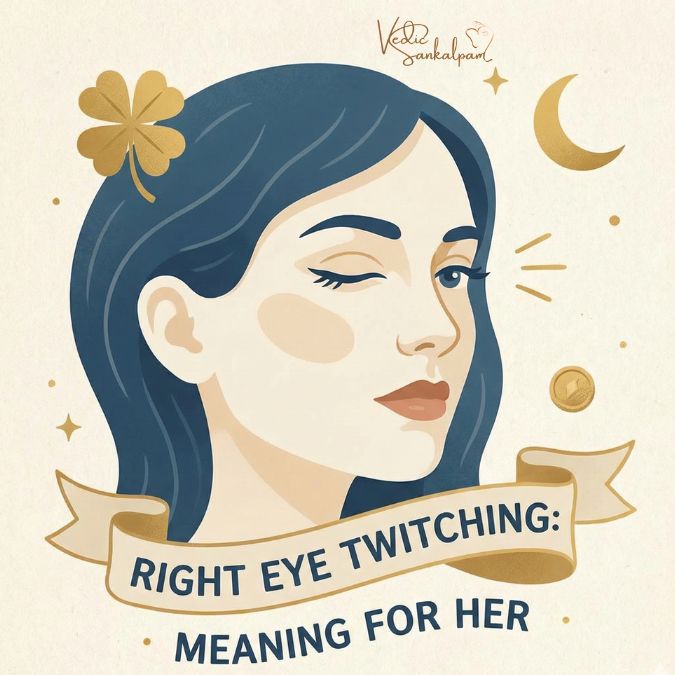
Right Eye Twitching Meaning for Females
Positive Interpretations
In many cultures, a twitching right eye in females is considered an auspicious sign. Let’s explore what good fortune might be heading your way:
Good news is coming. Many traditions believe that a right eye twitch signals that you’ll soon receive positive news. This could be related to your career, relationships, or personal endeavors. Perhaps that job offer you’ve been waiting for is finally on its way, or a long-awaited message from someone special is about to arrive.
Financial gains. Some cultures associate right eye twitching in women with incoming money or financial opportunities. This doesn’t necessarily mean you’ll win the lottery (though wouldn’t that be nice?), but it could signal a raise, a successful business deal, or an unexpected windfall.
Meeting someone special. Romantic interpretations abound, with some believing that a right eye twitch means you’ll soon encounter someone significant—whether a potential romantic partner, a new friend who’ll change your life, or the return of someone from your past.
Spiritual awakening. In more mystical interpretations, the right eye twitch represents opening your spiritual vision. It’s as if your third eye is waking up, preparing you to receive divine messages or heightened intuition.
Negative Interpretations
Not all cultures view right eye twitching in women positively. Some traditions carry warnings:
Approaching difficulties. Certain belief systems suggest that a right eye twitch warns of upcoming challenges or obstacles. Consider it your body’s early warning system, telling you to prepare yourself mentally and emotionally for what’s ahead.
Someone is gossiping about you. This interpretation is particularly common in several Asian and African cultures. The belief goes that when your right eye twitches, someone somewhere is talking about you—and not necessarily in a flattering way.
Energy depletion. Some spiritual practitioners believe that a right eye twitch indicates you’re giving away too much of your energy to others, whether through worry, excessive caregiving, or negative relationships draining you.
Time-Based Interpretations
The meaning can shift dramatically depending on when your eye decides to do its little dance:
Morning twitches (sunrise to noon) often predict good fortune arriving by the end of the day or week. It’s like receiving a cosmic notification that something positive is in transit.
Afternoon twitches (noon to evening) are sometimes interpreted as warnings to be cautious in your dealings, especially financial decisions or important conversations.
Evening twitches (sunset to midnight) might suggest emotional events ahead—perhaps a heartfelt conversation, the resolution of a conflict, or news that will affect you emotionally.
Night twitches (midnight to sunrise) are considered the most spiritually significant by some, representing messages from the subconscious or divine realm that require your attention.
Regional Variations in Superstitions
Indian Beliefs About Right Eye Twitching in Women
Indian astrology and folklore have particularly detailed interpretations of eye twitching for women. In many Indian traditions, a twitching right eye for females is generally considered inauspicious, contrary to many other cultures. It’s often interpreted as a sign of upcoming difficulties, tears, or emotional distress.
However, interpretations can vary by region within India. Some communities in South India believe it signals the arrival of guests or unexpected visitors. Others connect it to specific weekdays, with each day carrying different meanings. For instance, a right eye twitch on a Monday might mean something entirely different than one on a Saturday.
The position of the twitch matters too—upper eyelid versus lower eyelid, corner versus center. This intricate system reflects the complexity of Indian spiritual and astrological traditions.
Chinese Superstitions
Chinese culture has a saying: “Left eye jumps, wealth; right eye jumps, disaster.” However, this interpretation traditionally applies more to men. For women, the meaning often reverses—a right eye twitch can indicate good fortune, while a left eye twitch might signal problems.
Chinese beliefs also incorporate the time element extensively. The day is divided into 12 two-hour segments, each associated with different animals from the Chinese zodiac. The meaning of your eye twitch varies depending on which time segment it occurs in, creating a highly personalized interpretation system.
Additionally, Chinese face reading (mian xiang) considers eye twitching as part of a larger language of facial signs that can reveal your current luck, health, and fortune trajectory.
African Perspectives
African cultures, with their rich diversity, offer various interpretations. In some West African traditions, a right eye twitch in women suggests that someone from your past will reappear in your life. This could be an old friend, a former lover, or even someone you’ve lost touch with who carries important information.
Other African belief systems connect eye twitching to ancestral communication. Your ancestors might be trying to get your attention, guide you away from danger, or confirm you’re on the right path. This perspective encourages introspection and meditation when experiencing eye twitches.
Some traditions also link right eye twitching to the evil eye—the belief that someone harbors jealousy or ill will toward you, and their negative energy is manifesting as physical symptoms in your body.
Western Views
Western cultures generally take a more practical approach, though superstitions still exist. In parts of Europe, particularly Eastern Europe, some believe a right eye twitch means you’ll soon cry, while a left eye twitch means you’ll laugh.
However, modern Western society largely dismisses these superstitions in favor of medical explanations. The prevailing attitude is that if your eye is twitching, you probably need more sleep, less coffee, or should take a break from your computer screen.
That said, interest in alternative spirituality and cross-cultural beliefs has brought renewed curiosity about superstitions, even in Western contexts. Many people now explore these interpretations as interesting possibilities rather than hard facts.
Scientific Explanation vs Superstition
What Doctors Say About Eye Twitching
Let’s bring some medical perspective into the conversation. Ophthalmologists and neurologists will tell you that eye twitching is almost always benign and related to lifestyle factors. The medical community doesn’t recognize supernatural or prophetic qualities in eye twitches.
From a scientific standpoint, the phenomenon occurs when the orbicularis oculi muscle—the muscle responsible for closing your eyelid—experiences involuntary contractions. These contractions happen when the nerves controlling the muscle fire without your conscious command.
Stress triggers the release of cortisol and other hormones that can affect nerve signaling. Caffeine and other stimulants increase neural excitability. Fatigue disrupts the normal functioning of your nervous system. Eye strain causes muscle fatigue around the eyes. All these factors create the perfect conditions for those annoying twitches.
When to Worry About Eye Twitching
While most eye twitching is harmless, certain signs warrant medical attention:
If your eye twitch lasts more than a few weeks, see a doctor. When the twitching spreads to other parts of your face, this could indicate a neurological issue. If you experience complete eyelid closure during twitches (blepharospasm), professional evaluation is necessary. Twitching accompanied by eye redness, discharge, drooping eyelid, or vision changes requires immediate medical attention.
These symptoms might indicate conditions like hemifacial spasm, blepharospasm, or, in rare cases, multiple sclerosis or other neurological disorders. Don’t let superstition prevent you from seeking medical care when your body is genuinely signaling something’s wrong.
How to Stop Eye Twitching
Lifestyle Changes
Whether you believe in superstitions or not, you probably want that annoying twitch to stop. Here’s how:
Reduce stress. Easier said than done, right? But incorporating stress-management techniques like deep breathing, meditation, yoga, or simply taking regular breaks can significantly reduce eye twitching. Your body is telling you to slow down—maybe it’s time to listen.
Get adequate sleep. Aim for seven to nine hours of quality sleep each night. Create a bedtime routine, keep your bedroom cool and dark, and avoid screens before bed. Your eyes need rest to function properly.
Limit caffeine and alcohol. Both substances can trigger or worsen eye twitching. Try cutting back gradually and notice if your symptoms improve. Switch to decaf or herbal tea, at least temporarily.
Manage screen time. Follow the 20-20-20 rule: every 20 minutes, look at something 20 feet away for 20 seconds. Adjust your screen brightness and positioning to reduce eye strain. Consider blue light filtering glasses if you work at a computer all day.
Home Remedies
Several natural approaches can help soothe twitchy eyes:
Warm compress. Apply a warm, damp cloth over your closed eyes for 5-10 minutes. The warmth relaxes the muscles and can stop spasms.
Massage. Gently massage the area around your eye with clean fingers, using circular motions. This increases blood flow and releases tension.
Stay hydrated. Dehydration can contribute to muscle spasms. Drink plenty of water throughout the day.
Magnesium supplements. Some research suggests magnesium deficiency contributes to eye twitching. Foods rich in magnesium include dark leafy greens, nuts, seeds, and whole grains. Consult your doctor before starting supplements.
Eye exercises. Simple exercises like rapid blinking, focusing on distant and near objects alternately, and rolling your eyes can help relax eye muscles.
When to See a Doctor
If lifestyle changes and home remedies don’t resolve your eye twitch within a few weeks, or if you experience any of the warning signs mentioned earlier, schedule an appointment with your doctor or eye specialist. They can rule out underlying conditions and provide appropriate treatment if necessary.
Treatment options for persistent eye twitching include Botox injections to paralyze the affected muscles temporarily, medications to relax muscles or treat underlying conditions, and in severe cases, surgery.
Conclusion
The right eye twitch in females carries a fascinating tapestry of meanings across different cultures and belief systems. Whether you view it as a divine message, an ancestral warning, a sign of good fortune, or simply your body telling you to get more sleep, the phenomenon connects us to centuries of human interpretation and meaning-making.
What’s most important is finding the balance that works for you. If exploring superstitions and spiritual meanings enriches your life and helps you feel connected to something larger, embrace that journey. If you prefer scientific explanations and practical solutions, that’s equally valid. Perhaps the real wisdom lies in acknowledging both perspectives—respecting cultural traditions while also taking care of your physical health.
The next time your right eye decides to do its little involuntary dance, you can choose your own interpretation. Maybe it’s the universe sending you a message. Maybe it’s your body asking for rest. Or maybe, just maybe, it’s both—a reminder that we exist in a world where the mystical and the mundane constantly intertwine.
Listen to your body, honor your beliefs, and remember that whether it’s superstition or science, the most important thing is your wellbeing.
FAQs
1. Is right eye twitching different for females compared to males?
Yes, many cultural traditions have different interpretations for eye twitching based on gender. In most Asian cultures, right eye twitching meanings for females are often opposite to those for males. However, from a medical perspective, eye twitching occurs for the same physiological reasons regardless of gender.
2. How long does eye twitching typically last?
Most eye twitches are temporary and last from a few seconds to a few days. If your eye twitch persists beyond two to three weeks or worsens over time, you should consult a healthcare professional to rule out any underlying conditions.
3. Can stress really cause eye twitching?
Absolutely. Stress is one of the leading triggers of eye twitching. When you’re stressed, your body releases hormones that can affect nerve signaling and muscle control, leading to involuntary spasms like eye twitches. Managing stress through relaxation techniques often resolves the twitching.
4. Should I believe in eye twitching superstitions?
This is entirely a personal choice. Superstitions provide cultural richness and can offer comfort or guidance to those who believe in them. However, they shouldn’t replace medical advice when dealing with persistent or concerning symptoms. You can appreciate cultural beliefs while also taking care of your health practically.
5. What deficiency causes eye twitching?
Magnesium deficiency is most commonly associated with eye twitching, though deficiencies in calcium, vitamin D, and B vitamins can also contribute. If you suspect a nutritional deficiency, consult your doctor for proper testing and supplementation recommendations rather than self-diagnosing.