loading

Category: Vedic

  • Home
  • Category: Vedic

Mole on Right Hand in Astrology: Meaning, Personality Traits, and Destiny Insights

In the realm of astrology and mole interpretation (moleosophy), every mark on the human body carries a deeper symbolic meaning. A mole on the right hand is considered particularly significant, as it is associated with action, karma, destiny, and personal achievements. We explore the profound interpretations, personality traits, and life predictions linked with this placement in a detailed and authoritative manner.


Understanding the Significance of Moles in Astrology

Moles have long been interpreted as cosmic imprints that reflect an individual’s past karma and future potential. In astrology, the right side of the body is generally associated with active energy, masculinity, logic, and external achievements.

A mole on the right hand, therefore, symbolizes:

  • Power of action and execution
  • Strong willpower and determination
  • Material success and career growth
  • Karmic rewards from past deeds

Mole on Right Hand: General Meaning

Mole on right hand astrology

A mole on the right hand is often considered an auspicious sign. It indicates that the individual is:

  • Hardworking and goal-oriented
  • Destined for financial stability
  • Capable of achieving success through effort rather than luck
  • Blessed with leadership qualities

People with this mole are rarely dependent on others and tend to build their own path toward success.


Personality Traits of Individuals with Mole on Right Hand

1. Strong Decision-Making Ability

Individuals with a mole on their right hand possess sharp judgment and analytical thinking. They are not easily influenced and prefer making independent decisions.

2. Ambitious and Career-Focused

Such individuals are highly ambitious and consistently strive to reach the top. They are known for their discipline and persistence, often excelling in professional fields.

3. Practical and Logical Nature

Unlike emotional thinkers, they rely on logic and practicality. This makes them excellent problem-solvers in both personal and professional situations.

4. Financial Intelligence

A mole on the right hand is strongly linked to wealth accumulation and financial management skills. These individuals tend to make wise investments and secure their future.


Different Locations of Mole on Right Hand and Their Meanings

The exact placement of the mole on the right hand significantly alters its interpretation.

Mole on Right Palm

  • Indicates financial prosperity and good fortune
  • Suggests a life filled with comfort and luxury
  • Often linked with individuals who achieve success at a young age

Mole on Back of Right Hand

  • Symbolizes hidden talents and creativity
  • These individuals may struggle initially but eventually gain recognition
  • Indicates a strong desire for independence

Mole on Right Thumb

  • Represents strong willpower and leadership abilities
  • Such individuals are natural decision-makers and often hold authoritative positions

Mole on Right Index Finger

  • Associated with power, ambition, and authority
  • Indicates success in politics, management, or leadership roles

Mole on Right Middle Finger

  • Reflects balance and responsibility
  • These individuals are known for their ethical values and discipline

Mole on Right Ring Finger

  • Linked with fame, creativity, and artistic talent
  • Suggests success in fields like media, arts, or entertainment

Mole on Right Little Finger

  • Represents communication skills and business acumen
  • These individuals often excel in sales, marketing, or entrepreneurship

Mole on Right Hand for Men vs Women

For Men

A mole on the right hand in men is generally considered highly auspicious. It signifies:

  • Professional success and recognition
  • Strong financial growth
  • Leadership roles and authority
  • A tendency to become self-made individuals

For Women

For women, this mole symbolizes:

  • Intelligence and independence
  • Success in career and personal life
  • Strong ability to balance family and profession
  • A determined and confident personality

Career and Financial Predictions

A mole on the right hand is closely associated with career growth and wealth creation. Individuals with this mark often:

  • Achieve success through consistent hard work
  • Excel in business, management, finance, or entrepreneurship
  • Have the potential to become financially independent at an early stage
  • Possess strong risk-taking abilities

They are rarely satisfied with mediocrity and continuously strive for higher achievements.


Love and Relationship Insights

In relationships, individuals with a mole on the right hand tend to be:

  • Loyal and committed partners
  • Practical rather than overly emotional
  • Focused on long-term stability and security

However, their strong ambition may sometimes lead to:

  • Less time for emotional bonding
  • A need to balance work and personal life

Despite this, they are reliable partners who value trust and mutual respect.


Spiritual and Karmic Interpretation

From a spiritual perspective, a mole on the right hand indicates:

  • Positive karma from past lives
  • A life path focused on action and achievement
  • A strong connection with destiny and self-effort

It also suggests that the individual’s success is largely influenced by their own actions rather than external luck.


Is Mole on Right Hand Lucky or Unlucky?

In most astrological interpretations, a mole on the right hand is considered lucky and beneficial. It represents:

  • Success through effort
  • Financial prosperity
  • Strong character and determination

However, its exact impact depends on:

  • The specific location of the mole
  • The size, color, and shape
  • The individual’s overall astrological chart

Scientific Perspective vs Astrological Beliefs

While astrology provides symbolic interpretations, scientifically:

  • Moles are clusters of pigmented cells
  • They have no proven connection to destiny or personality

However, cultural and astrological beliefs continue to assign deep meanings and interpretations to these natural marks.


Conclusion

A mole on the right hand in astrology is widely regarded as a symbol of power, ambition, and success. It reflects a personality driven by determination, logic, and hard work, often leading to financial stability and professional achievements. Whether placed on the palm, fingers, or back of the hand, each variation offers unique insights into an individual’s destiny and character.

Understanding these interpretations allows us to gain a deeper perspective on how ancient astrological beliefs connect physical traits with life outcomes, making the study of moles both fascinating and insightful.

18 Mukhi Rudraksha: The Divine Bead of Earth’s Abundance

Introduction to 18 Mukhi Rudraksha

Have you ever wondered about the mysterious beads that have captivated spiritual seekers for thousands of years? Among the sacred Rudraksha beads, the 18 Mukhi Rudraksha stands as one of the rarest and most powerful. This divine bead isn’t just a piece of religious jewelry—it’s considered a spiritual powerhouse that connects you directly with the energies of Mother Earth herself.

In the vast ocean of spiritual tools and sacred objects, the 18 Mukhi Rudraksha shines like a rare gem. It’s not something you’ll find on every street corner, and that’s exactly what makes it so special. Think of it as nature’s own blessing, wrapped in a tiny seed that carries the wisdom of ages.


What is 18 Mukhi Rudraksha?

Let’s break this down in simple terms. A Rudraksha is a seed that comes from the Elaeocarpus ganitrus tree, which grows primarily in the Himalayan regions, Indonesia, and parts of Southeast Asia. The word “Rudraksha” literally means “tears of Lord Shiva” in Sanskrit, and these beads have been venerated in Hindu and Buddhist traditions for millennia.

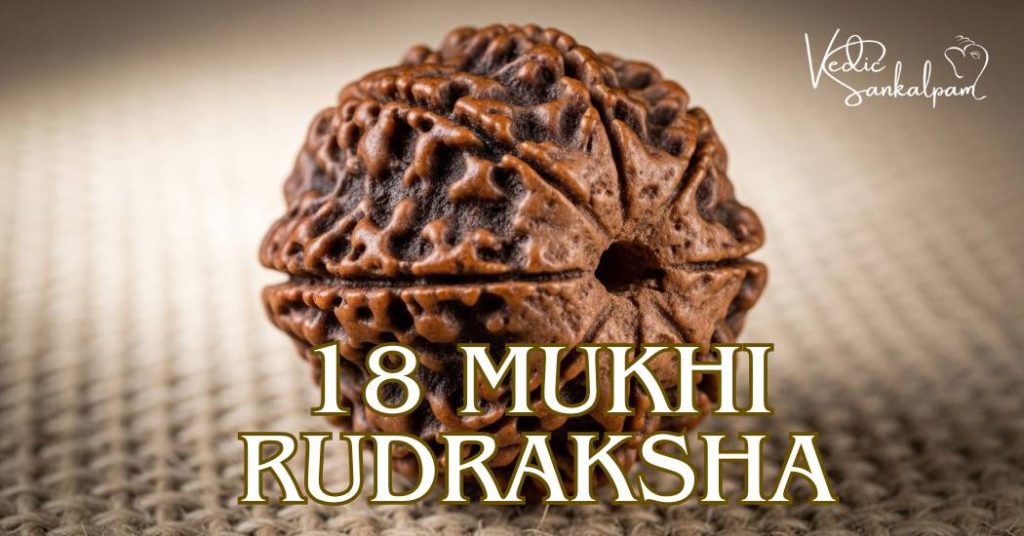
Now, the “18 Mukhi” part refers to the number of facets or lines (called mukhis) on the bead’s surface. Each mukhi represents a specific energy channel, and an 18 Mukhi Rudraksha has—you guessed it—18 natural divisions running from top to bottom. These aren’t carved or artificially created; they’re completely natural formations.

What makes this particular bead extraordinary is its extreme rarity. While you might find five-faced or six-faced Rudraksha beads relatively easily, the 18 Mukhi variety is exceptionally uncommon. It’s like finding a four-leaf clover in a field of three-leaf ones—possible, but definitely special.


The Spiritual Significance of 18 Mukhi Rudraksha

Connection with Goddess Earth (Bhumi Devi)

The 18 Mukhi Rudraksha is directly associated with Bhumi Devi, or Mother Earth. Can you think of a more grounding energy than the very planet we stand on? This bead is believed to channel the nurturing, stable, and abundant energy of the Earth itself.

In Hindu mythology, Bhumi Devi represents fertility, prosperity, patience, and unconditional support. She’s the one who literally holds us up, provides for us, and absorbs all our negativity. Wearing an 18 Mukhi Rudraksha is like carrying a piece of this divine maternal energy with you wherever you go.

Symbolic Meaning and Energy

The number 18 itself carries profound significance. In numerology, 18 reduces to 9 (1+8=9), which represents completion, wisdom, and universal love. The 18 Mukhi Rudraksha embodies material and spiritual abundance, grounding energy, and protection from negative influences.

This bead is said to balance all the elements within your body and environment. It’s like having a personal harmonizer that keeps you aligned with natural rhythms and cosmic energies. Pretty amazing for something so small, right?


Benefits of Wearing 18 Mukhi Rudraksha

18 Mukhi Rudraksha
18 Mukhi Rudraksha

Spiritual Benefits

From a spiritual standpoint, the 18 Mukhi Rudraksha is nothing short of transformative. It’s believed to:

  • Enhance your connection with divine energies and higher consciousness
  • Strengthen your intuition and inner wisdom
  • Remove obstacles from your spiritual path
  • Balance your chakras, particularly the root chakra (Muladhara)
  • Provide protection from negative energies and psychic attacks
  • Deepen meditation practices and spiritual awareness

Think of it as a spiritual anchor. Just as a ship needs an anchor to stay steady in turbulent waters, this bead helps you remain grounded even when life throws challenges your way.

Health Benefits

While spiritual benefits are paramount, many wearers report tangible health improvements as well. The 18 Mukhi Rudraksha is associated with:

  • Enhanced vitality and energy levels
  • Better immune system function
  • Relief from stress and anxiety
  • Improved focus and mental clarity
  • Support for bone health and physical strength
  • Balance in hormonal functions

Remember, though, that Rudraksha beads aren’t medical devices. They’re complementary tools that work alongside proper healthcare, not replacements for it.

Material and Professional Benefits

Here’s where things get really interesting. The 18 Mukhi Rudraksha is particularly renowned for attracting material prosperity. It’s believed to:

  • Bring success in business ventures and professional endeavors
  • Attract wealth and financial stability
  • Enhance leadership qualities and decision-making abilities
  • Open doors to new opportunities
  • Provide stability in property and land-related matters
  • Boost confidence and charisma

It’s like having a lucky charm, but one that’s backed by centuries of spiritual tradition and countless testimonials from believers worldwide.


Who Should Wear 18 Mukhi Rudraksha?

So, is this divine bead right for you? The beautiful thing about the 18 Mukhi Rudraksha is that it’s beneficial for almost anyone, regardless of age, gender, or religious background. However, certain individuals may find it particularly powerful:

  • Business owners and entrepreneurs seeking growth and prosperity
  • People dealing with property or land matters who need positive energy in real estate
  • Those feeling ungrounded or disconnected from reality
  • Individuals seeking material stability alongside spiritual growth
  • Anyone working in earth-related professions like agriculture, mining, or construction
  • Spiritual seekers wanting to deepen their connection with Mother Earth

That said, if you’re drawn to this bead, that attraction itself might be a sign that it’s meant for you. Trust your intuition—it’s often wiser than you think.


How to Identify Genuine 18 Mukhi Rudraksha

Physical Characteristics

Given the rarity and value of authentic 18 Mukhi Rudraksha beads, the market unfortunately has its share of fakes. Here’s how to spot the real deal:

  • Natural lines: The 18 mukhis should be clearly visible, running from top to bottom
  • Size: Genuine 18 Mukhi beads are typically larger, ranging from 18mm to 25mm
  • Weight: Authentic Rudraksha beads have a certain heft to them
  • Texture: The surface should feel slightly rough, not perfectly smooth
  • Color: Natural beads are usually brown to dark brown, sometimes with reddish tones

Testing Methods

Want to verify authenticity? Here are some traditional methods:

The Water Test: A genuine Rudraksha will sink in water, while many fakes will float.

The Copper Coin Test: Place the bead between two copper coins. Some believe genuine beads will rotate slightly due to magnetic properties, though this isn’t scientifically proven.

Magnification: Use a magnifying glass to check if the mukhis are natural formations or artificial cuts.

X-ray or CT scan: The most reliable method—professional testing can reveal the internal structure and confirm authenticity.

Your best bet? Purchase from reputable dealers who provide certificates of authenticity and have a solid track record.


How to Wear 18 Mukhi Rudraksha

Best Day and Time

Timing matters when it comes to energizing and wearing your 18 Mukhi Rudraksha. Traditional wisdom suggests:

  • Best day: Monday, which is associated with Lord Shiva
  • Best time: Early morning, preferably during Brahma Muhurta (approximately 4:30-5:30 AM)
  • Moon phase: Some practitioners recommend starting during a waxing moon for growth-oriented intentions

Mantra for Energization

Before wearing your bead for the first time, it should be energized with specific mantras. The primary mantra for the 18 Mukhi Rudraksha is:

“Om Hreem Shreem Vasudhaye Swaha”

This mantra invokes the blessings of Bhumi Devi (Goddess Earth). Chant it 108 times while holding the bead. You can wear it as a pendant, bracelet, or keep it in your pocket or purse. Many prefer wearing it close to the skin, as this is believed to enhance its energetic connection with your body.


Astrological Significance

From an astrological perspective, the 18 Mukhi Rudraksha is associated with all nine planets (Navagrahas) due to its completeness. However, it has special connections with:

  • Earth element: Providing grounding and stability
  • Saturn: Bringing discipline, structure, and karmic balance
  • Rahu: Offering protection from negative planetary influences

If your birth chart shows challenging planetary positions, especially related to property, wealth, or stability, the 18 Mukhi Rudraksha might be particularly beneficial for you. Consulting with a knowledgeable Vedic astrologer can provide personalized insights.


Price and Availability

Let’s talk money. Because of its extreme rarity, an authentic 18 Mukhi Rudraksha doesn’t come cheap. Prices can range significantly based on:

  • Origin: Indonesian beads are generally less expensive than Nepali ones
  • Size: Larger beads command higher prices
  • Quality: Clearer mukhis and better-shaped beads cost more
  • Certification: Properly certified beads are more expensive but worth it

You might find prices ranging from several hundred to several thousand dollars for a genuine piece. If someone’s offering you an 18 Mukhi Rudraksha for $50, alarm bells should be ringing. Remember: if it seems too good to be true, it probably is.


Care and Maintenance

Your 18 Mukhi Rudraksha is a sacred object that deserves proper care:

  • Cleaning: Gently clean with lukewarm water and a soft brush occasionally
  • Oiling: Apply a light coating of natural oil (sandalwood or almond oil) every few months to prevent drying
  • Storage: When not wearing, keep it in a clean, dedicated space—preferably in a silk or cotton cloth
  • Avoid: Don’t expose it to harsh chemicals, extreme temperatures, or rough handling
  • Respect: Treat it as a sacred object, not just jewelry

With proper care, your Rudraksha can last for generations, potentially becoming a cherished family heirloom.


Common Myths and Misconceptions

Let’s clear up some confusion:

Myth 1: “Only Hindus can wear Rudraksha.” Truth: Anyone from any faith can benefit from Rudraksha beads. Spiritual energy doesn’t discriminate.

Myth 2: “Women shouldn’t wear Rudraksha during menstruation.” Truth: This is an outdated belief. There’s no spiritual reason for such restrictions.

Myth 3: “Rudraksha beads work like magic overnight.” Truth: While some people report immediate effects, for most, the benefits unfold gradually over time.

Myth 4: “You must be vegetarian to wear Rudraksha.” Truth: While some traditions recommend it, your diet doesn’t invalidate the bead’s power.

Myth 5: “More mukhis always mean more power.” Truth: Different mukhis serve different purposes. It’s about finding what’s right for your needs, not just the highest number.


Scientific Perspective on Rudraksha

You might be wondering: is there any science behind these claims? While spiritual benefits can’t always be measured in a laboratory, some interesting research has been conducted:

  • Electromagnetic properties: Studies suggest Rudraksha beads have unique electromagnetic properties that may interact with the human body’s bioelectric field
  • Capacitance: Research has shown that Rudraksha beads can store electric charge, potentially influencing nerve impulses
  • Stress reduction: Some studies indicate that wearing Rudraksha may reduce stress markers and promote calmness

That said, much of the Rudraksha’s power lies in the realm of faith, tradition, and personal experience—areas where science and spirituality often part ways. And honestly? That’s perfectly okay. Not everything that matters can be measured.


Important Info

The 18 Mukhi Rudraksha is more than just a rare bead—it’s a bridge between the earthly and the divine, a tool for transformation, and a symbol of abundance in all its forms. Whether you’re seeking spiritual growth, material prosperity, or simply a deeper connection with the nurturing energy of Mother Earth, this powerful bead offers a path forward.

Remember, though, that no spiritual tool is a substitute for hard work, ethical living, and genuine spiritual practice. The 18 Mukhi Rudraksha is best understood as a companion on your journey—a supportive energy that amplifies your intentions and efforts, not a magic solution that does the work for you.

If you feel called to explore the world of Rudraksha, particularly this rare 18 Mukhi variety, approach it with respect, authenticity, and an open heart. The journey might just surprise you in the most beautiful ways.


FAQs

Q1: Can I wear 18 Mukhi Rudraksha with other Rudraksha beads?

Absolutely! In fact, many people create combinations of different Mukhi Rudraksha beads to address multiple life areas. The 18 Mukhi works harmoniously with other beads and can enhance their collective energy. Just ensure you’re wearing them with clear intention and proper energization.

Q2: How long does it take to experience the benefits of 18 Mukhi Rudraksha?

This varies from person to person. Some individuals report feeling a shift in energy within days, while for others, the transformation is more gradual, unfolding over weeks or months. Consistency in wearing the bead and maintaining a positive mindset can accelerate the process.

Q3: What’s the difference between Indonesian and Nepali 18 Mukhi Rudraksha?

Nepali Rudraksha beads are generally larger, more powerful, and rarer, commanding higher prices. Indonesian beads are smaller and more readily available but still effective. Both are authentic—the choice often comes down to personal preference and budget.

Q4: Can I remove my 18 Mukhi Rudraksha while sleeping or bathing?

Yes, you can remove it during these times, though it’s not necessary. Some people prefer to keep it on at all times to maintain the energetic connection, while others remove it during sleep or bathing. Follow what feels right for you—there’s no strict rule here.

Q5: What should I do if my 18 Mukhi Rudraksha breaks?

If your bead breaks, don’t panic. Some traditions believe this means the Rudraksha has absorbed negative energy meant for you, essentially sacrificing itself for your protection. You can either respectfully immerse the broken pieces in a natural water body or bury them in soil. Then, if you feel called to, acquire a new one.


कुंडली मिलान: संपूर्ण जानकारी और महत्व

कुंडली मिलान का परिचय

क्या आप जानते हैं कि भारतीय परंपरा में विवाह से पहले कुंडली मिलान क्यों किया जाता है? यह सिर्फ एक रस्म नहीं है, बल्कि एक वैज्ञानिक और ज्योतिषीय प्रक्रिया है जो दो व्यक्तियों के बीच तालमेल और संगतता को जांचती है। कुंडली मिलान, जिसे ‘गुण मिलान’ भी कहते हैं, हिंदू धर्म में विवाह का एक अनिवार्य हिस्सा माना जाता है। यह प्रथा सदियों पुरानी है और आज भी इसका महत्व कम नहीं हुआ है।

कुंडली मिलान का मूल उद्देश्य यह सुनिश्चित करना है कि विवाह करने वाले जोड़े का भविष्य सुखमय और समृद्ध हो। ज्योतिष शास्त्र के अनुसार, ग्रहों की स्थिति और नक्षत्रों का प्रभाव व्यक्ति के जीवन पर गहरा असर डालता है। इसलिए दो कुंडलियों का मिलान करके यह पता लगाया जाता है कि दोनों का साथ कितना अनुकूल होगा।


भारतीय संस्कृति में कुंडली मिलान का महत्व

भारतीय समाज में विवाह को सिर्फ दो व्यक्तियों का नहीं, बल्कि दो परिवारों और दो आत्माओं का पवित्र बंधन माना जाता है। यही कारण है कि कुंडली मिलान को इतनी गंभीरता से लिया जाता है। पुराने समय से ही माना जाता है कि अगर कुंडलियां मेल नहीं खातीं, तो विवाह में समस्याएं आ सकती हैं।

हमारे बुजुर्ग कहते हैं कि “जोड़ियां स्वर्ग में बनती हैं”, लेकिन उनका मिलान धरती पर कुंडली से किया जाता है। यह परंपरा न केवल धार्मिक बल्कि सामाजिक दृष्टि से भी महत्वपूर्ण है। यह दोनों पक्षों को मानसिक संतुष्टि और आश्वासन देती है कि उनका निर्णय सही है।


कुंडली मिलान कैसे किया जाता है?

कुंडली मिलान हिंदी में - 36 गुण मिलान विधि, मांगलिक दोष, भकूट दोष और नाड़ी दोष के उपाय। ऑनलाइन और ऑफलाइन कुंडली मिलान की पूरी जानकारी।
कुंडली मिलानकुंडली मिलान

कुंडली मिलान एक व्यवस्थित प्रक्रिया है जिसमें ज्योतिषी दोनों जातकों की जन्म कुंडली का गहन अध्ययन करते हैं। इसके लिए जन्म तिथि, समय और स्थान की सटीक जानकारी आवश्यक होती है।

जन्म कुंडली की आवश्यकता

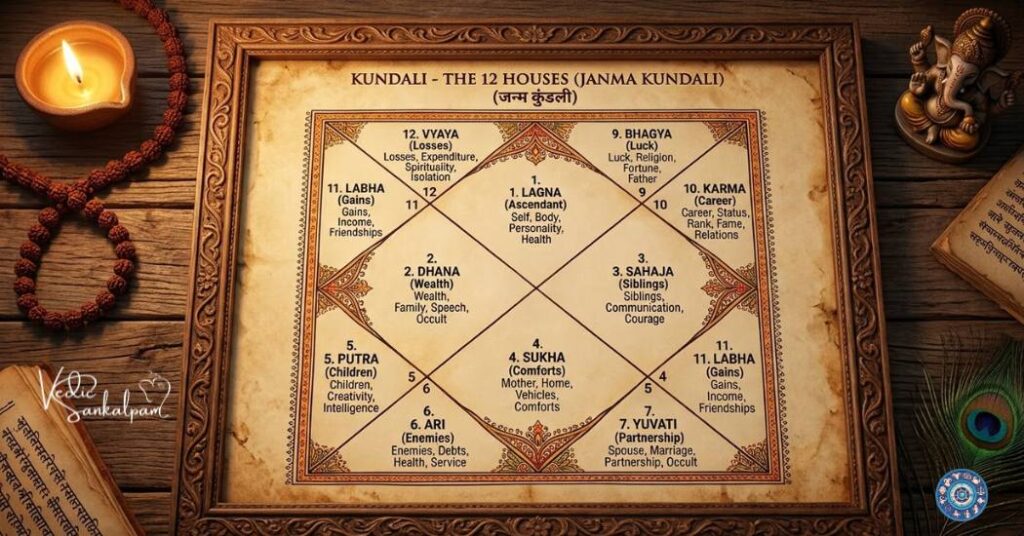
जन्म कुंडली किसी व्यक्ति के जन्म के समय आकाश में ग्रहों और नक्षत्रों की स्थिति का नक्शा होती है। इसमें 12 राशियां और 9 ग्रह शामिल होते हैं। कुंडली मिलान में दोनों कुंडलियों की तुलना करके यह देखा जाता है कि ग्रहों की स्थिति एक-दूसरे के अनुकूल है या नहीं।

अष्टकूट मिलान विधि

अष्टकूट मिलान सबसे लोकप्रिय और प्रामाणिक विधि है। इसमें आठ प्रमुख कूट या पहलुओं की जांच की जाती है। प्रत्येक कूट को अलग-अलग अंक दिए जाते हैं, जिनका कुल योग 36 होता है। माना जाता है कि अगर 18 या इससे अधिक गुण मिलते हैं, तो विवाह शुभ माना जाता है।


गुण मिलान प्रणाली

गुण मिलान भारतीय ज्योतिष की रीढ़ है। यह प्रणाली बेहद सटीक और वैज्ञानिक मानी जाती है।

36 गुणों का विवरण

कुंडली मिलान में कुल 36 गुणों की गणना की जाती है। इन्हें आठ श्रेणियों में बांटा गया है:

वर्ण (1 गुण)

यह व्यक्ति के आध्यात्मिक और मानसिक स्वभाव को दर्शाता है। इसमें चार वर्ण होते हैं – ब्राह्मण, क्षत्रिय, वैश्य और शूद्र।

वश्य (2 गुण)

यह पारस्परिक आकर्षण और नियंत्रण को दर्शाता है। इससे पता चलता है कि दोनों में से कौन किस पर हावी रहेगा।

तारा (3 गुण)

तारा से स्वास्थ्य और समृद्धि का पता चलता है। यह जन्म नक्षत्र के आधार पर निर्धारित होता है।

योनि (4 गुण)

यह शारीरिक और यौन संगतता को दर्शाता है। यह विवाह में अंतरंगता के लिए महत्वपूर्ण है।

ग्रह मैत्री (5 गुण)

यह दोनों की मानसिक अनुकूलता और मित्रता को मापता है। राशि स्वामियों की मैत्री के आधार पर यह तय होता है।

गण (6 गुण)

गण तीन प्रकार के होते हैं – देव, मनुष्य और राक्षस। यह स्वभाव और व्यवहार को दर्शाता है।

भकूट (7 गुण)

यह आर्थिक स्थिति और परिवार कल्याण से जुड़ा है। राशियों की स्थिति के आधार पर इसकी गणना होती है।

नाड़ी (8 गुण)

यह सबसे महत्वपूर्ण कूट है। नाड़ी तीन प्रकार की होती है – आदि, मध्य और अंत्य। यह स्वास्थ्य और संतान से संबंधित है।


कुंडली मिलान में दोष और उपाय

कुंडली मिलान के दौरान कई बार दोष सामने आते हैं। लेकिन घबराने की जरूरत नहीं! हर दोष का उपाय भी होता है।

मांगलिक दोष क्या है?

मांगलिक दोष तब होता है जब मंगल ग्रह कुंडली में विशेष घरों (1, 2, 4, 7, 8, या 12) में स्थित हो। यह एक आम दोष है जो लगभग 40% लोगों में पाया जाता है।

मांगलिक दोष के प्रभाव

मांगलिक दोष वाले व्यक्ति के विवाह में देरी, कलह या जीवनसाथी को हानि की संभावना हो सकती है। हालांकि, यह हर मामले में सच नहीं होता।

मांगलिक दोष के उपाय

  • दोनों में मांगलिक दोष हो तो वह एक-दूसरे को काट देता है
  • कुंभ विवाह (पीपल या केले के पेड़ से विवाह)
  • मंगल देवता की पूजा और मंत्र जाप
  • लाल रंग के वस्त्र दान करना

नाड़ी दोष और इसका समाधान

जब दोनों की नाड़ी एक हो तो नाड़ी दोष माना जाता है। इससे संतान और स्वास्थ्य संबंधी समस्याएं हो सकती हैं। लेकिन अगर दोनों की राशि या गोत्र अलग हो, तो यह दोष कम हो जाता है। महामृत्युंजय मंत्र का जाप और विशेष पूजा से इसे दूर किया जा सकता है।

भकूट दोष और उसके परिणाम

जब दोनों की राशियां 6-8 या 2-12 की स्थिति में हों तो भकूट दोष होता है। इससे आर्थिक कठिनाइयां और पारिवारिक अशांति हो सकती है। नवग्रह पूजा और दान-पुण्य से इसे शांत किया जा सकता है।


आधुनिक युग में कुंडली मिलान

आज के समय में तकनीक ने कुंडली मिलान को बेहद आसान बना दिया है।

ऑनलाइन कुंडली मिलान की सुविधा

अब आपको पंडित जी के पास जाने की जरूरत नहीं! कई वेबसाइट और ऐप्स हैं जो मुफ्त में कुंडली मिलान की सुविधा देते हैं। बस जन्म विवरण डालें और कुछ ही सेकंड में परिणाम मिल जाता है। हालांकि, महत्वपूर्ण निर्णयों के लिए अनुभवी ज्योतिषी से परामर्श लेना बेहतर रहता है।

विज्ञान बनाम ज्योतिष: क्या कुंडली मिलान सही है?

यह एक विवादास्पद प्रश्न है। कुछ लोग इसे अंधविश्वास मानते हैं, तो कुछ इस पर पूरा विश्वास करते हैं। सच तो यह है कि कुंडली मिलान सदियों के अनुभव और खगोलीय अध्ययन पर आधारित है। भले ही यह 100% सटीक न हो, लेकिन यह मनोवैज्ञानिक संतुष्टि और जोड़े की संगतता को समझने का एक माध्यम जरूर है।

आखिरकार, विवाह सिर्फ दो शरीरों का नहीं, दो मनों और आत्माओं का मिलन है। कुंडली मिलान इस मिलन को और सुगम बनाने का प्रयास करता है।


कुंडली मिलान के लाभ

वैवाहिक जीवन में सामंजस्य

जब कुंडलियां अच्छी तरह मेल खाती हैं, तो दंपत्ति के बीच प्राकृतिक तालमेल होता है। उनकी सोच, पसंद-नापसंद और जीवन के प्रति दृष्टिकोण में समानता होती है। यह विवाह को मजबूत आधार देता है।

भविष्य की समस्याओं का पूर्वानुमान

कुंडली मिलान से संभावित समस्याओं की पहले से जानकारी मिल जाती है। चाहे वह स्वास्थ्य हो, संतान हो या आर्थिक स्थिति – सब कुछ पता चल जाता है। और जब आप पहले से तैयार होते हैं, तो समस्याओं से निपटना आसान हो जाता है।


कुंडली मिलान भारतीय संस्कृति की एक अनमोल धरोहर है। यह सिर्फ एक परंपरा नहीं, बल्कि दो जीवन को जोड़ने से पहले उनकी संगतता जांचने का एक वैज्ञानिक तरीका है। चाहे आप इस पर विश्वास करें या न करें, यह निर्विवाद है कि यह प्रथा हजारों वर्षों से चली आ रही है और आज भी लाखों परिवार इसका पालन करते हैं।

आधुनिक समय में भी कुंडली मिलान की प्रासंगिकता बनी हुई है। तकनीक ने इसे और सुलभ बना दिया है। लेकिन याद रखें, कुंडली मिलान एक मार्गदर्शक है, अंतिम निर्णय नहीं। सच्चा प्यार, समझ और सम्मान – ये तीन स्तंभ किसी भी सफल विवाह की नींव हैं।

तो अगली बार जब कोई कुंडली मिलान की बात करे, तो उसे सिर्फ रस्म न समझें। इसे दो आत्माओं के सुखद भविष्य के लिए किया गया एक सार्थक प्रयास समझें!


अक्सर पूछे जाने वाले प्रश्न (FAQs)

1. क्या कुंडली मिलान में कम से कम कितने गुण मिलने चाहिए?

आदर्श रूप से 18 से 36 गुणों में से कम से कम 18 गुण मिलने चाहिए। 18 से कम गुण होने पर विवाह को शुभ नहीं माना जाता, हालांकि अन्य कारक भी महत्वपूर्ण होते हैं।

2. क्या मांगलिक व्यक्ति का विवाह गैर-मांगलिक से हो सकता है?

हां, लेकिन कुछ विशेष परिस्थितियों में। अगर मंगल दोष हल्का हो या उचित उपाय किए जाएं तो यह संभव है। कुछ ज्योतिषी मानते हैं कि 28 वर्ष की उम्र के बाद मांगलिक दोष कम हो जाता है।

3. क्या बिना कुंडली मिलान के विवाह करना गलत है?

नहीं, यह व्यक्तिगत विश्वास का मामला है। कई सफल विवाह बिना कुंडली मिलान के भी होते हैं। लेकिन अगर आप इस परंपरा में विश्वास रखते हैं, तो इसे अवश्य करवाएं।

4. ऑनलाइन कुंडली मिलान कितना सटीक होता है?

ऑनलाइन कुंडली मिलान बुनियादी जानकारी के लिए सही है, लेकिन यह कंप्यूटर जनरेटेड होता है। विस्तृत विश्लेषण के लिए अनुभवी ज्योतिषी से परामर्श लेना बेहतर है क्योंकि वे कई सूक्ष्म पहलुओं को भी देखते हैं।

5. अगर कुंडलियां नहीं मिलतीं तो क्या करें?

पहले किसी अनुभवी ज्योतिषी से दोबारा जांच करवाएं। अगर दोष है तो उसके उपाय पूछें। कई बार उपाय करने से दोष कम हो जाते हैं। अंततः, याद रखें कि आपसी प्रेम, समझ और प्रतिबद्धता किसी भी रिश्ते की सबसे बड़ी ताकत होती है।


Name Starting Letter Based on Date of Birth and Time

Introduction to Numerology and Name Selection

Have you ever wondered why some people seem to attract success effortlessly while others struggle despite their best efforts? Could the secret lie in something as simple as the first letter of your name? The ancient practice of selecting names based on date of birth and time has fascinated cultures worldwide for centuries, blending mysticism with mathematical precision.

What Is Numerology?

Numerology is the study of numbers and their mystical relationship with events, personalities, and life patterns. It’s like a cosmic fingerprint that reveals hidden aspects of who you are and what you’re destined to become. Ancient civilizations from Greece to India believed that numbers carry vibrational frequencies that influence our lives in profound ways.

The Connection Between Birth Details and Names

Your birth date and time aren’t random coincidences. They’re cosmic coordinates that map out your life’s blueprint. When you align your name with these celestial markers, you’re essentially tuning your personal radio to the universe’s frequency. Think of it as choosing the right key to unlock your potential.


Understanding the Basics of Name Numerology

How Numbers Influence Our Lives

Every number vibrates at a specific frequency. The number 1 resonates with leadership and independence, while 2 hums with cooperation and balance. These vibrations interact with your personal energy field, either amplifying your strengths or creating dissonance. It’s similar to how certain music makes you feel energized while other melodies bring calmness.

The Role of Birth Date in Name Selection

Your birth date is your numerical DNA. When reduced to a single digit (or master number), it reveals your Life Path Number—the primary influence on your journey. If you’re born on the 15th, you’d add 1+5=6, making 6 your guiding number. This number suggests which alphabets will harmonize with your natural vibration.

Why Birth Time Matters

The exact moment you took your first breath captured a unique planetary alignment. This cosmic snapshot influences everything from your temperament to your talents. In Vedic astrology, the birth time determines your Nakshatra (lunar mansion), which directly suggests specific name syllables and starting letters.


The Science Behind Choosing the Right Name Letter

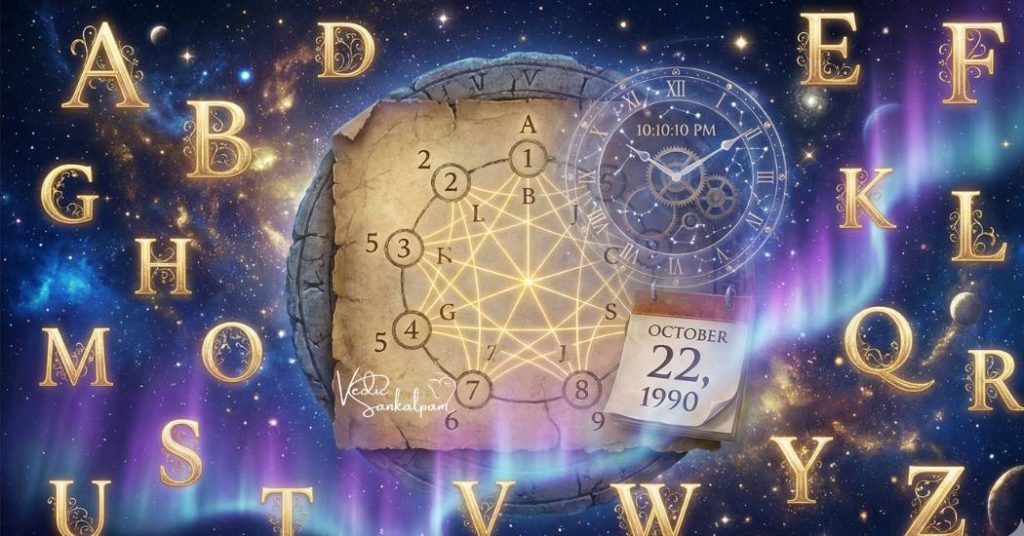
Name Starting Letter Based on date of birth and time

Calculating Your Life Path Number

Let’s break this down with a simple example. If you were born on March 18, 1990, you’d calculate: 3 (March) + 1+8 (day) + 1+9+9+0 (year) = 31, then 3+1 = 4. Your Life Path Number is 4, associated with stability, hard work, and practicality.

Destiny Number and Its Significance

Your Destiny Number comes from your full birth name and reveals your life’s purpose. But here’s the interesting part—when choosing a name for a newborn or considering a name change, you can deliberately select letters that create a favorable Destiny Number that complements the Life Path Number.

The Soul Urge Number

This number, derived from the vowels in your name, expresses your heart’s deepest desires. When selecting a name’s starting letter, you’re setting the foundation for this inner drive. Wouldn’t you want that foundation to be solid?


How to Determine the Best Starting Letter for Your Name

Step-by-Step Calculation Method

First, write down your complete birth date and time. Second, calculate your Life Path Number using the method above. Third, consult a numerology chart to find letters that correspond to compatible numbers. For instance, if your Life Path is 3, letters like C, L, and U (which correspond to 3) might be favorable starting points.

Compatibility Between Numbers and Letters

Not all numbers play well together. Some create harmony, while others clash like cymbals at midnight. The number 1 (letters A, J, S) represents individuality and might conflict with the collaborative nature of 2 (B, K, T). Understanding these dynamics helps you choose wisely.

Alphabet-Number Correspondences

Here’s the basic Pythagorean system:

  • 1: A, J, S
  • 2: B, K, T
  • 3: C, L, U
  • 4: D, M, V
  • 5: E, N, W
  • 6: F, O, X
  • 7: G, P, Y
  • 8: H, Q, Z
  • 9: I, R

The Influence of Planetary Positions at Birth Time

Vedic Astrology and Name Selection

In Vedic tradition, your birth chart (Kundali) is created based on the exact time and place of birth. The Moon’s position in a specific Nakshatra at that moment suggests particular syllables and letters. For example, if the Moon was in Rohini Nakshatra, letters like O, Va, Vi, or Vu might be recommended.

Nakshatra-Based Naming Traditions

The 27 Nakshatras each govern specific sound vibrations. Ashwini Nakshatra favors names starting with Chu, Che, Cho, La. This isn’t superstition—it’s an ancient understanding of how sound frequencies align with cosmic energies. Pretty fascinating, right?

Western Astrology Perspectives

Western astrology looks at your Sun sign, Moon sign, and Rising sign. An Aries born at dawn might benefit from names starting with bold, fiery letters like M or R, while a Pisces born at twilight might resonate with softer sounds like N or P.


Popular Naming Systems Around the World

Indian Numerology and Astrology

Indian systems combine numerology with astrology, creating a comprehensive approach. Renowned numerologists often calculate both the Chaldean and Pythagorean systems, checking which letters bring favorable numbers while also aligning with the birth chart.

Chinese Name Selection Practices

Chinese culture emphasizes the Five Elements (Wood, Fire, Earth, Metal, Water) and how they interact with birth time. A child born during a Metal hour might receive a name beginning with sounds that strengthen Metal energy or balance it with complementary elements.

Western Numerological Approaches

Western numerology tends to focus more heavily on the Pythagorean system and Life Path calculations. It’s somewhat simpler than Eastern methods but no less effective when applied correctly. The key is consistency in whichever system you choose.


Benefits of Choosing Names Based on Birth Details

Enhanced Personality Traits

When your name vibrates in harmony with your birth numbers, it’s like wearing perfectly fitted clothes. You feel more comfortable in your own skin, your natural talents emerge more easily, and you experience less internal conflict. People often report feeling “more themselves” after adjusting their names.

Career and Financial Prosperity

A well-chosen name can open professional doors. The number 8, for instance, is associated with material success and authority. If your career goals align with leadership and wealth, starting your name with H, Q, or Z might provide that extra cosmic boost.

Better Relationships and Social Harmony

Names influence how others perceive and interact with you. A name beginning with a letter that corresponds to numbers 2 or 6 might make you appear more approachable and nurturing, naturally attracting harmonious relationships.


Common Mistakes to Avoid When Selecting a Name

Ignoring the Complete Birth Chart

Focusing solely on one aspect—say, just the Life Path Number—while ignoring other elements is like building a house with only three walls. You need to consider the Destiny Number, Soul Urge, planetary positions, and even family karma for a complete picture.

Relying Solely on One System

Different systems sometimes suggest different letters. The smart approach? Cross-reference multiple systems. If both Vedic astrology and Chaldean numerology suggest similar letters, you’ve likely found a winner.

Overlooking Cultural Context

A name that’s numerologically perfect but culturally inappropriate might create more problems than it solves. Balance cosmic wisdom with practical considerations like pronunciation, spelling, and cultural relevance.


Practical Examples of Name Letter Selection

Case Study 1: Born on the 1st

Someone born on January 1st would have strong 1 energy (natural leadership, independence). Names starting with A, J, or S would amplify these qualities. “Arjun” or “Sophia” might be excellent choices, creating powerful, assertive personalities.

Case Study 2: Birth Time During Sunrise

A child born at sunrise carries the energy of new beginnings and vitality. If this coincides with a favorable Nakshatra suggesting the letter “R,” names like “Ravi” (meaning sun) or “Rachel” would beautifully align cosmic and temporal energies.

Case Study 3: Multiple Favorable Letters

What if calculations suggest both D and M are favorable? You could choose either, but consider the complete name’s total value. “David” adds up to 22 (a master number), while “Michael” totals 33 (another master number). Both are powerful choices with slightly different energies.


Expert Tips for Finalizing Your Name Choice

Consult with experienced numerologists and astrologers who can read your complete chart. Don’t rush the process—this name might accompany someone for a lifetime. Test the name by writing it down repeatedly, saying it aloud, and visualizing how it might shape a personality. Does it feel right? Your intuition matters too.

Remember that numerology and astrology are tools for guidance, not rigid rules. They work best when combined with personal preference, family traditions, and practical wisdom. After all, a name should inspire confidence and joy, not feel like an uncomfortable obligation.

Conclusion

Selecting a name based on date of birth and time is an ancient art that blends mathematics, astronomy, and intuition. Whether you’re naming a newborn, considering a name change, or simply curious about the forces shaping your identity, understanding this practice opens fascinating doors. The perfect name resonates with your cosmic blueprint while honoring your cultural heritage and personal preferences. It’s not about superstition—it’s about alignment, harmony, and giving yourself or your child every advantage in life’s journey. So why not explore what the stars and numbers suggest for you?


FAQs

1. Can I change my name later in life based on numerology?

Absolutely! Many people adopt numerologically favorable names or adjust their spelling as adults. However, the name you were given at birth still carries significance in your numerological chart, so both names influence your life path.

2. Do nicknames affect my numerology?

Yes, nicknames you use regularly create their own vibration and influence. If you’re consistently called by a shortened version of your name, calculate its numerological value too, as it’s actively shaping how others perceive you.

3. What if multiple systems suggest different letters?

This is common and not necessarily problematic. Look for overlapping recommendations, or choose the system that resonates most with your cultural background. Sometimes having options means you can select based on additional factors like sound preference or family significance.

4. Is the exact birth time really that important?

In Vedic astrology, yes—even a few minutes can change your Nakshatra and suggested letters. In pure numerology based on birth date alone, the time matters less. If possible, obtain the most accurate birth time from hospital records.

5. Can the wrong name letter cause problems?

While an inharmonious name might create subtle challenges or inner conflicts, remember that names are just one influence among many. Your actions, choices, and character development matter far more than any numerical vibration. Consider name selection as optimization, not predetermination.

Pran Dasha: The Subtle Driver of Destiny in Vedic Astrology

Understanding Pran Dasha in the Framework of Vedic Astrology

Pran Dasha is one of the most subtle, powerful, and less commonly understood timing systems in Vedic Astrology. While Mahadasha and Antardasha are widely used for predicting major life events, Pran Dasha operates at a much deeper and finer level, influencing day-to-day experiences, sudden transformations, inner shifts, and karmic triggers that often go unnoticed.

We consider Pran Dasha as the life-force timing system, directly connected to Prana, the vital energy that sustains existence. It governs the micro-cycles of destiny, revealing how planetary energies activate within extremely short periods, sometimes even within hours or days.

What Is Pran Dasha?

Pran Dasha is a sub-division of the Vimshottari Dasha system, operating below Sookshma Dasha. The hierarchy is as follows:

  • Mahadasha – Major life phase

  • Antardasha – Sub-period within Mahadasha

  • Pratyantar Dasha – Sub-period within Antardasha

  • Sookshma Dasha – Micro-period

  • Pran Dasha – Ultra-micro period

Each Pran Dasha lasts from a few hours to a few days, depending on the planetary lord and the ongoing higher-level dashas. Despite its short duration, its impact can be intense, immediate, and transformative.

Why Pran Dasha Is Critically Important

We observe that many events such as:

  • Sudden accidents

  • Instant opportunities

  • Unexpected meetings

  • Emotional breakdowns or breakthroughs

  • Spiritual realizations

  • Critical decisions

often occur not during Mahadasha changes, but during Pran Dasha transitions. This makes Pran Dasha indispensable for precise event timing.

Pran Dasha acts as the ignition spark. While Mahadasha provides the fuel and Antardasha shapes the direction, Pran Dasha determines the exact moment when karma manifests.

Calculation of Pran Dasha

Pran Dasha is calculated based on the Vimshottari Dasha sequence, using the Nakshatra of the Moon at birth. The duration of Pran Dasha is derived mathematically by proportionally dividing the Sookshma Dasha period according to the planetary years assigned in Vimshottari.

Each planet contributes its unique energetic signature, and when activated at the Pran level, it expresses its results with immediacy.

Planetary Influence in Pran Dasha

Pran Dasha in Vedic Astrology

Sun Pran Dasha

When Sun Pran Dasha operates, we notice themes of:

  • Authority and leadership

  • Ego confrontation

  • Government-related matters

  • Vitality and health of the heart

Positive placement brings recognition and confidence, while afflicted Sun may cause conflicts with authority or sudden health issues.

Moon Pran Dasha

Moon Pran Dasha influences:

  • Emotional reactions

  • Mental fluctuations

  • Domestic matters

  • Public interactions

This period can bring heightened sensitivity, mood changes, and strong intuitive experiences.

Mars Pran Dasha

Mars Pran Dasha triggers:

  • Sudden action or aggression

  • Accidents or injuries

  • Courage and decisive moves

  • Competitive situations

It is highly event-oriented and must be analyzed carefully, especially in sensitive charts.

Mercury Pran Dasha

Mercury Pran Dasha governs:

  • Communication

  • Business decisions

  • Contracts and negotiations

  • Learning and travel

This period often brings important conversations, messages, or intellectual clarity.

Jupiter Pran Dasha

Jupiter Pran Dasha signifies:

  • Blessings and protection

  • Financial gains

  • Spiritual guidance

  • Legal or educational matters

When favorable, it produces sudden opportunities and divine help.

Venus Pran Dasha

Venus Pran Dasha enhances:

  • Relationships and romance

  • Luxury and comforts

  • Artistic pursuits

  • Financial pleasures

Afflicted Venus may result in emotional indulgence or relationship complications.

Saturn Pran Dasha

Saturn Pran Dasha is karmically intense:

  • Delays and responsibilities

  • Sudden restrictions

  • Hard lessons

  • Endurance testing situations

Though challenging, it often brings long-term stability if handled with discipline.

Rahu Pran Dasha

Rahu Pran Dasha causes:

  • Sudden shocks

  • Foreign connections

  • Illusions or breakthroughs

  • Unconventional events

This is one of the most unpredictable Pran Dashas.

Ketu Pran Dasha

Ketu Pran Dasha activates:

  • Detachment

  • Spiritual insight

  • Sudden endings

  • Mystical experiences

It often disconnects us from worldly attachments and pushes inner transformation.

Role of Pran Dasha in Event Prediction

We rely on Pran Dasha for pinpoint accuracy in:

  • Marriage timing

  • Job changes

  • Surgery and health events

  • Legal verdicts

  • Travel and relocation

  • Spiritual initiation

Without Pran Dasha analysis, predictions remain broad and incomplete. With it, astrology becomes surgical and exact.

Pran Dasha and Transits (Gochar)

The results of Pran Dasha intensify when aligned with planetary transits. For example:

  • Saturn transit over Moon + Saturn Pran Dasha = emotional heaviness

  • Jupiter transit over Lagna + Jupiter Pran Dasha = sudden rise

We always recommend analyzing Pran Dasha in conjunction with Gochar for maximum accuracy.

Remedial Measures During Pran Dasha

Because Pran Dasha effects manifest quickly, remedies must be immediate and precise:

  • Mantra chanting of the Pran Dasha lord

  • Color therapy

  • Donation on specific weekdays

  • Breath control (Pranayama)

  • Planetary gemstones (only after expert consultation)

Even short-term remedies can significantly alter outcomes.

Spiritual Significance of Pran Dasha

Beyond material events, Pran Dasha governs inner evolution. It reveals:

  • When karmic knots loosen

  • When awareness expands

  • When ego dissolves

  • When destiny shifts silently

Advanced practitioners use Pran Dasha to time meditation, sadhana, and initiation, as it determines receptivity of consciousness.

Pran Dasha vs Mahadasha: Key Differences

Aspect Mahadasha Pran Dasha
Duration Years Hours to days
Impact Broad life themes Specific events
Visibility Obvious Subtle but powerful
Usage General predictions Precise timing

We consider Pran Dasha the final execution layer of karma.

Conclusion: Why Pran Dasha Cannot Be Ignored

Pran Dasha is the heartbeat of destiny. It decides when karma unfolds, not if. For accurate astrology, psychological clarity, and spiritual awareness, Pran Dasha analysis is essential.

We emphasize that mastering Pran Dasha elevates predictive astrology from estimation to precision science, allowing deeper understanding of life’s hidden mechanics.

Kaal Sarp Dosh: Complete Guide, Types, Effects, Remedies, and Astrological Significance

Understanding Kaal Sarp Dosh in Vedic Astrology

Kaal Sarp Dosh is one of the most discussed and influential astrological combinations in Vedic astrology, believed to significantly impact an individual’s life, destiny, and karmic journey. This dosh occurs when all seven planets (Sun, Moon, Mars, Mercury, Jupiter, Venus, and Saturn) are positioned between Rahu (North Node) and Ketu (South Node) in a birth chart (Kundli). The symbolic representation of Rahu and Ketu as a serpent swallowing all planets gives rise to the term “Kaal Sarp”, where Kaal denotes time and Sarp signifies a snake.

We observe that this dosh is associated with delays, obstacles, mental unrest, financial instability, relationship issues, and repeated struggles, especially during Rahu and Ketu Mahadasha or Antardasha periods.


Astrological Formation of Kaal Sarp Dosh

Kaal Sarp Dosh forms when:

  • Rahu occupies one house of the horoscope

  • Ketu occupies the opposite house

  • All remaining planets are confined between Rahu and Ketu

The house placement, strength of Rahu-Ketu, and aspect of benefic or malefic planets determine the intensity of the dosh. Not all Kaal Sarp Dosh charts yield negative outcomes; the results vary depending on planetary dignity, conjunctions, and dashas.


Types of Kaal Sarp Dosh and Their Effects

Kaal Sarp Dosh, its types, effects, symptoms, and powerful remedies in Vedic astrology for career, marriage, health, and success.
Kaal Sarp Dosh

There are 12 primary types of Kaal Sarp Dosh, each linked to the house placement of Rahu and Ketu. Below is a detailed explanation of each type:

1. Anant Kaal Sarp Dosh

Occurs when Rahu is in the 1st house and Ketu in the 7th house.
Effects: Health concerns, lack of confidence, marital discord, delays in success.

2. Kulik Kaal Sarp Dosh

Rahu in 2nd house, Ketu in 8th house.
Effects: Financial instability, family disputes, speech-related issues.

3. Vasuki Kaal Sarp Dosh

Rahu in 3rd house, Ketu in 9th house.
Effects: Struggles in communication, lack of sibling support, hurdles in higher education.

4. Shankhpal Kaal Sarp Dosh

Rahu in 4th house, Ketu in 10th house.
Effects: Disturbed domestic life, property issues, career instability.

5. Padma Kaal Sarp Dosh

Rahu in 5th house, Ketu in 11th house.
Effects: Delays in childbirth, problems in love life, fluctuating income.

6. Mahapadma Kaal Sarp Dosh

Rahu in 6th house, Ketu in 12th house.
Effects: Legal disputes, debts, health complications, anxiety.

7. Takshak Kaal Sarp Dosh

Rahu in 7th house, Ketu in 1st house.
Effects: Marriage delays, partner conflicts, emotional imbalance.

8. Karkotak Kaal Sarp Dosh

Rahu in 8th house, Ketu in 2nd house.
Effects: Sudden losses, inheritance issues, fear and insecurity.

9. Shankhnaad Kaal Sarp Dosh

Rahu in 9th house, Ketu in 3rd house.
Effects: Weak luck, strained relations with mentors, lack of spiritual clarity.

10. Ghatak Kaal Sarp Dosh

Rahu in 10th house, Ketu in 4th house.
Effects: Career obstacles, professional dissatisfaction, family stress.

11. Vishdhar Kaal Sarp Dosh

Rahu in 11th house, Ketu in 5th house.
Effects: Unfulfilled desires, problems with children, unstable friendships.

12. Sheshnag Kaal Sarp Dosh

Rahu in 12th house, Ketu in 6th house.
Effects: Expenditure issues, sleep disorders, hidden enemies.


Common Symptoms of Kaal Sarp Dosh

We frequently identify the presence of Kaal Sarp Dosh through the following life patterns:

  • Repeated failures despite hard work

  • Delayed marriage or unstable relationships

  • Financial ups and downs

  • Mental stress, fear, or depression

  • Career stagnation

  • Health issues without clear diagnosis

  • Lack of peace and spiritual disconnect


Is Kaal Sarp Dosh Always Harmful?

Contrary to widespread belief, Kaal Sarp Dosh is not always destructive. Many renowned personalities have had this dosh and achieved extraordinary success. When benefic planets aspect Rahu or Ketu, or when strong yogas coexist, the negative effects reduce significantly. In some cases, Kaal Sarp Dosh enhances focus, ambition, research abilities, and spiritual growth.


Powerful Remedies for Kaal Sarp Dosh

Astrology offers several effective remedies to balance the energies of Rahu and Ketu:

1. Kaal Sarp Dosh Nivaran Puja

Performed at spiritually potent locations such as Ujjain, Trimbakeshwar, Nasik, and Haridwar, this puja pacifies Rahu-Ketu energies and reduces karmic burdens.

2. Maha Mrityunjaya Mantra

Regular chanting helps in overcoming fear, illness, and psychological stress.

3. Rahu-Ketu Beej Mantra

Chanting these mantras strengthens planetary harmony and mental stability.

4. Charity and Donations

Offering food, black sesame seeds, blankets, or donating on Saturdays and Amavasya yields positive karmic results.

5. Wearing Gemstones

Under expert guidance, gemstones like Gomed (Hessonite) and Cat’s Eye (Lehsunia) may help stabilize Rahu and Ketu effects.


Best Time to Perform Kaal Sarp Dosh Puja

The most auspicious days include:

  • Amavasya (New Moon)

  • Nag Panchami

  • Rahu-Ketu transit periods

  • Shravan month

Performing remedies during these times amplifies their effectiveness.


Scientific and Psychological Perspective

From a psychological standpoint, belief in Kaal Sarp Dosh can intensify stress if misunderstood. However, when approached constructively, remedies function as ritualistic therapy, promoting discipline, hope, and inner balance. Astrology, when used wisely, serves as a guidance system rather than a fear mechanism.


Transforming Challenges into Strength

Kaal Sarp Dosh symbolizes intense karmic lessons, not permanent misfortune. With correct astrological interpretation, timely remedies, and conscious effort, individuals can convert struggles into stepping stones for growth. We believe that understanding this dosh empowers individuals to navigate life with clarity, resilience, and spiritual awareness.

Mantras and Meanings: Unlocking the Power of Sacred Sounds

Have you ever wondered why certain words or sounds seem to resonate deep within your soul? Why does repeating a simple phrase bring peace to a restless mind? Welcome to the fascinating world of mantras—ancient tools that have been used for thousands of years to transform consciousness, heal the spirit, and connect us with something greater than ourselves.

What Are Mantras?

At their core, mantras are sacred sounds, words, or phrases that are repeated during meditation or prayer. Think of them as spiritual formulas—concentrated packets of energy wrapped in syllables. But they’re much more than just words you say out loud or in your head.

The Origins of Mantras

Mantras trace their roots back to ancient India, where they emerged from the Vedic traditions over 3,000 years ago. The sages and seers of that time discovered that specific sound vibrations could influence both the physical and spiritual realms. These weren’t random discoveries—they came from deep meditation and an intimate understanding of the universe’s energetic fabric.

The word “mantra” itself comes from two Sanskrit words: “man,” meaning mind, and “tra,” meaning tool or instrument. So essentially, a mantra is a tool for the mind. Pretty straightforward, right? But the simplicity of the definition doesn’t diminish its profound power.

The Science Behind Mantras

You might be thinking, “Okay, but does science back this up?” Surprisingly, yes! Modern neuroscience has shown that repetitive sound patterns can actually alter brain wave activity. When you chant a mantra, you’re essentially giving your brain a focal point, which helps reduce the mental chatter that normally dominates our thoughts.

Studies using brain imaging have revealed that mantra meditation activates areas associated with attention, emotional regulation, and even pain management. The rhythmic repetition creates a kind of neurological harmony that brings about measurable physiological changes—lower blood pressure, reduced stress hormones, and improved immune function.

Understanding the Deeper Meaning of Mantras

So what makes mantras different from just repeating any old word over and over? It all comes down to intention and vibration.

Vibration and Energy

Everything in the universe vibrates at different frequencies—from the chair you’re sitting on to the thoughts in your head. Ancient yogis understood this concept long before quantum physics came along. They believed that certain sound vibrations could align our personal energy with universal energy.

When you chant a mantra, you’re not just making noise. You’re creating specific vibrations that resonate through your body, mind, and the space around you. It’s like tuning a guitar—when the strings vibrate at the right frequency, you get beautiful music. When your energy vibrates at the right frequency, you experience harmony and peace.

Intention and Focus

But vibration alone isn’t enough. The real magic happens when you combine sound with intention. Your intention acts as the steering wheel, directing the energy of the mantra toward a specific purpose—whether that’s healing, wisdom, compassion, or spiritual awakening.

Have you ever noticed how the same song can affect you differently depending on your mood? That’s because your internal state influences how you receive and interpret vibrations. Similarly, approaching mantras with sincerity, respect, and clear intention amplifies their effectiveness exponentially.

Types of Mantras

Not all mantras are created equal. There are different categories, each serving unique purposes and coming from various spiritual traditions.

Vedic Mantras

These are the oldest mantras, originating from the Vedas—ancient Indian scriptures. They’re typically in Sanskrit and are often quite lengthy and complex. Vedic mantras were traditionally passed down from teacher to student in an unbroken lineage, ensuring their pronunciation and power remained intact.

Examples include the Gayatri Mantra and the Mahamrityunjaya Mantra, both of which carry deep spiritual significance and are believed to offer protection, enlightenment, and liberation.

Buddhist Mantras

Buddhism adopted the practice of mantra recitation and developed its own collection of sacred sounds. Buddhist mantras often focus on cultivating compassion, wisdom, and the awakening of Buddha-nature within all beings.

The most famous Buddhist mantra is probably “Om Mani Padme Hum,” which embodies the compassion of all Buddhas. Tibetan Buddhism especially emphasizes mantra practice as a core part of spiritual development.

Personal Affirmations

In modern times, the concept of mantras has expanded to include personal affirmations—positive statements that you repeat to reprogram your subconscious mind. While these aren’t traditional mantras in the spiritual sense, they operate on similar principles of repetition and focused intention.

Phrases like “I am worthy of love” or “I trust in the process of life” might not have the ancient lineage of Sanskrit mantras, but they can still be powerful tools for personal transformation.

Popular Mantras and Their Meanings

Let’s dive into some of the most well-known mantras and unpack what they actually mean.

Om (Aum)

If mantras had a king, Om would wear the crown. This single syllable is considered the primordial sound of the universe—the vibration from which all creation emerges. When you chant Om, you’re aligning yourself with the fundamental frequency of existence itself.

The sound is actually composed of three parts: “A-U-M,” representing the waking state, dream state, and deep sleep state of consciousness. The silence that follows represents the fourth state—pure consciousness or enlightenment.

Om Mani Padme Hum

This six-syllable Tibetan Buddhist mantra is all about compassion. While translations vary, it’s often interpreted as meaning something along the lines of honoring the jewel in the lotus of the heart. Each syllable purifies a different negative emotion: pride, jealousy, desire, ignorance, greed, and anger.

Tibetan Buddhists believe that reciting this mantra, even once, can bring tremendous benefit. Imagine it as a spiritual shower that cleanses your mind and heart of impurities.

Gayatri Mantra

This is one of the most revered Vedic mantras, traditionally chanted at sunrise and sunset. It’s a prayer to the sun god Savitr, asking for enlightenment and the removal of darkness from our minds.

Breaking Down the Gayatri Mantra

The mantra acknowledges the divine light that illuminates the three worlds (earth, atmosphere, and heaven) and asks that this light guide our intellect and understanding. It’s essentially saying, “May the divine light illuminate my mind and lead me toward truth.”

The beauty of the Gayatri Mantra lies not just in its meaning but in its rhythm and vibration. Many practitioners report feeling an immediate shift in consciousness when they chant it with devotion.

How Do Mantras Work?

You’ve probably gathered by now that mantras are more than just words. But what’s actually happening when you practice them?

The Role of Repetition

Repetition is key to mantra practice. When you repeat a mantra over and over, you’re essentially training your mind to focus. Think of it like building a muscle—the more you practice, the stronger your concentration becomes.

This repetitive practice also helps to bypass the critical, analytical mind and access deeper levels of consciousness. It’s like sneaking past a guard to enter a secret garden—the guard being your busy, chattering mind.

Neurological Benefits

From a neuroscience perspective, mantra repetition activates the brain’s default mode network, which is associated with self-referential thinking and mind-wandering. By giving the mind a single point of focus, mantras help quiet this network, leading to a state of calm awareness.

Research has also shown that mantra meditation increases grey matter in the brain, particularly in areas responsible for emotional regulation and self-awareness. Over time, regular practice can literally reshape your brain in positive ways.

Benefits of Chanting Mantras

Unlock ancient wisdom with mantras and meanings. Explore popular mantras like Om, their benefits for mental clarity, emotional healing, and meditation techniques.
Mantras and Meanings

So what can you actually expect from incorporating mantras into your life? The benefits are both immediate and cumulative.

Mental Clarity and Focus

In our distraction-filled world, maintaining focus feels like trying to hold water in your hands—it just slips away. Mantras provide an anchor for your attention, helping you develop laser-like concentration.

Many practitioners report that after just a few weeks of regular mantra practice, they notice improvements in their ability to focus at work, remember information, and stay present in conversations.

Emotional Healing

Emotions can be overwhelming, can’t they? Like waves that threaten to pull you under. Mantras act as a life raft, giving you something stable to hold onto during emotional storms.

The vibrations of certain mantras are believed to release stored emotional trauma from the body’s energy centers. Whether you believe in chakras or not, there’s something undeniably therapeutic about the rhythmic repetition of sacred sounds when you’re feeling anxious, sad, or angry.

Spiritual Growth

Beyond the practical benefits, mantras are fundamentally spiritual tools. They’re designed to connect you with something greater than your individual self—whether you call that God, the Universe, Source, or simply your highest potential.

Regular mantra practice cultivates qualities like compassion, humility, devotion, and inner peace. It’s like watering a spiritual garden—with patience and consistency, beautiful things begin to bloom.

How to Practice Mantra Meditation

Ready to give it a try? Here’s how to get started with your own mantra practice.

Choosing Your Mantra

The first step is selecting a mantra that resonates with you. You might feel drawn to a traditional Sanskrit mantra, or you might prefer something in your native language. Some people receive mantras from spiritual teachers, while others choose their own.

Trust your intuition here. If a particular mantra gives you goosebumps or brings tears to your eyes, that’s a good sign it’s right for you. You can always change mantras later if your needs evolve.

Creating the Right Environment

While you can technically practice mantras anywhere, creating a dedicated space can enhance your experience. Find a quiet spot where you won’t be disturbed. Some people like to create a small altar with candles, incense, or meaningful objects.

The key is consistency. Try to practice at the same time and place each day. This trains your mind and body to enter a meditative state more easily over time.

Techniques for Chanting

There are several ways to practice mantras:

Vocal chanting: Speaking or singing the mantra out loud. This is the most powerful method for creating vibrations in the physical body.

Whisper chanting: Softly repeating the mantra in a whisper. This creates subtle vibrations and is useful when you want to practice quietly.

Mental repetition: Silently repeating the mantra in your mind. This is the most subtle form and is said to be the most powerful for spiritual advancement.

Many practitioners use mala beads (similar to a rosary) to count repetitions—traditionally 108 times. The tactile sensation of moving the beads helps maintain focus.

Common Misconceptions About Mantras

Let’s clear up some confusion about mantras.

First, you don’t need to be religious or follow a specific spiritual path to benefit from mantras. While many mantras have religious origins, the practice itself is non-denominational. You can honor the tradition while adapting it to your personal beliefs.

Second, you don’t need to understand Sanskrit or the exact meaning of every syllable for a mantra to work. The vibration itself carries power. That said, understanding the meaning can certainly deepen your connection and intention.

Third, mantras aren’t magic spells that instantly solve all your problems. They’re tools that work gradually through consistent practice. Think of them as spiritual exercise—you wouldn’t expect to get fit after one trip to the gym, right?

Integrating Mantras into Daily Life

The real transformation happens when you bring mantras off the meditation cushion and into everyday life.

You might repeat your mantra while stuck in traffic, waiting in line at the grocery store, or before an important meeting. Some people use mantras to help them fall asleep or to shift their energy when they notice themselves spiraling into negative thought patterns.

The beauty is that mantras are portable—you carry them with you wherever you go. No equipment necessary, no special clothing required. Just you and the sacred sound vibrating through your consciousness.

Conclusion

Mantras are much more than ancient words from faraway lands. They’re living tools that bridge the gap between our ordinary human experience and the extraordinary potential that lies within us. Whether you’re seeking mental clarity, emotional healing, or spiritual awakening, mantras offer a proven path forward.

The key is to approach them with an open heart, consistent practice, and patience. You might not experience instant enlightenment, but over time, you’ll likely notice subtle shifts—more peace, greater focus, deeper compassion, and a sense of connection to something meaningful.

So why not give it a try? Choose a mantra that speaks to you, set aside just five minutes a day, and see what unfolds. You might be surprised by the transformation that awaits in the simple repetition of sacred sound.


FAQs

1. How long should I chant a mantra for it to be effective?

Most traditions suggest a minimum of 108 repetitions (one mala) per session, which typically takes about 10-15 minutes. However, even 5 minutes of sincere practice can bring benefits. Consistency matters more than duration—daily practice of 10 minutes is more effective than occasional hour-long sessions.

2. Can I create my own mantra or should I stick to traditional ones?

Both approaches work! Traditional mantras carry the power of thousands of years of collective practice, but personal affirmations in your native language can also be powerful tools for transformation. If you’re drawn to traditional mantras, honor that. If creating your own feels more authentic, that’s equally valid.

3. Do I need to chant mantras out loud or can I repeat them silently?

All three methods—vocal, whisper, and mental repetition—are effective, just in different ways. Vocal chanting creates the strongest physical vibrations, while mental repetition is considered most powerful for advanced spiritual practice. Many practitioners use all three methods at different times.

4. What’s the difference between a mantra and an affirmation?

Traditional mantras are sacred sounds passed down through spiritual lineages, often in Sanskrit, and are believed to carry inherent spiritual power through their vibration. Affirmations are personal, positive statements in any language designed to reprogram thinking patterns. Both use repetition, but mantras typically have a spiritual dimension that affirmations may lack.

5. Can mantras help with anxiety and stress?

Absolutely! Scientific research has shown that mantra meditation effectively reduces anxiety, lowers stress hormones, and promotes relaxation. The rhythmic repetition gives your mind something to focus on besides anxious thoughts, while the vibrations help regulate your nervous system. Many people find mantras especially helpful during panic attacks or high-stress situations.

Right Eye Twitching Superstition Meaning for Female Full Detail Guide

Have you ever experienced that sudden, involuntary flutter in your right eye and wondered if the universe was trying to tell you something? You’re not alone. For centuries, women across the globe have looked beyond the physical sensation of eye twitching to find deeper, spiritual meanings hidden in this peculiar phenomenon. Whether you’re a believer in superstitions or simply curious about what different cultures say, the right eye twitch has sparked countless interpretations, especially when it happens to women.

In this comprehensive guide, we’ll explore everything from ancient beliefs to modern medical explanations, helping you understand what that little flutter might mean—or if it means anything at all beyond your body sending you a signal.

Understanding Eye Twitching

What is Eye Twitching?

Eye twitching, medically known as myokymia, is an involuntary spasm of the eyelid muscles. It typically affects the lower eyelid of one eye, though it can occur in the upper lid or even both eyes. These twitches are usually harmless and temporary, lasting anywhere from a few seconds to several minutes. Sometimes they can persist for days or even weeks.

The sensation feels like a tiny pulse or flutter beneath your skin. While it’s noticeable to you, others usually can’t see it happening. Think of it as your eyelid doing a little dance without your permission—annoying, yes, but typically nothing to worry about from a health perspective.

Common Medical Causes of Eye Twitching

Before we dive into the mystical meanings, let’s ground ourselves in science. Medical professionals point to several common triggers for eye twitching:

Stress and fatigue top the list. When you’re running on empty, your body protests in various ways, and eye twitching is one of them. Too much caffeine can overstimulate your nervous system, causing those eyelid spasms. Eye strain from staring at screens for hours or reading in poor lighting conditions also contributes significantly.

Other factors include dry eyes, nutritional deficiencies (particularly magnesium), alcohol consumption, and allergies. In rare cases, eye twitching can signal neurological conditions, but this is accompanied by other symptoms and affects more than just the eyelid.


The Cultural Significance of Eye Twitching

Eye Twitching in Different Cultures

Across continents and centuries, humans have attributed supernatural significance to bodily phenomena they couldn’t fully explain. Eye twitching sits prominently in this category. From ancient civilizations to modern societies, the twitch of an eye has been interpreted as an omen, a message, or a warning.

Different cultures have developed elaborate systems to decode these twitches based on which eye is affected, the time of day, the day of the week, and even the specific part of the eyelid that twitches. For women specifically, these interpretations often differ from those applied to men, reflecting broader cultural attitudes toward gender and intuition.

Why Superstitions Around Eye Twitching Exist

Why do we create superstitions in the first place? Humans are pattern-seeking creatures. When something unexplained happens—like an eye twitch—followed by a significant event, our brains create a connection. Over generations, these observations get passed down, refined, and become embedded in cultural folklore.

For women, who have historically been associated with intuition and spiritual sensitivity in many cultures, physical signs like eye twitching have been given special attention. It’s seen as the body’s way of receiving signals from the universe, ancestors, or the divine.


Right Eye Twitching Meaning for Females

Right eye twitching means for females across cultures. Explore superstitions, spiritual meanings, medical causes, and remedies for eye twitching.
Right Eye Twitching Superstition Meaning for Female

Positive Interpretations

In many cultures, a twitching right eye in females is considered an auspicious sign. Let’s explore what good fortune might be heading your way:

Good news is coming. Many traditions believe that a right eye twitch signals that you’ll soon receive positive news. This could be related to your career, relationships, or personal endeavors. Perhaps that job offer you’ve been waiting for is finally on its way, or a long-awaited message from someone special is about to arrive.

Financial gains. Some cultures associate right eye twitching in women with incoming money or financial opportunities. This doesn’t necessarily mean you’ll win the lottery (though wouldn’t that be nice?), but it could signal a raise, a successful business deal, or an unexpected windfall.

Meeting someone special. Romantic interpretations abound, with some believing that a right eye twitch means you’ll soon encounter someone significant—whether a potential romantic partner, a new friend who’ll change your life, or the return of someone from your past.

Spiritual awakening. In more mystical interpretations, the right eye twitch represents opening your spiritual vision. It’s as if your third eye is waking up, preparing you to receive divine messages or heightened intuition.

Negative Interpretations

Not all cultures view right eye twitching in women positively. Some traditions carry warnings:

Approaching difficulties. Certain belief systems suggest that a right eye twitch warns of upcoming challenges or obstacles. Consider it your body’s early warning system, telling you to prepare yourself mentally and emotionally for what’s ahead.

Someone is gossiping about you. This interpretation is particularly common in several Asian and African cultures. The belief goes that when your right eye twitches, someone somewhere is talking about you—and not necessarily in a flattering way.

Energy depletion. Some spiritual practitioners believe that a right eye twitch indicates you’re giving away too much of your energy to others, whether through worry, excessive caregiving, or negative relationships draining you.

Time-Based Interpretations

The meaning can shift dramatically depending on when your eye decides to do its little dance:

Morning twitches (sunrise to noon) often predict good fortune arriving by the end of the day or week. It’s like receiving a cosmic notification that something positive is in transit.

Afternoon twitches (noon to evening) are sometimes interpreted as warnings to be cautious in your dealings, especially financial decisions or important conversations.

Evening twitches (sunset to midnight) might suggest emotional events ahead—perhaps a heartfelt conversation, the resolution of a conflict, or news that will affect you emotionally.

Night twitches (midnight to sunrise) are considered the most spiritually significant by some, representing messages from the subconscious or divine realm that require your attention.


Regional Variations in Superstitions

Indian Beliefs About Right Eye Twitching in Women

Indian astrology and folklore have particularly detailed interpretations of eye twitching for women. In many Indian traditions, a twitching right eye for females is generally considered inauspicious, contrary to many other cultures. It’s often interpreted as a sign of upcoming difficulties, tears, or emotional distress.

However, interpretations can vary by region within India. Some communities in South India believe it signals the arrival of guests or unexpected visitors. Others connect it to specific weekdays, with each day carrying different meanings. For instance, a right eye twitch on a Monday might mean something entirely different than one on a Saturday.

The position of the twitch matters too—upper eyelid versus lower eyelid, corner versus center. This intricate system reflects the complexity of Indian spiritual and astrological traditions.

Chinese Superstitions

Chinese culture has a saying: “Left eye jumps, wealth; right eye jumps, disaster.” However, this interpretation traditionally applies more to men. For women, the meaning often reverses—a right eye twitch can indicate good fortune, while a left eye twitch might signal problems.

Chinese beliefs also incorporate the time element extensively. The day is divided into 12 two-hour segments, each associated with different animals from the Chinese zodiac. The meaning of your eye twitch varies depending on which time segment it occurs in, creating a highly personalized interpretation system.

Additionally, Chinese face reading (mian xiang) considers eye twitching as part of a larger language of facial signs that can reveal your current luck, health, and fortune trajectory.

African Perspectives

African cultures, with their rich diversity, offer various interpretations. In some West African traditions, a right eye twitch in women suggests that someone from your past will reappear in your life. This could be an old friend, a former lover, or even someone you’ve lost touch with who carries important information.

Other African belief systems connect eye twitching to ancestral communication. Your ancestors might be trying to get your attention, guide you away from danger, or confirm you’re on the right path. This perspective encourages introspection and meditation when experiencing eye twitches.

Some traditions also link right eye twitching to the evil eye—the belief that someone harbors jealousy or ill will toward you, and their negative energy is manifesting as physical symptoms in your body.

Western Views

Western cultures generally take a more practical approach, though superstitions still exist. In parts of Europe, particularly Eastern Europe, some believe a right eye twitch means you’ll soon cry, while a left eye twitch means you’ll laugh.

However, modern Western society largely dismisses these superstitions in favor of medical explanations. The prevailing attitude is that if your eye is twitching, you probably need more sleep, less coffee, or should take a break from your computer screen.

That said, interest in alternative spirituality and cross-cultural beliefs has brought renewed curiosity about superstitions, even in Western contexts. Many people now explore these interpretations as interesting possibilities rather than hard facts.


Scientific Explanation vs Superstition

What Doctors Say About Eye Twitching

Let’s bring some medical perspective into the conversation. Ophthalmologists and neurologists will tell you that eye twitching is almost always benign and related to lifestyle factors. The medical community doesn’t recognize supernatural or prophetic qualities in eye twitches.

From a scientific standpoint, the phenomenon occurs when the orbicularis oculi muscle—the muscle responsible for closing your eyelid—experiences involuntary contractions. These contractions happen when the nerves controlling the muscle fire without your conscious command.

Stress triggers the release of cortisol and other hormones that can affect nerve signaling. Caffeine and other stimulants increase neural excitability. Fatigue disrupts the normal functioning of your nervous system. Eye strain causes muscle fatigue around the eyes. All these factors create the perfect conditions for those annoying twitches.

When to Worry About Eye Twitching

While most eye twitching is harmless, certain signs warrant medical attention:

If your eye twitch lasts more than a few weeks, see a doctor. When the twitching spreads to other parts of your face, this could indicate a neurological issue. If you experience complete eyelid closure during twitches (blepharospasm), professional evaluation is necessary. Twitching accompanied by eye redness, discharge, drooping eyelid, or vision changes requires immediate medical attention.

These symptoms might indicate conditions like hemifacial spasm, blepharospasm, or, in rare cases, multiple sclerosis or other neurological disorders. Don’t let superstition prevent you from seeking medical care when your body is genuinely signaling something’s wrong.


How to Stop Eye Twitching

Lifestyle Changes

Whether you believe in superstitions or not, you probably want that annoying twitch to stop. Here’s how:

Reduce stress. Easier said than done, right? But incorporating stress-management techniques like deep breathing, meditation, yoga, or simply taking regular breaks can significantly reduce eye twitching. Your body is telling you to slow down—maybe it’s time to listen.

Get adequate sleep. Aim for seven to nine hours of quality sleep each night. Create a bedtime routine, keep your bedroom cool and dark, and avoid screens before bed. Your eyes need rest to function properly.

Limit caffeine and alcohol. Both substances can trigger or worsen eye twitching. Try cutting back gradually and notice if your symptoms improve. Switch to decaf or herbal tea, at least temporarily.

Manage screen time. Follow the 20-20-20 rule: every 20 minutes, look at something 20 feet away for 20 seconds. Adjust your screen brightness and positioning to reduce eye strain. Consider blue light filtering glasses if you work at a computer all day.

Home Remedies

Several natural approaches can help soothe twitchy eyes:

Warm compress. Apply a warm, damp cloth over your closed eyes for 5-10 minutes. The warmth relaxes the muscles and can stop spasms.

Massage. Gently massage the area around your eye with clean fingers, using circular motions. This increases blood flow and releases tension.

Stay hydrated. Dehydration can contribute to muscle spasms. Drink plenty of water throughout the day.

Magnesium supplements. Some research suggests magnesium deficiency contributes to eye twitching. Foods rich in magnesium include dark leafy greens, nuts, seeds, and whole grains. Consult your doctor before starting supplements.

Eye exercises. Simple exercises like rapid blinking, focusing on distant and near objects alternately, and rolling your eyes can help relax eye muscles.

When to See a Doctor

If lifestyle changes and home remedies don’t resolve your eye twitch within a few weeks, or if you experience any of the warning signs mentioned earlier, schedule an appointment with your doctor or eye specialist. They can rule out underlying conditions and provide appropriate treatment if necessary.

Treatment options for persistent eye twitching include Botox injections to paralyze the affected muscles temporarily, medications to relax muscles or treat underlying conditions, and in severe cases, surgery.


Conclusion

The right eye twitch in females carries a fascinating tapestry of meanings across different cultures and belief systems. Whether you view it as a divine message, an ancestral warning, a sign of good fortune, or simply your body telling you to get more sleep, the phenomenon connects us to centuries of human interpretation and meaning-making.

What’s most important is finding the balance that works for you. If exploring superstitions and spiritual meanings enriches your life and helps you feel connected to something larger, embrace that journey. If you prefer scientific explanations and practical solutions, that’s equally valid. Perhaps the real wisdom lies in acknowledging both perspectives—respecting cultural traditions while also taking care of your physical health.

The next time your right eye decides to do its little involuntary dance, you can choose your own interpretation. Maybe it’s the universe sending you a message. Maybe it’s your body asking for rest. Or maybe, just maybe, it’s both—a reminder that we exist in a world where the mystical and the mundane constantly intertwine.

Listen to your body, honor your beliefs, and remember that whether it’s superstition or science, the most important thing is your wellbeing.


FAQs

1. Is right eye twitching different for females compared to males?

Yes, many cultural traditions have different interpretations for eye twitching based on gender. In most Asian cultures, right eye twitching meanings for females are often opposite to those for males. However, from a medical perspective, eye twitching occurs for the same physiological reasons regardless of gender.

2. How long does eye twitching typically last?

Most eye twitches are temporary and last from a few seconds to a few days. If your eye twitch persists beyond two to three weeks or worsens over time, you should consult a healthcare professional to rule out any underlying conditions.

3. Can stress really cause eye twitching?

Absolutely. Stress is one of the leading triggers of eye twitching. When you’re stressed, your body releases hormones that can affect nerve signaling and muscle control, leading to involuntary spasms like eye twitches. Managing stress through relaxation techniques often resolves the twitching.

4. Should I believe in eye twitching superstitions?

This is entirely a personal choice. Superstitions provide cultural richness and can offer comfort or guidance to those who believe in them. However, they shouldn’t replace medical advice when dealing with persistent or concerning symptoms. You can appreciate cultural beliefs while also taking care of your health practically.

5. What deficiency causes eye twitching?

Magnesium deficiency is most commonly associated with eye twitching, though deficiencies in calcium, vitamin D, and B vitamins can also contribute. If you suspect a nutritional deficiency, consult your doctor for proper testing and supplementation recommendations rather than self-diagnosing.

Money Line in Hand: Understanding This Ancient Palm Reading Secret

Have you ever wondered if your financial destiny is literally written in your hands? For thousands of years, people across cultures have studied palm lines seeking answers about wealth, success, and prosperity. Among these mystical markings, the money line holds particular fascination. But what exactly is this mysterious line, and can it really predict your financial future?

Let’s dive deep into the world of palmistry and uncover everything you need to know about the money line in your hand.

What Is the Money Line in Palmistry?

The money line is one of the lesser-known but highly significant markings in palmistry. Unlike the major lines—heart, head, and life lines—that most people recognize, the money line is a secondary indicator that palm readers believe reveals information about your financial potential and wealth accumulation abilities.

Origins of Palm Reading

Palm reading, or chiromancy, dates back thousands of years with roots in ancient India, China, and Greece. Ancient practitioners believed that the lines on our palms were cosmic imprints that carried information about our character, health, and destiny. The concept of reading financial indicators in hands emerged as societies became more complex and wealth became a defining aspect of human life.

Identifying the Money Line

So where exactly is this elusive money line? In traditional palmistry, the money line isn’t actually a single, universally defined line. Instead, it refers to several possible markings that indicate financial fortune. The most commonly referenced money line is a short vertical or slightly diagonal line located between the pinky finger and the ring finger, typically underneath the ring finger in the area palmists call the “Mercury mount.”

Where to Find Your Money Line

Finding your money line requires examining your palm carefully under good lighting. Let’s break down exactly where to look.

Primary Location on the Palm

The classic money line appears as a short vertical line beneath your ring finger. To find it, extend your hand and look at the area between your ring and pinky fingers. You might see one or more small vertical lines in this zone. Some palm readers also consider lines that start from the base of your thumb and move toward your fingers as wealth indicators, particularly if they’re deep and clear.

Variations in Different Hands

Here’s something interesting: your dominant and non-dominant hands may show different lines. Traditional palmistry suggests that your non-dominant hand (left for right-handed people) shows your potential and inherited traits, while your dominant hand reveals what you’ve done with that potential. So if your money line appears stronger on your dominant hand, it might indicate you’re actively building wealth through your choices and actions.

Different Types of Money Lines

Not all money lines look the same, and their appearance can tell different stories about your financial journey.

Straight Money Lines

A straight, clear money line is considered the most favorable marking. It suggests steady financial growth, sound money management skills, and consistent income. People with straight money lines are often described as practical with finances and capable of building wealth gradually over time.

Curved Money Lines

When the money line curves, it might indicate a more flexible approach to finances. Some interpretations suggest curved lines represent people who earn money through creative or unconventional means. The curve might also indicate ups and downs in financial circumstances, but ultimately positive outcomes.

Broken or Fragmented Lines

Broken or interrupted money lines can feel concerning, but they don’t necessarily spell financial doom. These markings might represent temporary setbacks, career changes, or periods of financial challenge followed by recovery.

What Broken Lines Mean

Rather than viewing breaks as permanently negative, modern palm readers interpret them as transformation points. A break might coincide with a major life change—perhaps you left a stable job to start a business, faced an unexpected expense, or made a significant investment. The key is looking at whether the line continues after the break, which would suggest recovery and continued growth.

What Does Your Money Line Reveal?

Let’s get to the heart of what people really want to know: what can your money line actually tell you about your financial future?

Financial Success Indicators

According to palmistry traditions, certain characteristics suggest strong financial prospects. Multiple clear money lines are considered especially fortunate, suggesting multiple income streams or diverse financial opportunities. Deep, prominent lines indicate strong earning potential and the ability to accumulate significant wealth.

Wealth Accumulation Patterns

The depth and length of your money line might reveal how you accumulate wealth. A long money line could suggest sustained earning power throughout your life, while shorter lines might indicate concentrated periods of financial success or inheritance. Some palm readers believe that lines extending upward toward the fingers show ambition and upward mobility in wealth creation.

Career and Money Connection

Your money line doesn’t exist in isolation—it interacts with other lines on your palm. When combined with a strong fate line (the vertical line running up the center of your palm), it might suggest financial success through career achievements. If your money line connects with your head line, it could indicate that your intellectual abilities and smart decisions drive your financial success.

How to Read Your Money Line

Ready to examine your own palm? Here’s how to interpret what you see.

Length and Depth Significance

Length matters in palmistry. A longer money line generally indicates sustained financial stability over your lifetime. Depth is equally important—a deep, well-etched line suggests strong financial energy and potential for significant wealth accumulation. Think of it like a river: a deep, wide river carries more water than a shallow stream.

Clarity and Visibility

Can you see your money line clearly, or do you need to squint and search for it? Clear, visible lines are considered more powerful than faint ones. A barely visible money line might suggest that while financial success is possible, it requires more effort and conscious attention to manifest.

Faint vs. Deep Lines

Faint money lines don’t mean you’re destined for poverty! They might simply indicate that money isn’t your primary life focus or that your wealth comes through less obvious channels. Deep lines, conversely, suggest that financial success plays a significant role in your life path and that you have natural abilities for wealth creation.

Money Line vs. Other Prosperity Indicators

The money line is just one piece of the financial puzzle in palmistry. Let’s see how it relates to other prosperity signs.

The Fate Line Connection

Your fate line—that vertical line running up the middle of your palm—is another crucial indicator of life direction and success. When the fate line is strong and clear alongside prominent money lines, palmists interpret this as a powerful combination for career success and financial achievement. The fate line represents your life path, while the money line shows the financial fruits of that path.

Sun Line and Success

The sun line, located parallel to the fate line under the ring finger, represents fame, success, and recognition. When combined with money lines, it might suggest not just wealth but also public acknowledgment of your achievements. Think of successful entrepreneurs or entertainers who have both wealth and recognition—this combination of lines might reflect that dual success.

Scientific Perspective on Palm Reading

Now, let’s address the elephant in the room: what does science say about all this?

Modern Research

Modern science remains skeptical about palmistry’s predictive abilities. There’s no scientific evidence that hand lines can predict financial outcomes or any other specific life events. Dermatoglyphics—the scientific study of skin ridge patterns—has medical applications for identifying certain genetic conditions, but it doesn’t support palmistry’s broader claims about personality or destiny.

Cultural Beliefs vs. Evidence

Despite lacking scientific validation, palmistry persists across cultures for several reasons. It taps into our natural desire to understand our future and find patterns in uncertainty. Some argue that palm reading works through cold reading techniques and the Barnum effect—where vague statements seem personally meaningful. Others view it as a cultural tradition or self-reflection tool rather than a literal prediction method.

Common Misconceptions About Money Lines

What does your money line reveal? Complete guide to palm reading for wealth. Discover how to identify and interpret money lines in your hand accurately.
Money line in hand

Let’s clear up some myths about money lines that circulate widely.

Myth 1: No visible money line means you’ll be poor. Reality: Many successful, wealthy people have faint or no discernible money lines. Wealth creation depends on countless factors—education, opportunities, decisions, market conditions, and luck—not palm markings.

Myth 2: Money lines guarantee wealth without effort. Reality: Even traditional palmists emphasize that lines show potential, not guarantees. They require action, smart decisions, and hard work to manifest.

Myth 3: Money lines never change. Reality: Many palm readers claim lines can shift over time as your life circumstances change, though this remains unverified scientifically.

Myth 4: Everyone’s money line is in the same spot. Reality: Different palmistry traditions identify various lines as “money indicators,” leading to confusion about which line is the “real” money line.

Can Your Money Line Change Over Time?

This question fascinates both believers and skeptics. Traditional palmists often claim that palm lines can evolve as your life changes. Major life events, shifts in mindset, or significant decisions might manifest as changes in your palm lines over months or years.

From a physiological perspective, the basic patterns of major palm lines are formed before birth and remain relatively stable. However, minor lines can appear or fade based on hand usage, aging, and skin changes. Whether these changes have mystical significance or are simply physical variations remains a matter of personal belief.

The more interesting question might be: if you believe your lines can change, might that belief motivate positive financial behaviors that actually improve your circumstances? Sometimes the power of belief itself creates real-world results, regardless of supernatural explanations.

Enhancing Your Financial Fortune

Whether you believe in palmistry or not, let’s talk about practical steps to improve your financial situation.

Practical Steps Beyond Palm Reading

Instead of relying solely on palm lines, focus on actionable strategies: Create a budget and stick to it. Build an emergency fund with three to six months of expenses. Invest in your education and skills to increase earning potential. Diversify income sources. Make informed investment decisions. Network with successful people who can open doors to opportunities.

These concrete actions will impact your financial future far more reliably than any palm marking.

Mindset and Money Management

Your beliefs about money significantly influence your financial outcomes. Whether you call it a “money line mindset” or simply financial confidence, cultivating a positive relationship with money matters. Educate yourself about personal finance, challenge limiting beliefs about wealth, set clear financial goals, celebrate small wins, and learn from setbacks without becoming discouraged.

Think of palmistry as one possible tool for self-reflection rather than a definitive answer. If examining your money line motivates you to think more intentionally about finances, it serves a purpose regardless of its predictive accuracy.

Famous Personalities and Their Money Lines

While detailed palm analyses of celebrities aren’t readily available (famous people rarely publish their palm prints!), palmistry enthusiasts have long speculated about the hands of wealthy and successful individuals. Some claim that many successful entrepreneurs and businesspeople have prominent money lines, though these observations remain anecdotal and unverified.

What we do know is that successful people tend to share certain traits: persistence, strategic thinking, willingness to take calculated risks, and ability to learn from failure. Whether these qualities correlate with specific palm markings is an open question that science hasn’t answered.

How to Interpret Multiple Lines

What if you have several lines in the money line area? Traditional palmistry views this favorably, suggesting multiple income streams or diverse financial opportunities. Each line might represent a different source of wealth—perhaps your primary career, a side business, investments, or inheritance.

Multiple lines can also indicate complexity in your financial journey. You might experience money coming from unexpected sources or find success in multiple endeavors throughout your life. Rather than focusing on a single career or income path, you might be someone who thrives on diversity and multiple projects.

Conclusion

The money line in your hand remains one of palmistry’s most intriguing concepts. Whether you view it as an ancient mystical indicator or simply an interesting cultural tradition, exploring your palm lines can be a fun exercise in self-reflection. While science doesn’t support palmistry’s predictive claims, the practice continues to captivate people worldwide.

Remember that your financial future isn’t predetermined by the lines on your palm—it’s shaped by your decisions, actions, education, and opportunities. Use palmistry as inspiration if it motivates positive financial behaviors, but never substitute it for solid financial planning, education, and hard work.

Your hands might be remarkable tools for creating wealth—not because of the lines on them, but because of what you can build and achieve with them. So whether your money line is prominent or barely visible, your real power lies in the choices you make every single day.


FAQs

1. Can I have a money line on one hand but not the other?

Yes, it’s common for lines to appear differently on each hand. Palmists traditionally read the non-dominant hand as showing potential and the dominant hand as showing what you’ve actually developed through life choices. If your money line appears only on your non-dominant hand, it might suggest untapped financial potential.

2. Does having no money line mean I’ll never be wealthy?

Absolutely not. Many financially successful people have faint or no visible money lines. Your wealth is determined by countless factors including education, opportunities, decisions, effort, and circumstances—not palm markings. Palmistry shows potential paths, not guaranteed outcomes, and should never limit your financial ambitions.

3. How often should I check my money line to see if it changes?

If you’re interested in tracking changes, palm readers suggest checking every few months or after major life events. However, remember that major palm lines remain relatively stable throughout life. Any perceived changes might be due to lighting conditions, hand position, or natural skin variations rather than mystical transformations.

4. Are money lines more accurate for certain age groups?

Traditional palmistry doesn’t specify age-related accuracy differences. However, palm readers sometimes claim that lines become more defined and “settled” as you age and your life patterns become established. Young people might have less defined minor lines because their financial paths aren’t yet fully developed. Older individuals might show clearer patterns reflecting their actual financial journey.

5. Should I make financial decisions based on my money line?

No. Never make important financial decisions based solely on palm reading. Use proven financial planning strategies, consult with qualified financial advisors, research investment options thoroughly, and base decisions on facts, analysis, and your personal circumstances. Treat palmistry as entertainment or self-reflection, not as financial advice or a prediction tool.

Understanding Mole Meanings on the Face in Indian Astrology

Have you ever wondered what that tiny mole on your face might reveal about your destiny? In Indian astrology, moles aren’t just random beauty marks—they’re cosmic signatures that tell fascinating stories about your personality, fortune, and future. Let’s dive deep into this ancient practice and uncover what your facial moles might be saying about you.

Introduction to Mole Astrology (Samudrika Shastra)

Mole astrology, known as Samudrika Shastra in Sanskrit, is an ancient Indian science that studies body marks, including moles, to predict a person’s character and fate. This practice has been part of Indian culture for thousands of years, mentioned in classical texts like the Garuda Purana and Brahma Vaivarta Purana.

Think of moles as nature’s tattoos—permanent marks that the universe places on your body to give you hints about your life journey. In Indian astrology, every mole has a story, and its position on your face acts like a roadmap to understanding your strengths, weaknesses, and what the stars have in store for you.

The fascinating part? This isn’t just superstition. Many people in India still consult mole readings before making major life decisions, from choosing careers to selecting marriage partners. It’s woven into the cultural fabric, passed down through generations like precious wisdom.

The Science Behind Mole Reading

You might be asking, “How can a small spot on my face predict my future?” Well, according to Samudrika Shastra, your physical body is a reflection of your karmic blueprint. Every feature, including moles, corresponds to planetary positions at the time of your birth.

Indian astrology divides the face into different zones, each governed by specific planets. When a mole appears in a particular zone, it indicates the influence of that planet on your life. For instance, the forehead is ruled by Jupiter and Saturn, while the nose is governed by Venus.

The interpretation also considers the mole’s color, size, shape, and whether it’s raised or flat. A prominent, dark mole generally has a stronger influence than a faint, light-colored one. It’s like reading a cosmic message—the clearer the mark, the stronger the signal.

General Significance of Facial Moles

Mole on Face Meaning in Indian Astrology Guide
Mole on face meaning

Before we explore specific locations, let’s understand some general principles. Not all moles are created equal in astrology!

Lucky moles are typically round, slightly raised, and have a rich black or honey color. They’re considered auspicious signs that bring good fortune, wealth, and happiness. On the other hand, unlucky moles tend to be irregular in shape, dull in color, or appear in certain inauspicious locations.

Here’s something interesting: the same mole position can have different meanings for men and women. Indian astrology recognizes that masculine and feminine energies interact differently with cosmic forces. For example, a mole on the right side of a man’s face might be considered lucky, while the same position on a woman’s face could have a different interpretation.

Mole on Forehead

The forehead is prime real estate in mole astrology! It’s associated with intellect, authority, and your public image.

Center of Forehead

A mole right in the middle of your forehead—between the eyebrows or slightly above—is considered highly auspicious. This is often called the “royal mole” because it indicates leadership qualities, wisdom, and spiritual inclination. People with this mole tend to be intuitive, respected in society, and often achieve positions of authority.

If you’ve got this mole, you’re likely someone who thinks deeply about life’s big questions. You might be drawn to philosophy, spirituality, or roles where you guide others. It’s like having a built-in compass pointing you toward enlightenment.

Right Side of Forehead

A mole on the right side of the forehead suggests intelligence and creativity. For men, this is particularly favorable, indicating success in business ventures and the ability to accumulate wealth. You’re probably the problem-solver in your group, the person everyone turns to when they need practical solutions.

This position also hints at good fortune in relationships and a harmonious family life. Your practical nature helps you navigate life’s challenges with grace.

Left Side of Forehead

On the left side? This indicates someone who might struggle with financial management or face obstacles in early life. However, don’t lose hope! These individuals often develop strong resilience and creativity as they overcome challenges.

For women, a mole on the left forehead suggests a tendency toward overthinking and emotional sensitivity. But here’s the silver lining—this sensitivity often translates into artistic talent and deep empathy for others.

Moles Around the Eyes

Eyes are the windows to the soul, and moles near them reveal much about your emotional nature and relationships.

Near Right Eye

A mole near the right eye indicates a calm, composed personality with good earning potential. You’re probably someone who makes sound financial decisions and maintains stable relationships. In Indian astrology, this position is associated with Venus, suggesting a love for beauty and comfort.

People with this mole often have successful marriages and enjoy harmonious domestic life. They’re loyal partners who value stability over drama.

Near Left Eye

Here’s where things get interesting. A mole near the left eye suggests a passionate, sometimes impulsive nature. You might experience ups and downs in relationships, but you’re also incredibly charismatic and attractive to others.

This position indicates someone who wears their heart on their sleeve. Your emotions run deep, and you’re not afraid to show vulnerability. While this can lead to heartache, it also means you experience love and joy more intensely than most.

Between Eyebrows (Third Eye Region)

A mole in the third eye area is spiritually significant. It suggests heightened intuition, psychic abilities, and a strong connection to the divine. If you have this mole, you might find yourself naturally drawn to meditation, yoga, or other spiritual practices.

This is considered one of the most powerful positions for a mole, indicating wisdom beyond your years and the potential for spiritual leadership.

Mole on Nose

The nose represents financial prosperity and business acumen in face reading.

Tip of the Nose

Got a mole on your nose tip? You’re probably impulsive and passionate about life! This position suggests someone who takes risks—sometimes they pay off spectacularly, and sometimes they don’t. You’re the friend who books spontaneous trips and tries new experiences without overthinking.

In terms of finances, this mole can indicate fluctuating income. You might earn well but also spend freely. The key is developing financial discipline without losing your adventurous spirit.

Bridge of the Nose

A mole on the nose bridge indicates health concerns, particularly digestive issues. However, it also suggests strong willpower and determination. You’re someone who doesn’t give up easily, even when facing health challenges or obstacles.

This position requires paying extra attention to wellness and maintaining a balanced lifestyle.

Side of the Nose

Moles on either side of the nose suggest a sensual, pleasure-loving nature. You appreciate good food, comfortable surroundings, and life’s finer things. For women, this position is considered particularly fortunate, indicating a happy married life and material comfort.

Moles on Cheeks

Cheeks represent social interactions and your relationship with the world.

Right Cheek Mole

A mole on the right cheek indicates sensitivity and emotional depth. You’re probably the friend everyone confides in because you genuinely care and offer thoughtful advice. This position suggests success in careers involving communication, counseling, or creative arts.

For men, this mole indicates a loving family life and respect in the community. For women, it suggests beauty, grace, and the ability to maintain harmonious relationships.

Left Cheek Mole

Left cheek moles suggest introversion and a reserved nature. You might prefer small, intimate gatherings over large social events. However, this introspection gives you depth and makes your friendships meaningful rather than superficial.

This position also indicates potential struggles with self-esteem or confidence, especially in youth. The good news? As you mature, you often develop inner strength that’s more powerful than external confidence.

Mole on Lips

Lips govern communication and sensuality.

Upper Lip

A mole on the upper lip indicates a charismatic personality with excellent communication skills. You’re probably popular in social circles and might have a talent for public speaking or entertainment. This position is associated with a love for good food and culinary expertise.

People with upper lip moles often attract admiration effortlessly. They have a magnetic presence that draws others in.

Lower Lip

Lower lip moles suggest someone who’s family-oriented and values domestic harmony. You might be the peacemaker in your family, always working to keep everyone happy. This position also indicates a generous nature and willingness to help others.

However, there’s a caution here—people with lower lip moles should watch their words, as they might sometimes speak without thinking, leading to misunderstandings.

Corner of Lips

A mole at the corner of the mouth? Lucky you! This is considered highly auspicious, indicating wealth, happiness, and the ability to enjoy life’s pleasures. You’re someone who finds joy in everyday moments and spreads positivity wherever you go.

Mole on Chin

The chin represents determination and willpower.

A mole on the chin indicates a stubborn but goal-oriented personality. Once you set your mind on something, you pursue it relentlessly. This determination often leads to career success and financial stability, particularly in later life.

For women, a chin mole suggests frequent travel opportunities and a love for exploration. For men, it indicates leadership abilities and success in business or politics. These individuals often become pillars of their communities, respected for their reliability and wisdom.

Moles on Ears

Ears are associated with wealth and intelligence in Indian astrology.

On the Earlobe

A mole on the earlobe is a jackpot! This position indicates wealth, prosperity, and high intelligence. You’re probably someone who makes wise financial decisions and enjoys material comfort throughout life. Children with earlobe moles are considered blessed and often excel academically.

Inside or Behind the Ear

Hidden ear moles suggest a secretive nature and good fortune that comes quietly, without fanfare. You might accumulate wealth gradually or receive unexpected inheritances. This position also indicates excellent health and longevity.

Mole on Temples

The temples connect to travel and life changes.

A mole on the temple suggests frequent travel, possibly for work or spiritual purposes. You’re someone who feels restless staying in one place too long. This position is favorable for careers in import-export, travel industry, or international business.

Temple moles also indicate sudden life changes—both positive and challenging. Your life path might have unexpected turns, but you possess the adaptability to handle them gracefully.

Color and Size of Moles

The physical characteristics of moles matter just as much as their position.

Black Moles

Dark black moles are considered the most powerful, indicating strong karmic influences. They suggest clear, definite outcomes—whether positive or negative—depending on their location. Black moles on auspicious positions bring exceptional luck.

Red or Brown Moles

Lighter colored moles indicate gentler influences. Red or honey-colored moles are generally favorable, suggesting warmth, prosperity, and positive personality traits. Brown moles fall somewhere in between, with moderate influence.

Large vs Small Moles

Size matters in mole astrology! Larger, prominent moles have stronger influences on your life, while small, subtle moles indicate gentler effects. Think of it as volume control—the bigger the mole, the louder its message.

Hidden vs Visible Moles

Visibility affects interpretation significantly.

Moles in visible locations suggest public life influences—your career, social reputation, and external success. Hidden moles, covered by hair or in less visible spots, relate to private life—your inner thoughts, family matters, and personal development.

A person with many visible moles might have a public career or be well-known in their community. Someone with hidden moles might prefer working behind the scenes or valuing privacy over fame.

Remedies for Inauspicious Moles

What if you have a mole in an unfavorable position? Don’t worry—Indian astrology offers solutions!

Traditional remedies include wearing specific gemstones, chanting mantras, or performing charitable acts to mitigate negative effects. Some astrologers recommend covering inauspicious moles with makeup or clothing when possible.

The question of mole removal is controversial in astrology. Some believe removing a mole removes its influence—good or bad. Others argue that the karmic imprint remains regardless. Most astrologers suggest accepting your moles as part of your destiny and working with their energies rather than against them.

Remember, even “unlucky” moles often come with hidden blessings. That challenging mole might be pushing you toward personal growth that ultimately makes you stronger and wiser.

Conclusion

The ancient wisdom of mole astrology offers a fascinating lens through which to view ourselves and our destinies. Whether you’re a firm believer or a curious skeptic, there’s something undeniably intriguing about the idea that our bodies carry cosmic messages written in tiny marks and spots.

Your facial moles tell a unique story—one written in the stars at the moment of your birth. They speak of strengths to embrace, challenges to overcome, and possibilities waiting to unfold. While modern science might see them as random collections of melanin cells, Indian astrology sees them as deliberate signs from the universe.

The most important takeaway? Every mole, regardless of its astrological meaning, makes you uniquely you. Whether it promises wealth, warns of challenges, or simply adds character to your face, it’s part of your personal narrative. Embrace your moles, understand their potential meanings, and use this ancient knowledge as a tool for self-reflection rather than a rigid prediction of fate.

After all, astrology is meant to guide us, not limit us. Your moles might indicate tendencies and possibilities, but your choices, actions, and free will ultimately shape your destiny.


Frequently Asked Questions

1. Are mole predictions accurate in Indian astrology?

Mole astrology’s accuracy depends on various factors, including the skill of the reader and the overall astrological chart. Many people find general personality traits surprisingly accurate, while specific predictions may vary. It’s best viewed as guidance rather than absolute truth, offering insights into potential tendencies rather than fixed outcomes.

2. Does the meaning of a mole change if it appears later in life?

According to traditional astrology, moles present at birth carry the strongest astrological significance. However, moles that appear later in life are also considered meaningful, often indicating changes in your karmic journey or the activation of certain planetary influences that were dormant earlier. Their interpretation might be slightly different from birth moles.

3. Should I remove a mole if it has negative astrological meaning?

This is a personal decision. From a purely astrological perspective, some believe removal can lessen negative influences, while others argue that karmic patterns remain regardless. If considering removal, prioritize medical reasons (like potential health concerns) over astrological ones. Many astrologers recommend working with the energy of challenging moles through spiritual practices rather than removal.

4. Why do men and women have different interpretations for the same mole position?

Indian astrology recognizes that masculine and feminine energies interact differently with cosmic forces. This stems from traditional beliefs about gender roles and energy polarities. The right side is considered solar (masculine) and the left lunar (feminine), which is why interpretations vary. Modern practitioners sometimes offer more universal interpretations acknowledging diverse gender identities.

5. Can mole astrology predict marriage compatibility?

While mole astrology can provide insights into personality traits and life tendencies that might affect relationships, it’s not typically used alone for marriage compatibility. Traditional Indian astrology relies more heavily on birth chart analysis (Kundali matching) for compatibility predictions. Mole readings might supplement this analysis but shouldn’t be the sole determining factor in relationship decisions.